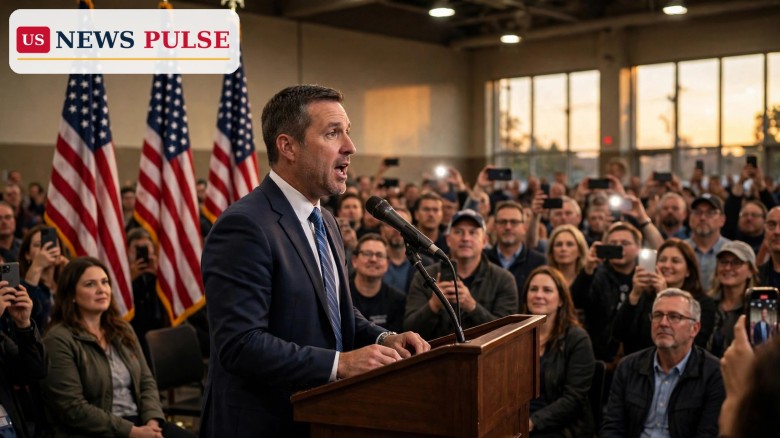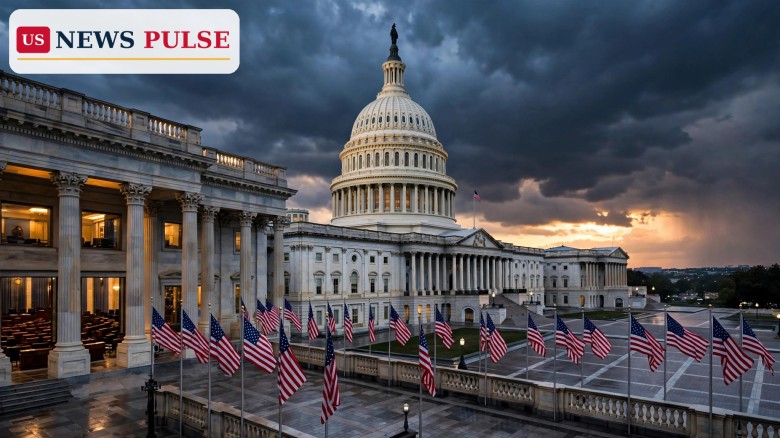
The Senate tariffs vote on Thursday, October 29, 2026, delivered the sharpest congressional rebuke yet to President Donald Trump's global trade policy, as the Senate voted 51-47 to terminate the national emergency that underpins most of his sweeping import taxes. Four Republicans joined every Democrat in backing the resolution, the third such Senate rebuke in a single week, even though the measure is almost certain to stall in the House and face a presidential veto.
The vote does not, by itself, remove a single tariff. Its importance lies in what it signals: a bipartisan majority in the Senate is now willing to say, on the record, that the emergency justification for the April tariffs no longer holds, just five days before voters decide control of Congress in the November 3 midterm elections.
Senators voted on a resolution to nullify the national emergency President Trump declared in early April 2026 over what he called a large and persistent trade deficit. That declaration, made under the International Emergency Economic Powers Act, provided the legal basis for a 10 percent tariff on goods from almost every country, plus higher so-called reciprocal rates for many trading partners.
The resolution passed 51-47. The four Republican supporters were Senate Republican leader Mitch McConnell of Kentucky, Rand Paul of Kentucky, Lisa Murkowski of Alaska and Susan Collins of Maine. The same four had helped advance the Canada and Brazil resolutions earlier in the week, and Senator Thom Tillis of North Carolina also backed the Brazil measure.
Democrats used a decades-old law that allows Congress to terminate a presidential emergency declaration. Senator Ron Wyden of Oregon, a leading Democratic voice on trade, and other supporters argued that the tariffs raise costs for American families and businesses and have not delivered the promised rebalancing of trade.
Senator Paul, who has long opposed broad presidential tariff powers, credited the president for reducing tariffs on China in the recent Busan agreement, but said the result was still far above normal levels. In remarks reported by the Associated Press, Paul said the tariff level was "still much higher than we've had."
The vote came on the same day the president was celebrating his trade negotiations with China as a success. That contrast was not lost on supporters of the resolution, who presented the Senate action as a sign that even members of the president's own party want Congress to reclaim a say over trade policy.
The story of the Senate tariffs vote begins in April 2026, when President Trump announced his "Liberation Day" tariff programme. The administration said the United States faced an emergency because of its persistent goods trade deficit, and it imposed a universal 10 percent levy plus country-specific reciprocal rates.
The tariffs immediately became one of the defining economic policies of the president's second term. Supporters in the White House argued they would force trading partners to open their markets, bring manufacturing back to the United States and raise revenue. Critics, including many importers, retailers and manufacturers, said the taxes were paid largely by American buyers and pushed up prices for food, clothing, electronics and industrial inputs.
A nearly identical Senate resolution failed in April on a tied vote, when Senator McConnell was absent. His presence on Thursday, and his vote in favour, helped turn a tie into a clear, if narrow, majority. The change also reflected months of lobbying by business groups, farmers and state-level interests that say they have borne the cost of the trade war.
Earlier in the same week, the Senate passed resolutions aimed at ending the tariff emergencies for Canada and Brazil. The Canada resolution, sponsored by Senator Tim Kaine of Virginia and Senator Paul, challenged the use of fentanyl smuggling as an emergency justification for tariffs on a close ally. The Brazil resolution followed the same pattern. Together, the three votes form the most sustained Senate challenge to presidential tariff authority in decades.
The Senate tariffs vote matters because of who crossed party lines, not just the final tally. McConnell, the longest-serving Senate Republican leader, rarely breaks with a Republican president on a signature policy. Murkowski and Collins are frequent swing votes, but their support here, alongside Paul's consistent opposition to emergency tariff powers, gave the resolution a bipartisan character that Democrats were quick to emphasise.
For Republicans facing re-election in trade-dependent states, the vote also offers political cover. Senators from farm, manufacturing and border states have heard complaints all year from exporters hit by retaliatory tariffs and from importers paying higher duties. A symbolic vote to end the emergency allows them to register that concern without changing the law.
Public Citizen, a consumer advocacy group, welcomed the result. Its Global Trade Watch director, Melinda St. Louis, said the Senate had "rightly rejected Trump's fraudulent national emergency declaration behind his sweeping 'reciprocal' tariffs." The group noted that the votes came less than a week before the Supreme Court hears challenges to the tariffs under the same emergency-powers law.
That court case may prove more consequential than the Senate vote itself. Two lower courts have already ruled that the tariffs were imposed unlawfully, and the administration has appealed. If the Supreme Court upholds those rulings on November 5 or in a later decision, the legal foundation for the reciprocal tariffs could collapse regardless of what Congress does.
White House allies dismissed the Senate action as symbolic. They pointed out that House Republicans have adopted a rule that prevents tariff-termination resolutions from reaching the floor through March, and that President Trump would veto any such measure that did reach his desk. Overriding a veto would require two-thirds majorities in both chambers, far beyond the 51 votes secured on Thursday.
Supporters of the resolution did not dispute that arithmetic. Their argument is different: the vote puts every senator on the record, builds a legislative marker for a future Congress, and strengthens the political case in the courts and in trade negotiations. It also gives trading partners a reason to believe that American tariff policy could change after the midterms or after a court ruling.
Business groups that have opposed the tariffs welcomed the vote as a sign that congressional patience is wearing thin. Importers have long argued that uncertainty over tariff rates makes it impossible to plan orders, set prices or sign long-term contracts. A Senate majority in favour of termination, even without legal effect, reduces some of that uncertainty about the direction of travel.
Democrats, meanwhile, plan to use the vote on the campaign trail. With the midterms five days away, they argue that the tariffs are a tax on working families and that even Republicans now recognise the damage. Republicans who opposed the resolution counter that the tariffs are a negotiating tool that has already produced deals, including the recent agreement with China that cut overall China tariffs from 57 percent to 47 percent.
The Senate tariffs vote matters for three reasons. First, it tests the limits of emergency presidential power. If a president can declare an emergency over a long-running trade deficit and impose taxes on nearly every country, critics ask, what economic policy could not be justified the same way? The Senate vote is Congress's clearest answer so far: not this one, and not without a fight.
Second, it shapes the midterm debate. Tariffs, prices and the cost of living are central issues in the final days before November 3. A bipartisan Senate vote against the tariffs gives Democrats a concrete example to cite in ads and debates, and it complicates the White House argument that the trade policy enjoys broad support.
Third, it interacts with the courts. The Supreme Court hearing on November 5 will examine whether the emergency-powers law can support tariffs at all. A Senate vote to terminate the same emergency does not decide the legal question, but it adds political weight to the argument that the emergency was never a genuine, time-limited crisis.
In the short term, nothing changes at the border. The tariffs remain in place, importers must still pay them, and the House rule blocking a vote remains in effect through March. The resolution will not become law unless the House changes its rule, passes the measure and musters a veto-proof majority, or the president changes his mind — none of which is expected.
The next decisive moment is the Supreme Court hearing on November 5, two days after the midterms. A ruling against the administration could force a rapid unwinding of the reciprocal tariffs and raise difficult questions about refunds for duties already collected. A ruling in favour would leave the tariffs intact and shift the fight back to Congress and the ballot box.
After the midterms, the composition of Congress will determine whether the Senate vote was a one-off protest or the start of a sustained effort to rewrite emergency trade powers. If Democrats gain ground, expect new attempts to force House votes and to attach tariff limits to must-pass legislation. If Republicans hold Congress, the vote may stand as a warning shot that still leaves presidential authority largely untouched.
Did the Senate vote end President Trump's tariffs? No. The 51-47 vote passed a resolution to terminate the emergency declaration, but the House has blocked such measures through March and the president would veto it. The tariffs remain in force.
Which Republicans voted to end the tariffs? Mitch McConnell of Kentucky, Rand Paul of Kentucky, Lisa Murkowski of Alaska and Susan Collins of Maine voted with all Democrats.
Why did the Senate vote three times in one week? Democrats used the emergency-termination procedure separately for the global tariffs and for the Canada and Brazil tariffs, producing three distinct rebukes in the same week.
What happens at the Supreme Court on November 5? The court will hear arguments on whether the International Emergency Economic Powers Act allows the president to impose tariffs. Two lower courts have ruled against the administration.
Could Congress override a veto? In theory, yes, but it would need two-thirds majorities in both the House and the Senate, well above the 51 votes in the Senate on Thursday.
Related coverage: Canada tariffs revised as plywood and packaging leave the 50% list, Trump-Xi trade deal cuts China tariffs to 47% after Busan, and Trump tariffs fail to cut the US trade deficit, study finds.
Leave a Comment



 | Today's Date: