


 | Today's Date:



Canada US Trade Deal Gets Fresh Push as Carney Calls Trump Talk a Good One
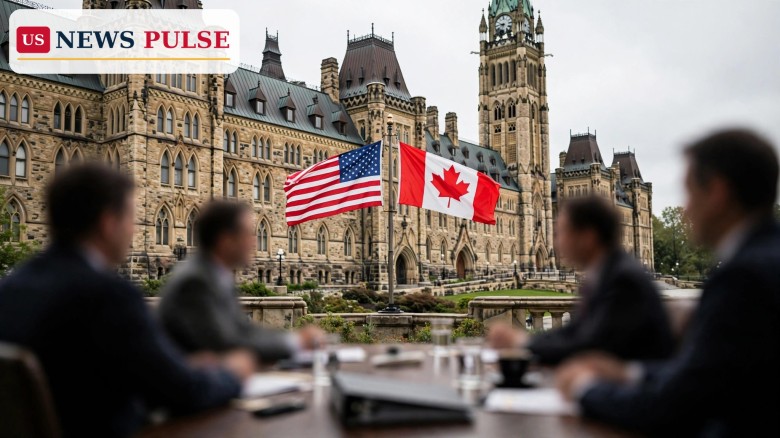
Canadian Prime Minister Mark Carney said on Sunday, November 1, 2026, that he had a “good conversation” with United States President Donald Trump about the future of Canada-U.S. trade, giving the long-running Canada US trade deal effort its clearest public push in weeks just two days before the American midterm elections. Carney said negotiating teams from both countries will now work in the coming weeks to deliver an outcome, a signal that the two sides have moved from a standoff toward drafting the outlines of an agreement.
The update matters because it is the first leader-level sign of momentum since talks broke down in August, when Canada walked away from the table and Washington answered with sweeping new tariffs. No final terms have been announced, and the White House had not issued its own statement about the call at the time Carney posted, but the Canadian leader’s language was deliberately upbeat: the discussion, he said, built on “recent constructive discussions” on a deal that would create jobs, lower costs for families, and fully respect Canada’s languages, culture and sovereignty.
Key Points
- Mark Carney said he had a “good conversation” with Donald Trump on Sunday, November 1, 2026, about the future of Canada-U.S. trade.
- Carney said the call built on recent constructive talks on the outlines of a mutually beneficial trade deal.
- Negotiating teams will work in the coming weeks toward an agreement, Carney said; no final terms have been announced.
- The push follows the August collapse of talks, after which the U.S. imposed 50% tariffs on about $20 billion of Canadian goods and Canada retaliated.
- Possible relief for steel and automobile tariffs has been discussed, but no details of a prospective deal have been released.
What Happened
Carney announced the call in a post on X on Sunday. “Good conversation with President @realDonaldTrump on the future of Canada-U.S. trade,” he wrote. “This builds on our recent constructive discussions on the outlines of a mutually beneficial trade deal that would create jobs for our workers, boost affordability for families, and fully respect Canada’s languages, culture, and sovereignty. Our teams will now be working in the coming weeks to deliver that outcome.”
The timing is significant. The United States votes in midterm elections on Tuesday, November 3, 2026, with all 435 House seats and 35 Senate seats on the ballot, and trade has become a live political issue in border states where tariffs are squeezing businesses. As recently as Wednesday, October 28, Carney had said the two countries were not yet in a position to reach an agreement before the elections. Sunday’s message does not reverse that assessment — it points to work “in the coming weeks” rather than a deal before Tuesday — but it does replace weeks of caution with a public timetable for negotiators.
Reports in the days before the call had already pointed in the same direction. Reuters reported last week that the two sides were working toward a possible agreement on tariffs, and Carney said last week that negotiations had intensified slightly, arguing that any movement was the result of Washington coming closer to Canada’s position. The leader-level call on Sunday turns that reporting into an on-the-record signal from Ottawa that the outlines of a deal are now being discussed at the top.
Background/Context
The Canada-U.S. trade dispute has been running for months, and its roots explain why Carney keeps returning to the same three words: jobs, affordability and sovereignty. In August, Canada walked away from negotiations after rejecting U.S. demands that Carney said threatened Canadian sovereignty, protections for the French language, and the auto industry. Trump responded by imposing 50% tariffs on roughly $20 billion worth of Canadian goods, and Canada answered with countermeasures of its own.
Talks have since resumed, but progress has been uneven. The two sides have discussed possible relief from U.S. tariffs on Canadian steel and automobiles, two sectors where the tariff burden falls directly on factories, suppliers and workers on both sides of the border. No prospective deal has been announced, and no tariff relief has been confirmed, which is why Sunday’s announcement is best read as momentum rather than a breakthrough.
The dispute also sits inside a wider North American trade picture. The United States has pursued tariff-heavy deals with several partners this year, and Ottawa has been careful to frame any agreement as one that protects Canadian autonomy rather than trading it away. Carney has repeatedly described his bottom lines as clear: an agreement must benefit all Canadians, with red lines that were not met by what was offered in August. He has also been candid that he cannot guarantee any future president will respect what is signed — a frankness that reflects how politically charged trade has become in Washington.
Canada US Trade Deal: What the Outlines Cover
What do we actually know about the outlines Carney mentioned? In his own words, the deal under discussion would create jobs for Canadian workers, boost affordability for families, and fully respect Canada’s languages, culture and sovereignty. Those three tests are not decorative language; they map directly onto the reasons Canada walked away in August.
On jobs, the focus is on the export sectors most exposed to U.S. tariffs, above all steel and automobiles, where negotiators have been exploring tariff relief. On affordability, the argument is that lower tariffs mean lower costs for households on both sides of the border, at a moment when American voters are already unhappy about food and fuel prices. On sovereignty, language and culture, Carney is signalling to a domestic audience that no deal will trade away French-language protections or Canadian decision-making in exchange for market access.
What the outlines do not yet include is any published text, timetable for tariff cuts, or list of products covered. Until negotiators produce something concrete, businesses in Michigan, Maine and other border states will be watching for specifics: which tariffs fall, by how much, and when. For now, the honest summary is that the two leaders have agreed their teams should try to turn outlines into an agreement in the coming weeks.
Reactions/Quotes
Carney’s own statement is the fullest on-the-record account so far. “Good conversation with President @realDonaldTrump on the future of Canada-U.S. trade,” he wrote on X. “This builds on our recent constructive discussions on the outlines of a mutually beneficial trade deal that would create jobs for our workers, boost affordability for families, and fully respect Canada’s languages, culture, and sovereignty.”
“Our teams will now be working in the coming weeks to deliver that outcome,” he added, the clearest commitment yet to a negotiating push after the August breakdown.
The White House had not issued an official statement about the conversation in the reporting that followed Carney’s post, and no American official has publicly confirmed a timetable. That asymmetry is worth noting: the momentum narrative on Sunday came from Ottawa, not Washington, and it remains to be seen whether the Trump administration echoes it in the final days before the midterms.
Trade analysts quoted in recent coverage have described the shift as a turnaround from August, when Canada rejected U.S. demands it said threatened sovereignty, French-language protections and the auto industry. The test of that turnaround will be whether the “coming weeks” produce a text, or whether the outlines stall again once negotiators get into the details of steel, autos and tariff rates.
Why It Matters
For American voters, the Canada dispute is not an abstract foreign-policy story. Tariffs on Canadian goods feed into prices and jobs in states where Republican candidates have faced pressure over tariffs hurting local businesses, and the issue has been raised repeatedly in the final week of the midterm campaign. A credible path to a deal could ease that pressure; a collapse would confirm the scepticism of voters who have heard trade promises before.
For Canada, the stakes are equally direct. The United States is by far its largest trading partner, and the 50% tariffs imposed after the August breakdown hit about $20 billion of Canadian goods. A deal that restores predictable access for steel and autos would matter more to Canadian factories than almost any other single policy decision this year, which is why Carney has tied it explicitly to jobs and affordability rather than to diplomatic goodwill alone.
For the wider trading system, the episode is a test of whether tariff disputes between close allies can be unwound by negotiation rather than escalation. Canada walked away in August, both sides raised tariffs, and now both sides say they are talking again about outlines. If that produces an agreement, it will be cited as evidence that even bitter trade fights can be settled; if it fails, it will reinforce the view that tariff wars, once started, are hard to stop.
What Happens Next
The immediate next step is unglamorous but decisive: negotiating teams from both countries will work in the coming weeks to turn the outlines into a deliverable agreement. Watch for three signals. First, whether the White House publicly endorses Carney’s account of the call and the “coming weeks” timetable. Second, whether any specifics emerge on steel and automobile tariffs, the two sectors most often named in reporting. Third, whether either side sets a date — a leaders’ meeting, a ministerial session, or a target for a text — that would turn momentum into a deadline.
None of that is expected before Tuesday’s midterms. Carney himself said as recently as Wednesday that the countries were not in a position to reach an agreement before the elections, and Sunday’s message is consistent with that: work in the coming weeks, not a deal this week. The midterm result may itself shape the talks, since a changed Congress could alter the political incentives for the White House on tariffs.
Businesses should therefore treat Sunday’s news as a reason for cautious optimism, not a reason to reprice supply chains. The tariffs in place today remain in place until negotiators announce otherwise, and the history of this dispute — a walkout in August, uneven progress since — counsels against assuming a smooth path from outlines to agreement.
Frequently Asked Questions
Will there be a Canada-U.S. trade deal before the November 3 midterms? No, not on Carney’s own timetable. He said as recently as October 28 that the countries were not in a position to reach an agreement before the elections, and on November 1 he said teams will work “in the coming weeks” toward an outcome.
What tariffs are at the centre of the dispute? After talks broke down in August, the U.S. imposed 50% tariffs on about $20 billion worth of Canadian goods, and Canada retaliated with countermeasures. Possible relief for steel and automobile tariffs has been discussed, but no details have been announced.
Why did Canada walk away from talks in August? Carney said Canada rejected U.S. demands that threatened Canadian sovereignty, French-language protections and the auto industry. He has since described those areas as red lines that any deal must respect.
What did Carney actually say about the Trump call? He called it a “good conversation” that built on recent constructive discussions on the outlines of a mutually beneficial deal, and said negotiating teams will work in the coming weeks to deliver that outcome.
Has the White House confirmed the call? In the reporting that followed Carney’s post, the White House had not issued an official statement about the conversation. The momentum narrative on Sunday came from Ottawa.
Related coverage: US-India trade deal nears finish as White House calls talks productive and US warns EU that $3.4B Airbus loan threatens hard-won aircraft trade truce.
Leave a Comment