
Trump flew on Epstein’s plane ‘many more times’ than previously reported, DOJ emails claim in latest files release

The Department of Justice has published thousands of documents in another batch of files from investigations into Jeffrey Epstein, marking the largest release yet, with many references to President Donald Trump.
Tuesday’s newly released documents include hundreds of emails as well as jail and court correspondences from prosecutors investigating Ghislaine Maxwell and Epstein in the wake of his death in prison in 2019, which was ruled a suicide.
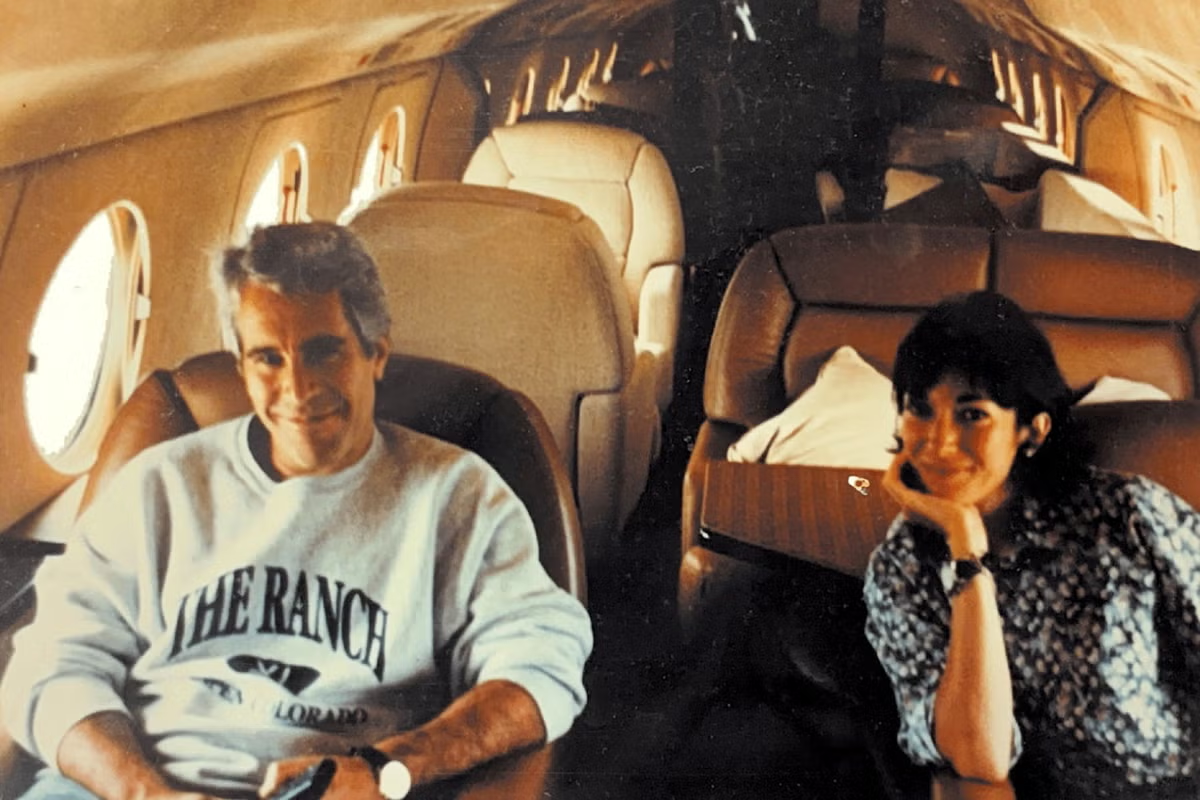
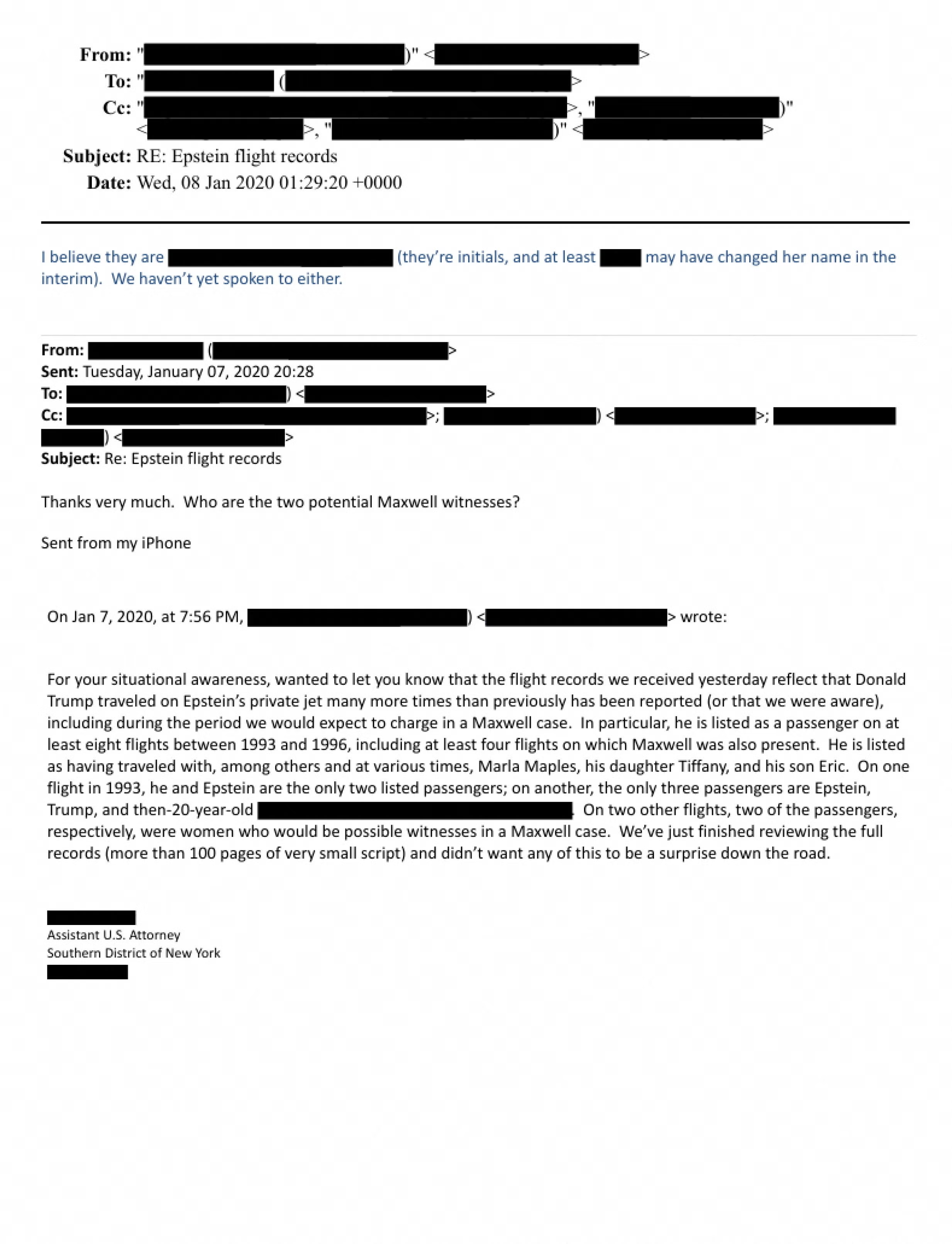
In one message from January 2020, a federal prosecutor in Manhattan claimed that flight records showed Trump “traveled on Epstein’s private jet many more times than previously has been reported (or that we were aware),” including during the period in which prosecutors were preparing to charge in the case against Maxwell.
There were at least eight flights between 1993 and 1996 in which Trump was a passenger, according to the message. Maxwell was also present on at least four of those flights, the prosecutor — whose name is redacted — wrote.
“We’ve just finished reviewing the full records (more than 100 pages of very small script) and didn’t want any of this to be a surprise down the road,” the prosecutor added.
In a statement accompanying the agency’s announcement of the latest batch of 30,000 pages, the Justice Department said that “some of these documents contain untrue and sensationalist claims made against President Trump that were submitted to the FBI right before the 2020 election.”
“To be clear: the claims are unfounded and false, and if they had a shred of credibility, they certainly would have been weaponized against President Trump already,” the statement said. “Nevertheless, out of our commitment to the law and transparency, the DOJ is releasing these documents with the legally required protections for Epstein’s victims.”
The documents also include several tips collected by the FBI about Trump’s involvement with Epstein and parties at their properties in the early 2000s.
The messages do not state whether any follow-up investigations were pursued or if the allegations are corroborated.
Trump, who had a yearslong relationship with Epstein until the early 2000s, is not accused of wrongdoing in connection with his crimes, and one’s appearance within the files does not suggest otherwise.
The Justice Department failed to release all of the files related to Epstein’s cases in its possession despite federal law signed by Trump requiring the administration to publicly disclose everything it has by Friday, December 19.
An initial round of long-awaited documents, including photographs of Epstein with high-profile figures, failed to advance the public’s understanding of the scope of his alleged crimes and connections to an alleged sex trafficking ring accused of exploiting and abusing young girls.
There were heavy redactions, including dozens of pages of grand jury testimony and previously sealed court filings that were nearly entirely blacked out.
The law requires the release of potentially thousands of documents that are typically shielded from public view, including grand jury testimony, settlements, investigative notes and internal records related to the Epstein and Maxwell cases
It also requires the release of documents related to Epstein’s jailhouse death. Maxwell was convicted of sex trafficking in 2021 and is serving a 20-year prison sentence.
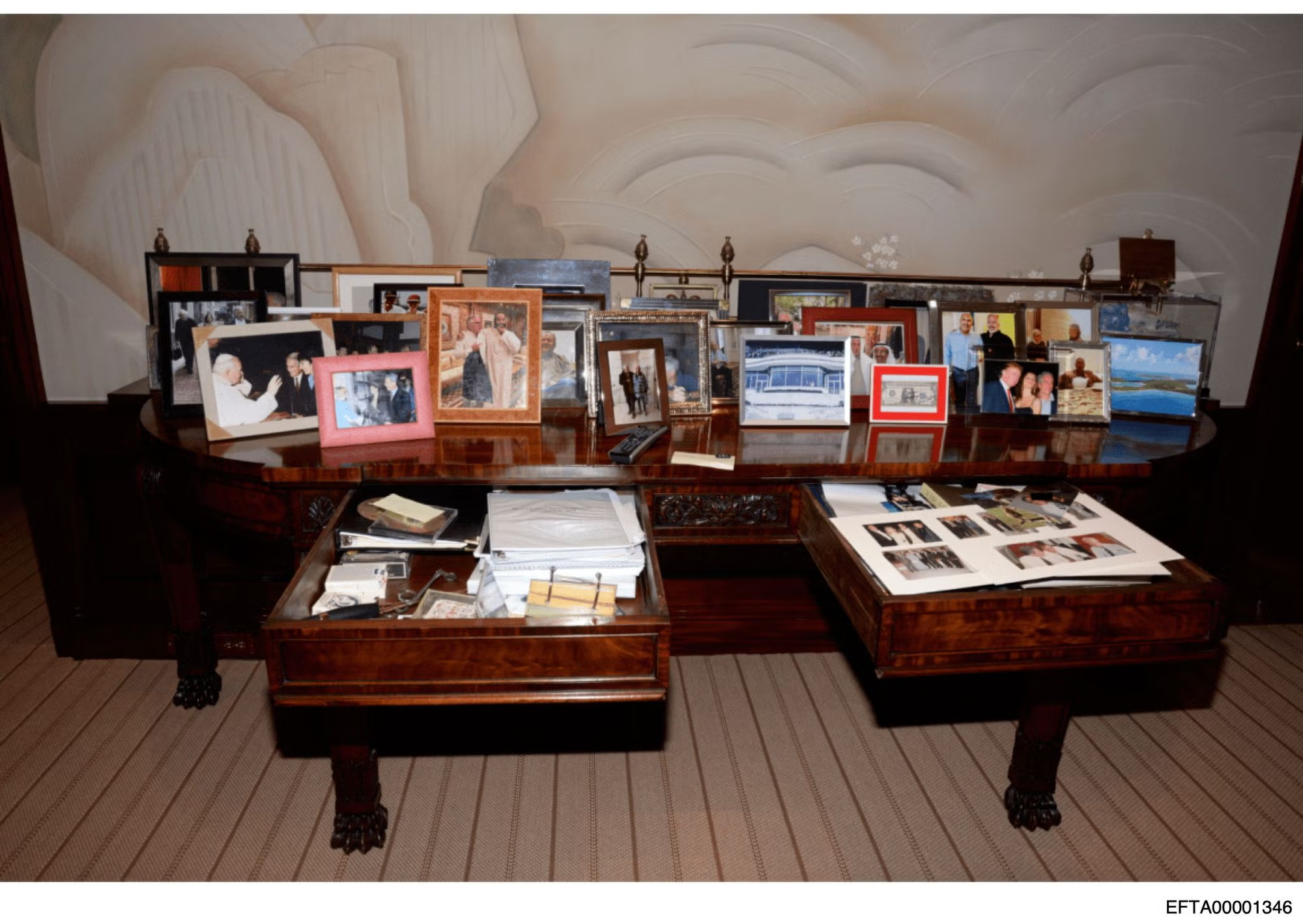
After an initial release of documents under the Epstein Files Transparency Act , the Justice Department removed more than 20 files — including an image of a credenza inside Epstein’s home, where a photograph of Trump with bikini-clad women was sitting in an open drawer.
Those images were later restored, but the Justice Department’s violation of the legal deadline and the apparent removal of images only fueled outrage and demand for the full release of the files.
Deputy Attorney General Todd Blanche said the Justice Department needed time to make necessary redactions to protect survivors.
“You’re talking about a million or so pages of documents — virtually all of them contain victim information,” he told NBC’s Meet the Press Sunday.
He said officials were not removing any mentions of Trump in the documents, more of which are expected to be rolled out over the coming weeks.
“We are not redacting information around President Trump,” Blanche said.
After the Justice Department restored the image of Trump taken from Epstein’s credenza, the agency said in a statement that “there is no evidence that any Epstein victims are depicted in the photograph, and it has been reposted without any alteration or redaction.”
More than a dozen survivors of Epstein’s and Maxwell’s abuse criticized the administration’s partial release of the files, which were “riddled with abnormal and extreme redactions with no explanation,” they said.
“At the same time, numerous victim identities were left unredacted, causing real and immediate harm,” they wrote in a statement Monday. “No financial documents were released. Grand jury minutes, though approved by a federal judge for release, were fully blacked out — not the scattered redactions that might be expected to protect victim names, but 119 full pages blacked out.”
They also said the files made it difficult to find materials “that would be most relevant to our search for accountability,” with no guidance from the Justice Department for navigating the files or obtaining their own copies.
“While clearer communication would not change the fact that a law was broken, its absence suggests an ongoing intent to keep survivors and the public in the dark as much as possible and as long as possible,” they wrote.
Members of Congress have suggested Attorney General Pam Bondi could be held in contempt for failing to release documents on deadline.
The first batch of files appeared to prominently feature photographs of former President Bill Clinton with Epstein and Maxwell, which the White House immediately pounced on.
A spokesperson for Clinton accused the administration of using “selective releases to imply wrongdoing” and called on the Justice Department to “immediately release any remaining materials” from the Epstein files “referring to, mentioning or containing a photograph of” the former president.
“Someone or something is protected,” wrote Clinton’s deputy chief of staff Angel Ureña. “We do not know whom, what or why. But we do know this: We need no such protection.”