
Car theft in the U.S. has undergone a high-tech transformation in recent years. Gone are the days of jimmying windows or hot-wiring an engine – instead, tech-savvy criminals are exploiting weak points in cars’ keyless entry systems.
Using inexpensive electronic devices, they can intercept or mimic a car’s fob signal, unlocking and starting vehicles in seconds, often without leaving a trace.
The scale of the problem is growing even as car thefts nationwide decline.
From over a million vehicles stolen nationwide in 2023 – the highest figure in over a decade – thefts have fallen steadily since, dropping by 17 per cent to approximately 850,000 vehicles in 2024, and then falling again by 23 per cent during the first six months of 2025, compared to the same period in 2024.
Nonetheless, keyless cars are the primary targets. Relay attacks and signal hijacking are increasingly used by criminals to commit thefts, particularly targeting popular models and luxury brands.
Relay attacks account for over 80 per cent of keyless car thefts in the US. They work by tricking the car into artificially detecting that its key fob is nearby, when in actual fact, it isn’t. Using two small signal amplification devices, one criminal stands close to the vehicle while another positions themselves near the owner’s key, often inside a house or pocket.
The first device captures the fob’s signal and “relays” it to the second, which then transmits it to the car. The vehicle unlocks and starts as if the real key were present, allowing the thieves to drive away in seconds without ever touching the actual fob.
The tools used to hijack fob signals can be purchased cheaply online, and social media has played a significant role in spreading tutorials demonstrating the technique, including the emergence of a trend on TikTok dubbed the “Kia Challenge”.
The Kia Challenge was simple: steal cars made by Kia and Hyundai. One group even called themselves The Kia Boyz and documented their criminal exploits, posting them on TikTok and YouTube.
The challenge followed the discovery of the relative ease of stealing these companies’ models. Still, the numerous thefts and resulting joyriding resulted in several deaths and millions of dollars in damages.
In mid-December, Hyundai and Kia agreed to provide a free hardware fix for millions of vehicles lacking industry‑standard anti‑theft technology, following a settlement with Arizona Attorney General Kris Mayes and 34 other attorneys general.
As part of the deal, the companies must now ensure that all future U.S. models are equipped with engine immobilizers to prevent theft, after facing numerous lawsuits for selling vehicles without this basic safety feature.
Meanwhile, US driving website Autoblog reported this year that Tesla Model 3 and Model Y are both susceptible to “Bluetooth low energy (BLE) relay attacks”, a tactic that allows thieves to unlock and drive away in seconds if advanced security features such as PIN-to-drive are not enabled.
“While not among the top 10 most stolen cars by volume, Tesla’s vulnerability is notable because the attack exploits the convenience of phone-as-key and BLE fobs, similar to attacks on other brands using BLE for entry/start,” they noted.
A similar pattern is emerging in the UK, with research this year showing that 58 per cent of vehicle thefts between April 2023 and March 2024 involved signal manipulation of remote locking devices – a fourfold increase from 2018–2019.
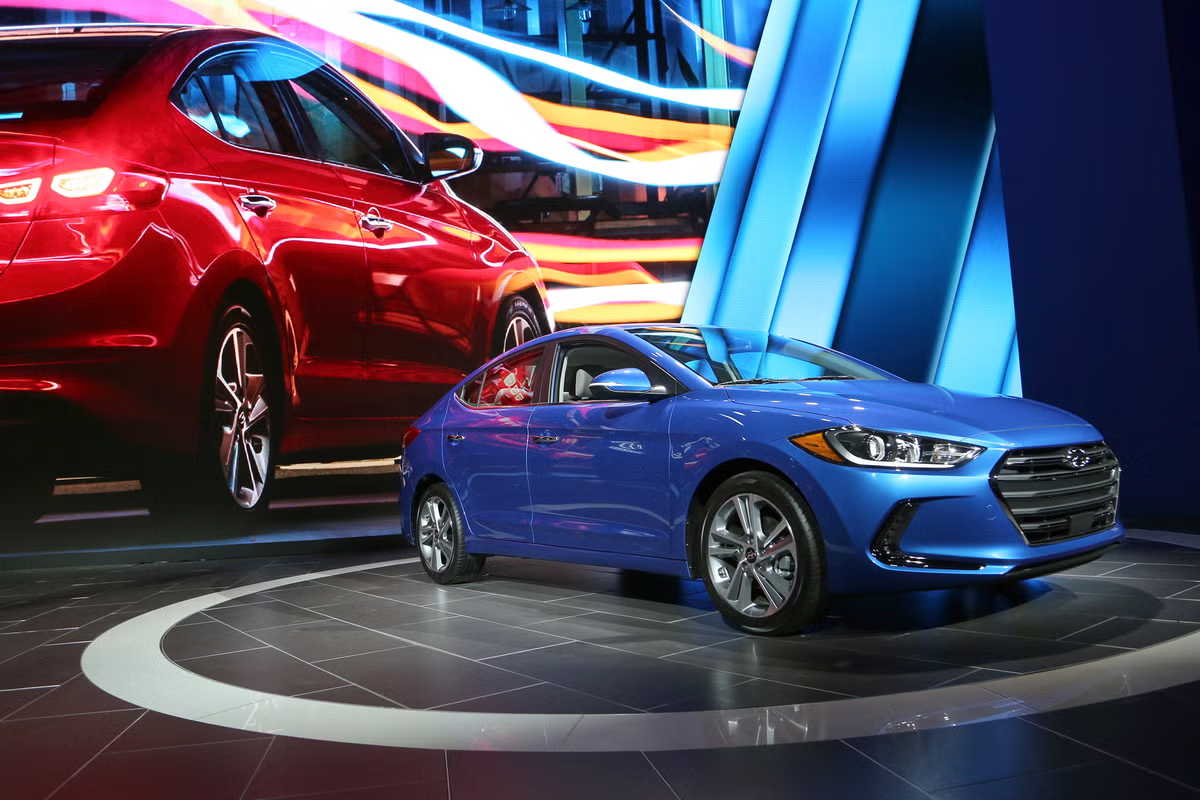
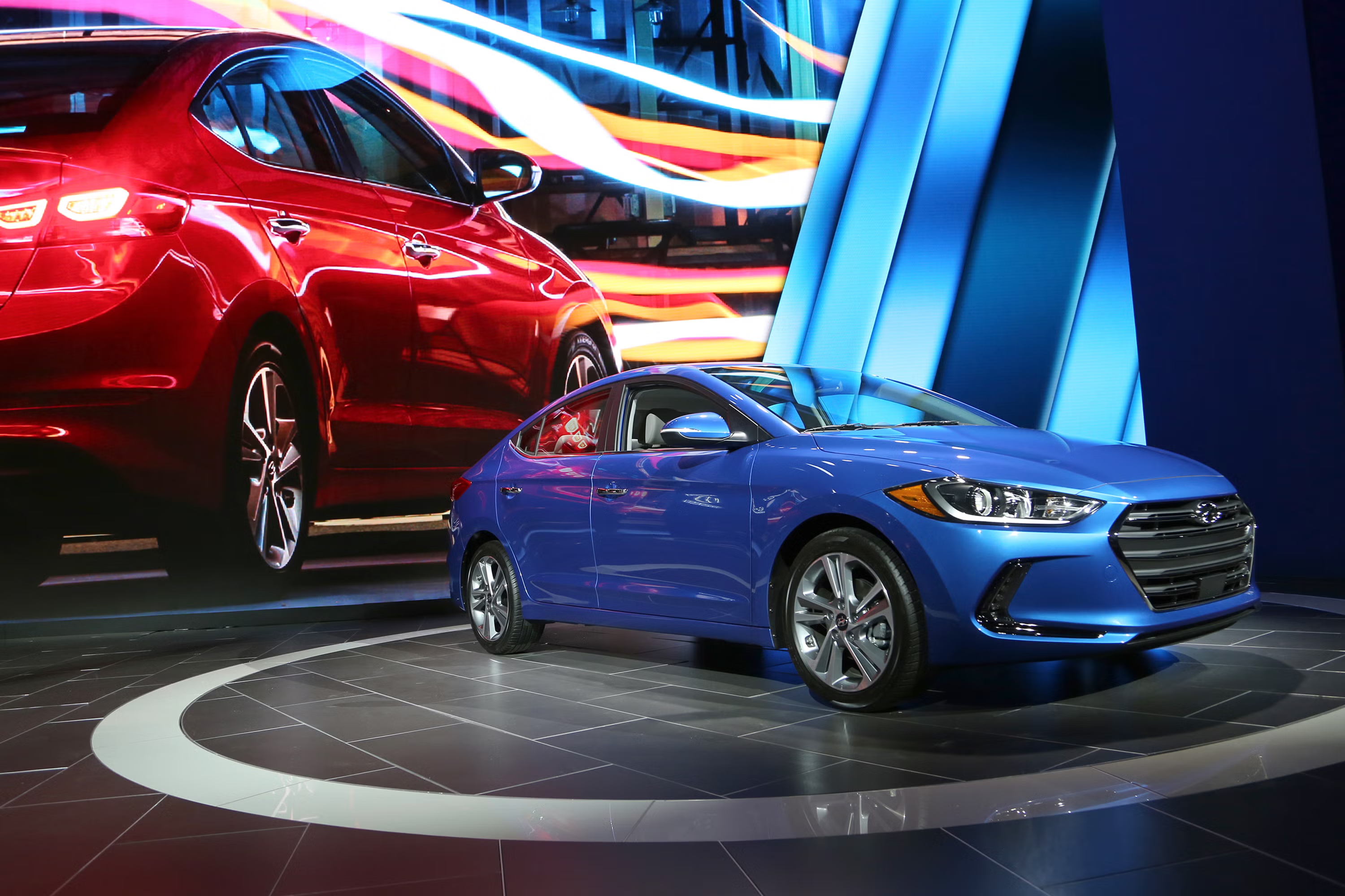
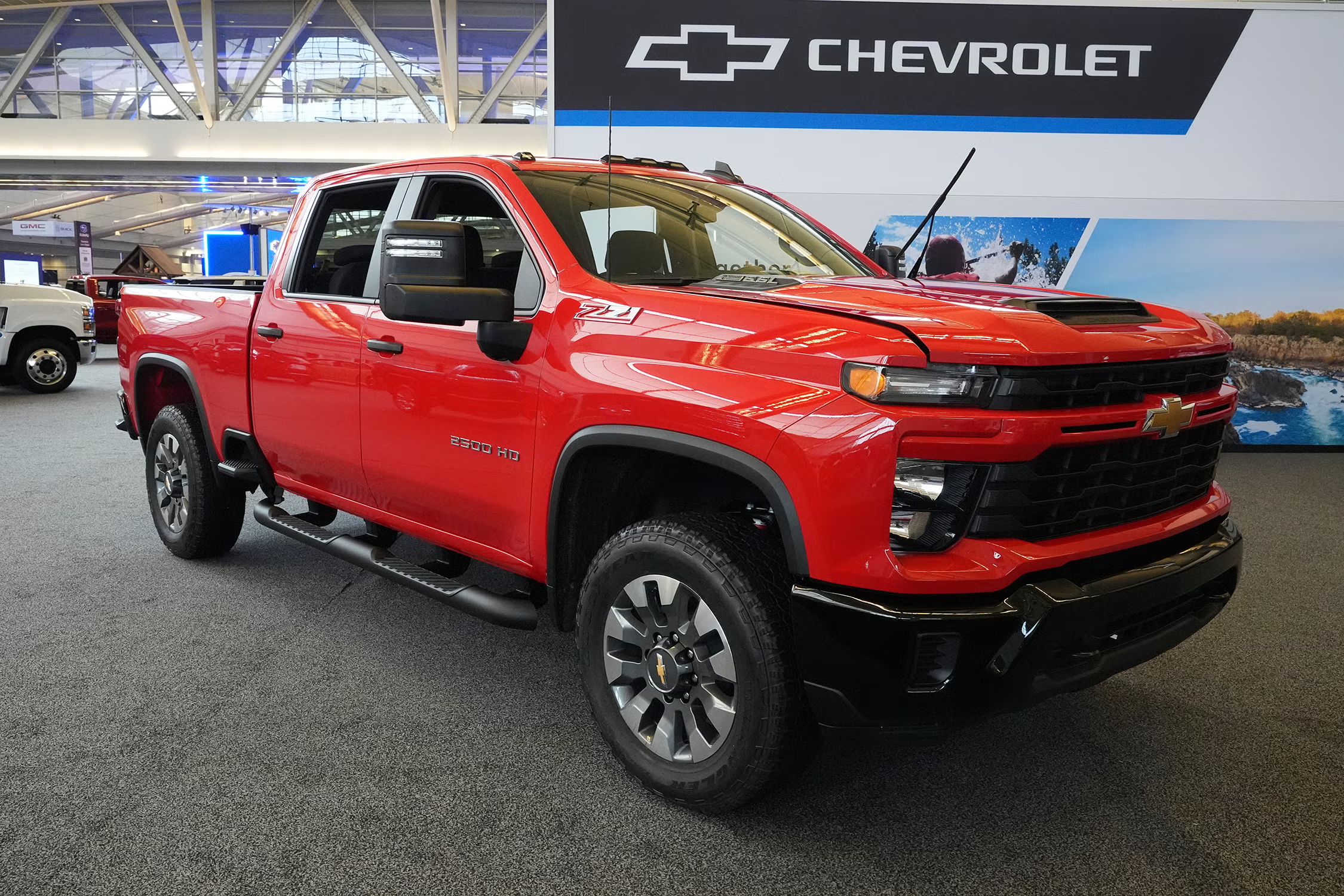
All models of the most-stolen vehicles in the US during the first half of 2025 were keyless, according to the U.S. National Insurance Crime Bureau. They are:
- Hyundai Elantra
- Hyundai Sonata
- Honda Accord
- Chevrolet Silverado 1500
- Honda Civic
- Kia Optima
- Ford F150
- Toyota Camry
- Honda CR-V
- Kia Soul
How to keep your vulnerable keyless car safe
To keep a keyless car safe, experts recommend a combination of safety-conscious habits and judicious use of smart devices.
One of the most effective security steps is to put your key fob in a Faraday pouch or signal‑blocking box, which prevents thieves from intercepting its radio signal.
Parking in well‑lit areas or secure garages also reduces risk, while old-school visible deterrents like a steering wheel lock make your car a less attractive target.
Locking doors, rolling up windows, not leaving cars running when unoccupied, and always taking your keys are also recommended by the National Insurance Crime Bureau.
Turning off passive entry, if your vehicle allows it, adds an extra layer of protection by preventing the car from automatically unlocking when the fob is nearby.
Staying up to date with technological advances can also be helpful, if frustrating. Software updates from manufacturers may include security patches, so keeping your car’s system current could be the difference between keeping it and losing it.
At home, experts advise avoiding leaving keys near doors or windows where signals can be easily captured, and consider installing surveillance cameras or motion‑sensor lighting around your driveway.
For extra peace of mind, GPS tracking devices can help locate a stolen vehicle quickly.
When taken together, these precautions make it much more difficult for criminals to get away with your wheels.