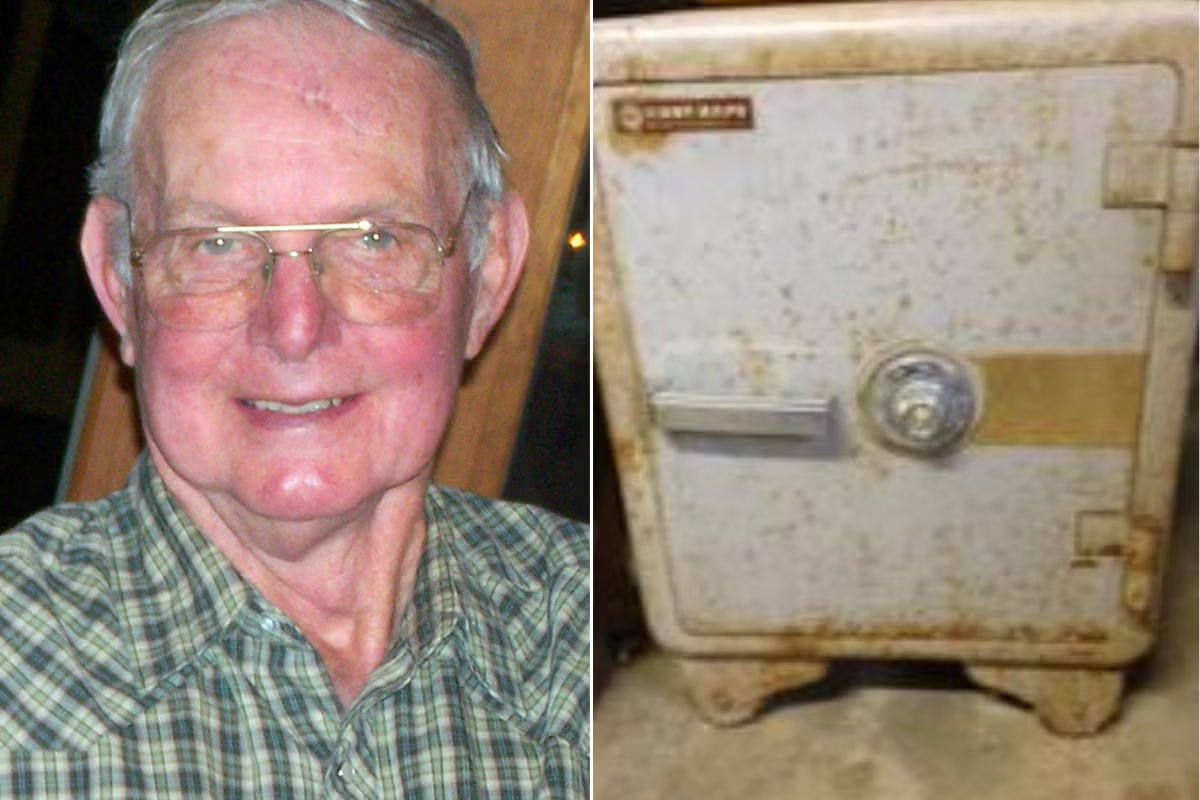
A farmer’s murder haunted a rural Indiana town for years. The key to the case may be a stolen safe that was never found

Investigators in a rural Indian town long believed a missing safe would unlock the truth about what happened to a retired farmer found shot to death in his own home.
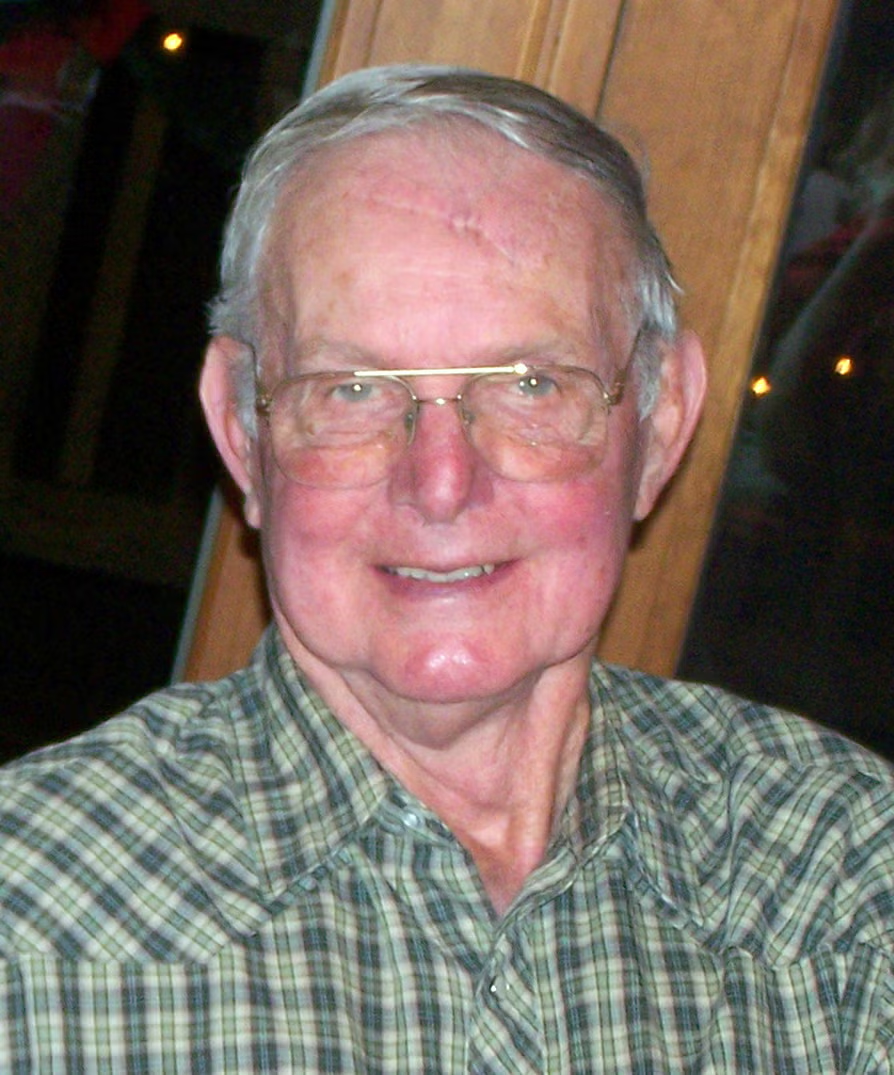
When 85-year-old Lowell Badger was found dead on the bedroom floor of his Sullivan County home in December 2012, police said it was a burglary that had turned deadly.
A television was stolen. Other electronics were later found discarded along back roads. But one item, a heavy metal safe taken from the basement, never resurfaced.
Investigators believed the safe held the motive for the murder – and for more than a decade, they asked the same question: what was inside the safe that was worth killing an elderly man for?
Despite extensive searches of ponds, lakes, and nearby rivers, the safe was never found. And for years, neither were the people responsible for Badger’s murder.
The case went cold for 13 years until new arrests, more than a decade later, finally began to reveal what happened inside Badger’s home that cold December night.
But one question lingers: what happened to the safe?
A grim discovery
The retired farmer was found dead on December 8, 2012, inside his home on West County Road 350 North in Sullivan County, Indiana.
He had been shot during what investigators quickly determined was a burglary.
It’s believed the killing happened between 9 p.m. on Friday, December 7, and 5 a.m. the following morning. Badger’s son, Alan, discovered his father’s body early that day.
Police said a black 46-inch Sony Bravia television had been stolen. So had a light-to-medium dark gray John D. Brush and Company model safe, measuring 23½ inches tall, 17 inches deep, and 17 inches wide.
A case goes cold
Despite hundreds of tips and a $30,000 reward offered for information leading to an arrest, the case stalled.
Years later, a locked safe matching the description was discovered inside an abandoned farm silo several miles from Badger’s home.
Its serial numbers had been partially damaged, raising immediate hope. But when the property owners forced it open, documents inside tied it to previous landowners – not to Lowell Badger.
Investigators still believe it may hold crucial evidence or confirm what the killers were searching for that night.
But the real safe remained missing.
New focus, new leads
In 2023, Indiana State Police renewed their focus on the case, assigning full-time detectives to reexamine evidence and re-interview witnesses.
What followed was multiple statements from more than a dozen unnamed individuals that revealed new leads.
According to court documents, during a party on the evening of December 7, 2012, a witness heard William Ray Grimes, Richard Taft, and another individual allegedly saying that they were going to break into a house looking for money.
Later that night, witnesses said the men returned with a flat-screen television in the bed of a truck.
On the morning of December 8, a person received a phone call from Grimes asking for a ride to town for Taft.
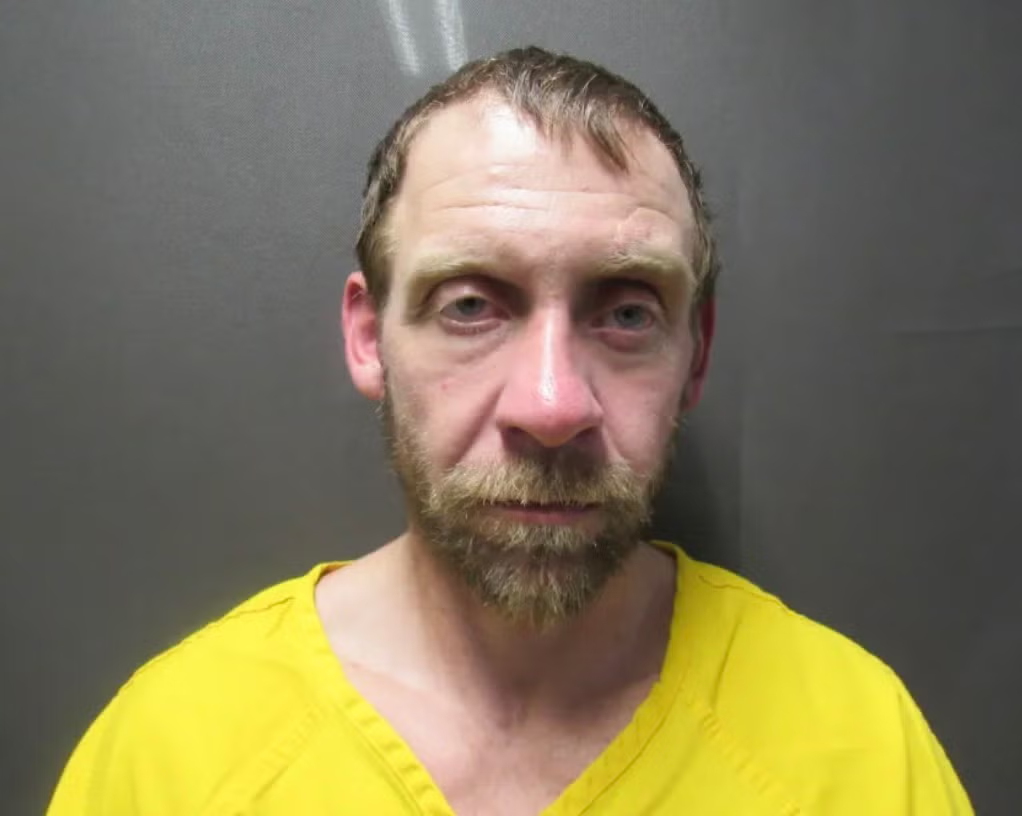
The witness found Taft hiding behind a building in tall grass. Taft said he had been left behind and needed to get out of the area quickly. When the car approached a law enforcement vehicle, Taft told the driver to turn away from the lights.
Days later, after seeing news coverage of Badger’s murder, the witness recognized the location where they had picked Taft up. According to multiple witnesses, Taft later described his role in the crime.
One person told police Taft admitted to participating in the “hitting” and robbing of an old man, saying someone else was too afraid to shoot, so he took the gun and shot Badger himself.
Taft allegedly said the safe was thrown into a creek behind a relative’s house.
Another witness recalled Taft crying and screaming during a car ride, talking about an old man he “did not want to hurt like the old man had been hurt.” At the time, the witness did not yet know about Badger’s murder.
Over the years, Taft reportedly told different versions of the story – sometimes claiming another person shot Badger, sometimes saying Grimes was the killer, and sometimes admitting his own involvement. Investigators noted these inconsistencies in a probable cause affidavit.
Two arrested after more than a decade
In April 2024, a grand jury indicted William Ray Grimes on charges of murder, burglary, and conspiracy to commit burglary. Already incarcerated on unrelated charges, Grimes was formally served with the warrant at an Indiana Department of Correction facility.
Three months later, a second arrest followed.
Richard D. Taft, 39, was charged with murder and two counts of burglary resulting in bodily injury. He was arrested at the Michigan City Correctional Facility, where he is serving a sentence for a separate conviction. His projected release date is 2031.
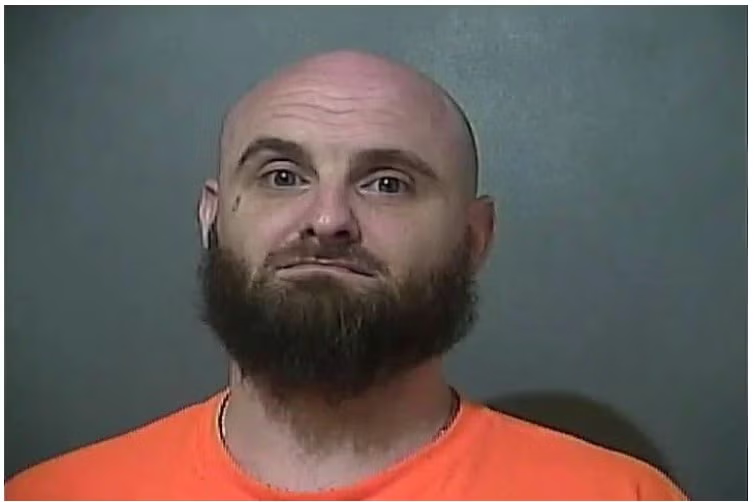
A probable cause affidavit cited interviews with 58 witnesses, several of whom described Taft as “emotional” and “crying” in the months after Badger’s death.
Inside the trial
A Sullivan County jury ultimately found Grimes guilty of murder, burglary, and conspiracy to commit burglary, adding a firearm enhancement to the charges.
During the trial, prosecutors relied heavily on witness testimony. Forensic experts testified that Badger died from a .22 caliber gunshot wound to the temple, with bloodstain analysis suggesting he may have been standing when he was shot.
Taft testified for the prosecution, admitting his involvement in the burglary and claiming he saw Grimes shoot Badger at point-blank range. He denied testifying in exchange for a reduced sentence.
The defense challenged Taft’s credibility, highlighting his past denials and criminal history, and argued there was no physical evidence tying Grimes directly to the scene.
In May, the jury returned a guilty verdict. In June, Grimes was sentenced to 120 years in prison – 70 years for murder and 50 years for conspiracy. The judge cited the “heinous nature” of the crime in imposing the maximum sentence. But Grimes maintained his innocence and said he would appeal.
After the sentencing, Lowell Badger’s son, Alan, spoke publicly about the long road to justice.
“We are blessed to have a community that supports us, we have been blessed to have a family that supports us, we have been blessed to have a church that supports us,” he said. “There are a lot of days where you think you take a step forward, and the next day you take two steps back. It’s been a long journey.”
Victim remembered as the ‘kindest man’
Lowell Badger was widely known and deeply loved in his community.
A retired farmer, he had raised three children with his wife, Nellie, who died in 2008. He devoted much of his retirement to Kingsley Memorial United Methodist Church, where he had been an active member since 1960.
He also served for decades with the Sullivan County Credit Union, the Island Levee Conservancy District, and as District 7 Director of Farm Bureau.
A neighbor described him as “the kindest man I’ve ever met.”