

Brian Walshe, who admitted disposing of his wife’s body – which has never been found – is found guilty of her murder

A Massachusetts jury has reached a verdict in the murder trial of Brian Walshe, the man accused of killing and dismembering his wife, Ana Walshe, whose body has never been found.
Walshe was found guilty on Monday after less than a day of deliberations following closing arguments on Friday.
The 50-year-old was tried only on a charge of first-degree murder after pleading guilty – on the day jury selection was set to begin – to misleading police and improper disposal of a body. He has admitted to dismembering his wife and lying to police, but maintains he did not kill her.
Ana Walshe, a Serbian immigrant and real estate executive, was last seen in the early hours of January 1, 2023, after a small New Year’s Eve gathering at the couple’s home in Cohasset.
Her husband claimed the 39-year-old left for an emergency work trip to Washington, D.C., ordering a car to take her to Logan International Airport in Boston. But her company, the first to report her missing, said there was no work emergency.
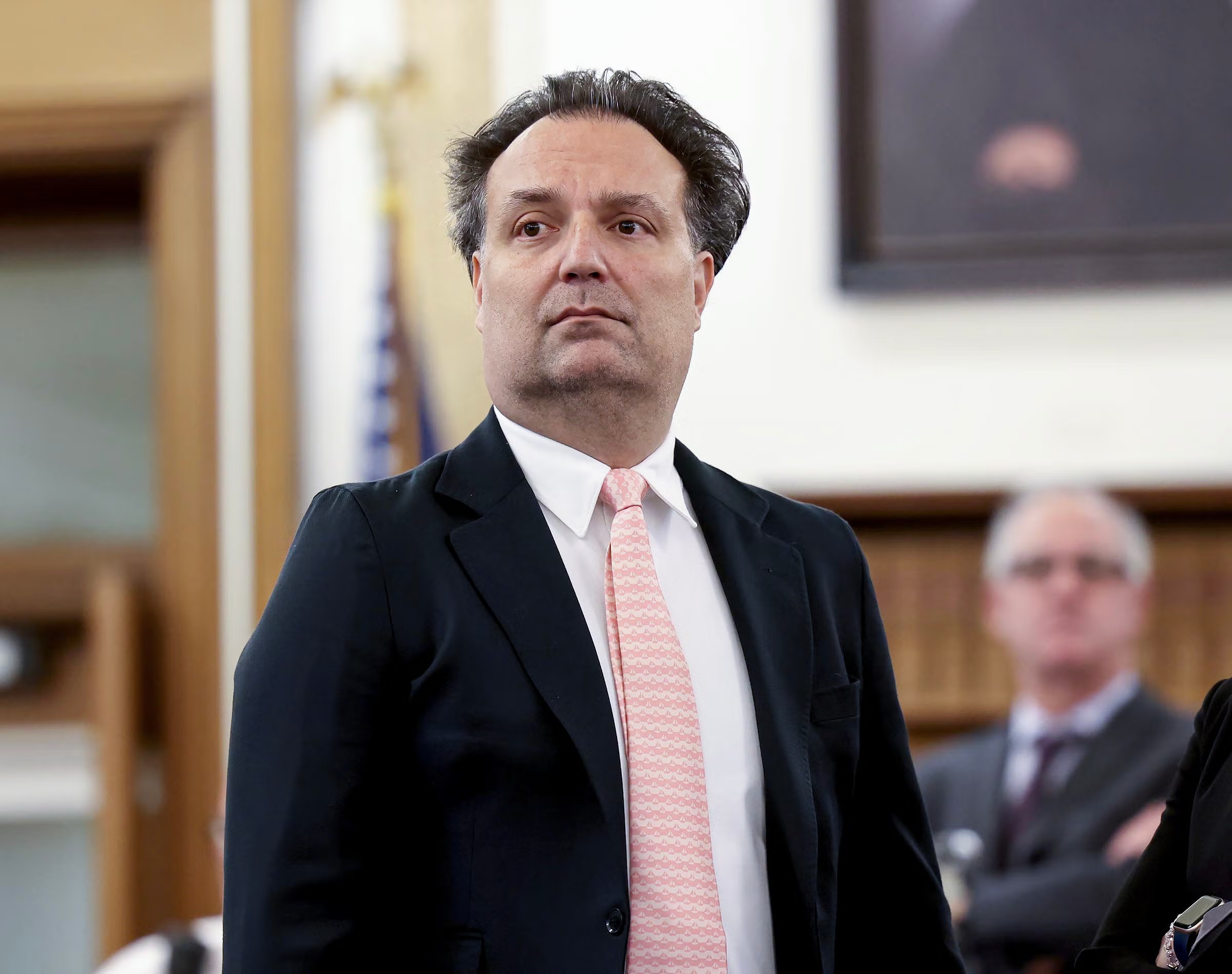
Prosecutors said that Ana never got into the ride share and there was no evidence of her being on a flight. Her cellphone, as well as her credit and debit cards, remained inactive after her disappearance.
“Ana Walshe is dead because he murdered her, and he intended her death,” she told the court during closing arguments on Friday. “She wasn’t going to D.C. for a work emergency; there was no emergency. It’s just a story that the defendant told people.”
Meanwhile, Walshe claimed that after she left the house, he visited his mother in Swampscott, went shopping at CVS and Whole Foods and spent time with his children.
But prosecutors claimed he spent New Year’s Day traveling to several pharmacies and hardware stores, buying heavy-duty cleaning supplies, a Tyvek protective suit and a utility knife – purchases they say were preceded by online searches such as “How long before a body starts to smell?” and “Dismemberment and best ways to dispose of a body.”
Over the next several days, investigators said, he continued searching for “how to dismember a body with a hacksaw.” He did not report Ana missing until January 4, when her employer contacted police after failing to reach her.
Surveillance footage later showed a man resembling Walshe discarding heavy trash bags in dumpsters. A search of a trash facility near his mother’s home uncovered bags containing a hatchet, hacksaw, towels, a protective suit, cleaning agents, a Prada purse, boots like the ones Ana was last seen wearing and her COVID-19 vaccination card. Prosecutors said many items tested positive for her DNA.
“The defendant did not want anyone to find Ana’s body and to know how she died,” Yas said in court, her voice rising. “So the defendant bought cutting tools … and he cut up Ana’s body, the woman he claimed to love, and dumped her into dumpsters,” she said. He didn’t just want her dead, “he needed her dead,” Yas said. “It was a marriage in crisis.”
Yas pointed out that Walshe at the time “had no assets” and was on home confinement for his federal case.
Meanwhile Ana was beginning to thrive as “the marriage was beginning to deteriorate,” she told the court, adding that she had set up rooms at her D.C. for their children. Yet Walshe needed the children with him so he could be the primary caregiver in an effort to avoid prison, Yas said. At the time, Ana had also taken out $2.7 million in life insurance, naming her husband as the sole beneficiary, prosecutors said.
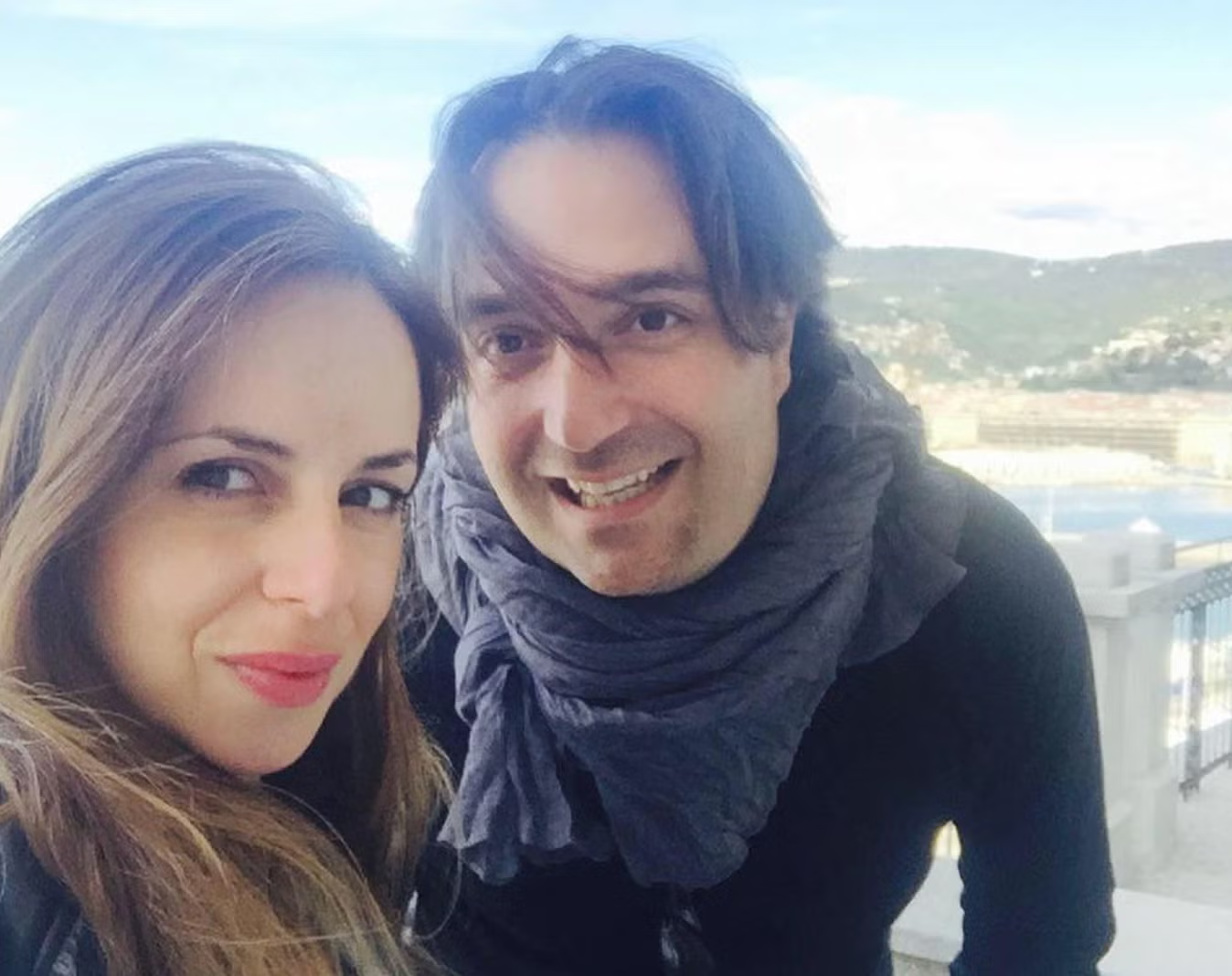
In a move that surprised courtroom observers, the defense rested earlier this week without calling any witnesses, and Brian Walshe did not testify in his own defense, despite speculation that he might take the stand to explain his version of events.
During closings, Defense attorney Larry Tipton repeatedly called Brian Walshe “a loving husband and a loving father” with “no motive at all” to kill his wife. He had previously told the court that his client had panicked after a “sudden unexplained death,” claiming Walshe found Ana unresponsive after their New Year’s Eve celebration.
“When he entered the bedroom and began to get into bed, he sensed something was wrong,” Tipton said, recalling Walshe’s claim that Ana “rolled off the bed.”
“You have a sudden unexpected event that results in confusion, panic, and fear,” Tipton said Friday. “All of those things that are so troubling, horrific” and could be argued to be showing consciousness of guilt, he said, referring to Walshe’s disposal of her body. But insisted he did not kill his wife.
Tipton also addressed Walshe’s Internet searches, claiming that if he made them “with murder in his heart,” why does the first search referencing murder occur “six hours later” on Jan. 1, 2023?
“Context matters,” Tipton said. “The first time the word murder is used in these horrific searches is six hours” after they start.

Tipton also argued that the searches about dismemberment and cleaning did not mean he murdered her, claiming there wasn’t anything that referred to a plan or intent to kill Ana.
“Even though they don’t talk about murder, they are equally upsetting,” Tipton said. “He’s thinking about how you clean a concrete floor” in the basement.
“Ask yourself, why is the man searching now if he had intended to kill his wife?” Tipton asked.
The defense acknowledged that Walshe lied to investigators but argued that his actions reflected fear, not guilt. With no body, Tipton emphasized, “investigators have been unable to determine a cause of death.”
”Mr. Walshe loved Ana Walshe, the mother of his three children,” Tipton added. “Mr. Walshe is not guilty. He’s not guilty.”
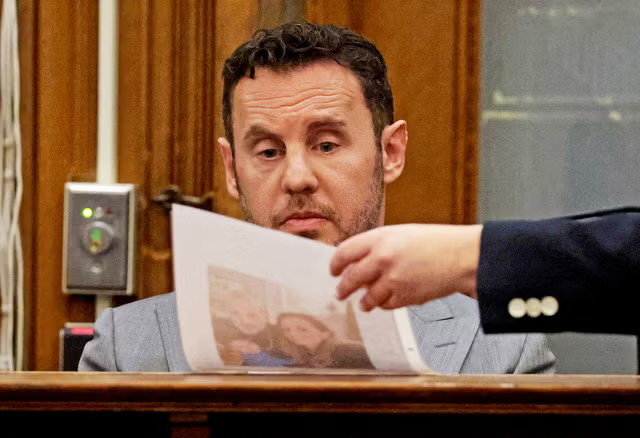
During the closely watched trial, the court heard from William Fastow, the man prosecutors identified as Ana Walshe’s boyfriend.
Fastow said he met Ana in March 2022 when he sold her a townhouse in Washington. Their relationship quickly intensified into an “intimate relationship.” They shared dinners, nights on his sailboat, overnight stays at his home and even a Thanksgiving trip to Ireland.
“Ana felt it was really important that when Brian was to find out about the relationship that he would hear it from her,” he said. “She had expressed great concern and I think she felt it would be a strike against her integrity if he found out a different way.”
Fastow said they planned to ring in the New Year together on January 4 and talk about the future. He last heard from her on New Year’s Eve. His follow-up texts and calls went unanswered.