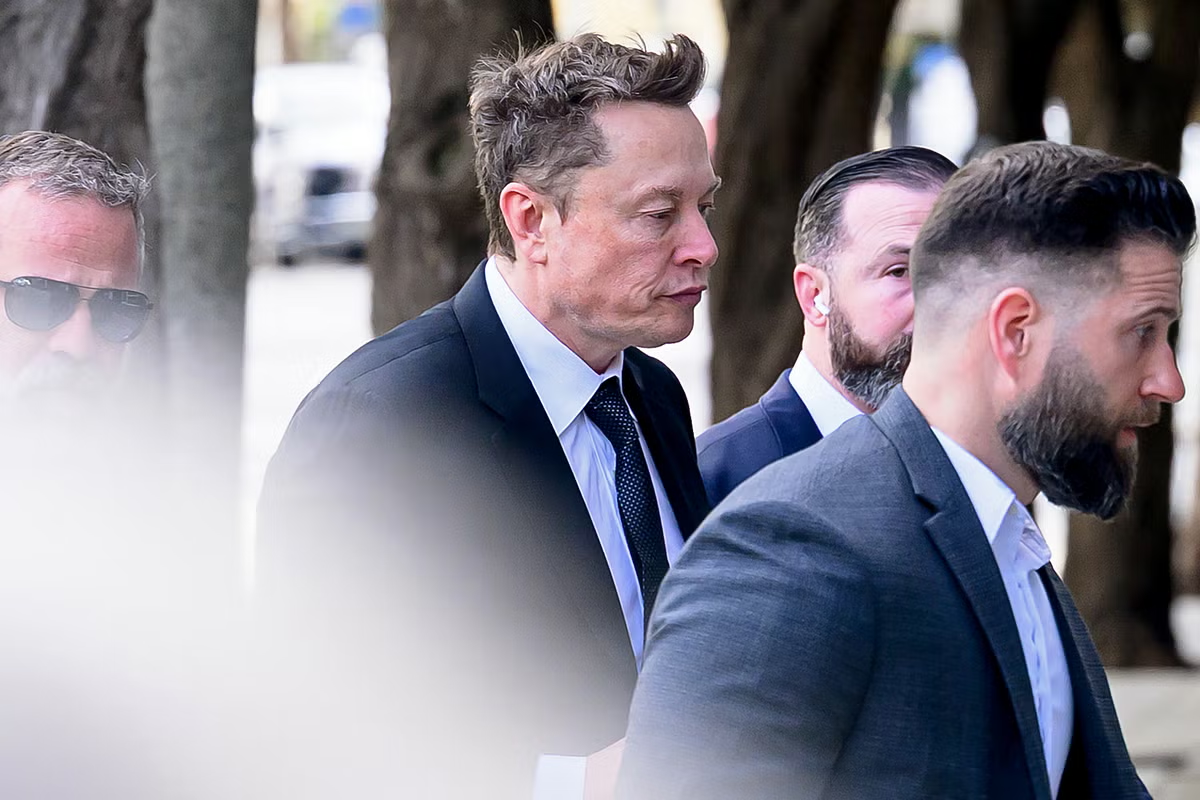

Elon Musk appeared in a San Francisco courtroom on Wednesday, facing accusations that he intentionally drove down Twitter’s stock price through false and misleading statements before his $44 billion acquisition of the social media platform in 2022.
The lawsuit, filed in October 2022, represents Twitter shareholders who sold their stock between May 13 and October 4, 2022. It alleges that Musk violated federal securities laws by issuing public statements “carefully calculated to drive down the price of Twitter stock.”
The billionaire Tesla CEO initially agreed to buy Twitter and take it private in April 2022. However, on May 13, he declared his plan “temporarily on hold,” citing the need to verify the number of spam and fake accounts on the platform. This announcement caused Twitter’s stock to tumble. Days later, he tweeted that the deal “cannot go forward,” claiming nearly 20% of Twitter accounts were “fake,” according to the lawsuit.
During questioning, plaintiff’s lawyer Aaron P. Arnzen pressed Musk on his tweets – or lack thereof – concerning his decision to acquire Twitter and his prior purchases of the company’s stock.
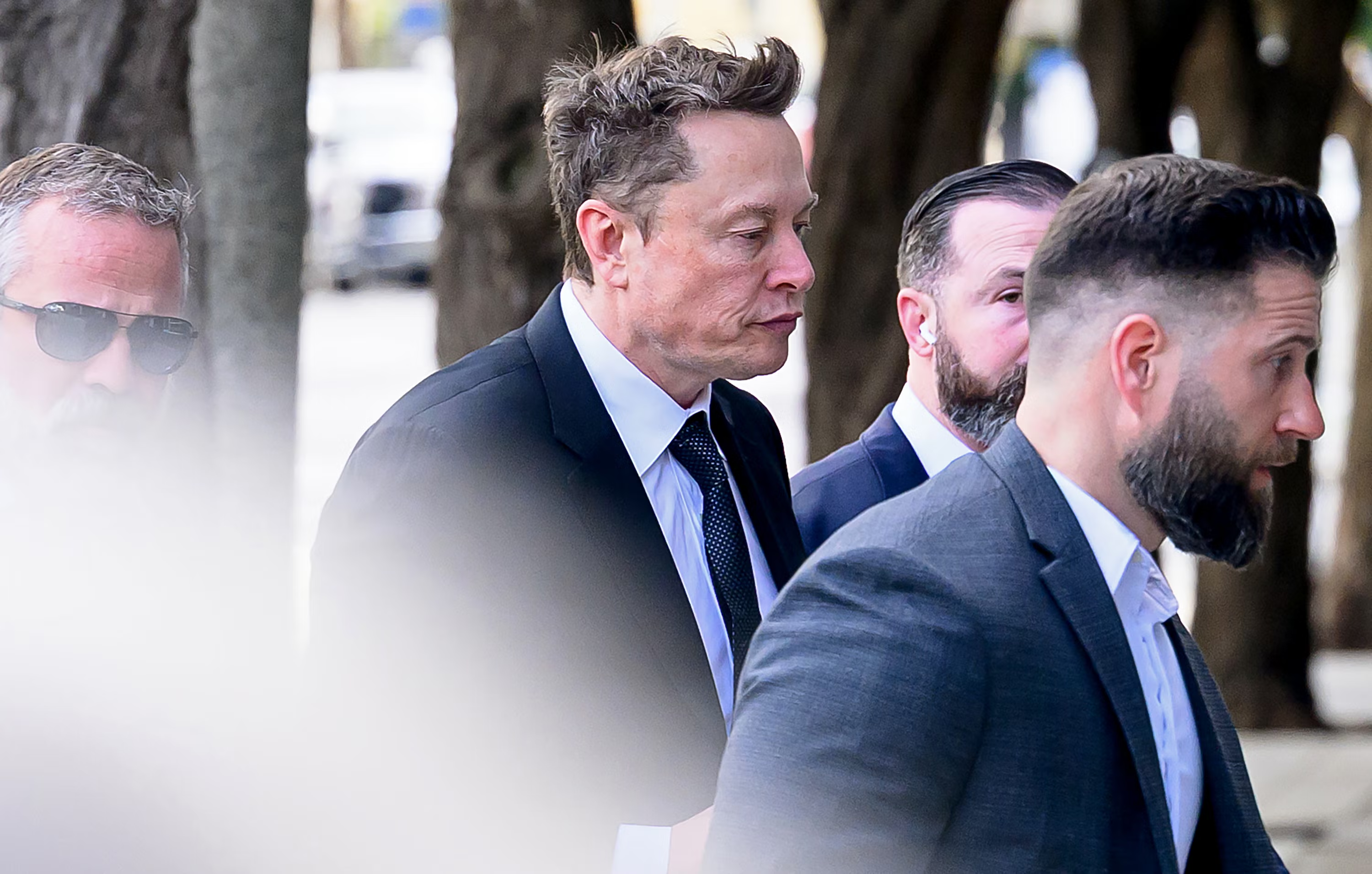
Dressed in a black suit and tie, Musk testified that he did not consider it “material” when he began accumulating Twitter stock in early 2022, and therefore did not tweet about it or disclose it to the Securities and Exchange Commission (SEC). He stated he had bought stock in “many companies” without publicizing it.
Once his stake became public, Twitter’s stock surged by 27% in a single day. “That sounds high,” Musk commented.
The lawsuit specifically targets Musk’s May 13 tweet – “Twitter deal temporarily on hold pending details supporting calculation that spam/fake accounts do indeed represent less than 5% of users” – asserting it was “false because the buyout was not, in fact, ‘temporarily on hold.’” The legal filing contends that Twitter had not agreed to a pause, and the merger agreement contained no provision allowing Musk to unilaterally halt the deal.
Arnzen extensively questioned Musk about the tweet, asking if he believed it would have a “material impact” on Twitter’s stock. Musk maintained that he had explicitly stated his commitment to the deal at the time, likening the “temporarily on hold” statement to “saying you’re going to be late for a meeting. (It doesn’t) mean you are not going to be at the meeting.”
Despite his explanation, Twitter’s stock fell nearly 10% on May 13. When repeatedly asked if he considered the tweet’s potential effect on the stock market, Musk consistently replied, “I was simply speaking my mind.”
In the subsequent weeks, Musk continued efforts to delay or withdraw from the deal, which the lawsuit claims he did through false and disparaging statements about Twitter’s business, causing a sharp decline in the San Francisco company’s stock.
In July 2022, Musk intensified his focus on the bots issue, announcing he would abandon his offer to buy Twitter, alleging the company failed to provide sufficient information about fake accounts. This move came despite the lawsuit noting that Musk had waived due diligence for his “take it or leave it” offer, thereby relinquishing his right to examine the company’s nonpublic finances.
Musk was asked if, prior to waiving due diligence, he had inquired about Twitter’s methodology for determining the number of fake or spam accounts, which the company had disclosed to be around 5%. He stated he had not, but assumed that if Twitter included something in an SEC filing, “it would be accurate.”
“It subsequently turned out they misrepresented the number of bots,” he asserted. “They lied.”
“To try to renegotiate the price or delay the merger, Musk made materially false and misleading statements and omissions, and engaged in a scheme to deceive the market, all in violation of the law,” the lawsuit states.
The issue of bots and fake accounts on Twitter was not new. The company had paid $809.5 million in 2021 to settle claims of overstating its growth rate and monthly user figures. Twitter had also disclosed its bot estimates to the SEC for years, while cautioning that its estimates might be too low.
Twitter subsequently sued Musk to compel him to complete the deal, prompting a countersuit from Musk. On October 4, Musk ultimately offered to proceed with his original \$44 billion proposal, which Twitter accepted. The deal closed later that month. In the months that followed, Musk significantly reduced the company’s workforce, dismantled its trust and safety team, and rolled back content moderation policies. In July 2023, he rebranded Twitter as X.
This is not the first instance of Musk being compelled to defend himself in court against allegations of misleading investors through his social media posts. Three years prior, he spent approximately eight hours testifying in a San Francisco federal trial regarding his unmaterialized 2018 plans to acquire Tesla, the electric automaker he still leads, for \$420 per share. A nine-member jury ultimately absolved Musk of wrongdoing in that case.