Four major takeaways from Epstein files as heavily redacted documents leave questions unanswered

Thousands of documents from investigations into Jeffrey Epstein have finally been released by President Donald Trump’s administration after months of public pressure.
While an initial round of long-awaited documents includes a vast library of salacious images and photographs of high-profile figures, it remains unclear whether they shed any new light on Epstein’s crimes and alleged connections to a sex trafficking ring implicating prominent officials accused of exploiting and abusing young girls.
Disclosures related to the Epstein Files Transparency Act include hundreds of undated photographs as well as heavily redacted images and case files, including 119 pages of grand jury testimony that have been totally blacked out.
Photographs submitted by law enforcement investigating Epstein’s properties include sex toys and costumes, images of women exposing themselves, folders full of photographs of nearly naked women, and nude paintings and sculptures of women’s breasts.
But Department of Justice officials acknowledged they are withholding documents and names of people inside them, and Friday’s partial release is likely to continue fueling demands for the so-called Epstein files that the administration has fought for months to suppress.
Epstein, a wealthy well-connected financier and convicted sex offender, is accused of trafficking women and girls as young as 14 years old. His death in jail awaiting trial on trafficking charges in 2019 was ruled a suicide.
Last month, after growing demands for a full public accounting of Epstein’s alleged abuse, the president reluctantly signed legislation compelling the Department of Justice, FBI and U.S. attorney’s offices to publish everything in their possession by December 19.
The Justice Department launched a public-facing website Friday afternoon. But officials acknowledged that not all of the materials required under law have been released, and government lawyers are scrambling to make redactions. More than 200 attorneys helped review the documents, deputy attorney general Todd Blanche wrote to members of Congress.
More than 1,200 names were identified as either victims or their relatives, according to Blanche. Those names are being redacted. “Protecting victims is of the highest priority” for the Trump administration, he wrote.
The “final stages of review” remain ongoing and will be completed within “the next two weeks,” he said.
Democrats have threatened legal action to force the full and immediate release of the files, which have consumed Trump’s second term thus far as he faces renewed scrutiny into his years-long relationship to the sex offender.
Photos with celebrities and Bill Clinton
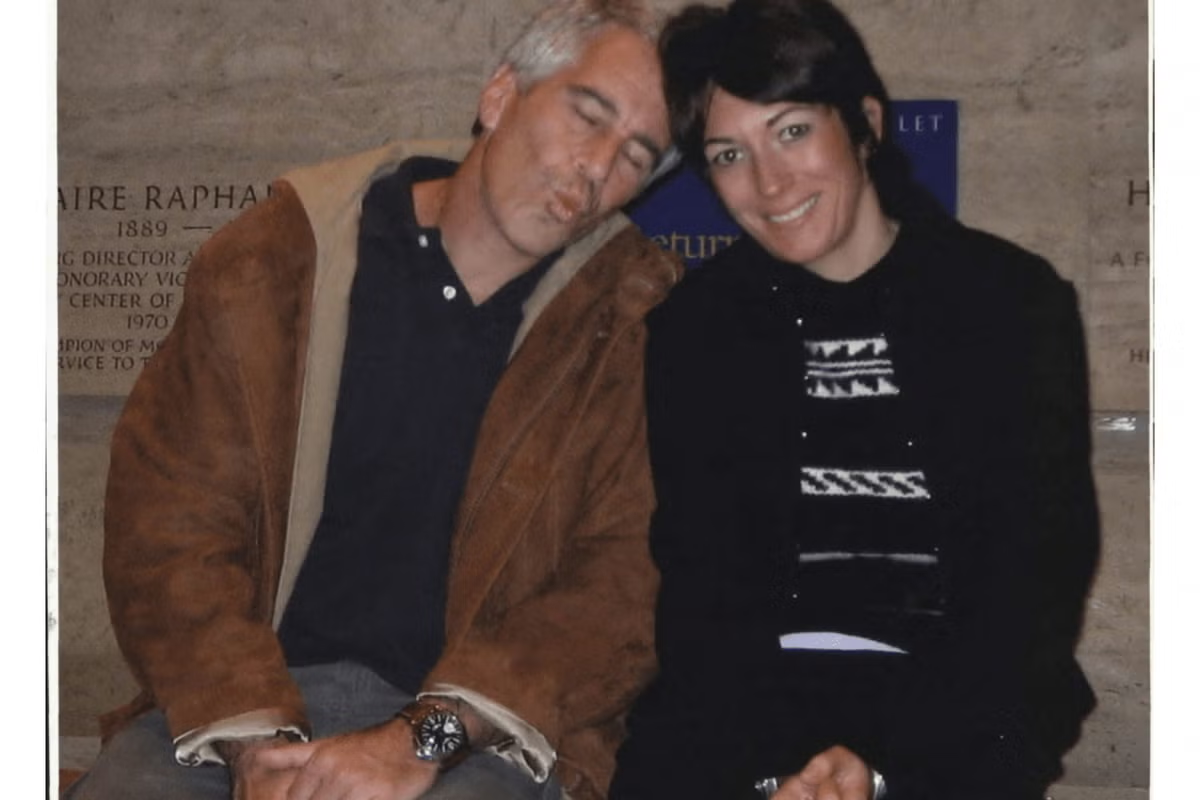
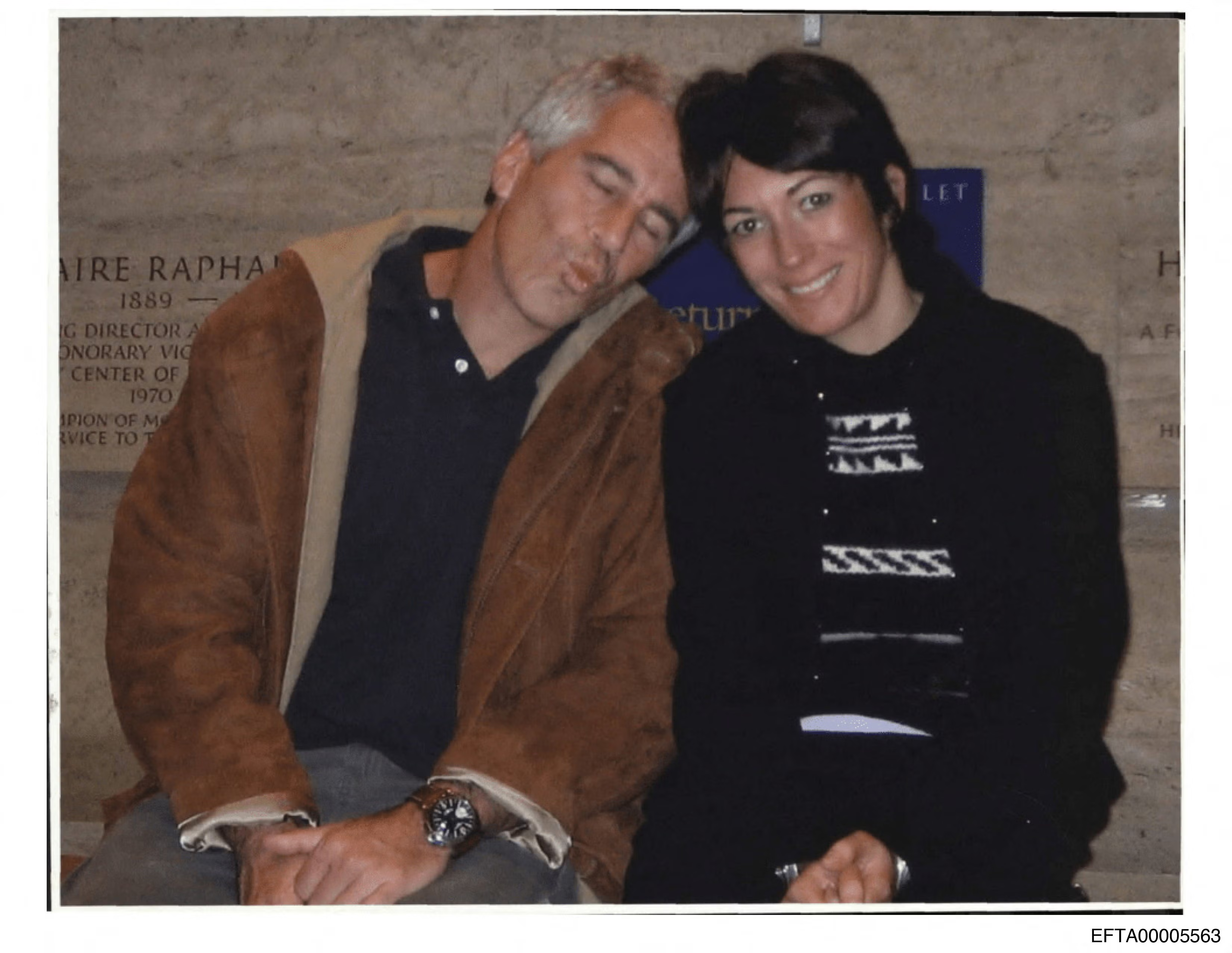
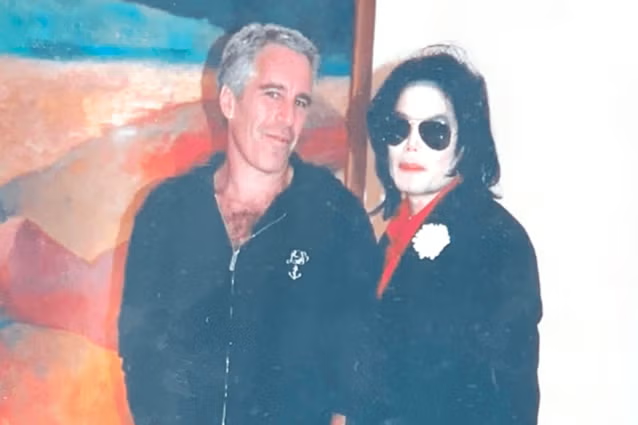
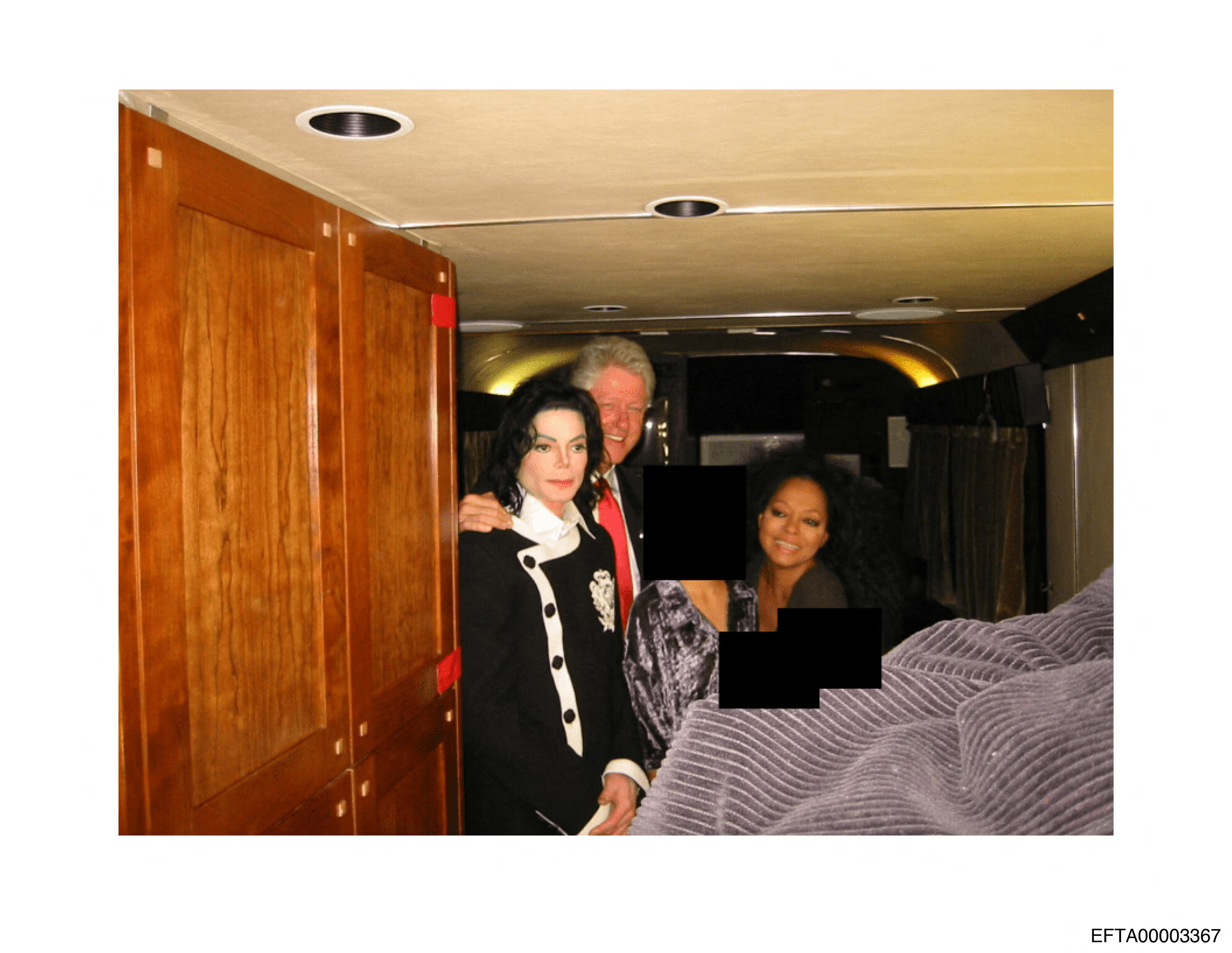
The latest batch of documents includes intimate photographs of Epstein and his associate Ghislaine Maxwell, as well as photographs with the pair alongside Michael Jackson, Mick Jagger, Andrew Mountbatten-Windsor and Sarah Ferguson.
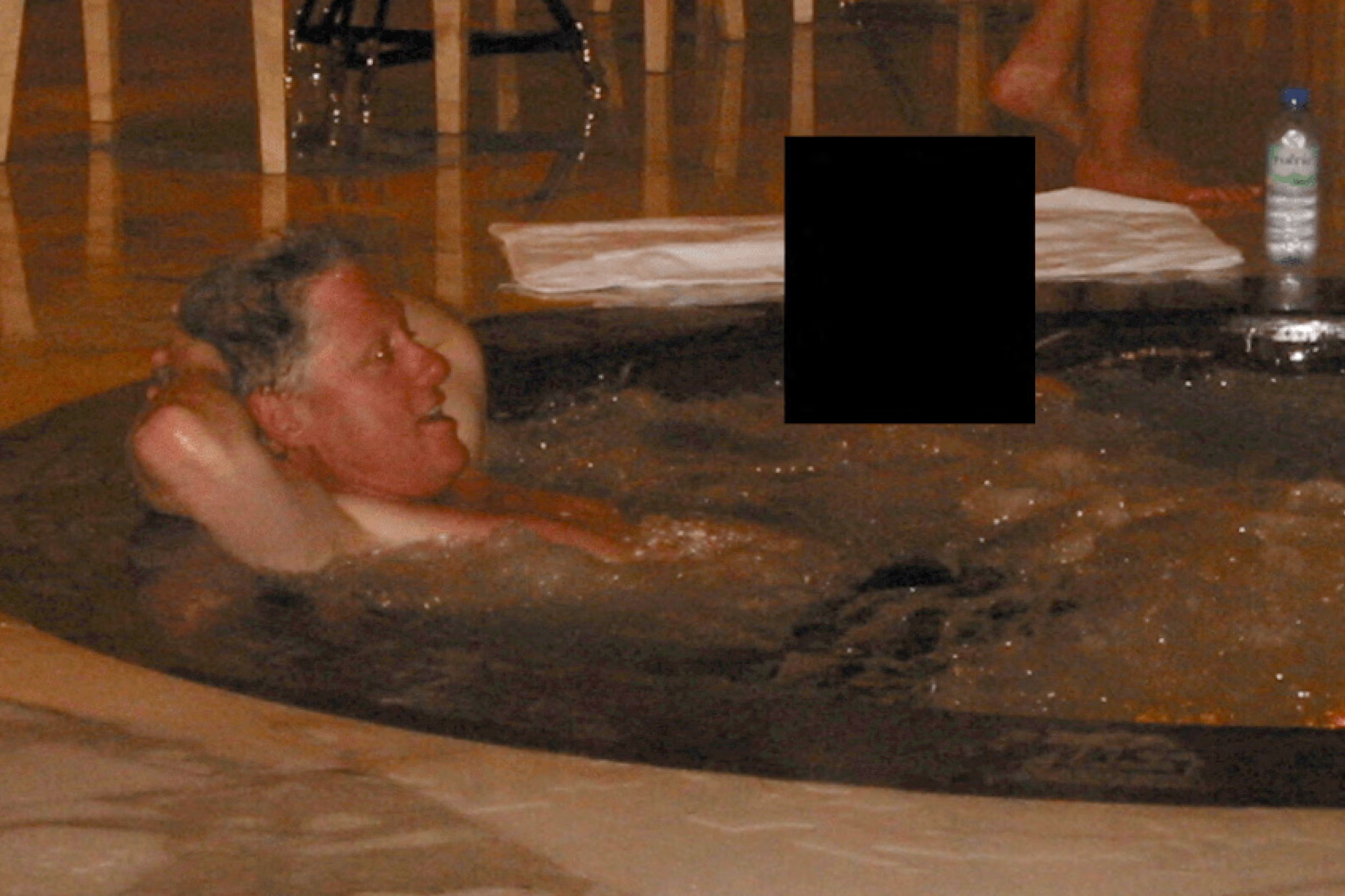
Former President Bill Clinton is captured in dozens of images, including in an undated photograph showing him lounging in a hot tub alongside someone whose face has been redacted, images that the White House immediately pounced on.
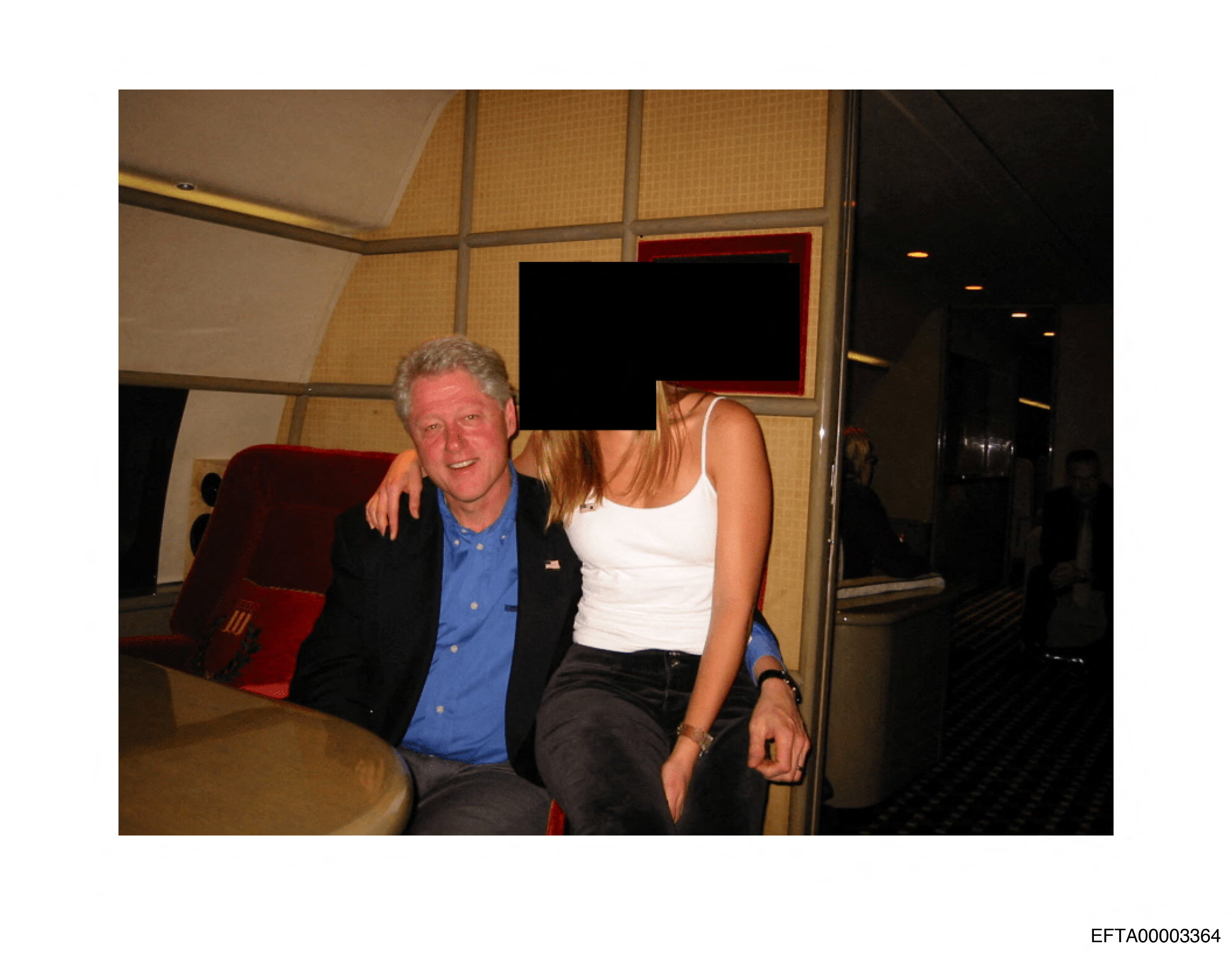
Clinton is also pictured on a private plane with a woman sitting on his lap. That woman’s face has also been redacted.
A painted portrait of Clinton in a blue dress, lounging in an armchair, also was photographed hanging in Epstein’s New York apartment.
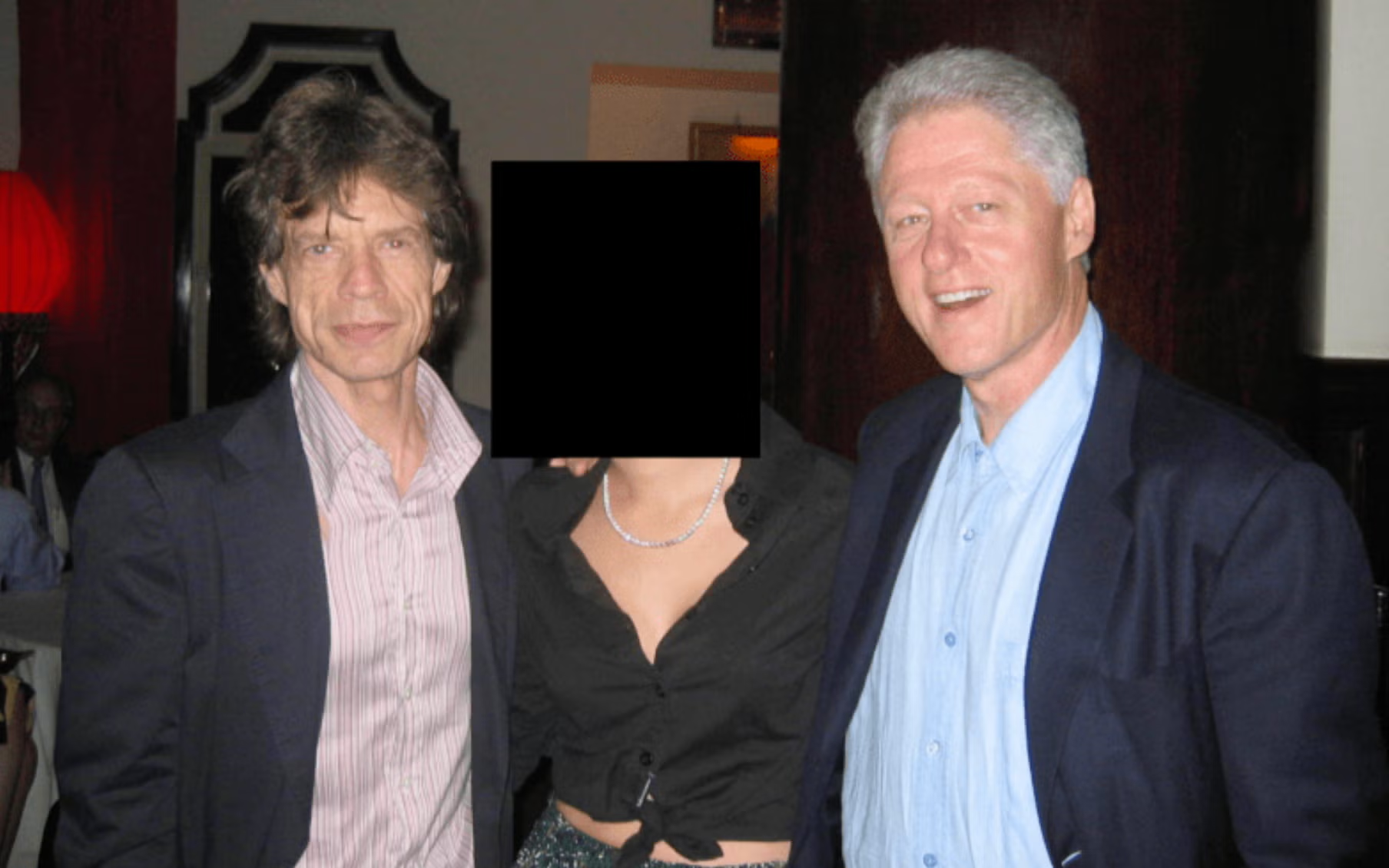
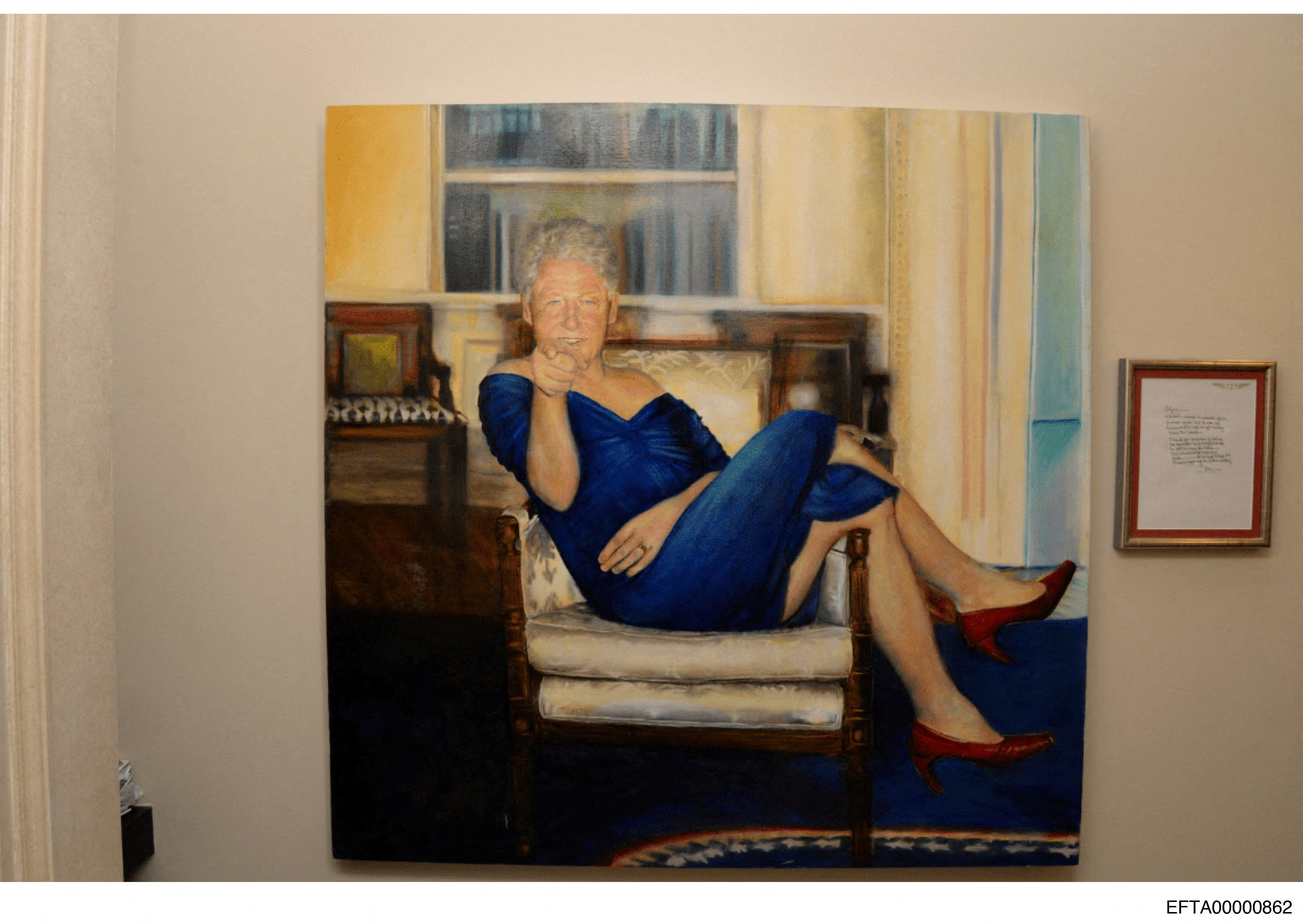
Clinton has never been accused of wrongdoing in connection with Epstein, and the mere inclusion of someone’s name or images in files does not imply otherwise.
“They can release as many grainy 20-plus-year-old photos as they want, but this isn’t about Bill Clinton. Never has, never will be,” Clinton’s deputy chief of staff Angel Ureña said in a statement.
“There are two types of people here. The first group knew nothing and cut Epstein off before his crimes came to light,” he added. “The second group continued relationships with him after. We’re in the first. No amount of stalling by people in the second group will change that.”
Heavy redactions and failed search functions
Under the recently passed transparency law, the Justice Department was required to publish the documents on a website and make them downloadable and searchable.
But the search function did not turn up any results for “Epstein,” let along other prominent names that appeared throughout.
The files also include investigative materials and grand jury documents from several cases against Epstein and Maxwell, including what appear to be interviews with victims, though a substantial portion of those documents are redacted.
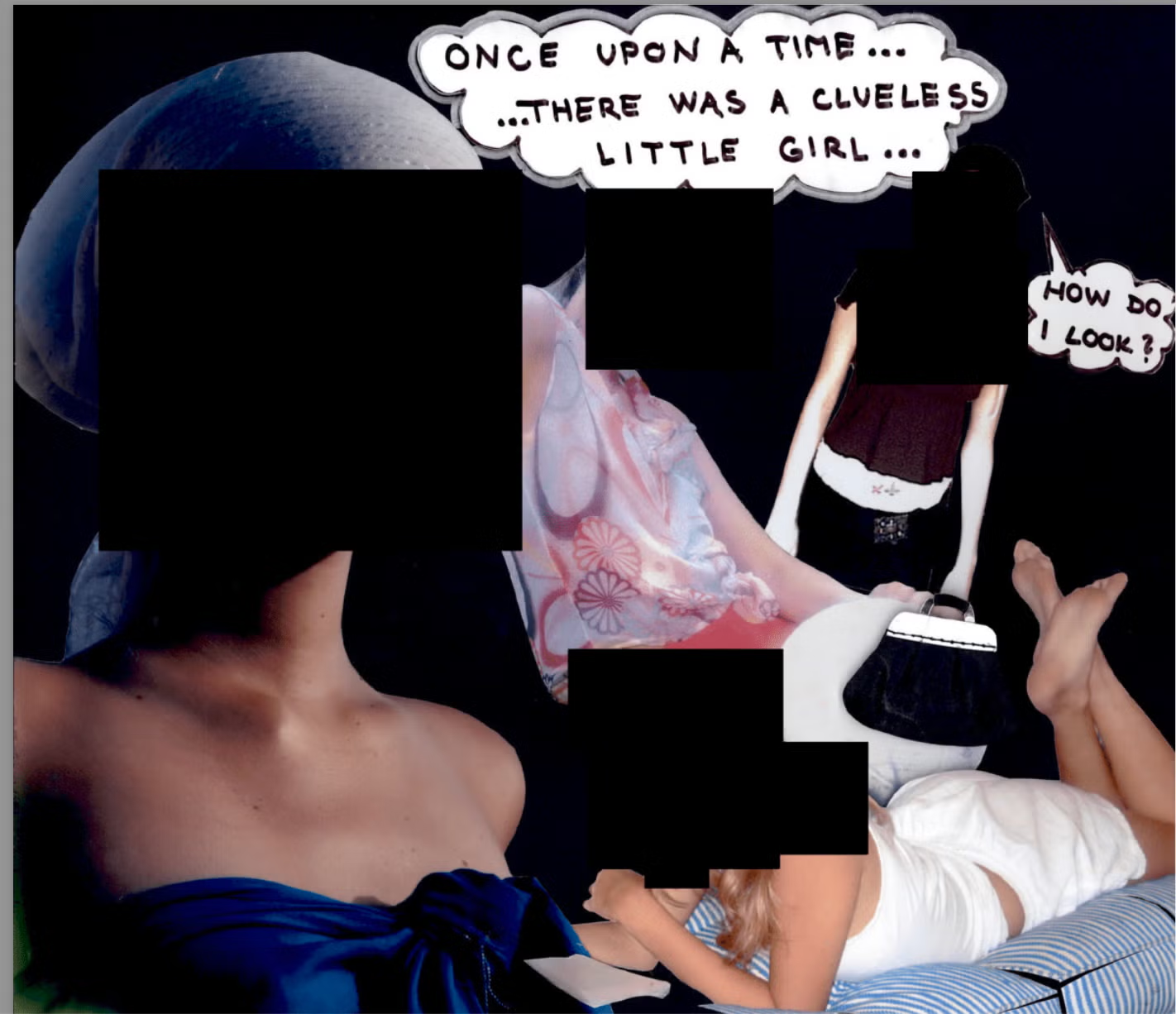
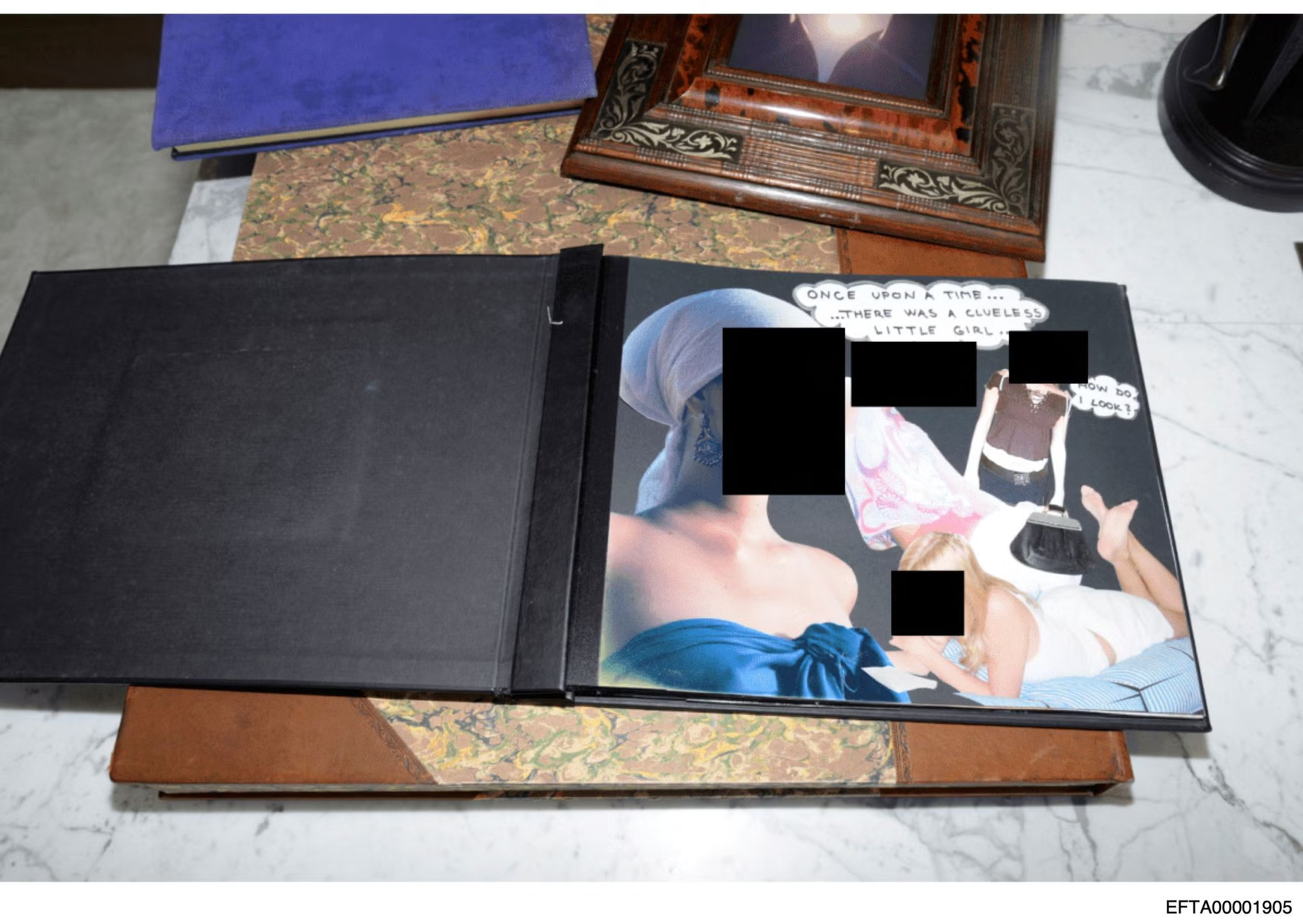
Those materials include what appear to be evidence folders featuring sex toys, pornography, underwear and rolls of film all collected as evidence by law enforcement in connection with criminal cases against Epstein.
Photographs feature topless and nude women whose faces are blacked out, as well as school portraits.
What appears to be a scrapbook-like anniversary card includes cut-up images of Epstein and a person whose face is redacted, with speech bubbles reading “once upon a time… there was a clueless little girl.”
Trump makes an appearance
Despite the administration’s attempts to distance the president from Epstein, Trump appears in a handful of photographs that have already been made public, including images of the president with his wife Melania alongside Epstein and Maxwell.
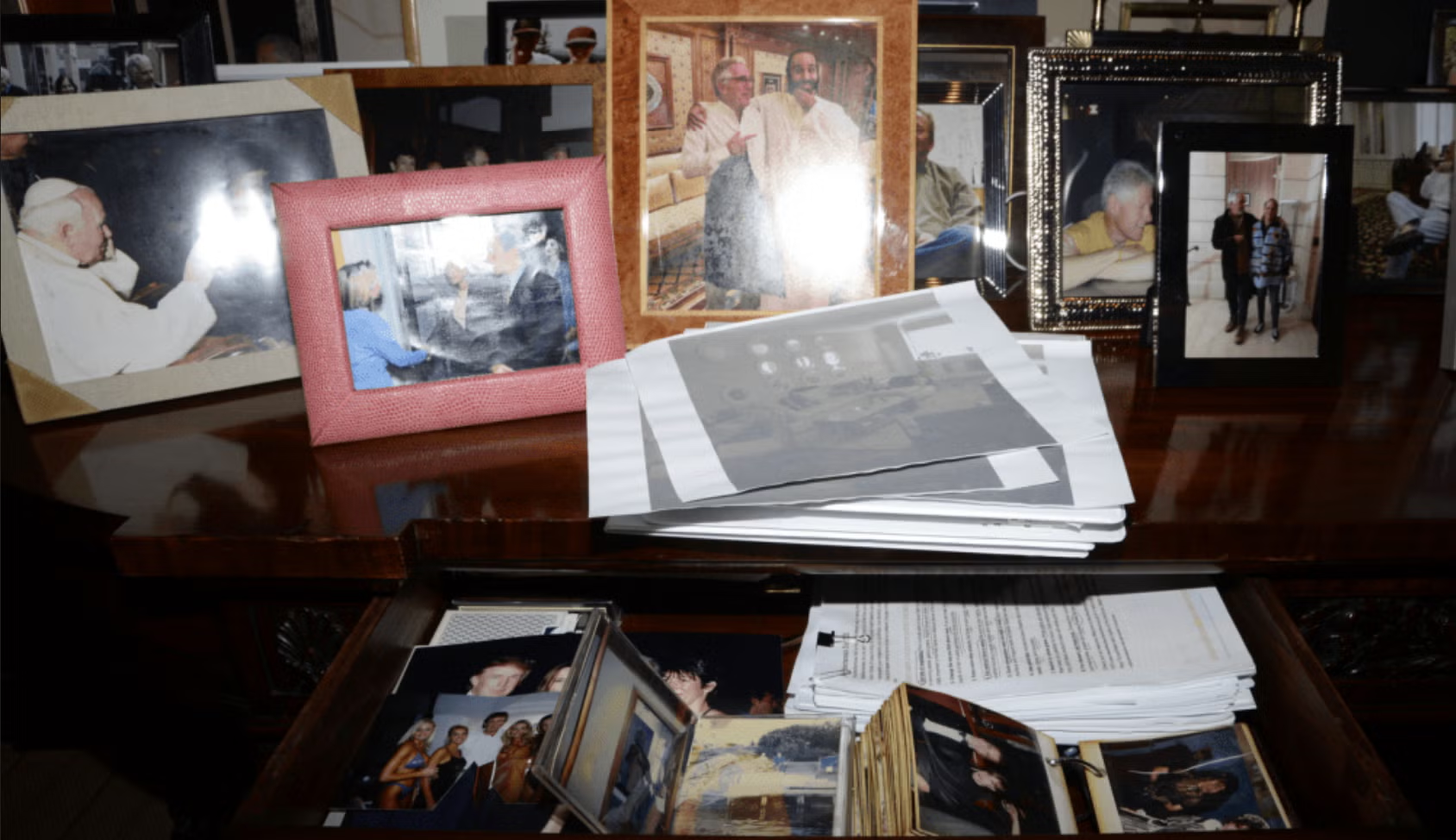
In one image, which was taken inside a desk drawer, Trump appeared to be pictured alongside a group of smiling women in a grainy photograph. The women’s identities are not redacted.
The White House has previously acknowledged that Trump appears in the documents, and his name appears dozens of times in emails released by members of Congress last month.
The president has not been accused of wrongdoing in connection with Epstein’s cases, and Trump has repeatedly claimed he cut ties with Epstein before he was under federal investigation.
White House defends partial release as Democrats demand ‘the truth’
Following the release of the documents, the White House claimed the Trump administration has “done more for the victims than Democrats ever have.”
Democratic Senate Minority Leader Chuck Schumer criticized the partial release, noting that the heavily redacted batch of documents reflects only a “fraction of the whole body of evidence.”
“Senate Democrats are working to assess the documents that have been released to determine what actions must be taken to hold the Trump administration accountable,” he said in a statement. “We will pursue every option to make sure the truth comes out.”
Democratic Rep. Ro Khanna, among House Democrats who pushed for the release of the full files, suggested that he believes the administration is “hiding things.”
“They have not been transparent, and that’s why that’s people’s biggest concern on this, that they’re hiding things,” he said.
Republican Rep. Thomas Massie, among a small group of House Republicans who pushed for the release, said the Justice Department has “grossly” failed to “comply with both the spirit and letter of the law” Trump signed last month.
Khanna said House Democrats could hold impeachment hearings for Attorney General Pam Bondi and her deputy Todd Blanche “if it comes to that.”

Maria Farmer, the first woman to file a criminal complaint against Epstein, said in a statement that she has “waited three decades, over half my life,” for this moment.
“When I was ignored and hung up on by the FBI in 1996, my world turned upside down and I felt frozen in time,” she said. “I faced death threats, ridicule and mockery by some of the most powerful people on earth.”
She said she is hopeful she can “pick up where I left off at age 26.”
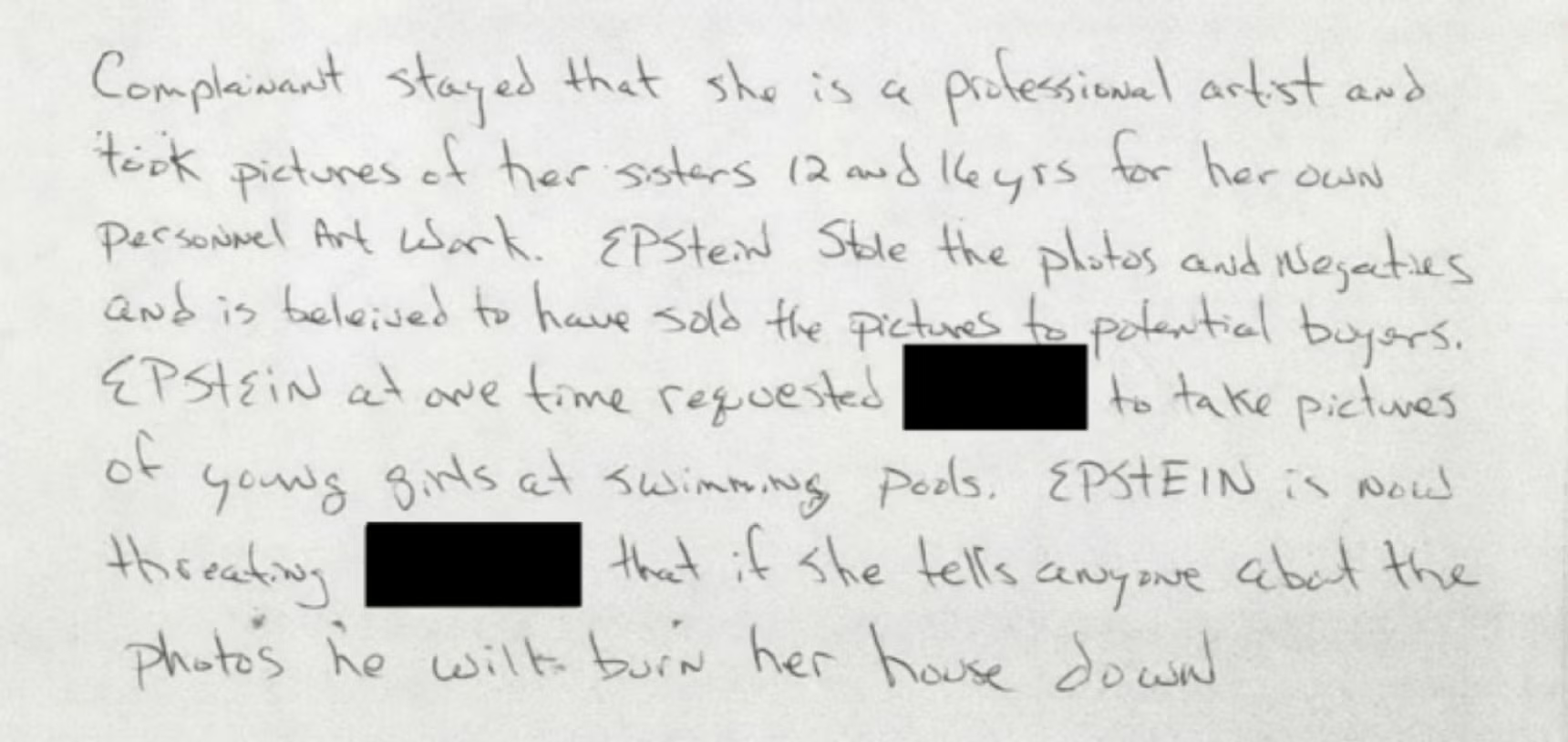
Farmer’s name is redacted, but a complaint from 1996 appears in the files released Friday, claiming that Epstein stole nude images of her and her sister, then ages 16 and 12.
The report also claims Epstein had her take pictures of young girls at swimming pools and threatened to “burn her house down” if she told anyone.
Farmer now hopes the release of the documents is an “important step for many of the survivors and to hold the government accountable for their grotesque law enforcement failure, one of the largest in U.S. history.”
For more than a decade, Epstein and Maxwell worked together to recruit young girls and entice them to travel to Epstein’s properties, according to federal prosecutors.
During a monthlong trial in 2021, survivors testified in Manhattan federal court that Maxwell had groomed them, taken their passports, and sexually abused them. She is serving a 20-year prison sentence for crimes associated with Epstein’s decades-long scheme.
Epstein pleaded guilty to state charges of solicitation of prostitution and of solicitation of prostitution with a minor under the age of 18 as part of controversial agreement to avoid a federal case in 2008. He was released after serving less than 13 months in state prison.
A decade later, in 2019, Epstein was found fead in his jail cell in Manhattan while awaiting trial on federal trafficking charges. He was 66 years old.