Grandmother jailed for 6 months after AI error linked her to a crime in a state she had never even visited, lawyers say

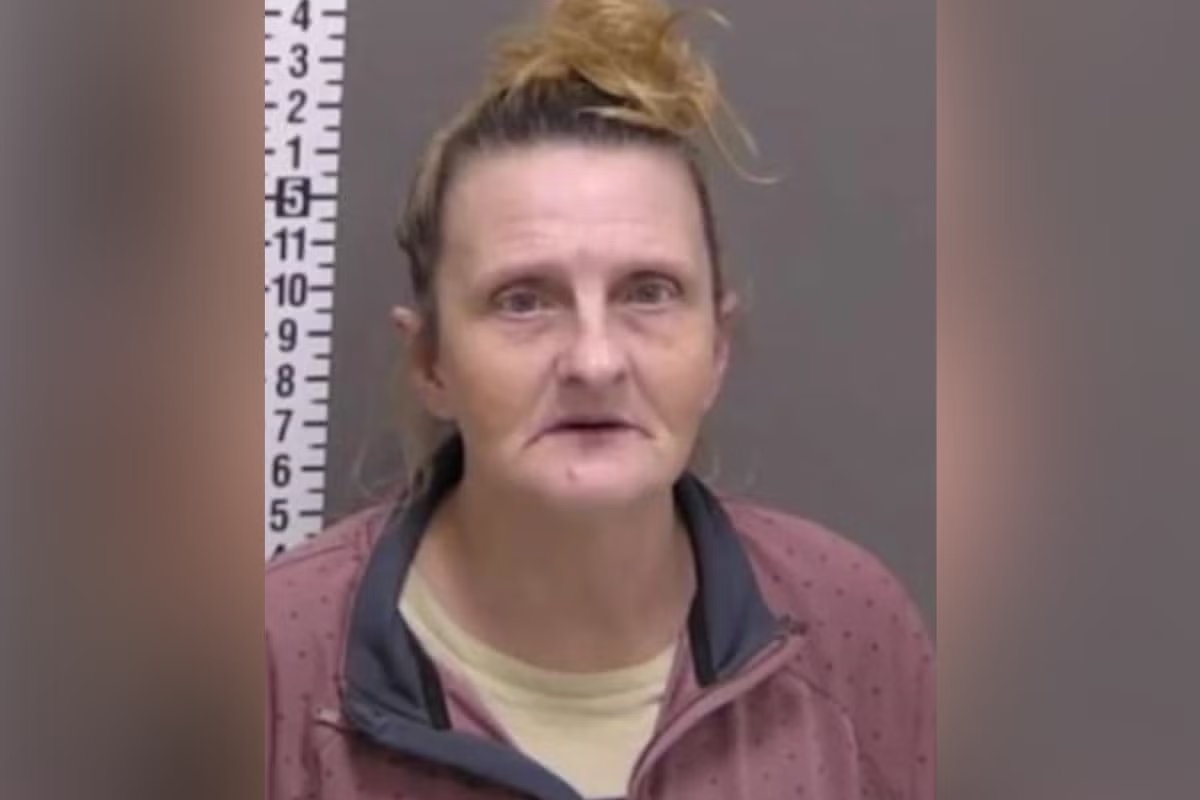
A Tennessee grandmother spent nearly six months behind bars after artificial intelligence facial recognition software wrongly identified her as a suspect in a bank fraud case – in North Dakota – a state she says she had never even visited.
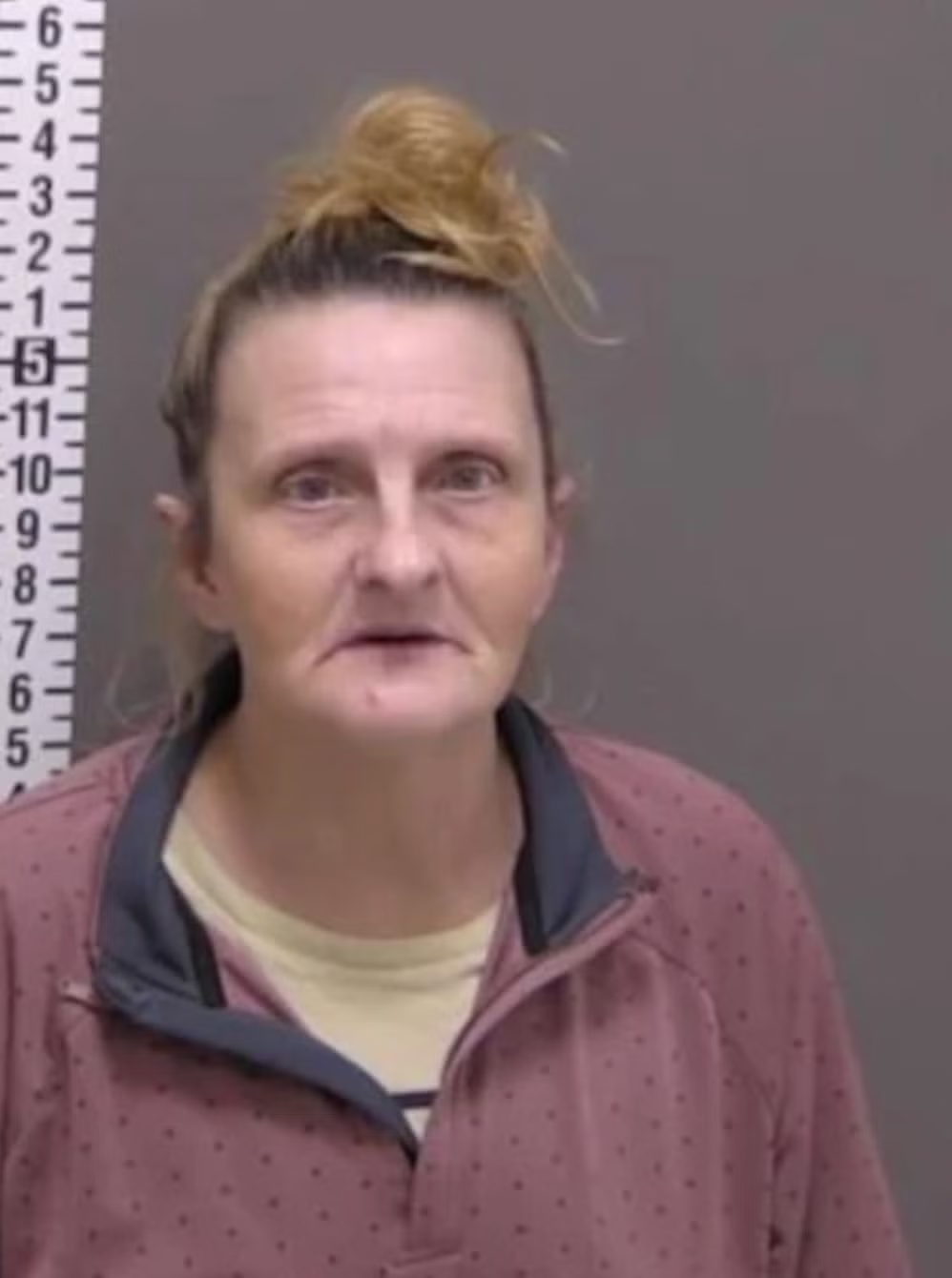
Angela Lipps, 50, was arrested at her home last summer and extradited more than 1,200 miles to Fargo to face criminal charges tied to what police described as an organized fraud scheme.
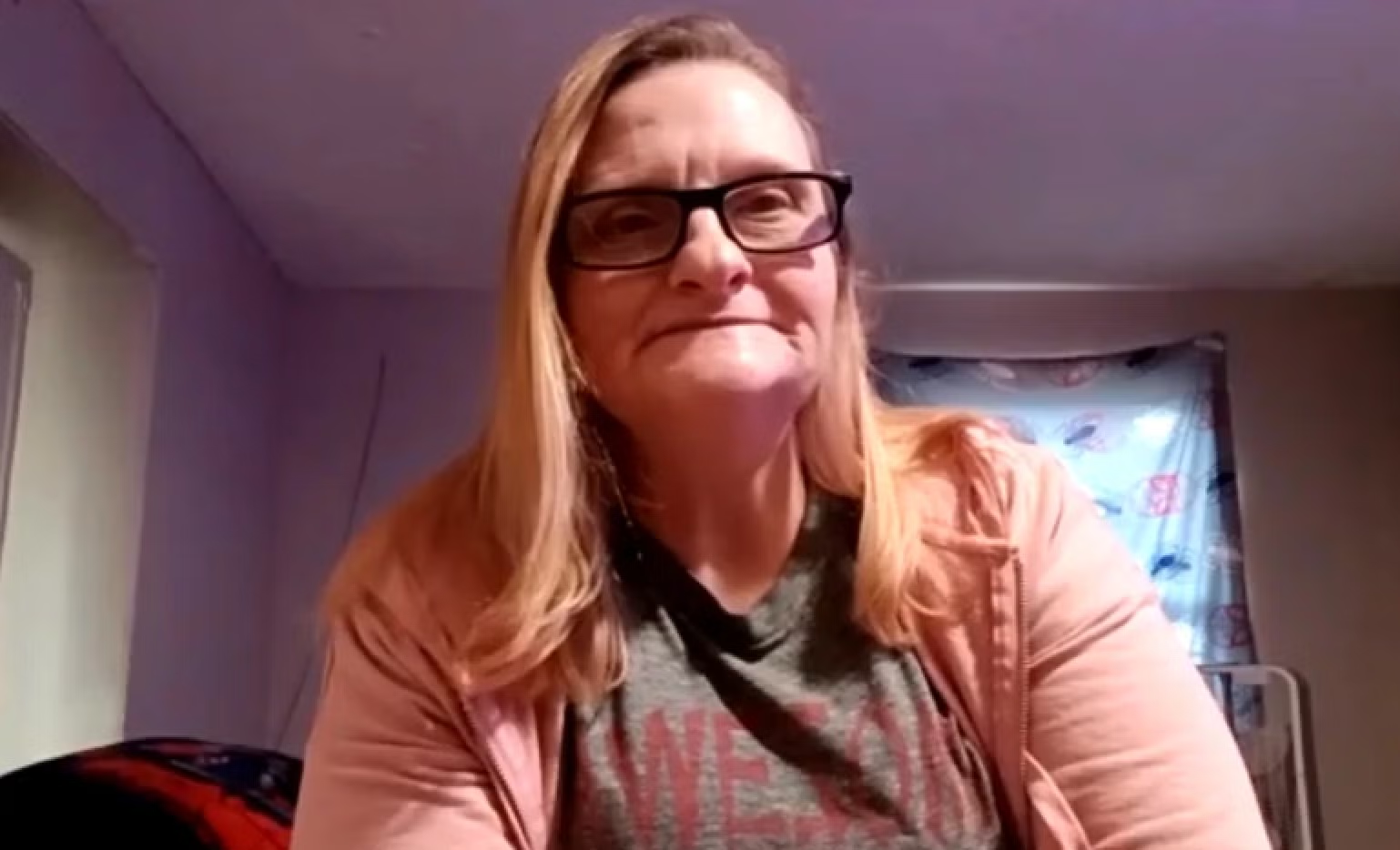
“It was so scary, I can still see it in my head, over and over again,” Lipps told WDAY News.
Authorities later dismissed the case after bank records showed she was in Tennessee at the time the crimes were allegedly committed.
But by then, she had spent nearly six months in jail and because she was unable to pay bills while behind bars, she lost her home, her car and her dog.
Lipps, a grandmother of five, said the entire ordeal upended her life.
She was babysitting four children on July 14 when a team of U.S. Marshals arrested her at gunpoint. She was booked into her local county jail as a fugitive from justice in North Dakota.
But Lipps says she had never been to North Dakota, or even on an airplane. Her travel was limited to neighboring states within driving distance.
“I’ve never been to North Dakota, I don’t know anyone from North Dakota,” Lipps said.
Lipps remained in a Tennessee jail for nearly four months while extradition proceedings played out. Because she was classified as a fugitive, she was held without bail.
During that time, she learned North Dakota authorities had charged her with four counts of unauthorized use of personal identifying information and four counts of theft. To challenge the charges, she would have to travel to North Dakota.
According to documents obtained by WDAY News, the investigation began in April and May 2025 as detectives were investigating multiple bank fraud incidents. Surveillance footage showed a woman using a fake U.S. Army military ID to withdraw tens of thousands of dollars from bank accounts.
To identify the suspect, Fargo police ran the surveillance images through facial recognition software. The system returned a match: Angela Lipps. Court documents show the detective working the case then reviewed Lipps’ social media accounts and Tennessee driver’s license photo.
The detective wrote in the documents that Lipps appeared to match the suspect based on facial features, body type, hairstyle and hair color. Lipps told WDAY that investigators in Fargo never contacted her before seeking charges.
Lipps was picked up from the Tennessee jail on October 30, 108 days after her arrest. The next day, she appeared in a North Dakota courtroom for the first time.
Her appointed attorney, Jay Greenwood, obtained Lipps’ financial records, which showed, he said, that she was more than 1,200 miles away in Tennessee during the alleged crimes.
“Around the same time she’s depositing Social Security checks … she is buying cigarettes at a gas station, around the same time, she is buying a pizza, she is using a cash app to buy an Uber Eats,” Greenwood said.
On December 19, Fargo police interviewed her for the first time at the Cass County Jail. Five days later, on Christmas Eve, prosecutors dismissed the case and Lipps was released. But it left Lipps stranded in Fargo in the middle of winter.
“I had my summer clothes on, no coat, it was so cold outside, snow on the ground, scared, I wanted out, but I didn’t know what I was going to do, how I was going to get home,” Lipps said.
Local defense attorneys stepped in to help, giving Lipps money for a hotel room and food for the holidays. Adam Martin, founder of the Fargo-based F5 Project, then drove Lipps to Chicago so she could travel home to Tennessee.
Lipps said she still feels the damage from the incident and claims no one from the Fargo Police Department has apologized.
“I’m just glad it’s over. I’ll never go back to North Dakota,” Lipps said.
Fargo police say the bank fraud investigation remains open and no arrests have been made.
Lipps’ arrest is the eighth documented wrongful arrest in the United States tied to facial recognition, according to IBS Times. Without additional verification, critics warn, a single algorithmic match can have life-altering consequences.