She is serving life for killing a baby by giving him cow’s milk. Her parole was denied by a single vote

Nie’John Woods still remembers the day his family changed forever.
In the weeks and months after Hurricane Katrina battered New Orleans in 2005, the Woods family was just struggling to survive when another tragedy struck. Nie’John watched his mother break down in tears as she knelt over his unresponsive baby brother, after feeding her child, desperately pumping the infant’s chest and breathing into his tiny body, trying to bring him back to life.
Nearly two decades later, he watched his mother break down again as a Louisiana parole board denied her request for release from prison.
“I was shocked and angry,” he said after watching the hearing over Zoom last month.
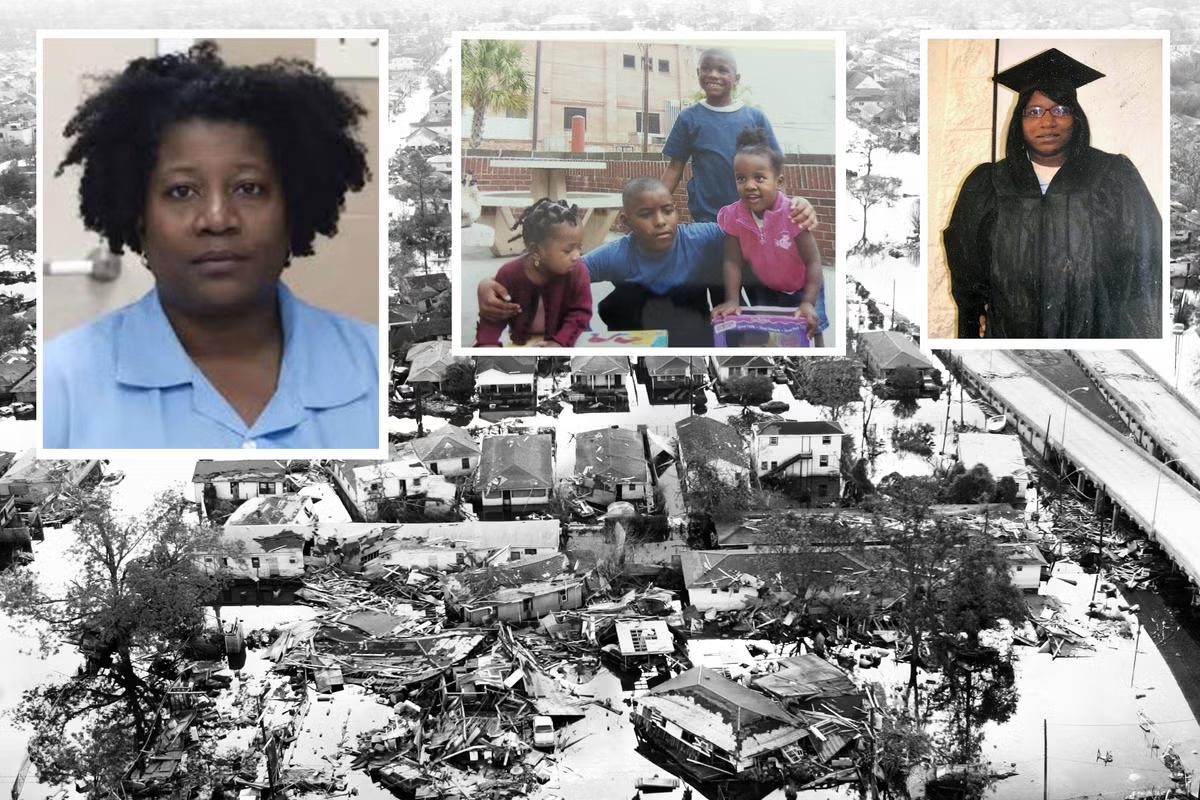
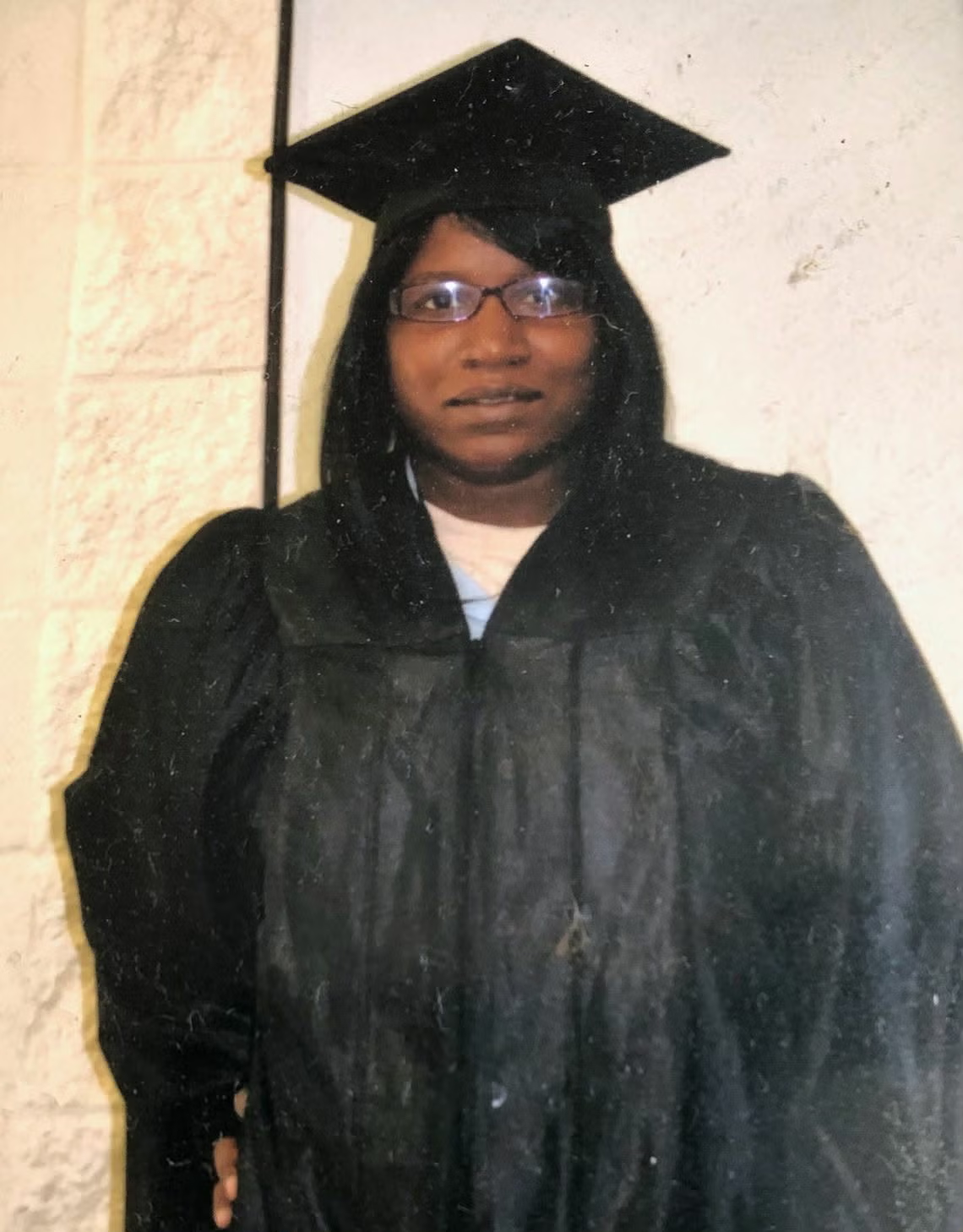
Tiffany Woods, now 46, has spent nearly 20 years incarcerated for the death of her five-month-old son, Emmanuel, who died of malnutrition after the storm devastated the city and its supply chains.
In February, Woods appeared before the Louisiana Board of Pardons and Parole hoping the hearing would focus on the person she has become after nearly two decades behind bars. Instead, her oldest son said, it felt like the past was on trial again.
“I went into the parole hearing thinking that parole hearings are conducted to of course determine if an incarcerated person poses a risk to public safety if released from prison,” Nie’John said. “And to assess her readiness to enter society as a law abiding citizen.”
“But the DA opposition was focused on the past,” he concluded.
A death during Katrina
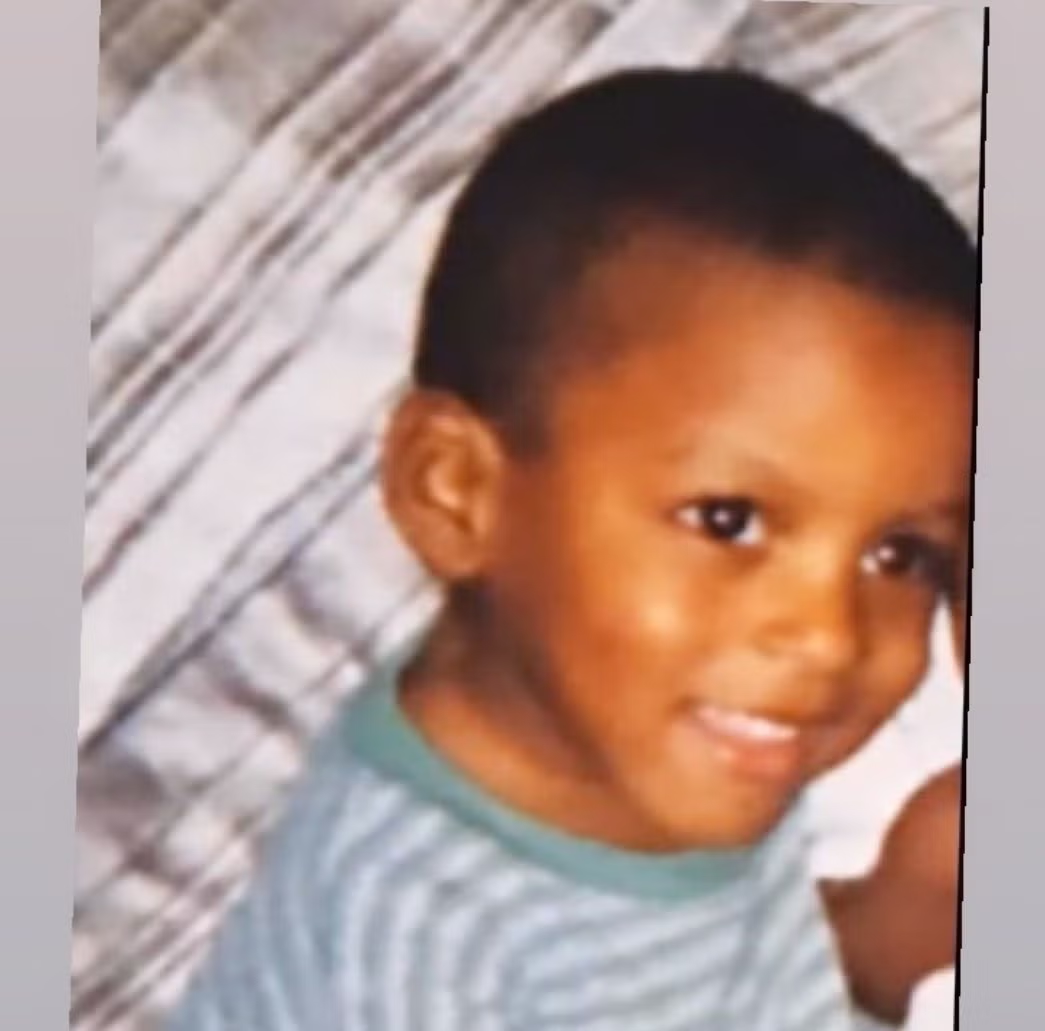
Baby Emmanuel was born prematurely in 2005 and released from Tulane Hospital just two weeks before Hurricane Katrina tore through New Orleans, forcing the evacuation of roughly 500,000 people and crippling access to food, medicine and baby supplies.
During the parole hearing, Tiffany Woods described the chaotic weeks that followed.
She testified that after drinking formula, Emmanuel would “throw up in large amounts.” When she ran out of government vouchers that provide infant formula for low-income families, she made what she later described as a devastating decision – she diluted cow’s milk with water and fed it to the baby.
“He was no longer throwing up” the way he did while taking the formula, she said during the hearing.
A baby under the age of one year should not be given cow’s milk, according to the American Academy of Pediatrics. This is because it doesn’t provide enough nutrients an infant needs, and it can be hard for some babies to digest the protein and fat in cow’s milk, causing belly pain, vomiting and diarrhea.
When baby Emmanuel was born, he tested positive for a metabolic deficiency, which makes the body unable to break down certain fats, according to The Marshall Project. A follow-up was scheduled for August 29 – the day after New Orleans Mayor Ray Nagin issued an evacuation order, and they never made the appointment.
Woods admitted she was in survival mode and did not know what else to do to feed the child in the confusion of the evacuation.
The baby died from malnutrition in November 2005, according to autopsy results. In 2008, Tiffany Woods and the baby’s father Emmanuel Scott were convicted of second-degree murder and sentenced to life in prison. A second-degree murder charge doesn’t require proof that anyone intended to harm him.
Brady O’Callaghan, who prosecuted the case, argued that the baby’s parents should have tried to get help.
“Ms. Woods and Mr. Scott had the complete custody and care of this child,” he said. “And they watched it die of starvation and dehydration in a city that at that time was doing everything it could to reach out to evacuees and in a place where medical care is available to anyone who needs it.”
In 2023, Tiffany Woods’ sentence was reduced to 32 years, making her eligible for parole in 2026.
A hearing focused on the past
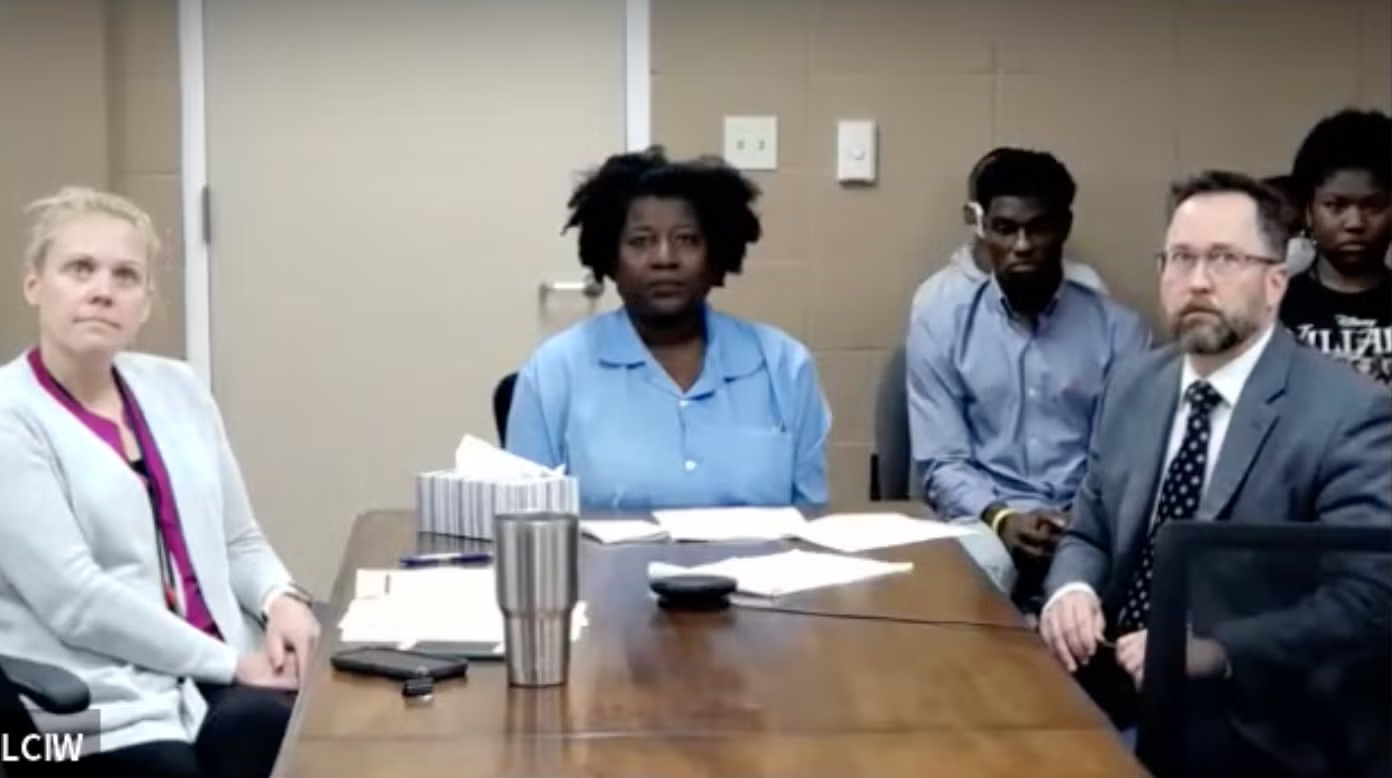
During the February 10 parole hearing, several prison officials and supporters testified on Woods’ behalf, painting a picture of an inmate who had spent nearly two decades working to rehabilitate herself.
While incarcerated at the Louisiana Correctional Institute for Women, Woods completed seminary training and Blackstone Career Education courses for inmates studying paralegal work. She mentors and counsels other incarcerated women and has no disciplinary record.
Kristen Thomas, the prison’s warden, told the board, “She is not a disciplinary problem. We don’t have any issues with Tiffany. The entire time that I’ve been here with her. She is low risk and low needs.”
Nie’John believed that was the point of parole – to find people who have been rehabilitated. Instead, he said, the hearing turned back to the crime itself.
Leone Fitzgerald, director of the Caddo Parish District Attorney’s Victim Assistance Program, who was representing the state, portrayed Woods as a mother who had options but chose neglect.
She argued against Woods’ release as she presented heartbreaking photos of a malnourished baby Emmanuel from 2005.
Fitzgerald also said her office was “getting a little tired of hearing about that (Hurricane Katrina) because, while we don’t undermine that, I know it had to be chaotic and stressful and unprecedented, but it wasn’t a reason for Miss Woods to not feed her baby,” she told the board.
While two of the board members voted for Woods to be granted parole, the third, who voted against parole, praised her progress but said she was ultimately swayed by images presented as evidence. Without an unanimous decision required for release, Woods would remain behind bars.
“Well, I went in there thinking she only needed two out of three votes, but turns out she needed a unanimous agreement in order to be accepted for parole,” Nie’John told The Independent after the decision. “So I am a bit shocked and angry because one of the parole board members changed her vote based on photos of my dead brother and the DA’s opposition, of course.”
To him, the hearing felt less like a review of rehabilitation and more like a retrial.
“Like the point of the parole hearing and the point of prison is when a person successfully do those things. You still look at what happened in 2005,” he said. “It’s almost as if, in my opinion, you’re being retried in a way. Or at least you’re ignoring all the progress or you’re choosing to ignore the progress.”
A family torn apart
Nie’John was just eight years old when his baby brother died and he remembers his mother calling 911.
“So it wasn’t as if she just stood there and waited for them to show up,” he said. “She was trying to bring him back to life. Pumping his heart and trying to breathe life into him.”
After Tiffany Woods’ arrest, their family fractured. Nie’John and his younger brother Troy’John were placed together in a foster home, while sisters Nyla and Elisha were placed in another home. The siblings cycled through foster care and relatives’ houses.
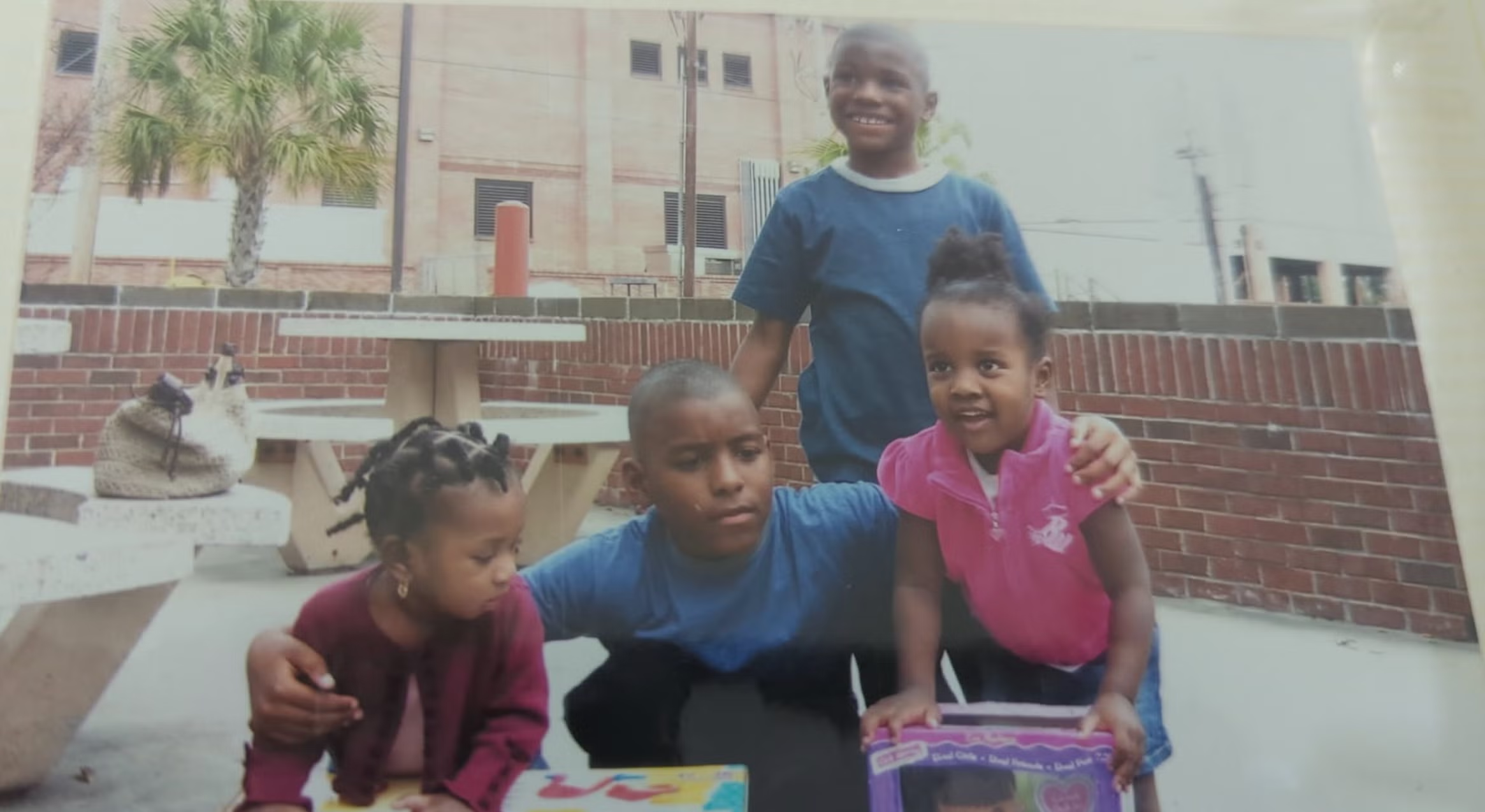
“So, yeah, the family was completely broken apart, and the state didn’t make sure we stayed together as siblings,” he said.
“They painted it as if they’re doing justice for the family in regards to the death of my baby brother, but I feel like the least they could have done was make sure the remaining living siblings were together, you know.”
‘She is not the same person’
Now an adult, Nie’John has served in the Air Force and lives in California. He had hoped his mother’s release would allow him to return to Louisiana and reunite their family.
“I know we all lost something that day,” he said. “I lost a brother, she lost a son. We were put in foster care. So much happened to us because of this. Our family was shattered.”
Instead, Nie’John watched his mother collapse emotionally during the hearing as she spoke about Emmanuel.
“She couldn’t even speak and she was very remorseful,” he said. “And you could see the defeat once she didn’t receive all three votes.”
After the hearing ended, he called her.
“She feels defeated,” he said. “It was kind of heartbreaking. She’s devastated. She was saying that she doesn’t want to go through that again. She can’t take it.”


Nie’John believes his mother has changed and that she should be given another chance.
“The point of prison, I thought, was to, in a way, rehabilitate you. And I believe she was. I believe she was successfully rehabilitated,” he said, “and I think my mom’s character was proven too. That she’s changed because the person she is today is not the same person she was in 2005.
“I mean, even as humans, free humans, I’m not the same person that was in 2005,” he added. “We change for either the better, the worse, but in this case, she changed for the better.”
For now, though, better wasn’t enough and Tiffany Woods remains behind bars.
But her son says he’s still trying to hold onto hope – for both of them.