
Messiah Hampton Arrested: Oregon Freshman WR Faces Eluding Police Charges
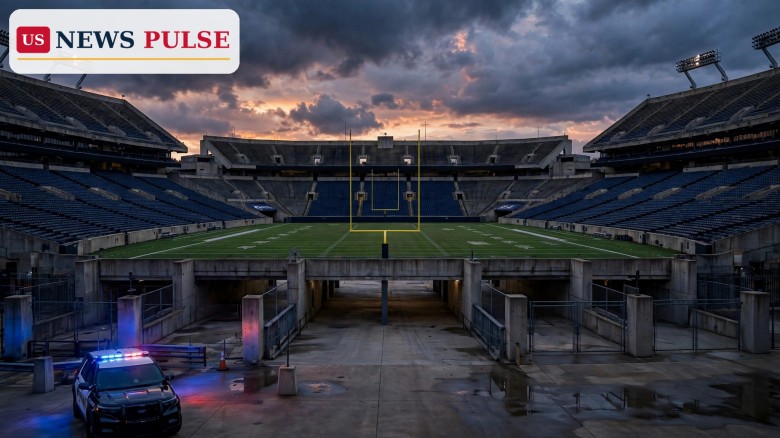
Oregon Ducks freshman wide receiver Messiah Hampton was arrested and booked into the Lane County Jail on charges of reckless driving and eluding police, the Springfield Police Department confirmed on Friday night, in a case that traces back to a high-speed chase in the early hours after Oregon beat Nebraska at Autzen Stadium. The arrest, first reported by The Oregonian/OregonLive, immediately ruled Hampton out of Saturday's game against Northwestern and added a fresh off-field headache for a Ducks programme already navigating a difficult stretch of its season.
Hampton, a first-year receiver for Oregon, was released from jail on Friday evening at 7:22 p.m. Pacific time, according to jail records cited by Ducks Wire. The charges relate to an incident on October 18 in Springfield, when officers pursued two vehicles in the early morning hours and then called the pursuit off for safety reasons. Police have identified Hampton as the driver of one of those vehicles, while the driver of the second vehicle has not yet been identified.
Key Points
- Oregon freshman wide receiver Messiah Hampton was arrested on charges of reckless driving and eluding police and booked into the Lane County Jail.
- The charges stem from a high-speed chase in Springfield in the early morning hours of October 18, after Oregon's win over Nebraska at Autzen Stadium.
- Springfield police pursued two vehicles but abandoned the chase for safety reasons; one vehicle was later found abandoned.
- Hampton was released from jail on Friday night at 7:22 p.m. PT and is listed as out for Saturday's game against Northwestern.
- Teammates Evan Stewart and Jamari Johnson were also dealt with by police that night, but neither is believed to be a suspect in the Hampton case.
What Happened
According to the Springfield Police Department, officers pursued two vehicles during the early hours of October 18. The pursuit did not last long: officers abandoned it for safety reasons, a decision departments routinely make when a chase through populated streets begins to pose more danger than the stop is worth. One of the vehicles involved was later found abandoned, near the area where Oregon wide receiver Evan Stewart was subsequently arrested and charged with driving under the influence of intoxicants.
Police have been careful to separate the two matters. Stewart, they said, is not believed to be a suspect in the Hampton case, and the abandoned vehicle is not being treated as part of Stewart's separate arrest. Another Oregon player, tight end Jamari Johnson, was cited for speeding on the same night, and police likewise said he is not believed to be a suspect in the pursuit case.
The arrest itself came almost two weeks after the chase. Hampton was booked into the Lane County Jail on Friday, October 30, and released the same evening. Jail records and a police confirmation established the charges as reckless driving and eluding police, both of which, in Oregon, can carry serious consequences depending on the circumstances and on any prior record, though no charging document detailing the precise allegations has been made public in the initial reporting.
Hampton's status for Saturday changed at the same time the news broke. He was a late addition to the Big Ten Availability Report on Friday night, listed as out for the Northwestern game. It was the second week in a row that Hampton had appeared on the report on a Friday night and been ruled out, a pattern that had already raised questions before the reason became public.
Background/Context
The timing of the arrest, on the eve of a conference game, is what turned a police matter into a football story. Under Big Ten rules, schools must publish availability reports in the days before a game, with a final update on Friday night, so Hampton's late listing as out was visible to fans, bettors and opponents alike before the arrest was reported. The report itself gives no reason for a player's absence, which is why the Friday-night addition drew attention without explaining it.
Hampton is a freshman wide receiver, still early in his college career, and the Ducks' receiving room has already been under strain. Stewart, one of the unit's most experienced names, is dealing with his own separate legal matter after his DUII arrest, and the programme has spent much of October managing absences. Earlier in the month, Oregon also lost star quarterback Dante Moore for the rest of the season to a concussion, a blow that reshaped the offence and put more pressure on every remaining skill player.
The October 18 date matters for another reason. It was the night Oregon beat Nebraska at Autzen Stadium in Eugene, and the chase unfolded in neighbouring Springfield in the hours after the game, when celebrations and traffic around the stadium area were at their peak. Police have not said what prompted officers to attempt to stop the vehicles in the first place, nor how fast they were travelling, and those details may only emerge if a charging document or police report is released.
High-speed pursuits have become a sensitive subject for police departments across the United States, with many agencies tightening their pursuit policies in recent years after crashes that injured bystanders. Springfield officers' decision to abandon this pursuit for safety reasons fits that broader pattern, and it also means the investigation leaned heavily on follow-up work — identifying vehicles, drivers and evidence after the fact — rather than an arrest at the roadside.
Messiah Hampton Arrested: What the Charges Mean
Reckless driving and eluding police are distinct charges, and together they describe a specific sequence: driving alleged to have endangered others, followed by a failure to stop when officers tried to intervene. An arrest, however, is not a conviction. Hampton is presumed innocent unless and until the charges are proven, and the case will now move through the normal court process, where prosecutors will decide what, if anything, to file formally and a judge will set the next dates.
For the university, the more immediate question is disciplinary rather than legal. College programmes typically handle arrests by their players through a combination of team rules and university conduct processes, and those decisions do not always wait for the courts. As of Friday night, the University of Oregon had not responded to a request for comment from Ducks Wire, and no team statement about Hampton's status beyond the availability report had been published.
That silence is not unusual in the first hours of a breaking story, when schools are still verifying facts and speaking to the player, his family and their own compliance staff. But it leaves the most pressing football question unanswered for now: whether Hampton faces a team suspension that extends beyond Saturday's game, or whether his absence against Northwestern is simply the practical consequence of a Friday-night arrest and jail booking.
Reactions/Quotes
Springfield Police Deputy Chief George Crolly confirmed the key facts to The Oregonian, saying: “Mr. Hampton has been identified as the driver of one of the vehicles. We are still working to identify the driver of the other vehicle.” The statement draws a clear line around what police know and what they do not, and it leaves open the possibility of further arrests as the investigation continues.
Police also moved quickly to prevent the night's separate incidents from being conflated. According to the department, Stewart is not believed to be a suspect in the Hampton case, and Johnson, despite his speeding citation that night, is not believed to be a suspect either. Those clarifications matter for all three players, because early social-media speculation after a game night can easily merge unrelated police contacts into a single story.
No statement had been issued by the University of Oregon at the time the arrest was first reported, and Ducks Wire said it had reached out to the university for comment without yet receiving a response. Hampton himself has not made a public statement, and no attorney for him had been identified in the initial reporting.
Why It Matters
For Oregon, the arrest is a compounding problem rather than an isolated one. A programme that has already lost its starting quarterback for the season and is managing absences in its receiving corps now loses a freshman receiver for at least a game, on the eve of a conference fixture it needs to win. Depth at wide receiver is built over years of recruiting, but it can thin quickly when injuries, suspensions and legal matters arrive together.
For Hampton personally, the stakes are higher than one missed game. A freshman year is when a young player establishes trust with coaches, learns a playbook and earns a role; an arrest in October, with the season still running, interrupts all of that at the worst possible moment. How the university and the coaching staff handle the next few days — support, discipline and clarity about expectations — will shape whether this becomes a brief setback or a defining episode of his early career.
More broadly, the case is a reminder of how quickly a celebratory night after a big home win can turn serious. College towns on game nights mix large crowds, late hours and young drivers, and police departments plan for exactly that combination. The Springfield pursuit, abandoned for safety, and the arrests that followed it show both sides of that policing challenge: the need to intervene, and the need to know when to stop chasing.
What Happens Next
Oregon plays Northwestern on Saturday without Hampton, and the next update on his status is likely to come from the university or the coaching staff rather than from the availability report alone. A team statement, if one comes, should clarify whether he is suspended, whether he will practise next week, and what conditions apply to his return.
In the legal process, the next steps will be an arraignment or first court appearance, at which the formal charges, if filed, will be read and a plea entered. Police have also said they are still working to identify the driver of the second vehicle, so further developments in the underlying chase investigation are possible even if Hampton's own case moves on its own track.
The university's response, when it comes, will also be watched for tone. Programmes across college football have faced criticism both for moving too slowly on player arrests and for rushing to judgment before the facts are known. Oregon's handling of Hampton's case, alongside the separate Stewart matter, will be read as a statement about the programme's standards in a season when off-field discipline has become part of the story.
Frequently Asked Questions
Why was Messiah Hampton arrested? Hampton was arrested on charges of reckless driving and eluding police, stemming from a high-speed chase in Springfield on October 18 in the early hours after Oregon beat Nebraska at Autzen Stadium.
Is Messiah Hampton playing against Northwestern? No. Hampton was listed as out on the Big Ten Availability Report on Friday night, hours after his arrest was confirmed, and will miss Saturday's game against the Wildcats.
Was Evan Stewart involved in the same case? No. Springfield police said Stewart, who was arrested separately and charged with DUII, is not believed to be a suspect in the Hampton case, and tight end Jamari Johnson, cited for speeding that night, is also not believed to be a suspect.
Has the University of Oregon commented? Not at the time the arrest was first reported. Ducks Wire said it had reached out to the university for comment and had not yet received a response.
What happens next for Hampton? His case will proceed through the court process, starting with a formal charging decision and a first court appearance, while Oregon decides separately on any team discipline beyond his absence against Northwestern.
Related coverage on US News Pulse: Dante Moore out for the season as Oregon's star quarterback concussion ends his 2026 campaign, Stephen Curry's perfect night powers the Warriors past the Nuggets, and Brewers rout the Rays 10-1 in World Series Game 3.
© 2026 US News Pulse. All rights reserved.
 Print
 Save