
Judge Orders Trump Ads Pulled From TV, Social Media Before Midterms in Ruling
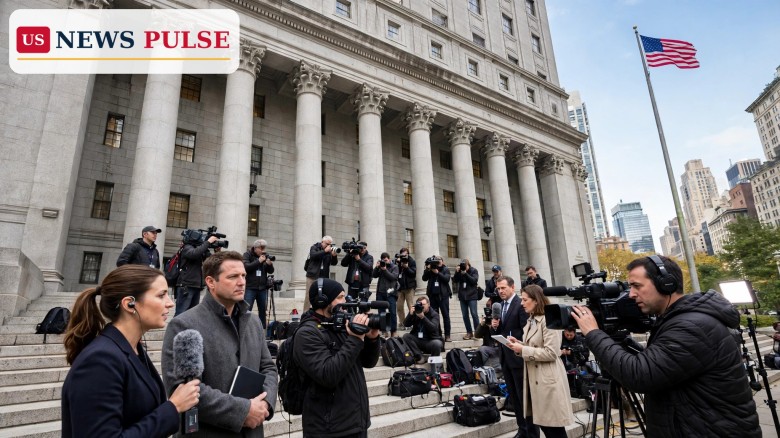
Trump ads pulled from television and social media became the latest courtroom flashpoint of the 2026 midterm campaign on Friday, October 30, 2026, when a federal judge in New York ordered the government to take down three taxpayer-funded Trump administration advertisements that she said appear to have been made for political or propaganda purposes. The ruling, issued just four days before voters go to the polls on Tuesday, November 3, covers spots that promote the president's claim that every American will get $5,000 if Republicans keep control of the House and Senate, and it orders the administration to cancel any remaining placements for the ads, including arrangements made through third parties.
United States District Judge Jennifer L. Rochon, sitting in Manhattan, sided with a coalition led by the nonpartisan watchdog Common Cause. She ruled during a hearing in which she considered expanding a temporary restraining order she issued two weeks earlier, when she banned a series of ads that glorify President Donald Trump and echo his political messaging going into the midterms. The three ads now ordered down are entitled "$5,000 to Americans," "Every Democrat Voted Against No Tax on Tips" and "Cost of Socialism."
Key Points
- Judge Jennifer L. Rochon ordered three taxpayer-funded Trump administration ads pulled from official government websites, television and social media on Friday, October 30, 2026.
- The ads are "$5,000 to Americans," "Every Democrat Voted Against No Tax on Tips" and "Cost of Socialism"; the $5,000 spot trumpets the claim that every American will get $5,000 if Republicans keep control of Congress.
- The order also cancels slots, placements, reservations and arrangements for airing or disseminating the ads through authorised third parties, including the president's flagship super PAC, MAGA Inc.
- The plaintiffs had sought the removal of at least 13 ads; Rochon declined to pull several others, at least for now, and said the government will ultimately prevail legally on many of them.
- The White House defended the spots as public service announcements and called the ruling lawless; a government lawyer said officials could immediately notify those responsible for taking the ads down.
- The ruling is a temporary, emergency-stage order, not a final judgment: Rochon said she could restore the ads or ban additional ones after hearing more evidence in the coming weeks.
What Happened
The hearing in New York on Friday was the next step in a fast-moving fight over a taxpayer-funded advertising campaign that began in late September. The Department of Homeland Security allocated $20 million for what was described as a national media campaign, with the money drawn from United States Customs and Border Protection funds. Contracting records cited in the case show that the advertising firm LMD Agency purchased media buys under the order through Sunday, October 11, 2026, at a cost of about $19 million, according to a sworn declaration by senior Homeland Security official Holly Mehringer.
Two weeks earlier, on Sunday night, October 11, Rochon had already granted a temporary restraining order halting the wider campaign. She found the plaintiffs were likely to succeed on their claim that the spending exceeded the purposes authorised by Congress and violated restrictions on publicity and propaganda, and she ordered the administration to cancel television slots already reserved and to stop entering into, renewing or expanding agreements for the challenged ads for the two-week life of that order. The Justice Department had argued at the time that the order was unnecessary because the ad push was set to end on Sunday night anyway, but Rochon concluded that the impending end of the campaign did not render the lawsuit moot.
Friday's hearing tested how far that first order should go. The plaintiffs asked Rochon to expand it to cover at least 13 spots. She ordered three of them down and left the rest in place for now, a split decision that gave both sides something to claim. The three must be taken off official government websites, including social media sites such as YouTube and Instagram and similar platforms, and any third-party arrangements for their airing or dissemination must be cancelled. After issuing the order, Rochon noted that she was doing so on a Friday afternoon and that the government would have no excuse to delay taking the ads down immediately. A government lawyer acknowledged that he would be able to immediately notify the relevant individuals responsible for removing them.
The timing matters because the ads sit at the intersection of two arguments that have defined the final days of the campaign. The administration says the spots are patriotic public service announcements, in line with what past administrations have produced to promote their policies. The plaintiffs say they are something else entirely: campaign-style material, paid for by taxpayers, that tells voters what to think about the election rather than telling them how to use a government programme. Rochon, in Friday's hearing, did not accept the plaintiffs' broadest request, but she did accept that the three named spots cross the line, at least while the case proceeds.
Background: A $20 Million Campaign, a $5,000 Promise and an Earlier Court Order
The advertising campaign at the heart of the case began airing in late September, in the final weeks before the midterms, and it drew bipartisan criticism almost immediately. At least 13 campaign-style ads were identified by watchdog groups, some of which aired on major television networks including CBS, CNN, MS NOW, Fox News and Fox. One spot, "Final Battle," was described in court as almost identical to a 2024 Trump campaign advertisement, except that its disclaimer now names the United States government, and the judge found it provides no information about the Homeland Security Department's official functions.
President Trump himself addressed the backlash on October 5, saying: "I have decided to do the Patriotic Ads, among others, and pay for them myself, and with money I raised for MAGA, Inc." But the taxpayer-funded ads continued to air for six more days after that statement. Data shared by AdImpact and reviewed by CNN showed that two ads, "Final Battle" and "Maduro," aired hundreds of times after the 6:45 p.m. ET deadline in Rochon's October 11 order, a point the plaintiffs have pressed as evidence that a court order alone, without follow-through, does not stop the campaign.
The legal theory behind the challenge is older than this campaign. Federal appropriations law has long barred agencies from spending public money on "publicity or propaganda," and the plaintiffs, led by Common Cause alongside two labour unions and a Democratic candidate for the Alabama House, argue that the Homeland Security money was appropriated for border security, technology and screening, not for political advertising. They brought their claims under the Administrative Procedure Act and the Constitution, and they sued the department, Homeland Security Secretary Markwayne Mullin, White House budget director Russell Vought, the Executive Office of the President and White House chief of staff Susie Wiles.
A separate lawsuit by the Democratic National Committee over the same ads is still pending in Washington, D.C., so Friday's ruling in New York is not the last word on the campaign. Nor is it the only election-related court order of the final weekend: on Friday evening, a federal judge in California separately barred the Justice Department and the Homeland Security Department from threatening election workers with prosecution, a case covered in our earlier report. Together, the two rulings show courts stepping into the mechanics of the election in its final days, in very different ways.
Trump Ads Pulled: Why Three Spots, and Not Thirteen?
The most revealing part of Friday's hearing was not the three ads Rochon pulled, but the ten or so she left alone. The plaintiffs had asked for a broad order covering at least 13 spots, arguing that the whole campaign was an unlawful use of taxpayer money. Rochon refused that sweep, saying the plaintiffs were seeking to restrict the president's office in ways that were "broad and far reaching." She noted that the Government Accountability Office has observed that there are instances when the president's office is entitled to inform the public of its policies, justify its policies and respond to attacks on its policies, and she said she found herself concluding that the government will ultimately prevail legally with regard to many of the ads.
That distinction is the core of the case. A government advertisement that explains a programme, or defends a policy, sits on one side of the line. An advertisement that functions as a campaign message, aimed at shaping how people vote, sits on the other. The three spots Rochon singled out, in her assessment, fall on the campaign side: the $5,000 spot ties a cash promise directly to Republicans retaining control of Congress; the "No Tax on Tips" spot frames a congressional vote in partisan terms; and "Cost of Socialism" frames the opposition in ideological terms. The other spots, at least on the evidence presented so far, did not persuade her to the same degree.
Rochon also explained why she acted now, rather than waiting for a full trial. She said irreparable harm could result to the plaintiffs if she did not ban the three ads while the court case proceeds, because an election cannot be re-run after a misleading, taxpayer-funded message has already reached voters. At the same time, she stressed that the order is provisional: she could reverse herself and restore the ads, or ban additional ads, after hearing more evidence in the coming weeks. That is the nature of a temporary restraining order — a holding measure, designed to preserve the status quo while the merits are litigated, not a final verdict on whether the spending was lawful.
The judge herself is part of the story's texture. Rochon was nominated to the court by then-President Joe Biden, a Democrat, and she once served as a law clerk for Trump's sister, the late Maryanne Trump Barry, a longtime federal appeals court judge. The White House seized on the Biden appointment in its response; the plaintiffs seized on the ruling itself as proof that the law, not party, decided the outcome. Both framings will now travel with the case as it moves toward a fuller hearing.
Reactions and Quotes
The White House response was swift and combative. White House spokesperson Lauren Bis said: "This Biden-appointed activist judge issued a lawless order to stop the administration from sharing patriotic videos." The administration's broader defence, repeated throughout the case, is that the ads are public service announcements akin to what past administrations have made to promote various policies. That argument has carried weight with Rochon on many of the spots, which is why most of them remain up.
The plaintiffs' position, as set out in court, is that the recent ads differ from many past public service announcements because they are not aimed at helping members of the public benefit from specific government programmes. After the October 11 order, Common Cause President and CEO Virginia Kase Solomón said: "We won't stop until this administration is held fully accountable, and no president from any party can waste and abuse taxpayer funds for propaganda ever again." That line captures the watchdog's ambition: not just to stop these three ads, but to establish a precedent that no future administration, of either party, can use agency money for campaign-style advertising.
Rochon's own words from the bench on Friday were more procedural than rhetorical, but they carried a clear instruction: the order was issued on a Friday afternoon, and the government would have no excuse to delay taking the ads down immediately. The government lawyer's acknowledgement that he could immediately notify the relevant individuals suggests the removals should begin at once, though the order's reach into third-party placements, including through MAGA Inc., will test how quickly a sprawling media buy can actually be unwound.
Why It Matters
This ruling matters for three reasons, and only the first is about the three ads themselves. The first is practical: with four days to go before the midterms, a message tying a $5,000 payment to Republican control of Congress will no longer be carried on official government channels or, if the order is complied with, through the third-party placements it covers. Voters who saw the spot before Friday will not unsee it, but the ruling stops the official megaphone from amplifying it further in the campaign's final stretch.
The second reason is financial and constitutional. Taxpayer money is appropriated by Congress for specific purposes, and the question of whether an agency can redirect border-security funds into political advertising goes to the heart of Congress's power of the purse. If the plaintiffs ultimately win on the merits, the ruling could constrain how future administrations use agency advertising budgets in election years. If the government ultimately wins on most of the ads, as Rochon suggested it might, the ruling will instead mark the outer boundary of what courts will police — a line that leaves presidents considerable room to promote their policies in their own voice.
The third reason is about trust. The ads were paid for by the public, but they spoke in the voice of a campaign. When voters see a spot that ends with a disclaimer saying it was paid for by the United States government, they reasonably assume it carries official information. The plaintiffs' argument, accepted for these three spots, is that the disclaimer does not cure the problem when the content itself is a political message. That argument will resonate well beyond this election, whatever the final outcome in court.
What Happens Next
In the immediate term, the government must pull the three ads from its official websites and social media accounts and cancel the third-party slots and arrangements covered by the order. How completely and how quickly that happens will be visible: if the spots continue to appear on official channels over the weekend, the plaintiffs are likely to return to court and ask Rochon to enforce her order, just as they pressed the issue of ads airing after the October 11 deadline.
In the coming weeks, Rochon will hear more evidence and could restore the three ads, leave the order in place, or extend it to additional spots. The Democratic National Committee's separate lawsuit in Washington will proceed on its own track, and the underlying case in New York will move toward a decision on the merits — a ruling on whether the spending actually violated appropriations law, not just whether the plaintiffs are likely to win. That decision could come after the election, when the immediate stakes have passed but the precedent will matter for the next one.
For voters, the practical consequence is simpler: the final days of the campaign will be fought, at least on official government channels, without these three spots. The $5,000 promise itself, as a campaign message, will continue to be debated in rallies, interviews and privately funded advertising — the order targets taxpayer-funded placements, not the claim itself. The distinction between public money and political money, which is the whole point of the case, is also the limit of what Friday's order can do.
Frequently Asked Questions
Which Trump ads did the judge order pulled? Three taxpayer-funded ads: "$5,000 to Americans," "Every Democrat Voted Against No Tax on Tips" and "Cost of Socialism." Judge Jennifer L. Rochon ordered them removed from official government websites, television and social media, and ordered third-party placements cancelled.
Why were only three ads pulled, when the plaintiffs sought at least 13? Rochon found the plaintiffs' broader request too sweeping and said the government will ultimately prevail legally on many of the ads. She singled out the three spots as crossing the line into political or propaganda purposes, at least while the case proceeds.
Is this a final ruling? No. It is an expansion of a temporary restraining order first issued on October 11, 2026. Rochon said she could restore the ads or ban additional ones after hearing more evidence in the coming weeks, and the case will still be decided on its merits.
What did the White House say? The White House defended the ads as public service announcements and, through spokesperson Lauren Bis, called the order lawless, describing the spots as "patriotic videos." A government lawyer said officials could immediately notify those responsible for taking the ads down.
How much taxpayer money was involved? The Department of Homeland Security allocated $20 million for the campaign, drawn from Customs and Border Protection funds. About $19 million in media buys through October 11, 2026, were documented in a sworn Homeland Security declaration.
Related coverage: Trump's $5,000 dividend promise back in spotlight seven days before midterms and Federal judge blocks DOJ election pressure campaign days before midterms.
© 2026 US News Pulse. All rights reserved.
 Print
 Save