
Fed Rate Hikes: Officials Back Two More Increases After October Hold
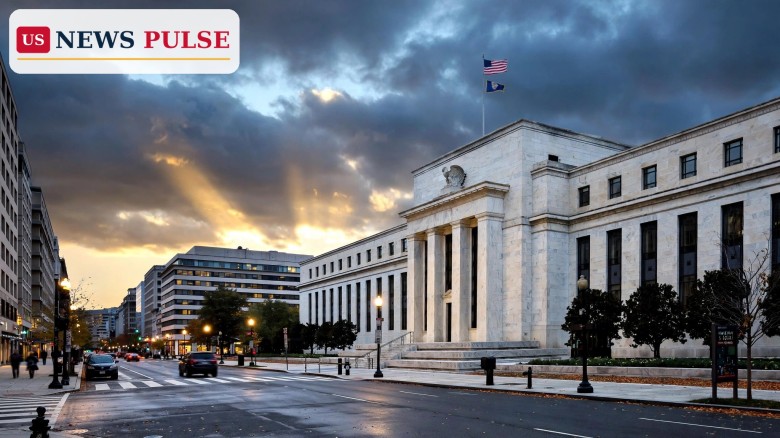
Three Federal Reserve officials used the first days after the central bank's October pause to deliver the same message in different words: the fight against inflation is not finished, at least two more interest-rate increases are probably needed, and the increases should come gradually enough that households, businesses and markets can adjust without a sharp break in economic activity. Dallas Fed President Lorie Logan put the clearest number on it on Friday, saying the Federal Open Market Committee needs "at least two more 25-basis-point rate increases" before it pauses again to judge whether even more tightening is required.
The remarks, from Logan, Richmond Fed President Tom Barkin and St. Louis Fed President Alberto Musalem, landed two days after the FOMC voted 10-2 on Wednesday to leave the benchmark federal funds rate unchanged at 3.75% to 4.00%. That decision followed a September increase that was the first since 2023, and it came with two dissents in the opposite direction: Governor Lisa Cook and Cleveland Fed President Beth Hammack both preferred a second consecutive increase in October. Friday's trio therefore did not contradict the hold so much as explain it — a pause in the meeting-by-meeting path, not a change in the destination.
Key Points
- Dallas Fed President Lorie Logan said the FOMC needs at least two more 25-basis-point rate hikes, then a pause to assess economic and financial developments.
- Richmond Fed President Tom Barkin and St. Louis Fed President Alberto Musalem backed the same gradual approach, arguing small, earlier moves beat large, abrupt ones later.
- The FOMC voted 10-2 on October 27-28 to hold rates at 3.75% to 4.00%, with Lisa Cook and Beth Hammack dissenting in favour of another increase.
- Investors now price a December 8-9 hike as the likely next step, with futures also pointing to a possible pause in January and a further hike considered in March.
- The 30-year fixed mortgage rate ticked up slightly to 7.35% after the October announcement, according to Mortgage News Daily, keeping borrowing costs elevated for homebuyers.
What Happened
Logan spoke at Davidson College on Friday, in the first round of public remarks by Fed officials after the October meeting. "It remains clear to me, given the current outlook, that the FOMC needs to implement at least two more 25-basis-point rate increases," she said. "Adjusting policy more gradually can help households, businesses and market participants adapt to higher rates and reduce the risk that economic activity deteriorates more sharply than necessary." Two increases of a quarter point each would add 50 basis points to the policy rate, taking the target range from 3.75% to 4.00% to 4.25% to 4.50% if both were delivered in full.
Logan added two qualifications that matter for how markets should read the call. First, after those two increases she expects the Fed to pause and assess, rather than hiking on autopilot, to determine whether further increases are necessary. Second, she said that "skipping a meeting does not change the monetary policy destination" — a direct answer to anyone reading Wednesday's hold as a softening of the Fed's stance. "The end goal should be to make policy modestly restrictive so we can sustainably deliver both maximum employment and stable prices," she said.
Barkin, speaking in a radio interview on Friday on SiriusXM, endorsed the same tempo. "A gradual approach is a good way to go," he said, adding a warning about demand: "If we do see a continued surge in demand, that would be the kind of thing you might want to lean against." Musalem, at an event in New York, made the case for moving sooner rather than later, but in small steps: "incremental adjustments made earlier are usually less disruptive than larger and abrupt actions taken later." He also stressed preventing elevated price pressures from spreading more broadly through the economy, a concern echoed in separate reporting on his Friday remarks, which highlighted core services inflation excluding housing as a particular focus.
The trio's remarks suggested, in the reporting of the day, a growing consensus inside the Fed on the need for more tightening delivered gradually. That consensus is not unanimous — the October vote itself proves it — but it is broader than the 10-2 headline suggests, because Logan, who voted with the majority to hold this week after dissenting against a similar hold in July, is now publicly calling for two more hikes. Barkin, meanwhile, will re-enter the voting ranks of the FOMC in 2027, so his Friday remarks also preview a voice that will count directly in next year's decisions.
Background/Context
To understand why officials are talking about hikes at all, after a hold, it helps to retrace the last two months. The Fed raised rates in September for the first time since 2023, a move that broke a long period without an increase and signalled that the central bank judged inflation to be the dominant risk again. In October it held, saying it wanted an "accumulation of more information" before deciding its next steps. The two dissenters wanted to go again immediately. The three officials who spoke on Friday are, in effect, siding with the dissenters on direction while siding with the majority on timing: hike, but not all at once, and not without watching the data between moves.
The data they are watching is uncomfortable. Inflation has been above the Fed's 2% target for more than five years, and the Fed's preferred measure accelerated to 3.6% in September amid a renewed rise in oil prices, according to reporting on the week's data. A separate report on Thursday showed the economy expanded in the third quarter at the fastest pace in a year, on strength in consumer spending and business investment driven by the boom in spending related to artificial intelligence. That combination — sticky inflation plus strong growth — is exactly the backdrop in which central bankers worry about demand running hot and price pressures broadening, and it is why Barkin's comment about leaning against a continued surge in demand carries weight.
Fed Chair Kevin Warsh, who refrained on Wednesday from revealing his own outlook for the economy or interest rates, framed the hold in similar terms. He said elevated inflation remains the central bank's main focus, described financial conditions as tighter following the September hike, and added that he is "unwilling and unable to call them tight." In his Wednesday press conference he returned to the theme of data dependence: "The information we receive over the coming period will help us determine where we want policy to be, and at every turn, good or bad, our job is to get monetary policy right and that's exactly what we're doing."
Most Fed officials, in projections published after the September meeting, already viewed an additional rate hike this year as likely necessary. What Friday's remarks add is a sense of scale and sequencing: not one token hike, but at least two, delivered gradually, with a pause afterwards to reassess. That is a more hawkish path than a single December move, and it helps explain why investors are now looking beyond December as well.
Fed Rate Hikes and the Market's December Bet
Investors, according to futures contracts cited in Friday's reporting, now see the next hike arriving at the Fed's last meeting of the year, on December 8-9, followed by a likely pause in January and then a third hike considered in March. The CME Group's FedWatch tool told a similar story immediately after the October 28 announcement: the perceived chance of a quarter-point December hike rose to 84.6%, up from 78.3% one day earlier. In other words, the market had already moved a long way towards pricing a December hike before Logan, Barkin and Musalem spoke — and their remarks reinforced, rather than created, that expectation.
Some economists think the market is still underestimating how far the Fed may go. Danielle Hale, chief economist at Realtor.com, was quoted as saying investors appear to be anticipating two or three more rate hikes in the next six to eight months — more than the Fed itself has projected. "Those hoping to make a home purchase in the months ahead should plan for further mortgage rate volatility," she said. That warning is grounded in what already happened this week: mortgage rates were broadly steady on Monday and Tuesday before the Fed's decision, then the 30-year fixed rate ticked up slightly to 7.35% after the announcement, according to Mortgage News Daily.
The mortgage channel is where Fed policy meets ordinary life most directly. A higher policy rate does not set mortgage rates mechanically — long-term bond yields, investor expectations and lender margins all intervene — but a Fed that is credibly heading higher tends to keep long-term borrowing costs elevated, and 7.35% is already a level that stretches many buyers. Melissa Cohn, regional vice president of William Raveis Mortgage, put the near-term logic plainly: the Fed is "watching how the September rate hike affects inflation" and is "very likely to raise rates in December if inflation hasn't improved." She also raised a political consideration, suggesting the FOMC may have been reluctant to hike with just a few days remaining before the November 3 midterm elections, because "the Fed doesn't want to appear political."
That political reading should be treated with care. The Fed's own statement cited the need for more information, not the election calendar, and officials have repeatedly said decisions are data-driven. But the timing is undeniable: the December meeting, on December 8-9, is the first after the midterms, and it is now the focal point for everyone trying to guess the Fed's next move. If inflation data between now and then stays hot, Logan's two-hike path starts in December. If it cools, the gradual approach gives the Fed room to wait — which is precisely the flexibility the gradualists say they want.
Reactions/Quotes
The clearest quotes of the day belong to the three officials themselves, and they are worth setting side by side because they reveal a shared philosophy with different emphases. Logan, on the destination: "It remains clear to me, given the current outlook, that the FOMC needs to implement at least two more 25-basis-point rate increases." Logan, on the pace: "Adjusting policy more gradually can help households, businesses and market participants adapt to higher rates and reduce the risk that economic activity deteriorates more sharply than necessary." Logan, on what a hold means: "skipping a meeting does not change the monetary policy destination."
Barkin, on the pace: "a gradual approach is a good way to go." Barkin, on the trigger for leaning harder: "If we do see a continued surge in demand, that would be the kind of thing you might want to lean against." Musalem, on why small and early beats big and late: "incremental adjustments made earlier are usually less disruptive than larger and abrupt actions taken later." Warsh, on the Fed's task: "The information we receive over the coming period will help us determine where we want policy to be, and at every turn, good or bad, our job is to get monetary policy right and that's exactly what we're doing."
Outside the Fed, the reactions recorded in Friday's reporting were practical rather than ideological. Hale warned homebuyers to expect further mortgage rate volatility. Cohn tied the December decision to whether inflation has improved since September. No official dissent from Friday's gradual-hawkish line was reported in the sources read for this article, and no new statement from the White House on the Fed's path was carried in those reports. The absence of a counter-voice in Friday's coverage is itself a signal: for now, the debate inside the Fed appears to be about pace and number, not about whether more tightening is needed at all.
Why It Matters
It matters first for borrowers. Every additional quarter point makes mortgages, car loans, credit-card balances and business credit more expensive, and it does so at a moment when many households are already carrying higher costs from years of above-target inflation. A gradual path softens the blow compared with a sudden jump, because it gives borrowers and lenders time to adjust, refinance or delay — but it does not remove it. Two more hikes would leave the policy rate a full half point higher than today, and mortgage rates near 7.35% already limit what many buyers can afford.
It matters second for markets, which have spent the last week re-pricing the AI spending boom. Technology shares sold off sharply on Friday, October 30, as Amazon's and Intel's results deepened worries about infrastructure costs and uncertain returns, and gold fell to a one-year low as higher-for-longer rate expectations firmed. A Fed that is openly contemplating two more hikes reinforces that higher-for-longer backdrop, even as it also offers reassurance that the hikes will be gradual rather than abrupt. The tension between those two messages — more tightening, but slowly — is likely to keep volatility elevated into December.
It matters third for the economy's balance between growth and inflation. Third-quarter growth at its fastest pace in a year, powered by consumer spending and AI-related business investment, is good news in isolation. But if that demand surge persists while inflation is still at 3.6% on the Fed's preferred measure, officials fear price pressures could broaden into services and wages in ways that are harder to reverse — the "second-round" effects Musalem warned about. The gradual-hawkish approach is an attempt to thread that needle: tight enough, eventually, to bring inflation back to 2%, but not so tight, so fast, that it tips a growing economy into an unnecessary downturn.
Finally, it matters for the Fed's own credibility. After a September hike, an October hold, two dissents for hiking, and now three officials calling for at least two more hikes, the central bank's communication task is to convince markets that all of these can be true at once: that a hold can coexist with a hiking bias, and that gradualism is a strategy rather than indecision. Logan's formulation — a destination that does not change when a meeting is skipped — is the clearest attempt yet to hold that line.
What Happens Next
The calendar now does most of the talking. The Fed's next scheduled meeting is December 8-9, and it is the last meeting of the year. Between now and then, the data that will shape the decision include further inflation readings, the October jobs report due on Friday, November 6, and any fresh evidence on consumer spending and business investment. If inflation cools and demand moderates, the gradualists have room to delay the first of Logan's two hikes. If inflation stays near 3.6% or rises, December becomes the natural starting point, with a pause in January and a further decision in March, as futures currently suggest.
Watch also for the next round of Fed speeches. Logan, Barkin and Musalem have now set out the gradual-hawkish case in public; the question is whether other officials, including the October dissenters Cook and Hammack and Chair Warsh himself, echo it, qualify it, or push back. A chorus would harden the December expectation further. Silence, or a dovish counter-note, would reopen the debate. Either way, mortgage borrowers, equity investors and businesses planning capital spending will be listening, because the difference between one more hike and two or three is the difference between a brief tightening episode and a longer higher-for-longer regime.
The November 3 midterm elections sit in the middle of that window, and while the Fed insists its decisions are data-driven, the political backdrop will inevitably colour how its December decision is read. A hike in December, after the election, will be presented by the Fed as the product of inflation data. Critics and supporters alike will test that claim against the data published between now and December 8. That test — data first, politics second — is the standard the Fed has set for itself, and December will be its next examination.
FAQ
How many more rate hikes did Lorie Logan call for?
At least two more increases of 25 basis points each, adding 50 basis points in total, followed by a pause to assess economic and financial developments before deciding whether further hikes are needed.
What is the current federal funds rate?
3.75% to 4.00%, after the FOMC voted 10-2 on October 27-28 to hold rates steady. The September increase was the first since 2023.
When is the Fed's next meeting?
December 8-9, 2026, the last meeting of the year. Futures markets currently point to a hike then, a likely pause in January, and a further hike considered in March.
Why are Fed officials backing hikes after a hold?
Because inflation, at 3.6% on the Fed's preferred September measure, remains well above the 2% target, while third-quarter growth was the fastest in a year. Officials argue gradual hikes can tame inflation without sharply damaging economic activity.
What does this mean for mortgage rates?
The 30-year fixed mortgage rate ticked up slightly to 7.35% after the October announcement, according to Mortgage News Daily. Economists warn homebuyers should plan for further mortgage rate volatility if the Fed hikes again in December.
Related coverage on US News Pulse: Fed rate decision October 2026: why a pause looks likely despite high inflation, US stock market selloff deepens as Amazon and Intel sink on AI spending fears and Gold price crashes to one-year low as silver slides below $50 an ounce.
© 2026 US News Pulse. All rights reserved.
 Print
 Save