
Strait of Hormuz Fishing Boats Attack: Iran Blames US, Missing Crew Found Safe
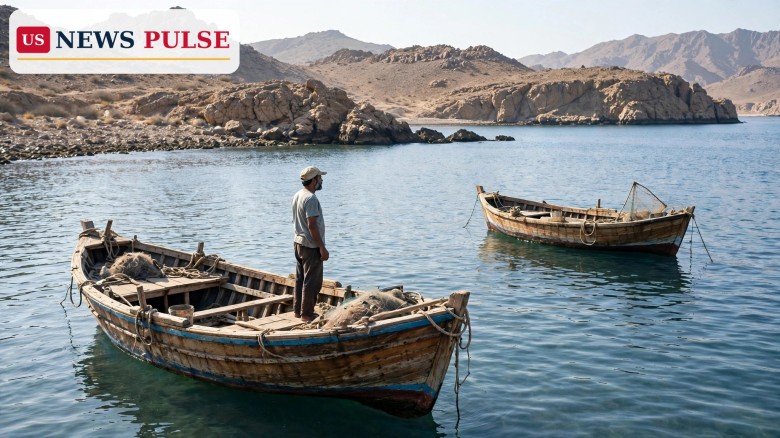
Strait of Hormuz fishing boats came under attack on Saturday, October 31, 2026, when Iranian officials say a drone strike hit two fishing boats near Qeshm Island, leaving two fishermen missing and others wounded. By the end of the day, Iranian state media said the two missing men had been found safe and were returning to Qeshm, closing a fast-moving incident in the world's most sensitive oil waterway with relief, but also with blame still unresolved: Tehran points at the United States, and Washington, in the reporting available so far, has not commented.
The incident matters beyond its small scale because of where it happened. The Strait of Hormuz is the narrow passage between the Gulf and the open sea, through which a large share of the world's seaborne oil passes. In an eight-month war, even a strike on two wooden fishing boats can sharpen the confrontation, especially while diplomats in Doha are trying to keep a channel open between Tehran and Washington.
Key Points
- Strait of Hormuz fishing boats: two boats, each carrying two crew, were attacked on the morning of Saturday, October 31, 2026, near Qeshm Island, Iranian officials said.
- Two fishermen were reported missing and others wounded; by later on Saturday, Iranian state media said the missing men had been found safe and were returning to Qeshm.
- Iranian state television and the Tasnim agency blamed the United States, calling it an attack by the American enemy; the Fars agency referred only to an enemy drone.
- The attack happened at about 11:30 a.m. local time, about 14 nautical miles south of Qeshm Island according to Fars, or 18 nautical miles from Messen village in Qeshm County according to the provincial deputy governor.
- No country or military had claimed the attack in the reporting available, and AFP said it had contacted US Central Command for comment.
What Happened
According to Hormozgan Province Deputy Governor Ahmad Nafisi, speaking to Iranian media, the incident occurred at about 11:30 a.m. local time on Saturday, involving two fishing boats within about 18 miles of Messen village, affiliated with Qeshm County. Each boat had two occupants. Two fishermen were brought back to Qeshm, one of them injured and taken to hospital for treatment, while the other two were reported missing, prompting a search and rescue operation.
Iran's semi-official Fars news agency reported that an enemy drone struck the two boats 14 nautical miles south of Qeshm Island, and that two fishermen were missing while two others were wounded. Tasnim, another Iranian agency, as quoted in reporting on the incident, said the American enemy carried out the attack that morning, that one person was injured, and that two more remained missing while a search was under way. The reports therefore agree on the core event, two boats attacked and two men unaccounted for, but differ on the injury count and on whether the United States is named.
Later on Saturday, the picture changed for the better. Iran's state television said the two fishermen reported missing had been found, and IRNA, the official news agency, reported that the head of Qeshm's fishing community, Ali Eslami Ramchahi, said the two men had been found and were returning to Qeshm. IRNA said Mahmoud Panjeh and his son, who had lost contact with shore after the attack, had been found safe, that Mehrzad Panjeh suffered injuries to both legs, and that his brother Mehran was rescued from the sea by passing vessels.
Background and Context
Qeshm is a large Iranian island off the country's southern coast, in the waters of the Strait of Hormuz. Its fishermen work waters that have become a front line in the war between the United States, Israel and Iran, now in its eighth month. Shipping, mines, drones and missile strikes have all featured in the strait in recent weeks, and the line between civilian traffic and military activity there is closely watched and fiercely disputed.
Only a day earlier, US Central Command said American forces had successfully cleared the strait's internationally recognised primary transit routes of Iranian sea mines and would keep them free and clear, while Oman evacuated 25 crew members from a damaged vessel. Iranian officials have separately claimed that oil tankers struck mines in the strait. Against that background, an attack on fishing boats, whoever carried it out, feeds a cycle of claim and counterclaim about who is endangering civilian mariners.
One interpretation offered in Israeli coverage, by an N12 correspondent, was that the fishermen were very probably civilian lookouts working for the Revolutionary Guards, helping to target ships in the strait. That interpretation does not appear in the Iranian reports themselves, and it is not presented here as fact. It illustrates how the same incident is read very differently on each side of the war.
Strait of Hormuz Fishing Boats: What the Reports Agree On, and Where They Differ
Readers should hold two things at once. The core facts are consistent across the Iranian-sourced reports carried internationally: two boats, four crew, an aerial attack on Saturday morning near Qeshm, two men initially missing, and by the afternoon, those men found. The disagreements are real but narrower: whether one or two people were hurt, whether the location was 14 nautical miles south of the island or 18 nautical miles from Messen village, and whether the attacker is named as the United States or left as an unnamed enemy.
What is missing matters too. None of the reports available describes the drone, how many strikes there were, or what condition the boats were left in. No country or military had claimed the attack, and none of the reports included a response from the United States or Israel to the Iranian accusations, beyond AFP's note that it had contacted Central Command. Until an official response or independent evidence appears, the question of responsibility remains an Iranian accusation, not an established fact.
Reactions and Quotes
The strongest official voice in the reporting is Deputy Governor Ahmad Nafisi, who confirmed the time, the two boats and the four crew, and said authorities were following up and would release details after receiving official reports. The Qeshm fishing community chief, Ali Eslami Ramchahi, provided the closing update: the missing men had been found and were returning to Qeshm.
State television's formulation, that two fishermen from Qeshm who had gone missing following an attack by the American enemy on their fishing boat that morning have been found, is the version that travelled furthest internationally. It is an accusation by Iranian state media, and this article attributes it as such. The US position, if one is given, will be added to the record as soon as it is available.
The wider diplomatic context also continued on Saturday. Saudi officials speaking at a security forum in Bahrain said efforts were under way to prevent a military escalation and reach an agreement ending the crisis with Iran, while Iran's foreign minister has described US outreach as a positive step even as Tehran says it sees no need yet to meet US officials. The Doha mediation channel remains the main hope for keeping incidents like this one from widening the war.
Why It Matters
A strike on fishing boats is small beside the campaign documented in the Associated Press investigation published the same day, which found more than 115 damaging strikes on 26 US bases. But small incidents in the Strait of Hormuz carry outsized risk, because they touch civilian life, because they are immediately claimed for propaganda by both sides, and because the strait leaves little room for error. A misread incident there can escalate faster than a battlefield exchange elsewhere.
It also matters for the fishermen themselves and for coastal communities on Qeshm, whose livelihoods depend on waters that are now contested. The safe return of the two missing men is the best possible outcome of this incident, but it does not remove the danger for the next boat that puts to sea in the same waters.
What Happens Next
The immediate questions are whether US Central Command responds to the Iranian accusation, whether Iranian authorities publish a fuller official account with the boats' condition and the injured men's treatment, and whether any independent evidence, such as imagery or vessel tracking, emerges to clarify what struck the boats. Any of those would move the story from accusation towards verification.
The longer question is whether the Doha talks can produce a de-escalation that covers the strait itself, including a shipping arrangement both sides can live with. Until then, incidents like Saturday's will keep testing whether diplomacy can hold while the shooting continues.
Frequently Asked Questions
What happened to the fishing boats near Qeshm Island?
Iranian officials say two fishing boats, each with two crew, were attacked by a drone on the morning of Saturday, October 31, 2026, near Qeshm Island in the Strait of Hormuz. Two fishermen were initially reported missing and others wounded.
Were the missing fishermen found?
Yes. Iranian state television and IRNA later reported that the two missing fishermen had been found safe and were returning to Qeshm.
Who does Iran blame?
Iranian state television and the Tasnim agency blamed the United States, describing an attack by the American enemy. The Fars agency referred only to an enemy drone. No US response was included in the reporting available.
Where exactly did it happen?
Reports differ slightly: Fars put the attack 14 nautical miles south of Qeshm Island, while the Hormozgan deputy governor put it about 18 nautical miles from Messen village in Qeshm County.
Why does the Strait of Hormuz matter?
It is the narrow passage linking the Gulf with the open sea, carrying a large share of the world's seaborne oil, and it has become a front line in the eight-month war between the United States, Israel and Iran.
Related coverage: US says Strait of Hormuz routes cleared of mines as Oman rescues 25 sailors, Iran-US talks: Araghchi calls US outreach a positive step as Doha delegation works, and Trump sends a third aircraft carrier towards Iran and says the war will end soon.
© 2026 US News Pulse. All rights reserved.
 Print
 Save