
US Revokes Record 300,000 Visas Under Rubio in Unprecedented Review
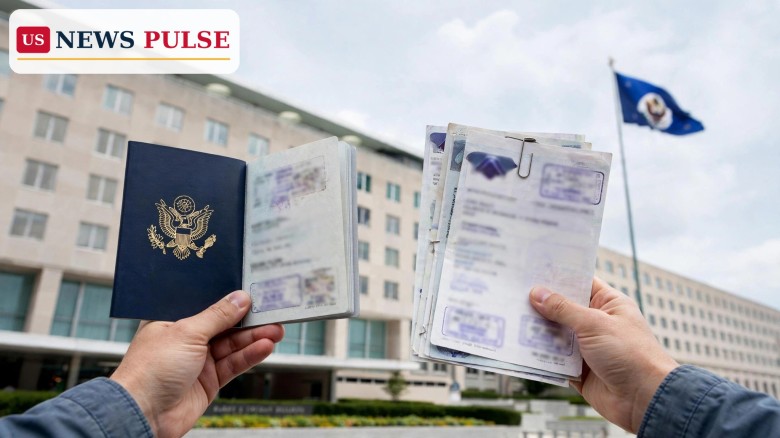
The United States has revoked more than 300,000 visas under Secretary of State Marco Rubio, the State Department said late on Saturday, calling it the highest number in American history. The figures, released in a thread on the department's official X account on Saturday evening, describe an unprecedented review of US visa holders that the Trump administration says is driven by criminal conduct, public safety concerns, immigration violations, fraud and misrepresentation.
The announcement, reported by IANS and multiple outlets on Sunday, November 1, 2026, gives the first headline total for a vetting drive that has run quietly across the second Trump administration. It also breaks out two smaller figures that explain how the total was reached: more than 4,000 visas revoked for birth tourism alone, including more than 700 belonging to Chinese nationals, and more than 23,000 revocations by a new Continuous Vetting Center set up inside the Bureau of Consular Affairs in 2025.
Key Points
- The State Department said on Saturday it has revoked more than 300,000 visas under Secretary of State Marco Rubio, the most in American history.
- The figures were released in a thread on the department's official X account late on Saturday evening, October 31, 2026.
- The department said the vast majority of revocations were for criminal activity, public safety concerns, immigration violations, fraud or misrepresentation.
- More than 4,000 visas were revoked for birth tourism alone, including more than 700 belonging to Chinese nationals.
- A Continuous Vetting Center established in 2025 revoked more than 23,000 of the visas, with assault, driving under the influence, theft and substance abuse among the leading reasons.
What Happened
The State Department's thread framed the total as a deliberate policy achievement rather than a routine statistic. "Under @SecRubio's leadership, the State Department has undertaken an unprecedented review of U.S. visa holders, resulting in the revocations of over 300,000 visas — the most in American history," the department said, according to IANS. The wording matters: the department was not merely reporting a number, but presenting the review itself as unprecedented in scale and intent.
The department's explanation for the bulk of the cases was broad but specific in its categories. "The vast majority of these revocations were due to criminal activity, public safety concerns, immigration violations, fraud or misrepresentation, or other information indicating the individual was no longer eligible for a visa," the thread said. That formulation covers a wide range of conduct, from criminal convictions to paperwork problems, and it leaves open how many cases fall into each category — a gap that critics are likely to press, and that the department did not fill in the thread.
Two subtotals were given in more detail. "Over 4,000 visas have been revoked for birth tourism alone," the department said, adding: "Among the 4,000 visas revoked for birth tourism, over 700 belonged to Chinese nationals." Birth tourism — travel to the United States to give birth so that a child acquires American citizenship — has been a specific target of the administration's immigration enforcement, and the Chinese-national figure was the only country-specific breakdown the thread provided. No country-wise breakdown was given for the overall total, including for Indian nationals, according to the reports.
The thread also described the machinery behind the numbers. "In 2025, the Bureau of Consular Affairs established a Continuous Vetting Center in Washington, D.C., which revoked over 23,000 of these visas," the department said. Reports of the thread added a breakdown for that centre's cases: about 25 per cent for assault, 22 per cent for driving under the influence, 7 per cent for theft and 7 per cent for substance abuse, with the remainder spread across other criminal or public safety categories. That centre, in other words, accounts for roughly one in thirteen of the total revocations, with the rest coming from the wider review across consular posts and other vetting systems.
Background and Context
Visa revocation is not a new power, but its use at this scale is. A US visa can be revoked when new information shows that the holder is no longer eligible, has committed a crime, has violated immigration law, or has misrepresented material facts in an application. Historically, revocations were relatively rare and often tied to individual cases that came to light through law enforcement or consular checks. What the State Department is describing now is a systematic, continuous review — a shift from case-by-case action to a standing vetting operation that re-examines holders after a visa has been issued.
That shift fits the broader immigration posture of the second Trump administration, which has tightened visa processing, suspended processing from dozens of countries, expanded vetting of applicants and holders alike, and made enforcement a central political message. Earlier in this cycle, the administration's deportation drive — approaching 980,000 removals in its first eighteen months, according to a Migration Policy Institute analysis — and its battles over voter rolls, state cooperation and sanctuary policies have all pointed in the same direction: a government that treats immigration status as continuously conditional rather than settled once granted.
Birth tourism sits at a particular intersection of that policy. The practice relies on birthright citizenship, which the administration has sought to restrict, and it has been a focus of enforcement actions and public messaging for years. Revoking more than 4,000 visas on birth-tourism grounds is a small share of the 300,000 total — about one in seventy-five — but it is a politically legible one, and the department's decision to single it out, with a specific figure for Chinese nationals, suggests it was chosen for emphasis rather than as a representative sample.
The timing of the announcement also matters. It came late on Saturday evening, on the final weekend before the November 3 midterm elections, when immigration is one of the top issues for voters alongside the cost of living and the war with Iran. A record revocation figure, presented as the most in American history, is a campaign-season statistic as well as an administrative one, and it is likely to be cited by both supporters, as evidence of enforcement, and critics, as evidence of overreach.
US Visa Revocations 300000: What the Number Does and Does Not Show
The focus keyword of this story — US visa revocations reaching 300,000 — deserves careful reading, because a headline total can conceal as much as it reveals. The department has not said how many of the 300,000 people were in the United States at the time of revocation, how many were outside it, how many had their visas revoked and later reinstated, or how many of the revocations led to removal, denial of entry or any other concrete consequence. A revoked visa is not the same as a deportation, and a person whose visa is revoked while abroad may never attempt to travel at all.
Nor has the department published a breakdown by visa type — tourist, student, work, family or other categories — or by the length of time between issuance and revocation. Those details would show whether the review is catching recent applicants, long-term holders, or both, and whether particular categories are disproportionately affected. Without them, the total is best understood as a measure of enforcement activity, not as a count of people removed from the country or of crimes prevented.
That caution does not diminish the scale. Even allowing for the gaps, 300,000 revocations is an order of magnitude larger than the totals that were publicly discussed in previous administrations, and the creation of a dedicated Continuous Vetting Center suggests the figure is not a one-off spike but the product of a standing system. If that system continues, the total will keep rising, and the question for policymakers, courts and affected communities will be less about the headline number and more about the criteria, the appeals process and the error rate — questions the Saturday thread did not address.
Reactions and Quotes
The State Department's own framing was the most complete official reaction available on Sunday. Its thread presented the review as a public safety measure, emphasising criminal activity and eligibility problems, and it did not acknowledge criticism or error. That framing is consistent with the administration's broader presentation of its immigration policy as enforcement of existing law rather than a change in the law itself.
Immigration advocates, who have criticised earlier phases of the vetting drive, are likely to focus on two points: the breadth of the "no longer eligible" category, which can include conduct that would not itself be a crime, and the lack of a published appeals or correction process for people whose visas are revoked in error. Those concerns have been raised in earlier litigation over visa and immigration decisions, though no specific legal challenge to the 300,000 figure had been reported as of Sunday morning.
For the countries most affected, the absence of a country-wise breakdown is itself a point of interest. The thread gave only one nationality figure — more than 700 Chinese nationals among the birth-tourism cases — and said nothing about the nationalities behind the other 296,000 revocations. Governments that learn their nationals are among the total through consular notifications, rather than through a public breakdown, may press Washington for more detail in the coming weeks, particularly if students, workers or family members are affected.
Within the United States, the announcement lands in a political environment where immigration enforcement is already a central midterm issue. Supporters of the administration will read the record total as proof that vetting promises are being kept. Critics will read it as evidence that a visa, once granted, is no longer a reliable document. Both readings can be drawn from the same thread, which is part of why the figure is likely to remain in the news well beyond this weekend.
Why It Matters
This story matters because a visa is, for millions of people, the practical gateway to the United States — for study, work, family visits, business and tourism. If 300,000 of those gateways have been closed, and if continuous vetting means more will follow, then the uncertainty affects not just the people whose visas were revoked, but everyone who holds one and wonders whether it will still be valid when they travel. Universities, employers and families that depend on international mobility will feel that uncertainty in planning, even if they are never directly affected.
It matters for the immigration debate because it shifts the focus from the border to the visa system itself. Much of the public argument about immigration centres on unauthorised crossings, but the majority of the immigration system operates through visas issued at consulates and embassies. A review that revokes visas at record scale is a reminder that enforcement now reaches deep into that legal system, not just at the border.
And it matters for the midterms because it gives voters a concrete number to weigh alongside other immigration statistics — deportations, border encounters, asylum decisions — in deciding whether the administration's approach is working. A record total is a powerful claim, but its meaning will depend on the details that follow: who was affected, why, and what happened next.
What Happens Next
Watch for three developments. First, whether the State Department publishes a more detailed breakdown — by visa type, by reason, by nationality or by outcome — in response to questions about the Saturday thread. Second, whether any legal challenge is filed on behalf of people whose visas were revoked, particularly if they claim error or lack of notice. Third, whether the Continuous Vetting Center's caseload grows in the coming months, which would suggest the 300,000 figure is a milestone on the way to a larger total rather than a final tally.
For visa holders, the practical advice is unchanged but more urgent: keep records of status, travel and any contact with law enforcement or immigration authorities, and check visa validity before travel rather than assuming a visa issued months or years ago remains in force. For the administration, the next test will be whether it can defend the record total with the kind of detail that turns a headline into a credible account of who was affected and why.
Frequently Asked Questions
How many visas has the US revoked under Marco Rubio?
More than 300,000, according to the State Department, which calls it the highest number in American history.
Why were most of the visas revoked?
The department said the vast majority were for criminal activity, public safety concerns, immigration violations, fraud or misrepresentation, or other information showing the holder was no longer eligible.
What is birth tourism, and how many visas were revoked for it?
Birth tourism is travel to the US to give birth so a child acquires American citizenship. More than 4,000 visas were revoked for it, including more than 700 belonging to Chinese nationals.
What is the Continuous Vetting Center?
It is a unit established in 2025 inside the Bureau of Consular Affairs in Washington, D.C., which revoked more than 23,000 of the visas, with assault, driving under the influence, theft and substance abuse among the leading reasons.
Does a revoked visa mean the person was deported?
No. A revoked visa is not the same as a deportation; the department has not said how many of the 300,000 people were in the US, were removed, or were denied entry as a result.
Related coverage: Trump Grants Visa for Mother of Slain Bronx Teen Javits Frimpong, Trump Deportations Near 980,000 in 18 Months, Study Finds and China Visa-Free Travel Suspended for Northern Mariana Islands.
© 2026 US News Pulse. All rights reserved.
 Print
 Save