
Yosemite Helicopter Crash: NTSB Details Final Water Drop That Killed Two Pilots
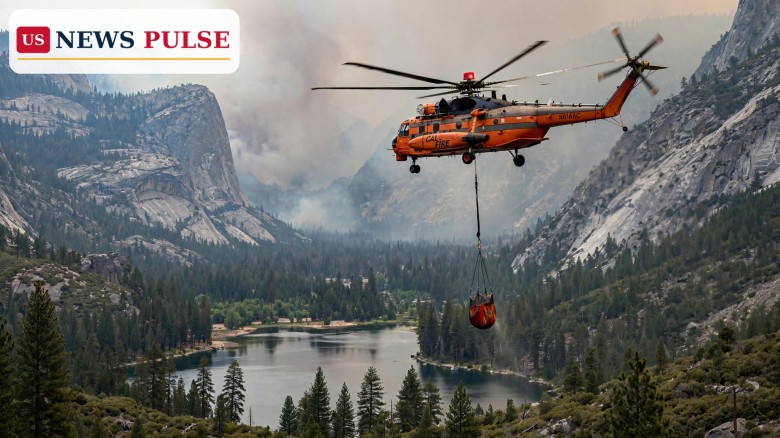
The Yosemite helicopter crash that killed two firefighting pilots on September 20, 2026, took a new turn this week as the National Transportation Safety Board released its preliminary report, detailing bucket problems earlier that day, a sudden swing to the left and a rapid descent during the crew's final water drop over Yosemite National Park. The report does not determine what caused the crash, but it reconstructs the last minutes of the flight in unusual detail, from more than 25 earlier drops to the seconds before impact near Ostrander Lake.
The two pilots killed were Greg King and Ryan Cutter, who were flying an Airbus AS332 L1 Super Puma, also described as a Eurocopter AS332, for a Cal Fire contractor while battling the Dome Fire in the southern part of the park. Their Oregon-based employer, Fly Precision, identified them after the crash. The helicopter was the only aircraft involved, and both men on board died. The Federal Aviation Administration said the NTSB is leading the investigation.
Key Points
- The NTSB preliminary report covers the September 20, 2026 Yosemite helicopter crash that killed pilots Greg King and Ryan Cutter on the Dome Fire.
- Earlier that day the crew completed more than 25 water drops in a 2.9-hour flight, but reported problems with the 800-gallon bucket; mechanics then tightened its air pressure regulator and pressure-checked the system.
- The helicopter left its helibase around 1:28 p.m., completed two drops near helispot H-5, and crashed during a third drop that began around 1:56 p.m. after collecting water from Ostrander Lake.
- After the bucket emptied in about three seconds, the helicopter yawed to the left, its groundspeed fell to about 4 knots and its descent rate reached 1,344 feet per minute.
- The NTSB has not determined a cause; the cockpit voice recorder was recovered, but most of the helicopter burned in a post-impact fire, leaving little usable data from the cockpit gauges.
What Happened
According to the NTSB preliminary report, as reported by AVweb and the Los Angeles Times via Firehouse, the crew's day began with a long firefighting flight over Yosemite. The Airbus AS332 carried an 800-gallon Nomad bucket suspended from a 200-foot longline, and completed more than 25 water drops in about 2.9 hours. During that flight, the crew experienced problems with the bucket. After the helicopter returned to its helibase, mechanics tightened the bucket's air pressure regulator and performed a pressure check before the aircraft was sent out again.
The second assignment began around 1:28 p.m., when the helicopter departed its helibase. After collecting water from Ostrander Lake, the crew completed two water drops near helispot H-5. The third drop began at approximately 1:56 p.m. Investigators, drawing on flight-tracking data and video recorded by firefighters on the ground, found that the bucket emptied in about three seconds. The helicopter then yawed to the left.
The NTSB stated: "The bucket appeared to drop almost vertically and then contacted the ground about 1356:38." About one second later, the cargo hook released the longline. The helicopter appeared to move forward, and about five seconds after the bucket touched the ground it struck trees. It came to rest on its left side on sloping, forested terrain at an elevation of approximately 8,150 feet, in the southern region of Yosemite National Park, southeast of Ostrander Lake, about seven miles northeast of Wawona and roughly nine miles south of El Capitan.
Investigators located the bucket about 90 feet from the main wreckage and found the cargo hook in its locked position, consistent with a normal electronic release rather than a manual release. Much of the helicopter was consumed by a post-impact fire, so investigators could obtain no meaningful data from most of the cockpit instruments. The agency did, however, recover and download the cockpit voice recorder, and it conducted a preliminary analysis of engine and rotor speeds using audio from ground video recordings.
Background: The Dome Fire in Yosemite
The Dome Fire started on September 15, 2026, near Yosemite's southern entrance, after an abandoned campfire, according to the NTSB report summary. It burned in remote, mountainous terrain above Wawona, a small community inside the park, and spread north and east, away from homes, into higher country. At the time of the crash it was still an active, fast-moving incident, with hundreds of firefighters assigned and aircraft rotating through water drops and crew transport.
By the time the fire was declared fully contained on October 17, it had scorched more than 6,700 acres, or roughly 10.5 square miles, in and around the park. Early in the incident, the fire had burned about 4.7 square miles and was about 15 percent contained, with about 580 personnel assigned. The crash therefore happened during the most intensive phase of the suppression effort, when helicopters were flying repeated bucket drops from nearby lakes.
Aerial firefighting is among the most demanding kinds of flying in the United States. Crews fly low, slow and heavy, with a bucket swinging on a long line beneath the aircraft, over steep, smoky terrain where winds shift without warning. The NTSB's preliminary report is careful to separate what it knows from what it does not: it documents the bucket problem, the maintenance work, the timing of the final drop and the descent, but it does not say whether any of those factors caused the accident.
Yosemite Helicopter Crash: The Final Water Drop
The final water drop is the centre of the preliminary report, because it is the sequence investigators can reconstruct most precisely. The timeline, in the NTSB's account, runs like this: the helicopter left its helibase around 1:28 p.m.; it dipped at Ostrander Lake and made two successful drops near helispot H-5; it began a third drop at about 1:56 p.m.; the 800-gallon bucket emptied in about three seconds; the helicopter yawed left; its groundspeed dropped to about 4 knots; its descent rate reached 1,344 feet per minute; the bucket fell almost vertically and hit the ground at about 1:56:38 p.m.; the cargo hook released the longline a second later; and the helicopter moved forward into trees about five seconds after that.
Two details in that sequence will matter most to the final investigation. The first is the bucket problem earlier in the day and the regulator work that followed. The report records the problem and the repair, but it does not say the repair failed, or that the bucket caused the descent. The second is the cargo hook, found locked, which investigators read as consistent with a normal electronic release rather than a manual one. That finding helps rule out one simple explanation, a manual jettison, without establishing what happened instead.
The loss of cockpit gauge data is a major constraint. Because most of the helicopter burned after impact, investigators cannot rely on the instruments that would normally show engine power, rotor speed and system warnings in the final seconds. The cockpit voice recorder, and the audio analysis of engine and rotor speeds from ground video, are therefore carrying unusual weight in this investigation, and the NTSB says additional examination of the wreckage is planned as conditions permit.
Reactions and Quotes
The NTSB's own words in the preliminary report are the only authoritative statements about the flight so far, and they are deliberately narrow. The agency said the bucket "appeared to drop almost vertically" before hitting the ground, that the cargo hook release was consistent with a normal electronic release, and that it has "not determined what caused the helicopter to descend into the trees." Those three sentences frame everything else: a reconstructed sequence, a ruled-out manual release, and an open cause.
The FAA has confirmed that it is involved and that the NTSB is leading the investigation, which is the normal division of labour after a fatal civil aviation accident in the United States. No finding of fault, and no recommendation, has been issued in the preliminary report. Preliminary reports in NTSB investigations are factual summaries, not final determinations, and the agency's final report, which can take a year or more, will address probable cause and any safety recommendations.
Beyond the official record, the deaths have been mourned within the wildland firefighting community, where King and Cutter were remembered by colleagues and by their employer after the crash. The wider debate about how aggressively remote fires should be fought, and about the risks of low-level bucket work, has continued in fire-service publications since September, but the NTSB report itself does not take a position on that policy question. Its job is narrower: to establish, as far as the surviving evidence allows, what the aircraft did and why.
Why It Matters
The Yosemite crash matters for three reasons. First, it killed two experienced firefighting pilots during a routine task, repeated water drops, that thousands of aerial firefighters perform every fire season. Understanding whether a bucket, a longline, a mechanical system or an aerodynamic effect played a role could change procedures for every similar operation.
Second, the crash sits inside a larger safety question for the 2026 fire season. Helicopters are now central to wildfire suppression in the American West, where fires burn hotter, longer and closer to communities than they did a generation ago. Each fatal accident sharpens the trade-off between attacking a fire early from the air and accepting the risk that low-level flying carries for crews.
Third, the preliminary report shows how modern investigations work when instruments are destroyed. Flight-tracking data, firefighter cellphone video, a recovered voice recorder and wreckage geometry are reconstructing a flight that its own gauges can no longer describe. That method, and its limits, will shape how much the final report can ever say with certainty about the last six seconds over Ostrander Lake.
What Happens Next
The NTSB investigation continues. Investigators plan additional examination of the wreckage as conditions permit, and the agency says the full wreckage will be removed and examined at a future date, because fire danger delayed that work. A final report will follow, with a probable-cause finding and any safety recommendations, but no date has been announced.
For the families of Greg King and Ryan Cutter, and for the crews still flying the Dome Fire's successors across California, the preliminary report answers the question of what happened in the final drop, while leaving the hardest question, why the helicopter descended into the trees, unanswered. Until the final report, operators, regulators and fire agencies will be reading the same sequence of times, speeds and positions, and drawing their own interim lessons from a bucket that emptied in three seconds and a helicopter that, seconds later, was on the forest floor.
Frequently Asked Questions
When did the Yosemite helicopter crash happen? The crash happened on September 20, 2026, during water-drop operations on the Dome Fire in Yosemite National Park. The NTSB preliminary report detailing the flight was published in late October 2026.
Who were the pilots killed in the Yosemite crash? Greg King and Ryan Cutter, who were flying an Airbus AS332 Super Puma for a Cal Fire contractor. Their Oregon-based employer, Fly Precision, identified them after the crash.
What does the NTSB preliminary report say caused the crash? It does not determine a cause. It documents bucket problems earlier that day, a regulator repair, a left yaw after the bucket emptied on the third drop, and a descent rate of 1,344 feet per minute, but the cause remains under investigation.
What was the Dome Fire? A wildfire that started on September 15, 2026, near Yosemite's southern entrance from an abandoned campfire, scorched more than 6,700 acres, and was declared fully contained on October 17, 2026.
What happens next in the investigation? The NTSB will examine the wreckage further as conditions permit and will issue a final report with a probable-cause finding and any safety recommendations; no date has been announced.
Related coverage on US News Pulse: Oregon helicopter crash kills three near McMinnville airport in midair collision and Spain train crash cause: Renfe train cleared past red signal, minister says.
© 2026 US News Pulse. All rights reserved.
 Print
 Save