
Cincinnati Memories Lounge Shooting Leaves Kameiro Blair-Martin, 20, Dead
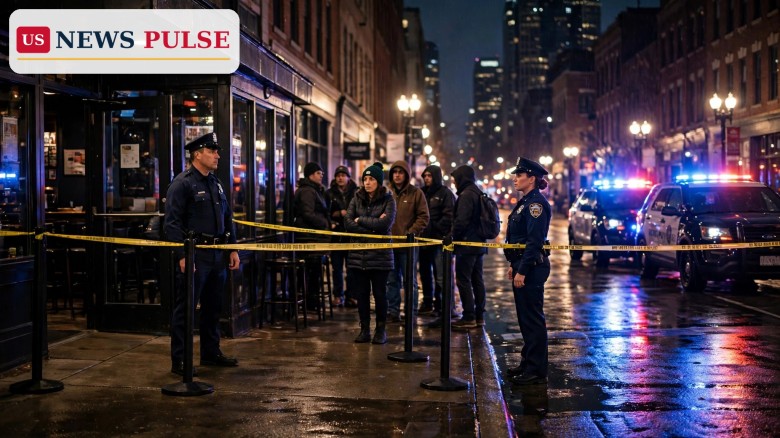
A Cincinnati lounge shooting early on Sunday, November 1, 2026, left a 20-year-old man dead in the city's downtown entertainment area, police said, in the latest fatal shooting to darken a Halloween weekend already marked by gun violence in nightlife districts across the United States. Cincinnati police identified the man killed as Kameiro Blair-Martin, 20, who died from a gunshot wound after officers were called to Memories Lounge on East Seventh Street at about 1:30 a.m.
Blair-Martin was taken to the University of Cincinnati Medical Center, where he succumbed to his injuries, according to a Cincinnati police news release reported by the Cincinnati Enquirer. Police have not said what led up to the shooting, have not publicly identified a suspect, and have not announced an arrest. The shooting remains under investigation, and the lounge was cleared out and was not allowing people back in after the incident, police said.
Key Points
- Cincinnati police identified the man killed as Kameiro Blair-Martin, 20, after a shooting at Memories Lounge in downtown Cincinnati early Sunday, November 1, 2026.
- Officers were called to the lounge on the 30 block of East Seventh Street at about 1:30 a.m. after receiving a report of a person shot.
- Blair-Martin was found suffering from a gunshot wound and was taken to the University of Cincinnati Medical Center, where he died from his injuries.
- Police have not announced a suspect, an arrest, or a motive, and have not said what led up to the shooting.
- Local television station WLWT reported that officers at the scene described the shooting as targeted, according to local reporting on the police response.
What Happened
According to the Cincinnati Police Department account carried by the Enquirer, officers responded to Memories Lounge, on East Seventh Street in downtown Cincinnati, at about 1:30 a.m. on Sunday, November 1. The call reported a person shot inside the lounge. When officers arrived, they found Blair-Martin suffering from a gunshot wound. He was transported to the University of Cincinnati Medical Center, where he later died.
Police said the lounge was cleared out after the shooting and was not allowing people back in. It was unclear when the venue would reopen. The police account did not say how many shots were fired, did not describe a weapon, and did not say whether more than one person fired. Those details, if they are released at all, will come from the continuing homicide investigation.
Early reporting on the incident contained one point of confusion that later police information appears to have narrowed. Initial dispatch information cited by local media indicated two people had been shot, but the Cincinnati Police Department's later public information identified Blair-Martin as the person fatally wounded, and police had not announced another shooting victim in their later account. Readers should therefore treat the confirmed toll, on the information available on Sunday, as one man killed, with no second victim confirmed by police.
WLWT, the Enquirer's media partner in Cincinnati, reported that officers at the scene described the shooting as targeted. That description matters because it points investigators toward a dispute or a specific intended victim rather than a random attack, but police themselves had not, in the releases reported on Sunday, publicly confirmed a motive, named a person of interest, or described the circumstances that preceded the gunfire. Until police say more, the word targeted should be read as an early on-scene characterisation, not as a concluded finding.
Background and Context
The Cincinnati shooting happened in the early hours after Halloween, a night when bars, lounges and entertainment districts across the country draw large crowds, many in costume, and when police departments routinely add officers to nightlife areas. That same weekend produced a grim run of shootings in similar settings, and Cincinnati's case sits within that wider pattern even though there is no evidence linking the incidents to one another.
In Dallas, Texas, four people were killed and about 15 others were injured in three separate shootings in the Deep Ellum entertainment district in the early hours of Saturday, October 31, into Sunday morning, according to Dallas police. Dallas Police Chief Daniel Comeaux told reporters on Sunday morning that investigators had not found a connection between the three Dallas incidents and were still working to determine whether they were linked. The first Dallas shooting took place at about 12:20 a.m., the second shortly after 1 a.m., and the third about half an hour later, all within a small area of Deep Ellum east of downtown Dallas.
In Birmingham, Alabama, one person was killed and eight others were wounded in a shooting just outside Legion Field after the annual Magic City Classic football game on Saturday night, police said. In Fayetteville, Arkansas, six people were taken to hospitals with gunshot wounds from a shooting early on Sunday. In Bloomington, Indiana, seven people were injured in a shooting on East Kirkwood Avenue near Indiana University during homecoming weekend, also early on Sunday. In Newark, Delaware, six people were shot late on Saturday near the University of Delaware campus. Each of those incidents is being investigated separately by its own police department, and none has been connected by police to the Cincinnati shooting.
Downtown Cincinnati's East Seventh Street sits in the heart of the city's central business and entertainment district, a mix of bars, restaurants, offices and venues that draws late-night crowds, particularly on weekends. A fatal shooting inside a lounge there, in the small hours of a holiday weekend, is the kind of incident that tends to raise immediate questions for residents and business owners about security inside venues, the role of door staff, and how quickly police can lock down a scene. Police have not addressed any of those questions in the information released so far, and it would be wrong to draw conclusions about the venue's security from the limited facts available.
Cincinnati Lounge Shooting: What Police Have Confirmed So Far
Stripped to what police have actually confirmed, the Cincinnati lounge shooting case stands as follows. A 20-year-old man, Kameiro Blair-Martin, was shot at Memories Lounge on East Seventh Street at about 1:30 a.m. on Sunday, November 1, 2026. He was taken to the University of Cincinnati Medical Center and died from a gunshot wound. The lounge was cleared and closed to re-entry. No suspect has been publicly identified. No arrest has been announced. No motive has been stated. The investigation is active.
Everything beyond that list is either early, second-hand, or still to be established. The targeted characterisation reported by WLWT is the most significant additional detail, because it shapes the direction of the investigation, but it is not a substitute for a police statement of motive. Likewise, the early dispatch suggestion of a second person shot has not been carried forward in the police department's later account, and it should not be repeated as fact. The discipline of separating confirmed facts from early reports matters in a case like this, where families, witnesses and a community are waiting for reliable information and where an unverified detail can travel quickly online.
Police investigations of this kind typically proceed in a predictable sequence, even though the Cincinnati department has not published its own timetable. Detectives interview witnesses who were inside the lounge and on the street outside, review any surveillance video from the venue and neighbouring businesses, examine the scene for physical evidence, and work with the coroner's office on the formal cause and manner of death. If a suspect is identified, police may release a description or an image and ask the public for help; if an arrest is made, the suspect's name and charges would normally be announced. None of those steps had been publicly reported by Sunday, and the absence of an announcement is not, by itself, evidence that investigators have no leads.
Reactions and Quotes
There were no extended public statements from Cincinnati police leaders in the reporting available on Sunday beyond the department's news release identifying Blair-Martin and confirming the basic facts. Police said the lounge was cleared out and was not allowing people back in, and that the shooting was still under investigation. Those two points, spare as they are, are the official position on the record so far.
Local reporting added the on-scene detail that officers described the shooting as targeted. No statement from Blair-Martin's family had been reported by Sunday, and no statement from the lounge's owners or management had been reported either. That silence is normal in the first hours after a fatal shooting, when families have often not yet been fully briefed and businesses are cooperating with investigators. This article does not carry invented quotations, and any family or community reaction will be reported only when it is genuinely given.
The wider reaction to the Halloween weekend's shootings has been one of alarm from police leaders in the affected cities. In Dallas, Chief Comeaux called the Deep Ellum violence unacceptable and said his department would do everything needed to get everyone responsible into custody. That remark was about Dallas, not Cincinnati, but it captures the tone of a weekend in which several cities were dealing with nightlife shootings at once. In Cincinnati, the public conversation on Sunday was still at the stage of establishing the facts: who was killed, where, and whether anyone is in custody. The answer to the first two questions is now confirmed; the third remains open.
Why It Matters
A fatal shooting of a 20-year-old inside a downtown lounge matters first and most plainly because a young life has been lost and a family is grieving. Blair-Martin was 20 years old. Beyond that human fact, the case matters for the questions it raises about safety in the places where young adults gather late at night, and about how cities handle a concentrated burst of gun violence over a single weekend.
Halloween weekend is one of the busiest periods of the year for bars and lounges, and it is also a period when police departments plan for larger crowds and a higher risk of disorder. When several cities report shootings in nightlife districts on the same weekend, it sharpens the debate about venue security, street policing, and the availability of firearms, even when the individual incidents are unrelated. Each case will be judged on its own facts, but the pattern is part of why this story travels beyond Cincinnati.
The case also matters as a test of how information is handled in the first day after a shooting. Early dispatch reports, social media posts and local television updates can move faster than a police department's verified releases, and the Cincinnati case already shows that tension: an early suggestion of two people shot gave way to a police account confirming one fatal victim. Getting that distinction right is not a technicality. It affects how the public understands the scale of an incident, how witnesses come forward, and how a victim's family is treated in the hours after a death.
What Happens Next
The next developments to watch are straightforward. Cincinnati police are expected to release further information as the homicide investigation progresses, which could include a suspect description, an arrest announcement, or a statement of motive if investigators establish one. The coroner's office will confirm the formal cause of death. The lounge's reopening status may also become clearer once the scene investigation is complete.
Witnesses who were at Memories Lounge in the early hours of Sunday, or who saw anything on East Seventh Street around 1:30 a.m., are the most likely source of a breakthrough, and police departments in cases like this typically appeal for photographs, video and first-hand accounts. Anyone with information should contact Cincinnati police directly rather than relying on social media posts, which can complicate an investigation. This article will be updated as police release verified new information, and any update will distinguish clearly between what police have confirmed and what remains unconfirmed.
For downtown Cincinnati, the longer question is whether this shooting leads to any change in how late-night venues and the streets around them are policed and managed. That conversation usually follows the facts, not the other way around, and it cannot properly begin until police say what happened inside the lounge and why. Until then, the confirmed facts are few, the investigation is open, and a 20-year-old man's death is the central fact of the story.
Frequently Asked Questions
Who was killed in the Cincinnati lounge shooting? Kameiro Blair-Martin, 20, was killed in a shooting at Memories Lounge in downtown Cincinnati early on Sunday, November 1, 2026, according to Cincinnati police.
Where and when did the shooting happen? Officers were called to Memories Lounge on the 30 block of East Seventh Street in downtown Cincinnati at about 1:30 a.m. on Sunday, November 1, 2026, after a report of a person shot.
Has anyone been arrested? No. Police had not announced a suspect or an arrest in the reporting available on Sunday, and the investigation remains ongoing.
Was the shooting targeted? WLWT reported that officers at the scene described the shooting as targeted, but police had not publicly confirmed a motive in the releases reported on Sunday. That detail should be treated as an early on-scene characterisation until police confirm more.
Is the Cincinnati shooting connected to the Dallas or Birmingham shootings? No connection has been reported. The Dallas, Birmingham, Fayetteville, Bloomington and Newark shootings were separate incidents investigated by their own police departments over the same Halloween weekend.
Related coverage: Deep Ellum shootings in Dallas and Bloomington shooting near Indiana University.
© 2026 US News Pulse. All rights reserved.
 Print
 Save