
Texas Senate Race Hits $573 Million, Costliest Non-Presidential Contest Ever
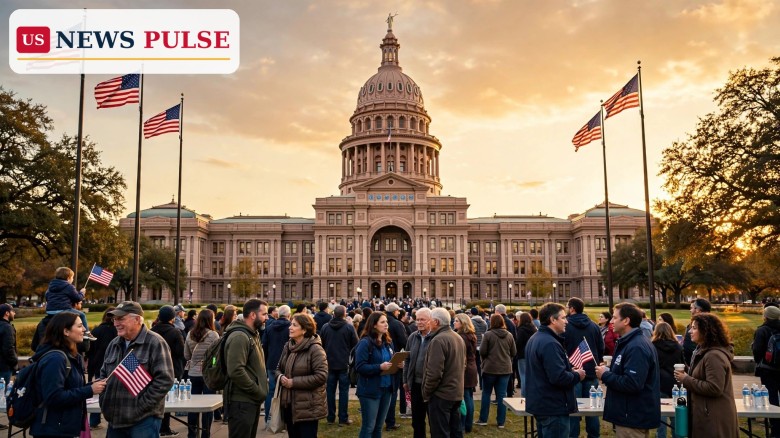
The Texas Senate race $573 million total has made the contest between Republican Ken Paxton and Democrat James Talarico the most expensive non-presidential race in American history, according to advertising intelligence firm AdImpact. With one day to go before the November 3 midterm elections, political advertising spending and reservations in the Texas contest reached $573 million, a figure reported on Monday, November 2, 2026, from AdImpact's October 30 analysis. The record matters not only for its size, but for what it reveals about the race itself: Republican-aligned advertisers have spent far more than Democrats, yet the latest polling puts the Democrat ahead.
That contrast is the heart of the story. Paxton, the Texas attorney general, is backed by $251.7 million in advertising support from outside groups, against $30.6 million for Talarico. Despite that eight-to-one outside-spending gap, the final New York Times/Siena University poll, released November 1, showed Talarico leading Paxton by 50 percent to 43 percent among likely Texas voters. Texas has not elected a Democrat to the US Senate since 1988, which is why a Democratic lead in the final poll, in the country's most expensive Senate race, has drawn national attention.
Key Points
- The Texas Senate race between Ken Paxton and James Talarico has reached $573 million in political advertising spending and reservations, a record for a non-presidential contest in US history, according to AdImpact.
- AdImpact's October 30 analysis counts $165.7 million in primary advertising and $407.5 million in general-election spending and reservations, a figure that includes bookings as well as money already spent.
- Republican advertisers outspent Democrats by $140.7 million in the general election, and outside groups gave Paxton $251.7 million in advertising support against $30.6 million for Talarico.
- The Senate Leadership Fund-aligned Texas PAC alone spent $182.1 million supporting Paxton and attacking Talarico, making it the eighth-largest advertiser of the current election cycle.
- The final New York Times/Siena poll, released November 1, put Talarico ahead 50 percent to 43 percent, a survey of 1,215 likely Texas voters with a margin of error of 3.4 percentage points.
What Happened
AdImpact, which tracks political advertising spending and reservations, reported that the Texas Senate contest had passed the half-billion-dollar mark and reached $573 million ahead of Tuesday's vote. The total combines two phases of the race: $165.7 million spent on primary advertising, and $407.5 million in general-election advertising spending and reservations. The distinction matters, because the general-election figure includes advertising bookings for the final days of the campaign, not only money already spent on ads that have aired.
The record was reported widely on November 2, the day before Election Day, when voters will decide all 435 seats in the House of Representatives and 35 Senate seats. Control of both chambers is at stake, and the Texas seat is one of the most closely watched because of the combination of record spending and a polling lead for the challenger in a state that has voted Republican in Senate races for nearly four decades.
Paxton, the Republican nominee and Texas attorney general, faces Talarico, the Democratic nominee. The race has attracted national money because the Senate majority is in play: Republicans currently hold a 53-47 majority, and Democrats need a net gain of at least four seats to take control. A Democratic win in Texas, long considered a Republican stronghold, would transform the map.
Background and Context
Texas is only the second non-presidential contest in US history to cross $500 million in political advertising. The first was the 2024 Ohio Senate race, which recorded $542.7 million. This cycle is the first in which two non-presidential races have crossed that threshold: the current Ohio Senate contest has also passed it, reaching $514.3 million. The Texas total of $573 million now stands above both.
The scale is also striking in comparison with the last Texas Senate race. The 2024 general election between Republican Ted Cruz and Democrat Colin Allred cost $202.2 million in advertising, less than half of the current general-election figure alone. In that 2024 race, Democratic advertisers held a $34.1 million spending advantage. This time the advantage has run the other way, and by a much larger margin.
The spending pattern changed over the course of the campaign. Until mid-August, Talarico and other Democratic advertisers dominated the advertising space, spending $21.4 million compared with just $2.5 million by Republicans. The Republican spending surge came later, driven by outside groups, and it accelerated as the general election approached. That late surge is consistent with a strategy of overwhelming the airwaves in the final weeks, when the largest share of voters are paying attention.
Texas Senate Race $573 Million: Where the Money Went
The breakdown of the $573 million shows how concentrated the spending has been. In the general election, Republican advertisers outspent their Democratic counterparts by $140.7 million, on a general-election total of $407.5 million in spending and reservations. That gap was driven overwhelmingly by outside groups rather than by the candidates' own campaigns.
One group dominates the list. Texas PAC, aligned with the Senate Leadership Fund, spent $182.1 million supporting Paxton and attacking Talarico, making it the eighth-largest advertiser of the entire election cycle. In total, outside groups provided $251.7 million in advertising support for Paxton, compared with $30.6 million for Talarico. The imbalance means Texas voters have seen far more advertising attacking Talarico and supporting Paxton than the reverse, at least from outside spenders.
That spending has not, so far, translated into a polling lead for Paxton. The final New York Times/Siena University survey, released November 1, surveyed 1,215 likely Texas voters and found Talarico ahead by seven points, 50 percent to 43 percent, with a margin of error of 3.4 percentage points. The poll is the last major survey before Election Day, and it is the figure both campaigns will be judged against when results come in.
Reactions and Quotes
AdImpact's data has been presented as a straightforward measurement of the race's scale, and the firm has emphasised that the $573 million figure covers both spending and reservations. That caveat is important for readers: reservations are bookings for future advertising, so the final amount actually spent may differ slightly from the headline total once the campaign ends.
Siena Research Institute executive director Don Levy, commenting on the final polling, said Democratic control of the Senate was a possibility, but cautioned that a majority for either party remained within reach. The caution reflects the polling picture nationally: Democrats lead in several competitive Senate races, but most of those leads are within or close to the margin of error, and the Texas lead of seven points is one of the larger ones.
The campaigns themselves have not disputed the spending figures. For Paxton's supporters, the record spending is presented as evidence of how much is at stake in holding a Republican seat in Texas. For Talarico's supporters, the polling lead despite the spending gap is presented as evidence that voters are not being swayed by the volume of advertising alone.
Why It Matters
The Texas race matters for three reasons. First, it is a test of whether money still decides elections. The conventional wisdom in American politics is that the candidate with more advertising usually wins, because more advertising means more visibility. Texas in 2026 is testing that wisdom in its most extreme form: a candidate backed by more than eight times as much outside advertising support is trailing in the final poll.
Second, it matters for control of the Senate. A Democratic victory in Texas would be a major upset and would change the arithmetic of the Senate majority. Texas has not elected a Democrat to the Senate since 1988, and a win there would signal a broader shift in a state whose growing cities and changing demographics have long been watched as a potential turning point in American politics.
Third, it matters for what comes next in campaign finance. The $573 million figure, and the fact that two non-presidential races have now crossed $500 million in the same cycle, suggests that the cost of competitive Senate races is rising sharply. If the trend continues, future Senate races in large states could routinely cost more than half a billion dollars, raising questions about who can afford to run and who funds the campaigns.
What Happens Next
Texans vote on Tuesday, November 3, 2026, and the result will settle the question that the spending and polling have framed. If Talarico wins, it will be the first Democratic Senate victory in Texas in 38 years, and it will be read as a sign that even record Republican spending could not hold the seat. If Paxton wins, it will be read as evidence that the late Republican advertising surge worked, and that the final poll overstated Democratic support.
After the election, AdImpact's final tallies will show how much of the $573 million was actually spent, as opposed to reserved. Analysts will also examine where the money went: which media markets received the most advertising, which messages were most common, and whether the late surge in Republican spending coincided with any movement in the polls. Those answers will shape how campaigns in 2028 plan their own spending.
For now, the record stands as a marker of the 2026 midterms: the most expensive non-presidential race in American history, fought in a state that has not sent a Democrat to the Senate in a generation, with the Democrat leading in the final poll despite being vastly outspent.
Frequently Asked Questions
How much has the Texas Senate race cost?
Political advertising spending and reservations in the Texas Senate race reached $573 million, according to AdImpact, making it the most expensive non-presidential contest in US history.
Who are the candidates in the Texas Senate race?
Republican Ken Paxton, the Texas attorney general, faces Democrat James Talarico. The election is on November 3, 2026.
What does the $573 million figure include?
It includes $165.7 million in primary advertising and $407.5 million in general-election spending and reservations. Reservations are bookings for advertising, so the figure includes ads booked but not yet aired.
Who is leading in the Texas Senate polls?
The final New York Times/Siena University poll, released November 1, put Talarico ahead of Paxton by 50 percent to 43 percent, among 1,215 likely voters, with a margin of error of 3.4 percentage points.
Has Texas elected a Democrat to the Senate recently?
No. Texas has not elected a Democrat to the US Senate since 1988, which is why a Democratic lead in the final poll is seen as a potential upset.
Related coverage on US News Pulse:
© 2026 US News Pulse. All rights reserved.
 Print
 Save