
Muhammad Ali Family Endorses El-Sayed in Michigan Senate Race Before Election Day
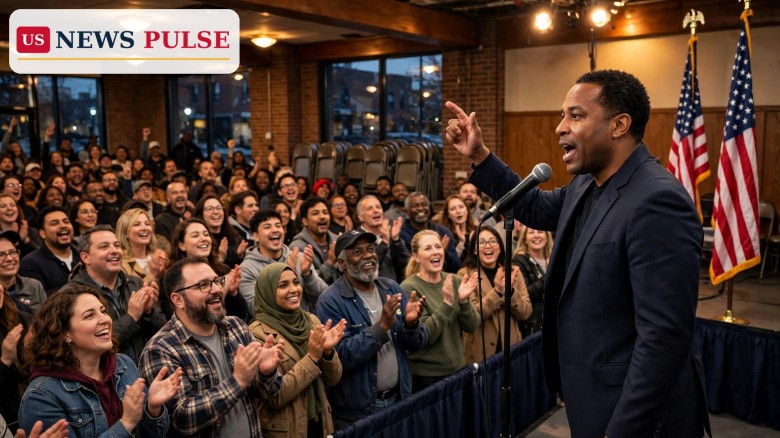
Muhammad Ali's family has entered Michigan's Senate race on the eve of Election Day. On Sunday, the late boxing champion's daughter Khaliah Ali and his grandson Jacob Ali-Wertheimer endorsed Democratic nominee Abdul El-Sayed at a campaign event in Detroit, casting the former public-health official as a carrier of Ali's legacy one day before voters decide one of the nation's most watched Senate contests.
The endorsement landed on the same extraordinary Sunday that El-Sayed's former primary rival, Representative Haley Stevens, broke with her own party and endorsed his Republican opponent, former Representative Mike Rogers. In a single day, Michigan's Senate race gained both a stunning defection and a famous family's blessing, and the contrast between the two moments now frames the final hours of the campaign.
Key Points
- Muhammad Ali's daughter Khaliah Ali and grandson Jacob Ali-Wertheimer endorsed Abdul El-Sayed at a Detroit campaign event on Sunday, November 1, 2026.
- Khaliah Ali said "this is what legacy is" and that her father fought so that candidates like El-Sayed could follow; Jacob Ali-Wertheimer called El-Sayed "a part of Muhammad Ali's legacy."
- The endorsement came hours after Haley Stevens endorsed Republican Mike Rogers, El-Sayed's general-election opponent, at a Detroit church service.
- El-Sayed defeated Stevens in Michigan's Democratic Senate primary in August by 14,893 votes, a margin of just under one percentage point.
- Michigan is one of the races that will decide control of the Senate, where Republicans now hold a 53-47 majority; polls close on Tuesday, November 3.
What Happened
The Ali family endorsement came at a Detroit campaign gathering on Sunday, where former Representative Jamaal Bowman, Michigan attorney general candidate Eli Savit and Michigan Lieutenant Governor Garlin Gilchrist II also spoke. Khaliah Ali took the stage and joked about her father's eye for a good entrance, telling El-Sayed: "I want to talk a little bit about this man, this fine looking man in his black t-shirts. Daddy would have said, who's prettier, me or Abdul?"
Then she turned serious. "You know Ali had to show up if there was a fight," she said. "What made you think this was going to go down without one of us showing up? You got two of us. This is what legacy is. This is why my father fought. They shattered that glass ceiling to pave the beautiful, shining way for you, my dear brother."
Her son, Jacob Ali-Wertheimer, picked up the theme and tied it directly to the campaign's closing argument. "Abdul El-Sayed is a part of Muhammad Ali's legacy," he said. "A man who understands what it means for people to be talked down to for the color of your skin or for the faith you believe in, or the things you dare to stand up to, whether it be unjust or still occurring to this day. There are troubling times ahead of us. We feel the rising tide of hatred."
Jacob Ali-Wertheimer reminded the crowd who his grandfather was and what he stood for. "People ask me that question a lot, and my answer has always been: you tell me when my grandfather, a black man in this country, called himself beautiful, he did that for all of you. But my grandfather, a black man, dared to call himself the greatest. He did that for all of you. And my grandfather protested the Vietnam War on behalf of his religious beliefs as a Muslim."
He closed by borrowing his grandfather's best-known line about service. "We have got another champion in the making, Abdul El-Sayed, and I am proud to be here to speak on his behalf and in his support," he said, "because this is another pivotal time. And as my mother said and my grandfather always used to say, 'Service to others is the rent you pay for your room here on earth.' So, I say, it's about time we pay our rent." He also told the crowd that Michiganders, like the rest of the country, were feeling the rising cost of living, and that El-Sayed was "another fighter in our corner."
Khaliah Ali serves on the board of the Philadelphia Juvenile Law Center and has carried on her father's social-justice work. Jacob Ali-Wertheimer is a Harvard Law School graduate. Their appearance gave El-Sayed, who is seeking to become the first Muslim-American senator in United States history, a cultural endorsement of a kind few candidates ever receive, delivered in the city where the Senate race's most dramatic weekend unfolded.
Background: A Primary, A Split, And A Sunday Of Endorsements
To understand why Sunday mattered, it helps to rewind to August, when El-Sayed narrowly defeated Stevens in Michigan's Democratic Senate primary. When the race was called, El-Sayed led by 14,893 votes out of more than 1.5 million ballots counted, a margin of just under one percentage point, in a primary that set a turnout record for the state. Stevens entered that contest backed by senior Democrats, including Governor Gretchen Whitmer, retiring Senator Gary Peters and Senate Minority Leader Chuck Schumer, and her side benefited from more than $50 million in outside spending, including more than $30 million from the American Israel Public Affairs Committee. El-Sayed ran a grassroots campaign built around Medicare for All, campaign-finance reform and an end to United States military aid to Israel, drawing endorsements from progressive leaders Senator Bernie Sanders and Representative Alexandria Ocasio-Cortez.
The primary ended three months ago, but it was relitigated in public on Sunday. El-Sayed's campaign had scheduled a church-service appearance with Stevens and Democratic South Carolina Representative Jim Clyburn, but El-Sayed disinvited Stevens, saying she should stay away "so as not to distract from the central issues of the campaign." Stevens instead appeared at the Perfecting Church in Detroit alongside Rogers on Sunday morning and endorsed him to reporters gathered outside.
"Hey Michigan, as you may have seen, our Democratic nominee for U.S. Senate, Abdul, said that I was no longer welcome in his campaign and that I should stay away. And he is right, and that's why I am endorsing Mike Rogers for the United States Senate today," Stevens said in a video post. She added: "I don't belong in Abdul's campaign. I do not stand with Hasan Piker, who gets trafficked on our college campuses." She said she remained "a very proud Democrat" and described her own campaign as "a love letter to Michigan," while calling the seat "Phil Hart's seat for the U.S. Senate" and "the conscience of the Senate right now."
El-Sayed responded by trying to move past the split. "I don't want any distractions," he said. "It seems as though other folks are more interested in making this race about things that it's not about. Congresswoman Stevens seems intent on relitigating a primary that ended three months ago. Let's all focus on the task at hand: that's beating Mike Rogers, holding Trump accountable, and getting money out of politics, putting money in pockets, and passing Medicare for All." Asked later about Stevens, he told reporters: "I actually don't think about Haley Stevens. None of these matters. I'm just less interested in the politics of it all than I am in the policy of it all."
The split had immediate consequences inside Stevens's own operation. CNN reported that several of her staffers resigned after her endorsement of Rogers. Her fellow Michigan Democrat, Representative Debbie Dingell, told CNN's Anderson Cooper that Stevens had assured her on Saturday night that she would never endorse Rogers, and called Stevens's subsequent CNN interview defending the endorsement "one of the most painful interviews I've ever watched." Stevens told Cooper: "Nothing with me changed. This is about Abdul getting angrier and angrier, and injecting lack of kindness. My mind is made up. I am rock solid. I am an independent woman, and I made my decision."
Stevens's break also drew attention to her August social-media post, in which she wrote: "Mike Rogers will be another rubber stamp for Donald Trump's dangerous agenda. We can't afford to give MAGA another Senate seat in November." Her fiance, civil-rights lawyer Jason Turkish, has donated to both Democrats and Republicans in this cycle and recently announced he would vote for Rogers, accusing El-Sayed of antisemitism following his pro-Gaza rhetoric. Both Stevens and Turkish have publicly expressed support for Israel.
Muhammad Ali's Family Endorses El-Sayed
Against that backdrop, the Ali endorsement did more than add two famous names to El-Sayed's list of supporters. It offered his campaign a competing story for the same news cycle: where Stevens's endorsement framed El-Sayed as a candidate even his own party's establishment could not support, the Ali family's appearance framed him as the heir to a beloved American tradition of conscience, courage and service.
The symbolism was not subtle, and the campaign did not try to make it subtle. Ali, the three-time heavyweight champion, spent his public life insisting that principle mattered more than popularity, a stance that cost him his titles when he refused induction into the United States Army during the Vietnam War on religious grounds. Jacob Ali-Wertheimer invoked exactly that history on Sunday, presenting his grandfather's defiance as a precedent for El-Sayed's own willingness to take unpopular positions. Khaliah Ali's line, "Whenever there's a good fight there's going to be an Ali," landed as both a family motto and a campaign slogan.
The endorsement also spoke to a specific electoral problem for El-Sayed that has followed him since the primary: building a broad coalition in a state where Black voters, Arab-American voters and progressive voters do not always move together. Detroit, the state's largest city and the site of Sunday's event, is central to that math. El-Sayed's campaign has worked to expand his support among Black Michiganders, many of whom backed Stevens in the primary, and an endorsement from Muhammad Ali's family, delivered in Detroit, is aimed squarely at voters who revere Ali as a civil-rights and cultural figure as much as a boxer.
It also arrived with momentum behind it. El-Sayed's campaign said Sunday was its biggest fundraising day yet, raising $2.4 million from more than 65,000 donors, including more than 29,000 first-time donors, after Stevens's endorsement of Rogers. The Ali endorsement gives that surge a face and a story to carry into Election Day, when the campaign will need its supporters to turn out in force.
Reactions: Trump Welcomes Stevens, Democrats Recoil
While the Ali family was endorsing El-Sayed in Detroit, President Donald Trump was welcoming Stevens's endorsement of Rogers on the campaign trail in Iowa. Speaking to reporters after landing in Dubuque, Trump called Stevens's move "a smart thing" and said of El-Sayed: "El Sayad would destroy our country." Asked whether he would reach out to Stevens, Trump said: "Just call her, thank her, and say she did the right thing." Asked whether she should become a Republican, he said: "Love to have her."
House Speaker Mike Johnson, who was travelling with Trump, said he had spoken to Stevens and called her decision "a heroic and important thing for the country." Johnson said he told Stevens to "stay safe," adding that the country was in "a heightened threat environment." Trump agreed, saying of Stevens: "I'd say she's in danger," and calling her "very brave." Trump also praised Rogers in Dubuque, saying: "Mike Rogers is apple pie. And you know what this country needs? A little apple pie. We don't need the communists or jihadists, the Muslim Brotherhood. He's apple pie. He'll be good."
Democratic reaction to Stevens was sharply different. Beyond Dingell's "painful" verdict and the staff resignations reported by CNN, the episode has become a national symbol of Democratic division days before an election in which the party hopes to win control of at least one chamber of Congress. Stevens herself, on CNN, rejected the idea that she had changed sides in any broader sense. "I still love my party a whole lot," she said, "and I know there are a lot of people working really hard on elections all over the country. This is about Michigan, not just Democrats."
Why It Matters
Michigan's Senate race matters far beyond Michigan. Democrats need a net gain of at least four seats to take control of the Senate from Republicans, who hold a 53-47 majority, and Michigan is one of a handful of battlegrounds that will decide whether that is possible. A Democratic takeover seemed highly unlikely at the start of the year, before the United States launched its war on Iran, but voter discontent over high prices and the war has tightened races in once-safe Republican states and put Democratic hopes within reach.
The final polls point to a close finish. The final New York Times/Siena poll released on Sunday evening showed Democratic candidates leading in all seven seats viewed as most competitive, though five remained within the margin of error. An NBC News poll released on Sunday found 60 percent of Americans disapprove of the president's performance, particularly over high prices exacerbated by the eight-month war against Iran. A record 54 million people had already cast early ballots as of Sunday, 8 million more than in 2022, according to the University of Florida Election Lab.
For El-Sayed, the Ali endorsement is also a statement about what kind of senator he would be. His campaign has argued from the start that the race is about money in politics, health care and accountability for the president, and the Ali family's language of service and conscience fits that argument better than any attack ad. For Rogers, the Stevens endorsement remains a powerful counterweight: a sitting Democratic congresswoman, from El-Sayed's own state and his own primary, telling voters that his opponent is the safer choice. Tuesday will show which endorsement voters remembered.
What Happens Next
Voters go to the polls on Tuesday, November 3, for all 435 House seats and 35 Senate seats. In Michigan, the Senate contest between El-Sayed and Rogers will be watched as an early indicator of whether Democrats can break through in the battlegrounds. Trump is scheduled to deliver his closing midterm message at the Lincoln Memorial Reflecting Pool in Washington on Monday afternoon, while Democratic candidates, including Texas Senate hopeful James Talarico and Kansas Senate hopeful Adam Hamilton, hold final get-out-the-vote rallies.
El-Sayed's campaign will spend its final day turning Sunday's fundraising surge and the Ali endorsement into turnout, particularly in Detroit and its suburbs. Rogers's campaign, backed by the Stevens endorsement and the president's praise, will argue that the race is about common sense versus what Johnson called "crazy." With early voting already at record levels, the remaining question is which side's final argument moves the voters who have not yet cast a ballot.
Frequently Asked Questions
Who endorsed Abdul El-Sayed on Sunday?
Muhammad Ali's daughter Khaliah Ali and his grandson Jacob Ali-Wertheimer endorsed El-Sayed at a campaign event in Detroit on Sunday, November 1, 2026, calling him part of Muhammad Ali's legacy.
What did Khaliah Ali say about El-Sayed?
She said "this is what legacy is" and that her father fought so that candidates like El-Sayed could follow, adding: "They shattered that glass ceiling to pave the beautiful, shining way for you, my dear brother."
Why did Haley Stevens endorse Mike Rogers?
Stevens said El-Sayed had told her she was no longer welcome in his campaign and should stay away, and that she did not stand with streamer Hasan Piker. She said she remained a proud Democrat but believed Rogers was the right choice for Michigan's Senate seat.
How close is the Michigan Senate race?
El-Sayed beat Stevens in the August Democratic primary by 14,893 votes, under one percentage point. The general election against Rogers is one of the nation's most competitive Senate races, with final polls showing several battleground contests within the margin of error.
When is Election Day?
Tuesday, November 3, 2026. A record 54 million Americans had already voted early as of Sunday, and polls will decide control of the House and Senate for the final two years of President Donald Trump's term.
Related coverage: Democrat Haley Stevens endorses Republican Mike Rogers in Michigan Senate race, El-Sayed raises $2.4 million in one day after Stevens backs Rogers, and Trump brands Michigan Democrat El-Sayed a jihadist at Dubuque rally before midterms.
© 2026 US News Pulse. All rights reserved.
 Print
 Save