
Iran US drones claim: Tehran says it downed US aircraft near Qeshm Island
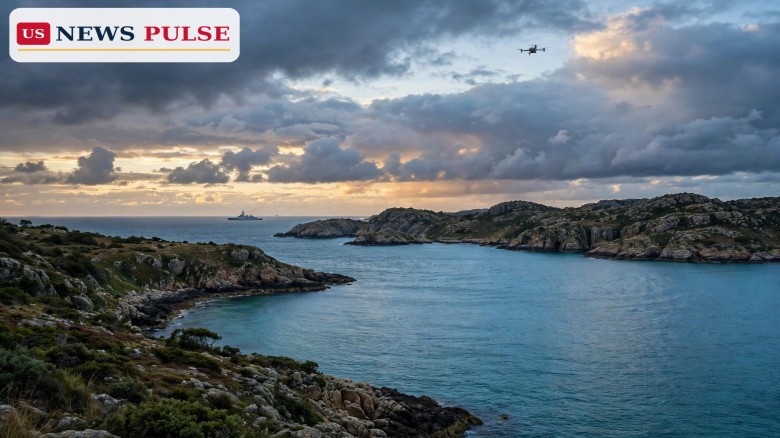
Iran US drones are at the centre of a fresh dispute near the Strait of Hormuz, after Tehran claimed on Monday that its forces had brought down American unmanned aircraft near Qeshm Island and the United States military denied that any of its aircraft had been lost. The competing accounts arrived on the same day Iranian state media reported five explosions on Qeshm, and they show how much of this eight-month war is now fought in statements as well as on the water and in the air.
Key Points
- Iran's Revolutionary Guard Corps (IRGC) claimed on Monday that it downed and captured US drones south of Qeshm Island and destroyed another east of the Strait of Hormuz.
- The accounts describe three aircraft in total: one MQ-9 and two MQM-170 reconnaissance drones, with the MQM-170s said to have been brought down by electronic warfare.
- US Central Command (CENTCOM) dismissed the claims as false and said all American unmanned surface vessels in the region were accounted for.
- Iranian state media also reported five explosions in rapid succession on Qeshm Island, with no confirmed casualties, damage or cause in the reports read.
- President Donald Trump said on Monday there was "no rush" to resume large-scale military action, while insisting that "one way or the other, we will do something".
What Happened
On Monday evening, IRGC-affiliated media carried a statement from the force's Aerospace Force saying its electronic-warfare systems had immobilised two American MQM-170 drones south of Qeshm Island. The statement said the two aircraft had been recovered, bringing the total number of MQM-170s Iran claims to have seized to four. It also named CENTCOM commander Admiral Brad Cooper and presented the episode as another failure for the American command.
Separately, Iranian media reported that the IRGC had destroyed an MQ-9 drone east of the strait. One account, citing the IRGC-affiliated Tasnim news agency, said the MQ-9 was the 55th of that model Iranian forces claimed to have shot down. Taken together, the Iranian accounts therefore describe three unmanned aircraft: the MQ-9 and the two MQM-170s. Some reports phrase the MQM-170 claims slightly differently, but the core picture is the same — Tehran says it intercepted American drones near Qeshm, and Washington says it did not lose any.
Iranian media also carried a claim that an American unmanned surface vessel had been destroyed in the eastern Strait of Hormuz. CENTCOM rejected that account too, saying every American unmanned surface vessel deployed in the region remained accounted for. The Pentagon has not confirmed any of the Iranian drone claims, and no independent evidence of a downed American aircraft has been published in the reports read for this article.
Background/Context
Qeshm Island sits at the mouth of the Strait of Hormuz, the narrow passage between Iran and Oman through which tankers carry Gulf oil to the rest of the world. Reuters has noted that the strait previously carried about a fifth of global crude oil and natural gas supplies, which is why even unconfirmed reports from the area can move oil prices and dominate election-eve news in the United States.
The US-Iran conflict began in late February 2026 and has sharply reduced traffic through the strait, according to Reuters. US News Pulse reported on Monday that The Wall Street Journal, citing US officials, said the United States had struck Qeshm Island as part of a series of limited, defensive strikes aimed at securing the strait. Iranian state media reported five explosions on Qeshm and blasts near Bandar Lengeh, while CENTCOM did not immediately comment on that strike report and Iranian authorities had not confirmed a strike or an attacker.
Drone claims are not new in this war. On October 29, CENTCOM spokesman Captain Tim Hawkins rejected an earlier Iranian account of an MQM-170 capture. That earlier rejection concerned a different claim and does not settle what happened on November 2. The US Army also describes the MQM-170 Outlaw as a target drone used in air-defence training, which does not establish who operated any aircraft referred to in Iran's claims.
Iran US Drones Near Qeshm: What Each Side Actually Said
The Iranian claim, as carried by Tasnim and other IRGC-affiliated outlets, is specific about method and outcome: electronic warfare immobilised the two MQM-170s south of Qeshm, and the aircraft were then recovered. The MQ-9 claim was presented separately, as a destruction east of the strait rather than a capture. The statement's language was triumphant, presenting the episode as a defeat for CENTCOM.
The American response, as reported by Gulf News and other outlets, was a flat denial. CENTCOM dismissed the reports of lost aircraft as untrue, and said all unmanned surface vessels were accounted for. That denial covers both the drone claims and the separate unmanned-vessel claim. It does not, in the reports read, address the five explosions reported on Qeshm in detail, and it should not be read as a denial of every event reported in the area on Monday. No wreckage photographs, serial numbers, flight logs or independent tracking data for the claimed drones have been published in the sources read, and local and provincial officials had not issued an account when the first explosion reports appeared.
Reactions/Quotes
Trump, in a phone interview with Axios on Monday, said: "One way or the other, we will do something, but there is no rush." He also claimed US economic pressure had severely weakened Iran's finances, leaving it short of money and fuel, and he pointed to a fall of nearly $10 a barrel in oil prices as a sign markets expected the conflict not to resume. Trump has previously said he would not attack Iran before the November 3 midterm elections, and on Monday he said a deal with Tehran "could happen".
Vice President JD Vance has said Washington has not set deadlines for Iran to reach a deal before strikes resume, and that progress has been made in talks. Iranian President Masoud Pezeshkian has said Tehran remains committed to resolving tensions through dialogue, while Qatari mediators have prepared a draft proposal involving three days of confidence-building measures aimed at restarting direct talks.
Why It Matters
The drone dispute matters for three reasons. First, it is a test of credibility in a war where both sides have strong incentives to claim success. If Iran did bring down American aircraft, it would be a significant military and propaganda result. If it did not, the claim still signals to domestic and regional audiences that Iran can challenge American operations near the strait. Second, it sits on top of the shipping risk that has driven oil prices all week: a separate UK maritime agency report said a vessel was hit by an unknown projectile about nine nautical miles north-east of Lima, Oman, suffering a hole in its starboard side, with the ship and crew reported safe, and with no confirmed attribution. Third, the timing is political, on the eve of the November 3 midterm elections, when all 435 House seats and 35 Senate seats are contested and high fuel prices have weighed on voters.
What Happens Next
Three things will clarify the picture, if they happen: a further CENTCOM statement with detail, independent evidence — photographs, wreckage, or tracking data — for the drones or the Qeshm explosions, and what happens to shipping through the strait in the coming days. Diplomatically, the next markers are whether the Qatari draft produces a concrete proposal and whether either side clarifies what happened on Qeshm.
Frequently Asked Questions
What does Iran claim happened near Qeshm? The IRGC says it downed and captured two US MQM-170 drones south of Qeshm Island using electronic warfare, and destroyed an MQ-9 drone east of the Strait of Hormuz, bringing its claimed total of seized MQM-170s to four.
What does the US military say? US Central Command dismissed the claims as false, said no American aircraft losses were confirmed, and said all American unmanned surface vessels in the region were accounted for.
Has any independent evidence been published? Not in the sources read: no wreckage photographs, serial numbers or independent tracking data for the claimed drones have been published, and the Qeshm explosions have no confirmed cause, casualties or damage figures.
What is an MQM-170? The US Army describes the MQM-170 Outlaw as a target drone used in air-defence training; that alone does not establish the operator, mission or fate of any aircraft referred to in Iran's claims.
Does this mean the US-Iran war is escalating again? Not necessarily. The claims and denial are part of an information dispute around the Strait of Hormuz, while diplomacy through Qatari mediators continues and Trump has said there is "no rush" to resume large-scale action.
Related coverage on US News Pulse: US strikes Iran's Qeshm Island in secret raids near Hormuz, WSJ reports; Russian bombs kill 26 at Ukraine aid centre school in Komyshuvakha, Kyiv says; Ukraine-Russia peace talks set for Abu Dhabi on Nov 10-11 as US mediates.
© 2026 US News Pulse. All rights reserved.
 Print
 Save