
Trump Urges New York Voters to Back Lawler, LiPetri and Driscoll on Election Day
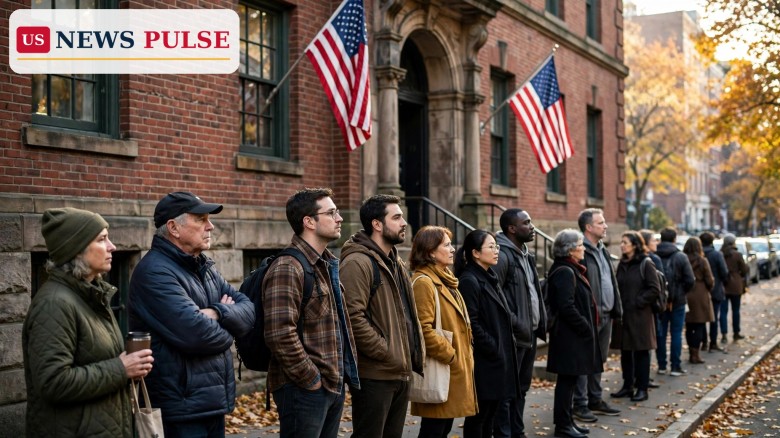
President Donald Trump has urged New York voters to elect three Republican congressional candidates, making a final telephone campaign pitch as midterm voting got under way on Tuesday, November 3, 2026. Addressing a virtual rally, Trump backed Mike Lawler, Mike LiPetri and Jeanine Driscoll, arguing that his tax policies and immigration agenda were directly at stake in their contests.
Key Points
- President Donald Trump made a final telephone pitch to New York voters as midterm voting began on Tuesday, November 3, 2026.
- He backed Mike Lawler, Mike LiPetri and Jeanine Driscoll for Congress, calling them fantastic people and urging supporters to turn out.
- Lawler was praised for his work on the SALT federal tax deduction; LiPetri was presented as an opponent of tax increases; Driscoll as a fiscal steward.
- Trump also praised Bruce Blakeman as his choice for New York governor, days after an earlier tele-rally for Blakeman.
- Separate telephone calls reached voters in Georgia, Indiana, South Carolina and Alaska, framing the midterms as a verdict on his presidency.
What Happened
Trump addressed the virtual rally by telephone, a format he has used repeatedly in the closing days of the campaign. He told New York supporters to get out and vote for Lawler, LiPetri and Driscoll, describing the three as fantastic people and saying he hoped to congratulate them after voting. The appeal focused on taxes, border enforcement and gun rights, and it widened, as these closing pitches often do, to Iran and energy prices, bringing foreign policy into a call aimed at congressional races.
The timing matters. The call came as voting was under way on November 3, with all 435 House seats and 35 Senate seats contested, along with governorships in 36 states. In that context, a telephone rally is less a speech than a turnout machine: a direct appeal, candidate by candidate, to voters who may still be deciding whether to go to the polls at all.
Background: Three New York Races, Three Different Pitches
Trump did not offer the three candidates an identical endorsement. He singled out Lawler for praise over the federal deduction for state and local taxes, commonly known as SALT, describing it as particularly significant for New York taxpayers and crediting Lawler with close collaboration on the issue. For homeowners in high-tax states, the SALT deduction is not an abstraction; it is a line on a tax return, and Trump framed Lawler's work on it as a concrete reason to keep him in Congress.
LiPetri, running against Democratic Congressman Tom Suozzi, was presented as a candidate who opposed tax increases during his time in Albany and would carry the same approach to Washington. Driscoll, the Hempstead town receiver, was presented as a fiscal steward who had delivered savings for local taxpayers, with her prospective election linked to preserving policies Trump described as removing taxes on tips, overtime and Social Security benefits. Trump also criticised Democrat Laura Gillen, whom Driscoll sought to defeat, over her stance on his tax measures.
New York Voters: Why These Seats Matter
New York has long been a Democratic-leaning state, which is precisely why these three races are useful early indicators. If Trump's personal endorsement and telephone outreach translate into votes here, it suggests his closing argument is travelling beyond friendly territory. If they do not, it suggests the limits of a national pitch in districts where local issues and local candidates still decide elections. Results from the three districts will therefore be read well beyond New York, as a first test of how the president's final push performed.
The governor's race runs alongside the congressional contests. Trump separately praised Bruce Blakeman as his preferred candidate for New York governor. That praise follows an earlier tele-rally on October 31 in which Trump urged New Yorkers to vote for Blakeman over Governor Kathy Hochul, calling her possibly the worst governor in the history of New York State. The new call did not repeat that language at length, but by naming Blakeman again on Election Day itself, Trump tied the governor's race to the same turnout appeal as the House races.
Reactions and Quotes
Trump's own words carried the call. He told supporters, in his direct appeal, to get out and vote for Mike Lawler, Mike LiPetri and Jeanine Driscoll, calling them fantastic people. He described telephone rallies as an important part of his campaign effort, a sign of how much he values a format that lets him speak to many states in a single evening without leaving Washington.
The source material includes no response from Suozzi, and no response from Gillen to Trump's account of her positions was carried in the reports checked. That absence is worth noting plainly: this was a one-sided campaign pitch, reported as such, not a debate. Voters in the three districts will have heard the other side's case elsewhere, in their own advertising and appearances, but it was not part of this call.
Why It Matters
The broader significance of the call lies in how Trump framed it. He did not present the three races as local contests about local services. He presented them as a referendum on his administration's programme at large: taxes, immigration enforcement, gun rights, drug pricing, Iran and energy prices, all folded into a single pitch. That framing is deliberate. If voters accept it, a House vote becomes a vote of confidence in the presidency. If they reject it, the same framing gives Democrats a ready argument that the president nationalised races he could not win on local ground.
The five-state shape of the evening reinforces the point. Beyond New York, Trump addressed voters in Georgia, Indiana, South Carolina and Alaska, criticising Democratic policies on taxation, immigration and gun rights in each. A telephone tour of that kind is cheap, fast and repeatable, and it lets a president act as his party's closer in states he cannot visit in person on Election Day itself.
What Happens Next
Results from the three New York districts will arrive through the night, alongside the governor's race and the national battle for House control. The first question is narrow: did Lawler, LiPetri and Driscoll win? The second is broader: did Trump's Election Day telephone push move votes in a state where his party usually struggles? The answers will shape how both parties judge the value of the president's personal endorsement in the next campaign, and whether the telephone rally remains a closing-night staple or fades as a novelty.
For now, the pitch itself is the news: on the morning voters were already casting ballots, the president picked up the phone and asked New York, by name and by candidate, to vote Republican.
Frequently Asked Questions
Which candidates did Trump endorse in New York?
Trump endorsed Mike Lawler, Mike LiPetri and Jeanine Driscoll, three Republican candidates running in New York congressional races, during a telephone rally on November 3, 2026.
What issues did Trump focus on?
He focused on tax policy, including the SALT deduction, immigration enforcement, gun rights and drug pricing, and he also addressed Iran and energy prices.
Who are LiPetri and Driscoll running against?
LiPetri is running against Democratic Congressman Tom Suozzi, and Driscoll sought to defeat Democrat Laura Gillen.
Did Trump mention the New York governor's race?
Yes. He praised Bruce Blakeman as his preferred candidate for New York governor, following an earlier October 31 tele-rally for Blakeman.
Which other states did Trump call?
Reports of the same telephone effort mention voters in Georgia, Indiana, South Carolina and Alaska, alongside New York.
Related coverage: Trump backs Blakeman in final New York push; JD Vance Rome rally fights to hold NY-21; Florida flooding moves Treasure Coast polling places.
Note: the featured image is an illustrative generated scene of voters outside a polling place, not a photograph of the telephone rally.
© 2026 US News Pulse. All rights reserved.
 Print
 Save