
Pentagon Anthropic Talks Put Claude Military Limits to Friday Test
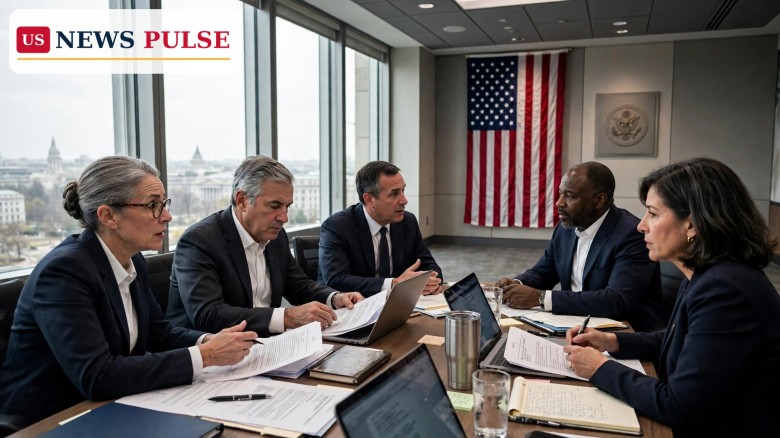
Pentagon Anthropic talks on Tuesday, November 3, 2026, have put one of the most consequential disputes in American defence technology on a short clock. Reports say Defence Secretary Pete Hegseth has given Anthropic chief executive Dario Amodei until Friday to accept the Pentagon's terms for military use of its Claude artificial intelligence model. The reported deadline turns a long argument about safety limits into an immediate test: can a private company keep guardrails on a powerful model the United States military wants to use more widely, or will the Pentagon move on without it?
Key Points
- Reports say senior Pentagon officials met Anthropic executives on Tuesday, November 3, 2026, to discuss defence access to Claude.
- The reported deadline is Friday, after which Anthropic could face serious contractual consequences if it does not accept the Pentagon's conditions.
- The dispute centres on two uses Anthropic has resisted: mass surveillance and fully autonomous weapons that can kill without human oversight.
- The Pentagon argues that a company paid by the Defence Department should not dictate how lawful military applications work.
- Claude was once the only model authorised for the Pentagon's classified systems, but reports say xAI's chatbot was added on Monday.
What Happened
According to reports published on Tuesday, the meeting brought together senior Pentagon leaders, led by Hegseth, and Anthropic executives to resolve a standoff that has lasted for weeks. The reports describe the session as high-stakes rather than a routine vendor discussion, because the outcome could determine whether Claude remains a central tool inside American defence systems or is sidelined in favour of rivals. No joint statement from the Pentagon or Anthropic about the meeting's outcome appeared in the reports checked for this article, and neither side's final position was presented as settled.
The reported Friday deadline is the clearest new element. If the reports are accurate, Amodei has only a few days to decide whether to adjust Anthropic's usage terms. The reports do not specify every condition the Pentagon is seeking, nor whether a partial agreement would be enough. The talks were reported on Election Day, amid intense scrutiny of artificial intelligence spending.
Background/Context
Anthropic signed a contract worth up to 200 million dollars with the Pentagon's Chief Digital and Artificial Intelligence Office in July 2025, describing it as a new chapter in its support for United States national security. For a period, Claude was the only model authorised for use in the Pentagon's classified networks.
The dispute sharpened in February 2026, when the Pentagon designated Anthropic as a supply-chain risk, a label normally associated with companies linked to foreign adversaries. Anthropic sued in March, arguing that the designation was retaliation for its public criticism of government uses of artificial intelligence and a violation of its free-speech rights. In late August, United States District Judge Rita Lin ruled that the designation was illegal and baseless. On August 31, the Defence Department opened ChatGPT Mil and Grok for Government to about three million users through its GenAI.mil portal, alongside Google Gemini. Claude was not on that list.
Pentagon Anthropic Talks: The Guardrails at the Centre
Anthropic has said its objections are limited to two areas: fully autonomous weapons and mass domestic surveillance. In a statement issued in March, the company said it would provide its models to the Defence Department at nominal cost for as long as necessary to make a transition, while keeping those two exceptions. Pentagon officials, as quoted in the reports, take a different view: if a company seeks to profit from the government, its safeguards ought to be tuned for the department's applications, so long as they are lawful. Anthropic argues the exceptions are not a general veto over military work, but a line against uses where an error or an absence of human judgement could cause irreversible harm. Reports say OpenAI and xAI have accepted the government's terms, and that xAI's chatbot was added to the classified systems on Monday.
Reactions/Quotes
“If someone seeks to make money from the US government, from the US Department of Defense, those safeguards ought to be adjusted for our applications, so long as they are legal,” a defence official was quoted as saying in reports on the dispute, a line that has become shorthand for the Pentagon's position. Anthropic chief executive Dario Amodei said in March that the company had much more in common with the Defence Department than it had differences, while insisting that its objections were limited to fully autonomous weapons and mass domestic surveillance.
Why It Matters
The Pentagon Anthropic talks will help define the rules for artificial intelligence in warfare and surveillance for years. If the Pentagon prevails, other vendors will understand that government contracts come with an expectation of broad lawful access, and that safety policies written for commercial users may not survive contact with military requirements. If Anthropic holds its lines and keeps a meaningful defence relationship, other companies may feel able to set their own limits without being excluded from government work. For the public, mass surveillance and autonomous weapons raise direct questions about privacy, accountability and who is responsible when a machine makes a lethal decision.
What Happens Next
The immediate next step is the reported Friday deadline. Anthropic must decide whether to accept the Pentagon's terms, seek a narrower compromise, or refuse and accept the consequences. A compromise could involve clearer definitions of mass surveillance or autonomous operation, or additional human-oversight requirements that satisfy both sides. A refusal could lead to the end of the partnership, deeper reliance on OpenAI, Google and xAI, and further litigation over the separate supply-chain designation affecting civilian government contracts.
Frequently Asked Questions
What are the Pentagon Anthropic talks about?
They concern the terms on which the United States military can use Claude, particularly whether guardrails against mass surveillance and fully autonomous weapons will remain.
What is the reported Friday deadline?
Reports say Defence Secretary Pete Hegseth has given Anthropic chief executive Dario Amodei until Friday to accept the Pentagon's conditions.
Why was Anthropic designated a supply-chain risk?
The Pentagon imposed the designation in February 2026 after Anthropic refused to remove its restrictions. A federal judge later ruled it illegal and baseless.
Is Claude still used by the Pentagon?
Reports say Claude has been integrated into some defence workflows, but it was not included in the August 31 GenAI.mil opening for about three million users.
What happens if Anthropic refuses?
Reports suggest the partnership could end, leaving the Pentagon to rely more on OpenAI, Google and xAI, while Anthropic would keep its stated safety limits.
Related coverage: Dan Driscoll joins OpenAI as national security modernization counselor, Anthropic Q3 revenue hits 17 billion dollars in new IPO filing, and Most Americans want more AI regulation, USC survey finds.
© 2026 US News Pulse. All rights reserved.
 Print
 Save