
Black Sea Drone Attacks Kill at Least 30 Mariners in Deadliest Shipping Surge
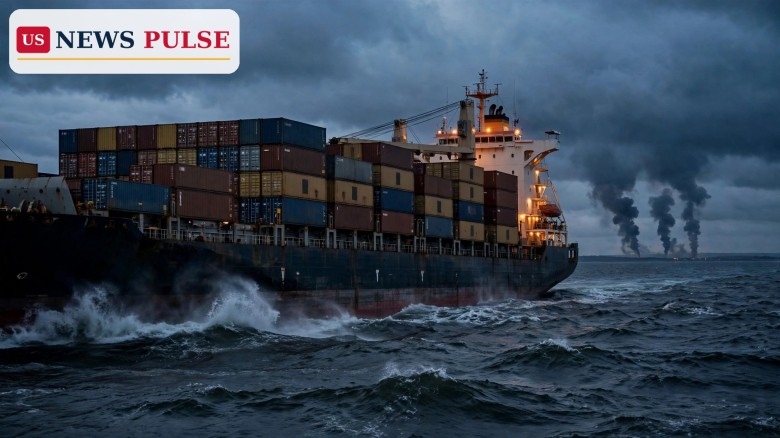
Russian drone strikes on merchant shipping in the Black Sea have killed or left missing at least 30 mariners in recent weeks, turning a vital grain route into what analysts now call the world's most dangerous waterway for civilian seafarers. The Black Sea drone attacks, detailed in reports published on Tuesday, November 3, 2026, have hit at least a dozen merchant vessels, several close to or inside the waters of NATO members Romania and Bulgaria.
Analysts say Russia aims to throttle trade through Ukrainian ports, which handle almost all Ukraine's grain exports. But strikes have also hit ships with no direct link to the war, in waters claimed by two NATO states — raising hard questions about deterrence and direct confrontation.
Key Points
- At least 30 mariners killed or missing in recent weeks, per maritime tracking services and the governments of Romania and Bulgaria.
- At least a dozen merchant vessels struck, including the Alfa Watan, HS Dignity, Wine Trader, Yara J and Contship Jet.
- Several attacks in Romanian territorial waters or the exclusive economic zones of Romania and Bulgaria, both NATO members.
- NATO will deploy patrol aircraft, radars and drones; Romania flies F-16 coastal patrols; Bulgaria seeks anti-drone systems.
- Ukraine exported 1.09 million tons of wheat in September, half the 2.05 million tons shipped a year earlier.
What Happened
The surge began in early October, when the Turkish-owned Alfa Watan, sailing from Egypt toward the Romanian port of Sulina, was struck by air and naval drones. Nine Syrian crew members and one Egyptian died, and the ship sank. Six days later, 11 crew of the HS Dignity — most of them Syrian — died when it was struck off the Bulgarian coast at night.
On October 15, four more merchant ships were targeted, including vessels in Romanian territorial waters and Romania's exclusive economic zone; eight lives were lost, Romanian Foreign Minister Oana-Silvia Toiu said. The chemical tankers Wine Trader and Yara J caught fire near the Sulina Canal, the channel from the Black Sea into the Danube. Six Beninese nationals and one Russian aboard the Wine Trader were killed by three drone hits, its operator said.
Last week, three drones hit a container ship approaching a Romanian port. A French surveillance plane filmed a surface drone closing on the Liberian-flagged Contship Jet, sailing from Haifa toward Romania with more than 400 containers; later video showed it listing heavily before sinking. All 18 crew were rescued, Bulgarian authorities said. Ambrey Analytics counts 317 vessels hit in the Black Sea and Sea of Azov from May to October, up from 74 in the previous half-year; Russia carried out 38 of 43 recorded strikes in October alone.
Background: How the Black Sea Became a War Zone at Sea
The Black Sea has been contested since Russia's full-scale invasion of Ukraine in 2022. Early fighting centred on blockades, naval mines and missile strikes on ports, above all Odesa. In summer 2026, Russia stepped up missile and drone attacks on Ukrainian Black Sea ports, while Ukraine struck ships using Russian ports in the Black Sea and Sea of Azov, plus refineries and military plants on land.
What is new this autumn is systematic combined drone attacks on civilian merchant shipping itself. Russia has paired maritime and aerial drones, and now uses jet-powered drones — faster and harder to intercept — and drones able to hit moving targets. Moscow has not acknowledged all attacks, but its defence ministry has claimed in several cases that targets carried military or dual-use cargo for Ukraine, an account Kyiv and Western analysts dispute for civilian ships near NATO waters.
Black Sea Drone Attacks and the Test for NATO
Geography makes this surge especially consequential. Nine cargo vessels were hit near Romania and Bulgaria in October, one in Romanian territorial waters and the rest in the two countries' exclusive economic zones. Romania has accused Russia of systematic strikes on civilian ships, without attributing individual attacks; Bulgaria has not publicly blamed Russia, but has asked NATO for combat aircraft and anti-drone systems.
Analysts call the campaign a deliberate test of NATO red lines, calibrated to Western aversion to escalation. A NATO official called the alliance's commitment to defending all members, including on the Black Sea, ironclad, and cited plans to invest over 40 billion dollars in counter-drone capabilities over five years. London insurers' Joint War Committee has extended the high-risk area to the whole Black Sea, except the territorial waters of Türkiye, Romania, Bulgaria and Georgia — a move that will raise insurance costs and may deter sailings altogether.
Reactions and Quotes
Ukrainian Foreign Minister Andrii Sybiha said the uptick is turning the Black Sea into a zone of danger for civilian shipping. President Volodymyr Zelenskyy said Kyiv's forces conducted no operations where the Contship Jet was hit, and called the attack part of Russia's effort to make the western Black Sea completely unfit for navigation.
Ambrey analysts said Russian forces are striking vessels linked to Ukrainian trade, now inside the exclusive economic zones of two NATO member states. Türkiye, which controls access through the Bosporus and Dardanelles, is pressing for a deal to restore safe grain shipments — an arrangement needing Moscow's cooperation, and therefore leverage Western governments are still trying to assemble.
Why It Matters
First, the human cost: at least 30 civilian seafarers, most with no part in the war's decisions, are dead or missing — merchant crews are not combatants, and their sea lanes should stay open even in war. Economically, Ukraine's halved wheat exports already signal tighter global grain supplies and higher food prices in import-dependent countries. Strategically, unanswered strikes near NATO waters may embolden Moscow to widen the campaign, while a forceful NATO response risks direct clash. That dilemma is why this matters beyond Ukraine.
What Happens Next
Expect more patrols while NATO's promised deployment builds into a continuous presence. Shipowners will weigh the high-risk designation against slower, costlier overland rerouting many smaller operators cannot afford. Diplomatically, Türkiye's safe-shipping push will be watched closely; even a limited deal covering grain vessels on declared routes would ease immediate pressure, but needs Moscow to accept constraints it has resisted. For families of the dead and missing, the next steps are identification, repatriation and compensation, where ships sank in deep water.
Related coverage: Vance says US-Iran talks are making progress with no deadline for a deal, UN begins liquidating Western Sahara mission after 35 years, and Melania Trump to host Russia-Ukraine meeting at the White House on November 5.
Frequently Asked Questions
How many mariners have been killed?
At least 30 killed or missing, per maritime tracking services and the Romanian and Bulgarian governments.
Which ships were hit?
At least a dozen, including the Alfa Watan, HS Dignity, Wine Trader, Yara J and Contship Jet.
Why are NATO countries involved?
Strikes hit Romanian territorial waters and the exclusive economic zones of Romania and Bulgaria, both NATO members.
What about grain and food prices?
Ukraine's wheat exports halved year on year in September; further disruption could tighten global grain supplies.
Has Russia admitted the attacks?
Not all of them; Moscow has claimed some targets carried military or dual-use cargo for Ukraine, which Kyiv disputes.
© 2026 US News Pulse. All rights reserved.
 Print
 Save