
Federal Hemp Ban Takes Effect December 11, Making Most CBD and THC Products Illegal
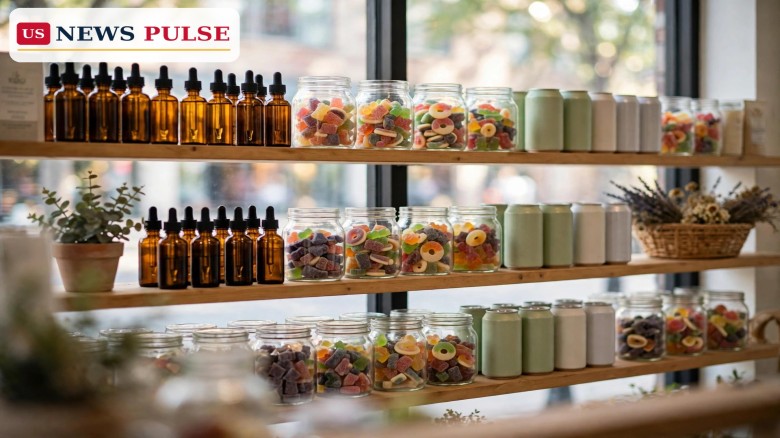
Millions of Americans who buy CBD gummies, hemp-derived THC drinks or full-spectrum oils at gas stations, wellness shops and online stores are about to face a very different shelf. A federal hemp ban takes effect on December 11, 2026, and under its terms most of those products will no longer be legal under federal law. The change does not touch marijuana sold through state-licensed dispensaries, but it redraws the line for everything made from hemp, the plant Congress legalised in 2018 and then largely left unregulated.
The ban was slipped into a sweeping budget bill passed by Congress in November 2025, Public Law 119-37, section 781, and was originally due to take effect this November. A bipartisan Senate coalition delayed most of it by a month in a September 2026 funding agreement, pushing the main deadline to December 11. A narrower piece, covering synthetic cannabinoids, takes effect sooner, on November 12. With weeks to go, retailers, manufacturers and consumers are still trying to work out exactly what can stay on sale, and what must go.
Key Points
- The federal hemp ban takes effect December 11, 2026, after a one-month delay from November.
- Any hemp product with more than 0.4 milligrams of total THC per container will fall outside the federal definition of hemp.
- That limit effectively bars most gummies, tinctures, salves, beverages and full-spectrum CBD oils with trace THC.
- Synthetic cannabinoids, including delta-8 and delta-10, are targeted separately, with that piece effective November 12.
- Marijuana sold through state-licensed medical or recreational dispensaries is not affected by the ban.
What Happened
CNN reported on Tuesday, November 3, 2026, that the ban will bar the sale of any hemp product containing more than 0.4 milligrams of total THC per container. The crucial word is container, not serving. A bottle of gummies, a tincture bottle or a single THC drink is judged on everything inside it, not on the dose in one gummy or one sip. Low-dose gummies typically hold 1 to 3 milligrams of THC per serving, so a whole bottle easily exceeds the new ceiling. Drinks and edibles made from hemp commonly contain 2.5 milligrams, 5 milligrams or 10 milligrams or more per serving, putting them far beyond it.
Products that fail the new test are treated as marijuana under federal law, and many will be classified as a Schedule I narcotic. That is a dramatic reclassification for goods that have been sold openly for years in shops that never held a cannabis licence. The ban also covers products made with cannabinoids that the cannabis plant cannot naturally produce, and cannabinoids produced in a laboratory rather than by the plant itself. That language is aimed squarely at the synthetic market, including delta-8 and delta-10 products that boomed after 2018.
What the Federal Hemp Ban Covers
The 0.4-milligram cap is the provision that does most of the work. Full-spectrum products, which keep all of the plant's natural cannabinoids including THC, are hit hardest. Bill Morachnick, chief executive of Charlotte's Web, the publicly traded CBD company that pioneered the use of hemp oil as a treatment for seizures, said it is virtually impossible to make a full-spectrum product that contains less than 0.4 milligrams in an entire bottle or box. That single observation explains why the industry describes the measure as a ban rather than a regulation: compliance is not a matter of reformulating slightly, but of removing THC almost entirely.
Reactions and Quotes
Some lawmakers who favour regulation over prohibition have signalled sympathy. Representative Morgan Griffith, Republican of Virginia, who sponsored the Hemp Enforcement, Modernization and Protection Act, known as the HEMP Act, said of the delay: "This delay may provide the needed time for lawmakers to collaborate on a potential solution." He added that his bill would create a much-needed regulatory framework at the FDA to regulate these products and ensure a responsible market for CBD products, and he said he expected the continuing resolution that passes the House to uphold the one-month delay. His measure, introduced in January 2026, has four Democratic and five Republican co-sponsors.
Why It Matters
For consumers, the ban changes where and how they can buy products they have used for years. A gummy bought at a convenience store in a state without legal recreational marijuana may simply disappear, even if the same dose would be legal from a dispensary across a state line. Seniors who received CBD products through a Medicare programme face the same disruption. For people who use low-dose THC drinks as an alternative to alcohol, the change removes a legal option that had grown rapidly in states where marijuana sales remain restricted.
What Happens Next
Three dates now frame the story. November 12 brings the synthetic-cannabinoid exclusions into effect. December 11 brings the full redefinition, including the total THC standard and the per-container cap. December 11 is also the day Congress must deal with government funding again, because the delay was tied to a funding bill rather than written as a permanent date. That coincidence gives hemp advocates a legislative vehicle: another funding bill could extend the deadline again, raise the cap, or replace the ban with a regulatory framework.
Frequently Asked Questions
Does the hemp ban make all CBD illegal?
No. CBD itself is not banned, and broad-spectrum or isolate products that stay under 0.4 milligrams of total THC per container can remain hemp. Full-spectrum products with trace THC across a whole bottle or box will generally exceed the cap and fall outside the law.
What happens to THC drinks and gummies?
Most hemp-derived THC drinks and gummies will become illegal under federal law, because a single serving commonly contains 2.5 milligrams or more of THC, far above the 0.4-milligram limit for the entire container.
Does the ban affect marijuana dispensaries?
No. Marijuana sold through state-licensed medical or recreational dispensaries is made from marijuana, not hemp, and is not covered by the ban.
When exactly does the ban take effect?
Synthetic cannabinoids are targeted from November 12, 2026, and the broader redefinition, including the per-container cap, takes effect December 11, 2026, unless Congress changes the law again.
Can Congress still stop or change the ban?
Yes. December 11 is also a government funding deadline, so a further funding bill could extend the date, raise the cap or replace the ban with a federal regulatory system. Until that happens, December 11 stands.
Featured image: an illustrative photograph of wellness shop shelves stocked with oils, gummies and drinks. More from US News Pulse: Westchester ballot scanners down on Election Day and Global markets slide as Nasdaq enters correction.
© 2026 US News Pulse. All rights reserved.
 Print
 Save