
Qatar Says US and Iran Reviewing Interim Deal as Iran Sets Five Conditions
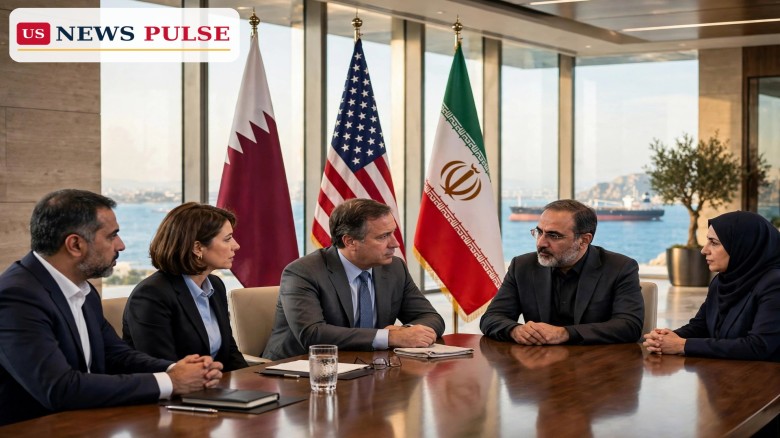
Doha, Qatar — The US Iran interim deal moved a step closer to the negotiating table on Tuesday, November 3, 2026, as Qatar said both Washington and Tehran are now reviewing mediator proposals aimed at pausing a war now in its ninth month. The announcement came alongside five conditions from Iran's armed forces chief for lasting regional security.
Key Points
- Qatar says the United States and Iran are reviewing mediator proposals in real time, with Doha working "towards an interim deal."
- A Qatari delegation returned to Doha on Monday evening after more than three hours of talks in Tehran.
- Iranian armed forces chief Maj-Gen Ali Abdollahi set out five conditions, including a complete lifting of sanctions and war reparations.
- Qatar said freedom of navigation in the Strait of Hormuz was nonnegotiable, and warned that any escalation would affect the talks.
- They follow Monday night's US strikes on Qeshm Island and Iran's two-day plan for reopening the strait.
What Happened
Qatar Foreign Ministry spokesman Majed al-Ansari told reporters on Tuesday that a Qatari delegation had returned to Doha on Monday evening after more than three hours of talks in Tehran. Mediators are now exchanging proposals with both sides in real time, he said, as each side studies Qatar's ideas for an interim arrangement.
"If there were no glimmer of hope, there would be no negotiations," al-Ansari said, in the clearest public signal yet from Doha that the mediation effort still has momentum. He cautioned that any escalation would affect the talks, and stressed that freedom of navigation in the Strait of Hormuz was nonnegotiable.
Separately on Tuesday, Iranian armed forces chief Maj-Gen Ali Abdollahi laid out five conditions, according to Tasnim. The conditions were: an end to hostilities on all fronts, including Lebanon and Gaza; the complete lifting of sanctions; the unfreezing of Iranian assets and war reparations; recognition of Iran's sovereignty over the Strait of Hormuz; and a guarantee against future aggression under a regional security framework.
The US Iran Interim Deal on the Table
An interim deal, as described by mediators, would be a limited first step rather than a final peace treaty. It would aim to stop the shooting, ease the economic chokehold on Iran and reopen a vital shipping lane, leaving the hardest questions — above all Iran's nuclear programme — for a second phase.
The shape of such a bargain has already been sketched in public reporting. Under Iran's two-day plan, the United States would lift its port blockade, waive oil-sale sanctions and cancel new sanctions on day one, with Iran reopening Hormuz on day two. Qatar's proposals are understood to build on that sequencing, though neither side has confirmed the details of the latest drafts now under review.
For Washington, the central demand remains a firm, verifiable commitment that Iran will not rebuild its nuclear programme, which US officials say American strikes destroyed. For Tehran, the priority is relief from sanctions and a guarantee that the war will not simply resume once the strait reopens. Bridging those two demands is the core task of the mediation.
Background: Nine Months of War
The US-Iran war began on February 28, 2026, and is now in its ninth month. It has disrupted shipping through the Strait of Hormuz, a route for much of the world's seaborne oil, pushed oil prices higher at moments of escalation, and drawn in regional powers as mediators and targets.
In recent days diplomacy has accelerated even as fighting continued. On Monday, US Vice President JD Vance said Washington had made "progress" in talks with Iran and set no deadline for a deal, while President Donald Trump said a deal was "coming together very nicely". On Monday night, however, the United States carried out defensive strikes on Qeshm Island, a reminder that military pressure and negotiation are proceeding in parallel.
Qatar has been central to the mediation throughout, shuttling proposals between the two sides alongside other regional mediators. Its delegation's return from Tehran on Monday evening marks the latest turn in that effort. Earlier stages are covered in Vance's progress report and the Qeshm Island strikes.
Reactions and Quotes
Doha's message on Tuesday was deliberately balanced: hopeful about the talks, firm about the strait. Al-Ansari's remark that "if there were no glimmer of hope, there would be no negotiations" answered sceptics who have watched earlier rounds collapse, while his warning on escalation urged both capitals to hold fire while proposals are on the table.
Abdollahi's five conditions, by contrast, set a high bar. A complete lifting of sanctions, war reparations and recognition of Iranian sovereignty over the strait go well beyond what Washington has publicly offered. The conditions may be an opening position rather than a final ultimatum, but they show the scale of the gap mediators must close.
Why It Matters
An interim deal would matter far beyond the two capitals. The Strait of Hormuz is the world's most important oil chokepoint, and its disruption has already rattled energy markets and shipping. A credible pause would lower the immediate risk of a wider regional war, ease pressure on oil prices and give Gulf states room to breathe.
It would also matter politically in Washington, where the war has run through the midterm campaign and a deal — or a collapse — would land mid-season. For Tehran, it offers sanctions relief without conceding the nuclear programme outright, but risks freezing an unfavourable status quo.
What Happens Next
Three things will determine whether the interim deal moves from proposals to reality. First, whether either side formally accepts, amends or rejects Qatar's drafts in the coming days. Second, whether the guns stay silent long enough for negotiators to work — a single major strike could unravel the process, as al-Ansari warned. Third, whether the two-day sequencing — sanctions relief first, Hormuz reopening second — survives contact with Abdollahi's five conditions.
More reporting is expected in the coming days, including whether Qatari mediators return to Tehran or host both sides in Doha. US News Pulse will update this story as the proposals develop. For the latest on the earlier draft circulating in Doha, see Iran's two-day Hormuz offer.
Frequently Asked Questions
What is the US Iran interim deal?
A proposed limited agreement, mediated by Qatar, that would pause fighting, ease sanctions and reopen the Strait of Hormuz while a wider settlement is negotiated later.
What are Iran's five conditions?
An end to hostilities on all fronts including Lebanon and Gaza, complete lifting of sanctions, unfreezing of assets and war reparations, recognition of Iranian sovereignty over the Strait of Hormuz, and a guarantee against future aggression.
Who is mediating the talks?
Qatar is leading it, with a delegation that held more than three hours of talks in Tehran on Monday before returning to Doha; other regional mediators have also shuttled proposals.
Why is the Strait of Hormuz so important?
The narrow waterway for much of the world's seaborne oil; its disruption raises oil prices and threatens shipping.
What happens if the talks fail?
Without one, the war continues, escalation risk around Hormuz stays high, and both sides retain military options — a prospect Qatar warns would damage the talks.
© 2026 US News Pulse. All rights reserved.
 Print
 Save