
Venezuela Frees 39 Political Prisoners After US-Backed Talks as Rubio Urges More Releases
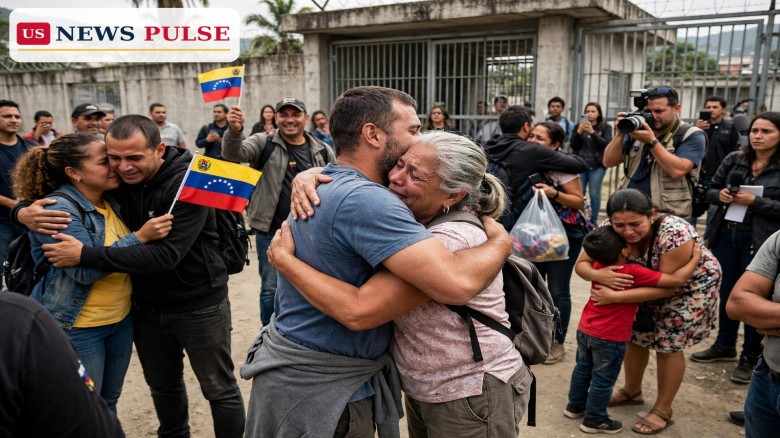
Caracas, Venezuela — Venezuela has freed 39 political prisoners after a second round of United States-backed talks between the interim government and the opposition. The releases took place between Friday and Saturday. On Monday, Secretary of State Marco Rubio met Venezuela's new foreign minister in Washington and urged further releases.
The Venezuela political prisoners freed in this round include eight women accused of "narco-terrorism" in 2021 and six people accused of working with the United States in a 2020 attempt to overthrow former President Nicolas Maduro. Rights group Foro Penal counted 344 political prisoners remaining as of September 18, down from 391 on August 10, after 131 were freed under an "alternative measures" programme. Rubio has said over 1,000 Venezuelans have been freed since Maduro was removed by US forces in January.
Key Points
- 39 political dissidents were freed between Friday and Saturday after a second round of US-backed talks.
- The freed include eight women accused of "narco-terrorism" in 2021 and six people accused of working with the US in a 2020 plot against Maduro.
- Marco Rubio met Venezuela's new Foreign Minister Oliver Blanco in Washington on Monday, November 2, and urged further releases.
- Foro Penal counted 344 political prisoners remaining as of September 18, down from 391 on August 10.
- Rubio reaffirmed the three-phase plan: stabilisation, economic recovery and political reconciliation, then democratic transition.
What Happened
The releases followed a second round of negotiations between the government of interim President Delcy Rodriguez and the opposition, backed by Washington. The talks are part of the political process that has taken shape since Maduro's removal by US forces in January. Rodriguez, Maduro's former vice president, now leads an interim administration under intense international scrutiny.
Details of individual cases remain partial. What is known is the group's composition: eight women whose cases date to 2021 accusations of "narco-terrorism", and six people accused of cooperating with the United States in a 2020 attempt to remove Maduro. The mix illustrates the breadth of Venezuela's political-prisoner population, from alleged coup plots to protest cases long described by rights groups as politically motivated. The timing also matters: the releases came just before Rubio's meeting with Blanco.
Background: How Venezuela Reached This Point
Venezuela's political-prisoner question did not begin this year. For more than a decade, successive governments detained opponents, activists, soldiers and ordinary citizens accused of plotting against the state, often holding them for long periods before trial or under charges critics say criminalise dissent. International bodies, rights groups and foreign governments have repeatedly called for releases, with limited success.
Maduro's removal in January changed the political landscape without resolving the underlying disputes. Rodriguez inherited both the detention system and the international demands to dismantle it, while the opposition has pressed for guarantees of genuinely free elections. That demand sits at the centre of the three-phase plan Rubio reaffirmed on Monday: stabilisation, then economic recovery with political reconciliation, then democratic transition. The releases sit squarely in the reconciliation stage.
Venezuela Political Prisoners Freed: Who Still Remains
Foro Penal's figures give the clearest public picture of what remains. As of September 18, the group counted 344 political prisoners still held — fewer than the 391 counted on August 10, but still a large population. The fall reflects the 131 people freed under the "alternative measures" programme, which has allowed some detainees to leave prison under conditions short of a full release.
Rubio's broader figure — over 1,000 Venezuelans freed since January — covers a longer period and wider cases. But the gap to Foro Penal's 344 shows how much work remains, and advocates caution that aggregate numbers can hide individual injustices. For the 39 freed, the practical questions are immediate: whether charges are dropped or merely suspended, whether they can travel and work freely, and whether they face restrictions after release.
Reactions: Rubio Urges More Releases in Washington
Rubio's meeting with Blanco on Monday was the new foreign minister's first visit to the United States since Rodriguez appointed him last week. The talks covered the three-phase transition plan and institutional reforms aimed at free, fair and credible elections, according to reports of the meeting. Rubio pressed for continued releases, making clear Washington views the prisoner question as central to the transition.
The message carries weight because it came alongside engagement, not instead of it: Washington backs the talks that produced the releases. Inside Venezuela, reaction has been more muted. The interim government has not been reported as trumpeting the releases, while rights groups welcome each release but insist the test is the total still detained.
Why It Matters
Political prisoners are a humanitarian issue, but in Venezuela they are also a political barometer. Releases signal a government willing to loosen its grip; refusals signal the opposite. When releases come through negotiation rather than unilateral amnesty, they also show something about the balance of power: the interim government sees value in concessions, and the opposition and Washington have leverage worth using.
There is a practical dimension too. A democratic transition cannot credibly proceed while hundreds remain detained for their politics, and elections lose legitimacy if opposition activists are in prison or under threat of re-arrest. That is why Rubio linked the prisoner question to credible elections in the same meeting. Beyond Venezuela, migration, regional stability and energy markets all run through its political future.
What Happens Next
The immediate question is whether more releases follow, and how soon. A further release in the coming weeks would suggest a pattern; a long pause would suggest a one-off gesture timed to the Washington meeting. Conditions matter too: dropped charges and free movement would strengthen the case that reconciliation is real.
The other question is the electoral calendar. Rodriguez has promised elections with international witnesses but named no date, and opposition leader Maria Corina Machado has said Rubio's sequence points to presidential elections in 2027. Until a date is set and rules agreed, prisoner releases remain one of the few concrete measures by which outsiders can judge whether the transition is advancing. For now, 39 people are free who were not free last week.
Frequently Asked Questions
How many political prisoners were freed in Venezuela?
Thirty-nine political dissidents were freed between Friday and Saturday after a second round of US-backed talks.
Who were among those released?
Eight women accused of "narco-terrorism" in 2021 and six people accused of working with the US in a 2020 attempt to overthrow Nicolas Maduro.
What did Marco Rubio say about the releases?
Rubio met Foreign Minister Oliver Blanco in Washington on Monday, November 2, and urged the continued release of remaining political prisoners.
How many political prisoners remain in Venezuela?
Foro Penal counted 344 remaining as of September 18, down from 391 on August 10, after 131 were freed under an "alternative measures" programme.
What is the three-phase plan for Venezuela?
Stabilisation first, then economic recovery and political reconciliation, and finally a democratic transition with free, fair and credible elections.
Related coverage: US News Pulse previously reported on the Rubio-Blanco meeting and the phased democratic transition plan, and on regional tensions shaping US foreign policy.
© 2026 US News Pulse. All rights reserved.
 Print
 Save