
Westchester Ballot Scanner Failure Blamed on Programming Error as Fix Rolls Out
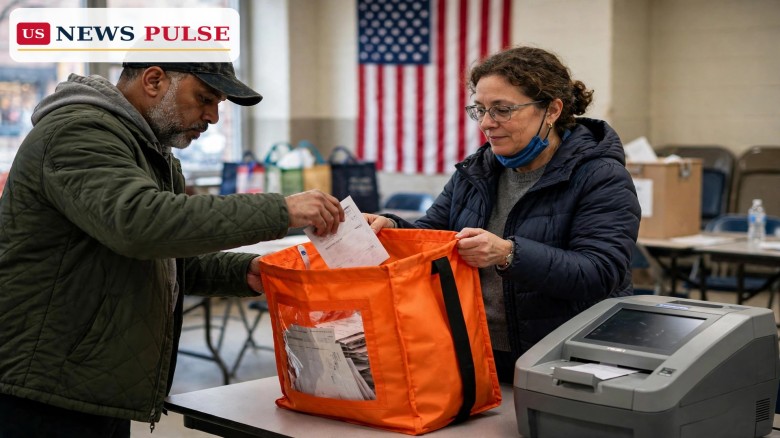
Westchester County's Election Day ballot scanner failure was caused by a programming error that made paper ballots incompatible with the county's machines, the New York State Board of Elections said on Tuesday, November 3, 2026, as replacement scanners were rushed to polling places and unfounded fraud claims spread online. The finding is the first confirmed cause after a day of confusion in a key New York House district. Thousands of ballots sealed in orange emergency bags must be counted, so the result in the toss-up 17th Congressional District may be delayed.
The Westchester ballot scanner failure began when polls opened at 6 a.m. and left machines unusable across the county for hours. Voters still cast paper ballots, which poll workers placed in secure orange emergency bags under bipartisan control. Officials stressed all day that no voter was turned away and every eligible ballot would be counted.
Key Points
- The State Board of Elections blamed a programming issue that made paper ballots incompatible with Westchester scanners.
- Replacement machines using updated programming tested for early voting are being deployed, aiming for at least one working scanner per polling place.
- The county first blamed ballot-paper thickness, then removed that explanation; the programming finding replaces it.
- Katie Miller, Laura Loomer and Representative Claudia Tenney spread unfounded fraud claims about the outage online.
- Officials said voting was never disrupted and bagged ballots sealed under bipartisan control will be counted.
What Happened
When polls opened at 6 a.m. on Tuesday, November 3, 2026, ballot scanners failed across Westchester County. The county Board of Elections confirmed the countywide issue at about 7:30 a.m., when the cause was not yet known. Software faults and misprinted ballots were suspected early, and the county first pointed to ballot-paper thickness.
That explanation did not last. The county later removed the thickness claim from its statement, leaving voters without an official cause for most of Election Day. By Tuesday evening, the State Board gave one: a programming issue had made ballots incompatible with the scanners, a problem not caught during initial testing. Replacement machines loaded with updated programming tested for early voting are now being deployed, with priority on restoring at least one scanner at every polling place. Voting never stopped.
Background and Context
Westchester County, just north of New York City, covers roughly 30 percent of New York's 17th Congressional District, where Republican Representative Mike Lawler faces Democrat Cait Conley in one of the country's tightest House races. Any delay in counting Westchester ballots therefore directly affects when that race can be called.
Paper ballots with a voter-verifiable record are now standard across much of the United States so a machine failure does not lose votes. Westchester's emergency-bag procedure is part of that design: when a scanner cannot read a ballot, it is secured, sealed and counted later, with observers from both parties present. What made Tuesday different was the speed of the rumours. Within hours, fraud claims were circulating widely, even though officials had explained from the morning that paper ballots were being collected securely.
Westchester Ballot Scanner Failure: The Programming Error Explained
In essence, the programming error was a mismatch: Election Day ballots did not match what scanners had been programmed to expect, so machines could not read them. The State Board said the issue had not surfaced during initial testing.
Officials have not yet said which element was wrong — ballot layout, timing marks or another coding detail — or how many ballots were affected before the fault was spotted. Those answers matter for the post-election review and for whether similar programming is used elsewhere in New York. The county's withdrawn thickness explanation shows how quickly an early guess can harden into its own story: offered first, then quietly removed as the investigation pointed elsewhere, it fuelled further speculation even as officials moved toward the programming finding.
Reactions and Quotes
State and county officials moved to reassure voters. They said there was no disruption to voting, ballots rejected by scanners were not wrongly tabulated, and completed ballots in secure emergency bags under bipartisan control will be counted. Attorney General Letitia James said her office was monitoring the issue and in contact with state and local boards. Both NY-17 candidates, Lawler and Conley, urged voters to stay and vote, saying paper ballots would be counted.
Online, the tone was different. Katie Miller wrote on X: "This is how the Left steals elections." Laura Loomer wrote: "Democrats are already trying to steal the election in New York today." Representative Claudia Tenney wrote: "Democrats in NY will do anything and everything to cheat." Activist Scott Pressler was also named among those spreading claims. The claims were unfounded: officials have produced no evidence of fraud or discarded votes, and the paper record itself is the safeguard — every bagged ballot exists as a physical, countable vote.
Why It Matters
The episode matters for three reasons. It affects a real, toss-up race in which Westchester is about 30 percent of the district, so a slow bagged-ballot count may delay the national House picture. It tests trust: a slow or shifting official explanation creates space for misinformation, as the withdrawn thickness claim showed. And it warns administrators everywhere that programming and ballot-printing checks, though unglamorous, are the backbone of a smooth Election Day — a missed mismatch can disable a county's scanners.
What Happens Next
Short term, the focus is counting. Replacement scanners are being deployed and election workers will process the orange bags under bipartisan observation. Officials have given no precise timetable for all Westchester ballots, and in a close district patience will be needed. The NY-17 race remains undecided as counting continues, with both campaigns watching the canvass closely.
Longer term, expect a formal review of how the programming error escaped initial testing and whether testing procedures must change. The State Board and the county board will face questions about what was tested, when, and against which ballot version, with possible new statewide guidance before the next election. For voters, the official message is unchanged: if you voted on paper in Westchester on Tuesday, your ballot is sealed, secured and will be counted. The failure delayed the count; it erased no vote.
Frequently Asked Questions
What caused the Westchester ballot scanner failure? A programming issue made paper ballots incompatible with the county's scanners, the State Board of Elections said, a problem not caught in initial testing.
Will orange-bag ballots be counted? Yes. Officials said completed ballots in secure emergency bags under bipartisan control will be counted, and rejected ballots were not wrongly tabulated.
Was there evidence of fraud? No. Officials said voting was not disrupted, and the online fraud claims by pro-Trump figures were unfounded.
Why could NY-17 be delayed? Westchester is roughly 30 percent of the toss-up district, and processing thousands of bagged ballots takes longer than scanning them on Election Day.
What is the fix? Replacement machines with updated programming tested for early voting are being deployed, aiming for at least one working scanner per polling place.
Related coverage: Westchester ballot scanners down on Election Day as voters use orange bags and Westchester ballot 'too thick' claim withdrawn as NY-17 count faces delay. Image is illustrative.
© 2026 US News Pulse. All rights reserved.
 Print
 Save