
Trump Congratulates Democrats After Midterm Sweep, Blaming Candidates and Fuel Costs
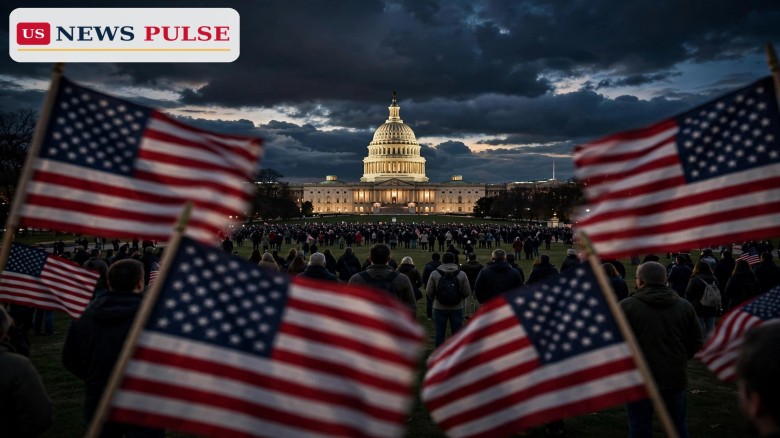
President Donald Trump congratulated Democrats on their sweeping 2026 midterm victories in late-night phone calls on Tuesday, November 3, 2026, and early Wednesday, telling interviewers that his rivals had fought hard and that he looked forward to working with them, even as he blamed Republican candidates and high fuel costs for his own party's losses.
Trump congratulates Democrats in unusually gracious terms for a president whose party had just suffered a bruising election night, but the praise came wrapped in familiar explanations: the candidates were wrong, his name was not on the ballot, and voters were feeling the pinch at the pump. The calls, to CBS News and Fox News, were his first public response to results that pointed to Democratic control of both chambers of Congress.
Key Points
- Trump called CBS News at 11:47 p.m. ET on Tuesday, congratulating Democrats and saying he looked forward to working with them for the good of the country.
- In a separate early-Wednesday Fox News call, he said Democrats "did a good job" and "fought hard" after seeking a Senate majority for 11 years.
- He blamed Republican losses on candidates voters did not like and on his absence from the ballot, saying: "If I was, we would have won."
- He also pointed to high fuel costs as a driving factor, adding that "part of it was Iran."
- Trump said he is not planning a major cabinet shakeup, insisting the results "had nothing to do with my cabinet."
What Happened
As results rolled in on Tuesday night, Trump picked up the phone rather than appearing before cameras. In his call with CBS News at 11:47 p.m. ET, he offered a direct congratulation to the Democrats, saying: "Congratulations to the Democrats, and I look forward to working with you for the good of our country." He added that he has "total veto power" and that he expects the two sides can "work things out."
A few hours later, in an early-Wednesday phone call with Fox News, he struck a similar note. "The Democrats did a good job. I really do," he said. "They fought hard." He noted that Democrats had sought a Senate majority for 11 years, framing their breakthrough as the product of a long campaign rather than a single night's luck. The White House listed no public appearance for Wednesday, and Trump had given no speech or held a press conference since the results came in.
Background/Context
Midterm elections almost always punish the party in the White House, and 2026 was no exception in that broad sense. But the scale of the Democratic advance, with projections pointing to majorities in both the House and the Senate, turned a familiar pattern into a sweeping rebuke. Voters went to the polls against a backdrop of high fuel prices, an eight-month war with Iran that has strained household budgets and global energy markets, and a bruising, expensive campaign season.
Trump Congratulates Democrats — and Explains the Losses His Way
Trump's account of the night had three strands. First, the candidates: he argued that Republican losses came in places where voters simply did not like the person on the ballot, a familiar Trump explanation that puts the blame on individuals rather than on the party's platform or his leadership. Second, the ballot itself: he repeated his belief that his presence would have changed the outcome, saying: "If I was, we would have won."
Third, the economy voters feel every day. Trump pointed to high fuel costs as a driving factor in the results and added that "part of it was Iran," a reference to the war and its effect on energy prices. The argument carries an obvious tension: fuel costs are a problem his administration has struggled to contain, yet he presented them as an outside force that hurt his party rather than as a verdict on his handling of the economy.
What he did not do, at least in these first calls, was promise a shakeup. Asked about his cabinet, Trump said he is not planning any major changes and that the results "had nothing to do with my cabinet." For officials who might have expected to be blamed for the night, that was a reprieve, though in Trumpworld such assurances have often proved short-lived.
Reactions/Quotes
The president's own words set the tone for the morning after. "Congratulations to the Democrats, and I look forward to working with you for the good of our country," he told CBS News, adding that he has "total veto power" and expects both sides can "work things out." To Fox News, he said: "The Democrats did a good job. I really do," and "They fought hard."
His explanations were equally direct. On his absence from the ballot, he said: "If I was, we would have won." On the wider causes, he said "part of it was Iran" while pointing to high fuel costs. And on his team, he was blunt: the results "had nothing to do with my cabinet."
Why It Matters
A president congratulating the opposition after a defeat is not just good manners; it shapes what happens next. With Democrats projected to control both chambers, Trump will need at least some Democratic votes for almost anything he wants to pass, from spending bills to nominations. His reminder that he holds "total veto power" was also a warning: cooperation, in his telling, will happen on his terms.
What Happens Next
The immediate question is whether Trump's conciliatory tone lasts beyond election week. Watch for his first formal remarks on the results, for any meeting with Democratic congressional leaders, and for the shape of the lame-duck session, where unfinished spending and policy business must still be dealt with before the new Congress is seated in January.
Frequently Asked Questions
What did Trump say to Democrats after the midterms?
He congratulated them in phone calls to CBS News and Fox News, saying they "did a good job" and "fought hard," and that he looked forward to working with them for the good of the country.
Why did Trump say Republicans lost?
He blamed candidates voters did not like, his absence from the ballot, and high fuel costs, adding that "part of it was Iran."
Is Trump planning a cabinet shakeup?
No, not according to his early-Wednesday comments. He said he is not planning any major cabinet changes and that the results "had nothing to do with my cabinet."
What does Democratic control of Congress mean for Trump?
It means he will need Democratic support to pass legislation, while retaining the veto. Oversight and investigations of his administration are also likely to increase sharply.
Has Trump spoken publicly since the results?
As of Wednesday morning, he had spoken only in the two phone calls, with no speech or press conference and no public appearance listed by the White House.
Read more on US News Pulse: Cook Political Report shifts 14 races toward Democrats before midterms, Democrats plan flood of Trump probes if they retake House, report says and How US news outlets will call the 2026 midterm races on election night.
© 2026 US News Pulse. All rights reserved.
 Print
 Save