
Janeese Lewis George Wins Washington D.C. Mayor Election in Historic 2026 Victory
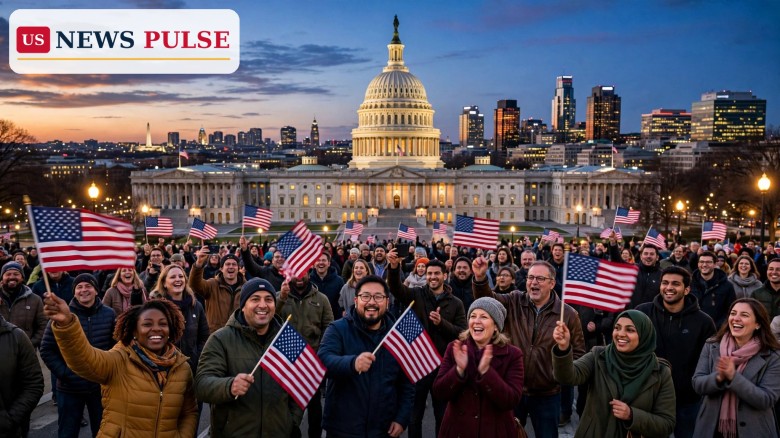
Janeese Lewis George has been elected the next mayor of Washington, D.C., winning Tuesday's election with about 84% of the vote and becoming the capital's first democratic socialist mayor. The Associated Press called the race at 9:56 p.m. Eastern Time on November 3, 2026, with NBC News projecting it a few minutes earlier, at 9:49 p.m. Her victory ends 12 years under one mayor and opens a new chapter for a city at the centre of national political tension.
Lewis George, a 38-year-old Democrat and Ward 4 councilmember since 2020, defeated independent Rhonda Hamilton, who took about 10%, and D.C. Statehood Green Party candidate Robert L. Gross, who took about 3.5%. She will be sworn in on January 2, 2027, as the District's eighth mayor since the 1973 Home Rule Act, succeeding Muriel Bowser, who has led the city since 2015 and chose not to seek a fourth term.
Key Points
- Janeese Lewis George won the Washington, D.C. mayoral election on November 3, 2026, with about 84% of the vote.
- The Associated Press called the race at 9:56 p.m. ET; NBC News projected it at 9:49 p.m. ET.
- She becomes the capital's first democratic socialist mayor and its first new mayor in 12 years.
- She succeeds Muriel Bowser, who has served as mayor since 2015 and did not seek a fourth term.
- She will be sworn in on January 2, 2027, alongside a new delegate to Congress, Robert White Jr.
What Happened
Voters went to the polls on Tuesday, November 3, 2026, in the first D.C. mayoral contest in 20 years without an incumbent on the ballot. Lewis George, a third-generation Washingtonian, built a commanding lead as results came in through the evening, and the major networks moved quickly to project her as the winner. No Republican stood in the general election, reflecting the District's heavily Democratic electorate and the shape of the race after a crowded primary.
An 84% share is a clear mandate in a city where local politics is fought over housing costs, public safety, schools and the District's complicated relationship with the federal government. It gives her political capital as she prepares to take office. On the same night, Robert White Jr. won the District's delegate-to-Congress race, succeeding longtime Delegate Eleanor Holmes Norton. It is the first time since 1990 that the city has chosen both a new mayor and a new delegate.
Background: How Lewis George Got Here
Lewis George has represented Ward 4 on the D.C. Council since 2020, a ward stretching across the northern part of the city. Her council career gave her a record on the issues that dominate District politics: affordable housing, tenant protections, public safety and everyday services, from streets and schools to libraries and recreation.
The road to the general election ran through a crowded seven-candidate Democratic primary on June 16, 2026, decided through ranked-choice tabulations. Lewis George emerged from that field, and her primary victory set up a general election in which she was the clear favourite. Bowser's decision not to seek a fourth term removed the usual advantages of incumbency and invited a wide field. For the first time in two decades, voters were choosing not whether to keep a mayor, but what kind of mayor the city should have next.
Janeese Lewis George Elected Mayor: What the Result Means
The election places Washington in a growing group of American cities led by democratic socialist mayors. Lewis George joins Zohran Mamdani in New York City and Katie Wilson in Seattle, a trio that will draw national attention as a test of how left-leaning municipal government works in practice in very different cities. Supporters see a mayor who will push harder on housing affordability, workers' rights and public services. Critics will watch for any clash with business, the federal government or the District's budget constraints. In practice, the job will be judged less by labels than by whether streets feel safer, rents feel reachable and services work.
The result also lands in a midterm election that has redrawn the national map. Voters across the country backed abortion rights and rejected redistricting moves in several states, as reported in our coverage of 2026 midterm ballot measures. Washington's result fits that broader mood of change, but it is also distinctly local: a city choosing its own leader for the first time in a generation. For residents, the most immediate question is the transition. A new mayor inherits a budget, a workforce and unfinished projects, and must build an administration quickly before January 2.
Reactions and the Road Ahead
The result was welcomed by supporters who see Lewis George as a break from the past 12 years, and noted nationally because of what it says about the direction of Democratic politics in big cities. Her tenure is set against tension with President Donald Trump, who criticised her candidacy after her primary win. That tension is not abstract in Washington: federal decisions touch the city's policing, public spaces and finances in ways other mayors do not face.
Why It Matters
Washington is the capital, but it is also home to more than 600,000 people, with neighbourhoods, schools, businesses and a local economy that do not pause for national politics. The mayor decides how the city responds to housing costs that push families out, to crime that shapes daily life, and to a budget that must stretch across services from trash collection to trauma care.
What Happens Next
Lewis George will spend the coming weeks building her administration, with announcements expected on her transition team, senior staff and first policy priorities, followed by the practical work of taking over city agencies. The new Congress will be sworn in around the same time, and White's arrival as delegate will give the city a new voice in the Capitol.
Her first budget, first appointments and first response to a crisis will set the tone. Mayors are often defined early, and a mayor taking office with an 84% mandate will be expected to move quickly. The test will be whether that speed produces results residents can feel: safer streets, more affordable homes and services that work when people need them. Readers can follow the wider midterm picture in our midterm ballot measures coverage and elections section.
Frequently Asked Questions
Who won the Washington, D.C. mayoral election?
Democrat Janeese Lewis George won on November 3, 2026, with about 84% of the vote.
When will Janeese Lewis George be sworn in?
She will be sworn in on January 2, 2027, as the District's eighth mayor since the 1973 Home Rule Act.
Who did she defeat?
Independent Rhonda Hamilton took about 10%, and D.C. Statehood Green Party candidate Robert L. Gross took about 3.5%. No Republican stood in the general election.
Why is this election historic?
Lewis George is the capital's first democratic socialist mayor and its first new mayor in 12 years, succeeding Muriel Bowser, who served since 2015.
Who won the D.C. delegate race on the same night?
Robert White Jr. won the delegate-to-Congress race, succeeding Eleanor Holmes Norton. It is the first time since 1990 the city has chosen both a new mayor and a new delegate.
© 2026 US News Pulse. All rights reserved.
 Print
 Save