
US Marine Dies in Okinawa Training Incident at Camp Schwab, 3rd Marine Division Says
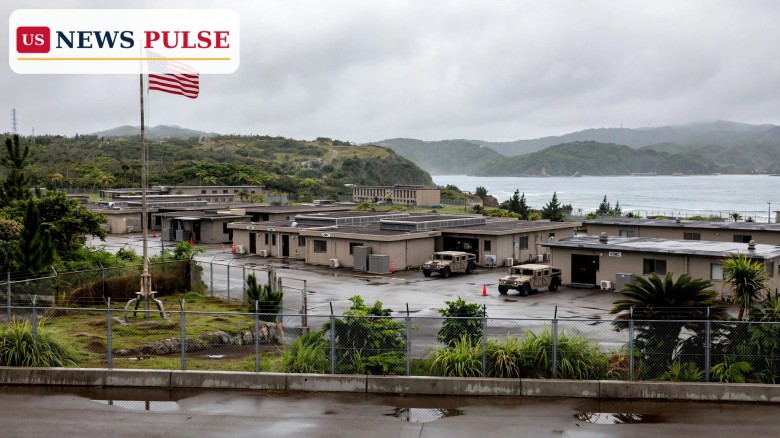
A US Marine has died following a training incident at Camp Schwab in Okinawa, Japan, the 3rd Marine Division announced on Wednesday, in a brief statement that gave no name, rank, unit or cause of death and no details of what happened during the training. The death occurred on Tuesday, November 3, 2026, according to the division, whose announcement was reported by ABC News and Reuters on November 4. The statement's brevity leaves the central questions about the incident unanswered for now: who the Marine was, what kind of training was under way, and what went wrong.
Key Points
- A US Marine died after a training incident at Camp Schwab, Okinawa, on Tuesday, November 3, 2026.
- The 3rd Marine Division announced the death in a statement reported on Wednesday, November 4.
- No name, rank, unit, cause of death or details of the incident were released in the initial report.
- Camp Schwab is a US Marine Corps camp on Okinawa, Japan, home to Marines stationed in the Pacific region.
- Further details are expected to follow once the family has been notified and the circumstances are established.
What Happened
The 3rd Marine Division said in its statement: “It is with heavy hearts that 3rd Marine Division announces the death of a Marine following a training incident at Camp Schwab, Okinawa, Japan, on Nov. 3, 2026.” That single sentence is, for now, the full public account of the incident. The reports carrying the announcement did not describe the type of training involved, the time of day, the location within the camp, or whether any other service members were injured.
The absence of detail in the first hours after such an announcement is not unusual. Military commands typically release only a confirmed death and a general description of the circumstances at first, while the next of kin are notified and the facts are checked. Names are withheld until that notification process is complete, and any account of how an incident unfolded is usually held back until an initial review has established what can reliably be said. In this case, the division has not yet said anything further, and there is no public indication of when a fuller statement might come.
The incident took place at Camp Schwab, on the east coast of Okinawa's main island, in the city of Nago. The camp is one of several Marine Corps installations on Okinawa, an island prefecture in southern Japan that has hosted a large American military presence since the end of the Second World War. Training at such camps ranges from routine field exercises and weapons qualification to larger unit manoeuvres, but nothing in the initial report indicates which kind of training was involved on November 3, and it would be wrong to speculate.
US Marine Dies Okinawa Training Incident: What Is Known So Far
What is confirmed is narrow but clear. A Marine died. The death followed a training incident. It happened at Camp Schwab on November 3. It was announced by the 3rd Marine Division, the Marine Corps division headquartered on Okinawa, and reported on November 4. Everything else that the public might want to know — the Marine's identity and age, their home town, their unit, how long they had served, what training they were doing, and what caused the death — has not been released.
That restraint matters for the family as much as for accuracy. In military deaths, the first people who should hear a name are the relatives, not the public, and early reports that rush ahead of official confirmation risk naming the wrong person or spreading an unconfirmed account of events. The division's short statement suggests a deliberate choice to confirm only what is certain while the rest is established. Readers should therefore treat any social-media claim about the Marine's identity or the cause of death as unverified unless it is confirmed by the division or another official source.
Background and Context
Okinawa is the centre of the United States military footprint in Japan. The island hosts a string of American bases, including Marine Corps camps, airfields and naval facilities, and tens of thousands of American service members, civilian employees and family members live there alongside a local population of about 1.5 million people. The presence dates back to the post-war years and is governed by the US-Japan security treaty and the Status of Forces Agreement, which sets out how American forces operate in Japan.
Reactions and Quotes
So far, the only official words are those of the 3rd Marine Division itself, in the statement quoted above. Neither the division nor the wider Marine Corps has yet published a tribute naming the Marine, and no statement from senior commanders, from the US government in Tokyo, or from Japanese officials has been reported in the initial coverage. That is consistent with the early stage of the process: formal tributes and condolences from senior leaders usually follow once the family has been notified and the identity is cleared for release.
Why It Matters
Every death in training matters first of all to a family, a unit and a close circle of fellow Marines who will carry the loss long after the headlines move on. Beyond that human cost, such deaths also matter because they test how a large military organisation handles safety and accountability in public. Families and the public are entitled to know, in time, what happened and whether anything could have prevented it, and the credibility of that accounting depends on the command getting the facts right before it speaks at length.
What Happens Next
This article will be updated as the 3rd Marine Division releases further information, including the Marine's identity when it is officially confirmed, any details of the training involved, and any statement from the command or the family. Until then, the confirmed facts remain those set out above: a Marine died after a training incident at Camp Schwab on November 3, 2026, and the division announced the death on November 4.
Frequently Asked Questions
Who was the Marine who died? The Marine's name, rank and unit have not been released. Military commands withhold identities until the next of kin have been notified.
When and where did the incident happen? The death followed a training incident at Camp Schwab, Okinawa, Japan, on Tuesday, November 3, 2026, according to the 3rd Marine Division.
What caused the death? No cause of death has been given in the initial report, and no details of the training or the incident itself have been released.
What is Camp Schwab? Camp Schwab is a US Marine Corps camp at Henoko, in Nago, on Okinawa's main island, one of several Marine Corps installations on the island.
Has anyone else been reported injured? No other injuries have been reported in the initial announcement, which refers to a single Marine's death.
Read more in our world news, US news and politics sections.
© 2026 US News Pulse. All rights reserved.
 Print
 Save