
Aber Kawas Makes History as First Palestinian American in New York Senate
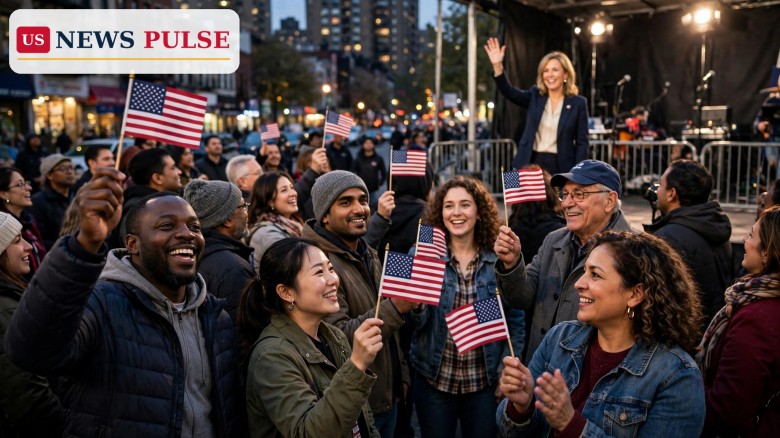
Aber Kawas has won New York State Senate District 12, becoming the first Palestinian American ever elected to the New York State Legislature and the first hijab-wearing woman elected to it, in a decisive victory in the November 3, 2026 midterm elections.
With about 90% of ballots counted when The New York Times called the race, Kawas secured about 75% of the vote, a commanding margin in the Queens-based district and one of the most striking firsts of this year's elections in New York.
Key Points
- Aber Kawas won New York State Senate District 12 with about 75% of the vote, with 90% of ballots counted when the race was called.
- She is the first Palestinian American elected to the New York State Legislature and the first hijab-wearing woman elected to it.
- Kawas is a Brooklyn-born daughter of Palestinian refugees and a community organiser of more than 15 years.
- She won the June 2026 Democratic primary with about 60% of the vote and defeated Republican nominee Han-Khon To in the general election.
- She takes office in January 2027, representing a Queens district previously held by Michael Gianaris.
What Happened
Kawas, a Democratic socialist, won the Queens seat in the November 3 midterms after a campaign built around neighbourhood organising and a platform centred on everyday costs and rights. The district covers Astoria, Sunnyside, Woodside, Ridgewood, Maspeth, Long Island City, Elmhurst, Glendale and Jackson Heights, some of the most diverse communities in New York City.
Her path to the general election ran through a competitive Democratic primary in June 2026, when she defeated Assemblyman Steven Raga with about 60% of the vote. That primary win, in a district where the Democratic nomination carries great weight, set up her November victory over Republican nominee Han-Khon To.
Background/Context
Kawas was born in Brooklyn to Palestinian refugees, and her biography has been central to how supporters describe her candidacy. She has worked as a community organiser for more than 15 years, a background her campaign presented as preparation for representing a district shaped by immigrant families, renters and working people.
She is a member of the Democratic Socialists of America and was backed by New York City Mayor Zohran Mamdani, Senator Bernie Sanders and Representative Rashida Tlaib. Those endorsements placed her firmly within the progressive wing of the Democratic Party, at a moment when that wing has gained ground in New York politics.
Aber Kawas: A Historic First for New York
The historic character of the result is not in doubt: no Palestinian American had previously been elected to the New York State Legislature, and no hijab-wearing woman had previously won a seat there. For supporters, the result is therefore about representation as well as policy, showing that a candidate who wears a hijab and speaks openly about her Palestinian heritage can win decisively in Queens.
Her campaign slogan, "Fund Dignity, Fight Destruction", summed up a platform centred on healthcare for all, affordable housing, public transport, immigrant protection and ending United States funding for war. Those themes, rather than national slogans alone, were aimed at the daily pressures facing district residents.
Reactions/Quotes
The campaign's slogan, "Fund Dignity, Fight Destruction", framed its case in moral as well as practical terms, linking funding for public services with opposition to policies its supporters describe as destructive for working families. Endorsements from Mamdani, Sanders and Tlaib signalled that national and city progressive figures saw the race as an important test of that politics in Queens.
The scale of the win also matters politically. A margin of about 75% with most ballots counted leaves little doubt about the district's choice, and it gives Kawas a strong mandate as she prepares to move from community organising to lawmaking in Albany.
Why It Matters
State senates shape daily life in ways that often escape national attention: they pass budgets, set housing and healthcare rules, and decide how state agencies treat immigrant communities. A new senator from Queens therefore has a direct say over issues that affect rents, hospital access, bus and subway service, and protections for neighbours worried about immigration enforcement.
Beyond policy, the result carries a symbolic weight that supporters say should not be dismissed. For Palestinian Americans, and for Muslim women who wear a hijab, seeing a candidate with that background win a state senate seat by a large margin is a visible break with a long history of under-representation. Representation alone does not change a rent bill or a hospital queue, but it changes who sits in the room when those decisions are made, and whose experiences are treated as ordinary rather than exceptional.
The result also fits a broader pattern in the 2026 midterms, in which voters in several states chose candidates from communities that had rarely held those offices before. In New York, that pattern is especially visible in Queens, where immigrant communities have long supplied much of the city's workforce and cultural life while holding fewer of its highest offices.
What Happens Next
Kawas takes office in January 2027, when she will join the State Senate in Albany for its new session. Her early test will be turning campaign promises on healthcare, housing, transport and immigrant protection into bills, budget priorities and votes, while representing a district that expects visible results.
Related coverage: Westchester ballot scanners down on Election Day, Vikki Goodwin beats Dan Patrick in Texas, US midterm elections 2026: Americans vote as control of Congress hangs in balance.
Frequently Asked Questions
Who is Aber Kawas? She is a Brooklyn-born daughter of Palestinian refugees, a community organiser of more than 15 years, and a member of the Democratic Socialists of America.
What did Aber Kawas win? She won New York State Senate District 12 in the November 3, 2026 midterms, with about 75% of the vote when the race was called.
Why is her win historic? She is the first Palestinian American elected to the New York State Legislature and the first hijab-wearing woman elected to it.
Who did she defeat? She defeated Assemblyman Steven Raga in the June 2026 Democratic primary and Republican nominee Han-Khon To in the general election.
When does she take office? She takes office in January 2027, representing Queens communities including Astoria, Sunnyside, Woodside and Jackson Heights.
© 2026 US News Pulse. All rights reserved.
 Print
 Save