
Knicks Rout Bulls 135-105 Behind 43-21 First Quarter at Madison Square Garden
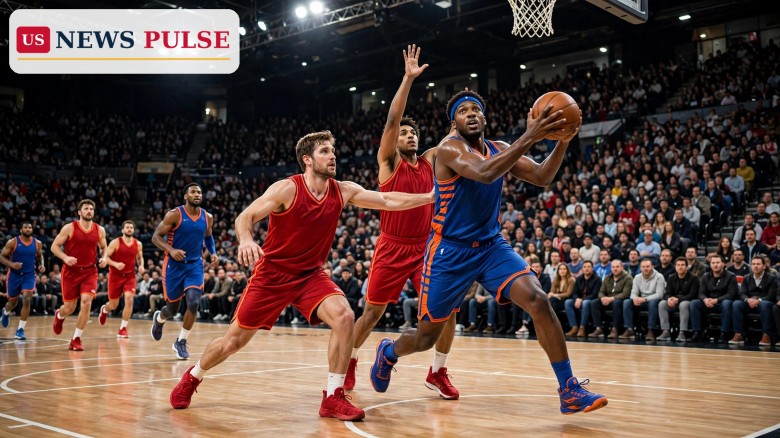
NEW YORK — The New York Knicks rout Bulls 135-105 on Wednesday, November 4, 2026, at Madison Square Garden, turning a home game into a rout before many fans had settled into their seats. New York led 43-21 after the first quarter and 84-52 at halftime, winning the first three quarters before Chicago took the fourth 26-22 with the result long decided. The win lifted New York to 4-4, while Chicago fell to 1-7.
The tone was set in the opening minutes. Jalen Brunson scored nine early points as New York opened a 17-8 lead and forced a Chicago timeout, with Landry Shamet and OG Anunoby adding four points each in that opening run. Chicago, already searching for answers, found itself chasing the game almost immediately.
Key Points
- New York beat Chicago 135-105 on November 4, 2026, at Madison Square Garden in New York.
- The Knicks led 43-21 after the first quarter and 84-52 at halftime, winning the first three quarters.
- Jalen Brunson scored nine early points as New York opened a 17-8 lead and forced a Chicago timeout.
- New York shot 44-for-87 from the field, 17-for-40 from three and 30-for-37 from the free-throw line.
- Chicago shot 37-for-96 from the field and 10-for-44 from three, falling to 1-7 while New York improved to 4-4.
What Happened
The opening run explains everything that followed. Brunson, with nine early points, was the catalyst, attacking with purpose and forcing Chicago's defence to react to him. When a defence collapses toward one player, openings appear elsewhere, and Shamet and Anunoby, with four points each in that opening stretch, were the beneficiaries. By the time Chicago called timeout at 17-8, the pattern was established: New York was playing downhill, Chicago was playing on its heels, and the Garden crowd could sense a long night ahead for the visitors.
New York then extended the lead to 43-21 by the end of the first quarter and to 84-52 by halftime, outscoring Chicago 41-31 in the second quarter. A 32-point halftime lead changes the nature of everything that follows. The leading team can manage minutes and protect its advantage, while the trailing team must play near-perfect basketball for two full quarters simply to make the game competitive again. New York also won the third quarter 29-27, taking a 113-79 lead into the final period, and Chicago's 26-22 fourth quarter came far too late to matter.
The shooting numbers underline the gap. New York finished 44-for-87 from the field, a shade over fifty percent, and 17-for-40 from three-point range, reflecting both good shot selection and confident execution. At the free-throw line, the Knicks were 30-for-37, another sign of a team getting to the basket and putting pressure on the defence. Chicago finished 37-for-96 from the field and 10-for-44 from three, numbers that describe a team struggling to find clean looks and to convert the ones it did find. In a game decided by thirty points, those percentages are not a footnote; they are the explanation.
Background: Two Teams Heading in Opposite Directions
New York arrived at this game at 3-4, a record suggesting a team still finding its footing rather than one already in full flight. A thirty-point home win changes that picture, at least for a night, moving the Knicks back to .500 in a manner that will encourage supporters and coaches alike: not through a narrow escape or a late run, but through dominance from the opening tip. Chicago's position is very different. At 1-7, the Bulls have lost seven of their first eight games, and this defeat was among the most comprehensive of them all, suggesting problems beyond a single bad shooting night.
Knicks Rout Bulls 135-105: How the First Quarter Decided the Game
A 43-21 quarter is not merely a good start; it is a statement, and it forces the trailing team into difficult choices. Does it chase the game, taking risks that may lead to more turnovers and more easy points for the team in front? Does it slow the game down, hoping to limit the damage and regroup at halftime, while accepting that the deficit may still grow? Chicago tried to find a way back, but neither approach, on this night, was enough to halt New York's momentum, and by halftime the lead had grown to 32 points.
Reactions
No post-game quotations are included here, because the source reports for this game did not carry verified post-game comments from either camp, and no quotations have been invented to fill that gap. In a thirty-point game, the most honest reaction is often found in the numbers rather than in words. A team that leads 43-21 after one quarter does not need to explain itself, and a team that trails by that much rarely has an explanation that changes the picture. What the facts show is a clear difference in execution, in shooting, and in control of the game from the opening minutes.
Why It Matters
For New York, this win matters because of the way it was achieved and the timing of it. At 3-4, the Knicks needed a result that would restore momentum and belief, and a thirty-point home win is about as emphatic a response as a team can produce. Moving to 4-4 puts New York back at .500, but more importantly, it does so with a performance suggesting the team is capable of much more than a .500 record when it plays like this. The challenge, as always, is consistency: turning one brilliant night into a run of results.
What Happens Next
New York will look to build on this result, and the immediate task is to prove that the first quarter against Chicago was not an isolated explosion but a standard the team can approach regularly. That means carrying the same defensive energy, ball movement and free-throw discipline into the next game, and doing so on the road as well as at Madison Square Garden. If the Knicks can do that, a 4-4 record will look like a starting point rather than a ceiling.
Frequently Asked Questions
What was the final score between the Knicks and Bulls?
New York beat Chicago 135-105 on Wednesday, November 4, 2026, at Madison Square Garden in New York.
How large was New York's first-quarter lead?
New York led 43-21 after the first quarter, having opened a 17-8 lead behind nine early points from Jalen Brunson that forced a Chicago timeout.
What was the halftime score?
New York led 84-52 at halftime, after outscoring Chicago 41-31 in the second quarter, and went on to lead 113-79 after three quarters.
How did the teams shoot?
New York shot 44-for-87 from the field, 17-for-40 from three and 30-for-37 from the free-throw line, against Chicago's 37-for-96 from the field and 10-for-44 from three.
What are the teams' records after the game?
New York improved to 4-4, while Chicago fell to 1-7 after its seventh defeat in eight games to start the season.
Related coverage: Celtics beat Bucks 109-102 as Milwaukee's 22-point comeback falls short, 76ers beat Pistons 112-106 as Jaylen Brown's late block seals Detroit win and Knicks beat Bulls 133-127 as Brunson's 38 fuels stunning comeback win in Chicago.
© 2026 US News Pulse. All rights reserved.
 Print
 Save