
Democrats Sweep State Governments With Five New Trifectas and Texas House Win
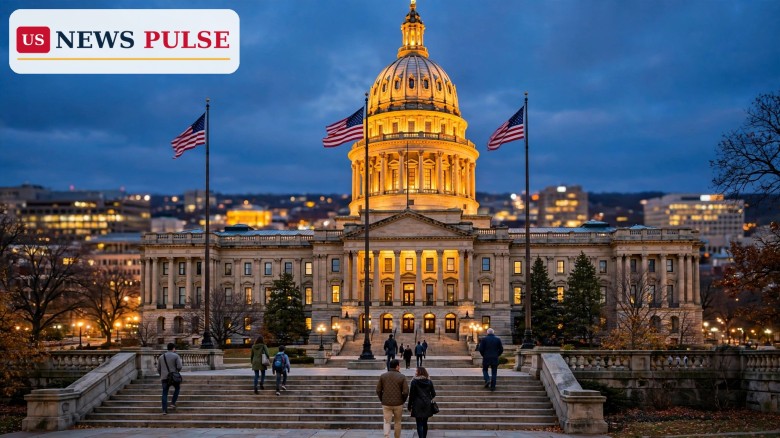
Democrats' takeover of Congress in Tuesday's midterm elections was matched at the state level, where the party flipped Republican-held governors' offices in at least five states, won five new governing trifectas and captured the Texas House for the first time in a generation. The National Conference of State Legislatures called the result the biggest single-election change in partisan control of state governments since 2010 — a shift that will shape redistricting, election administration and the laws millions of Americans live under for years to come.
Key Points
- Democrats won five new governing trifectas — Michigan, Minnesota, Nevada, Pennsylvania and Wisconsin — taking both legislative chambers and the governor's office in each.
- The party will hold at least 28 governorships in 2027, a majority for the first time in years, after flipping Republican-held governors' offices in at least five states.
- Democrats won the Texas House, their first control there since Republicans took over after the 2002 election, and broke Republican trifectas in Georgia, Iowa, Ohio and Texas.
- They broke or prevented Republican supermajorities in nine legislative chambers across eight states, including Florida, South Carolina, Indiana, Missouri, Iowa, Ohio, Kansas and North Carolina.
- Democrats also ousted incumbent Republican secretaries of state in Georgia, Indiana and Ohio, and elected Democratic attorneys general in Texas and Georgia for the first time in more than a decade.
What Happened
The scale of the state-level result became clear as the final races were called on Wednesday, a day after voters went to the polls. In Wisconsin, Democrats flipped both chambers of the legislature, ending 16 years of Republican legislative control while retaining the governor's office. In Minnesota, the House flipped to Democrats after being tied since the 2024 election, restoring a trifecta under incoming Governor Amy Klobuchar. In Michigan, the House flipped too, restoring the trifecta the party lost in 2024. Pennsylvania and Nevada completed the set of five new trifectas.
Texas delivered one of the night's most striking results. Democrats won the state House, ending more than two decades of Republican control that began after the 2002 election. The win came alongside Democrat Gina Hinojosa's defeat of well-financed Republican Governor Greg Abbott, making her the first Latina governor in Texas history. In Georgia, voters also elected a Democratic attorney general for the first time in more than a decade, and Democrats looked likely to take one chamber of the state legislature there as well.
The party also broke Republican trifectas in Georgia, Iowa, Ohio and Texas, and broke or prevented Republican supermajorities in nine legislative chambers across eight states: Florida, South Carolina, Indiana, Missouri, Iowa, Ohio, Kansas and North Carolina.
Background: Why State Governments Matter
State governments have rarely mattered more. Governors and legislatures set the rules for congressional redistricting, run election administration and certification, and write the laws on abortion access, minimum wage, data centres and Medicaid that shape daily life far more directly than most federal action.
The last comparable shift came in 2010, when Republicans swept state offices during Barack Obama's first midterm. That wave let them pass new election laws, redraw congressional districts and entrench control of election administration in many states for a decade — advantages Democrats have spent 16 years trying to reverse. The 2026 result is the mirror image: a single election that hands Democrats the levers of state power in the places where the next round of maps and voting rules will be written.
Democrats Sweep State Governments: Five New Trifectas Take Shape
A trifecta — control of the governor's office and both legislative chambers — gives a party the power to pass its agenda without negotiating with the opposition. Democrats will now hold that power in Michigan, Minnesota, Nevada, Pennsylvania and Wisconsin, on top of the states they already controlled.
The immediate priorities are likely to reflect the affordability concerns that dominated the campaign. Experts expect the new Democratic governments to move on raising the minimum wage, expanding Medicaid, protecting labour rights and undoing recent conservative policies such as abortion restrictions and incentives for data centres. Chris Warshaw, a professor at Georgetown University's McCourt School of Public Policy, said the incoming Democrats take office with “a huge backlog of liberal legislation that they want to do.”
Reactions and Quotes
Michael Berkman, a political science professor and director of Penn State University's McCourtney Institute for Democracy, called the outcomes “very significant” for future US elections. “So this gives Democrats an opportunity to really start to claw that back,” he said, referring to the state-level advantages Republicans built after 2010.
In Texas, Hinojosa told supporters on Tuesday night: “The voters have delivered a mandate for change, and it is change they will get.” Jim Battista, associate professor of political science at the University at Buffalo, said Texas and Georgia “will stop being fountains for initial lawsuits, and start being fountains for lawsuits that are challenging things that Trump is doing.”
Why It Matters
The consequences reach well beyond state capitals. The new Democratic governments will help draw congressional districts, administer elections and certify results ahead of the 2028 presidential election — the same levers Republicans used after 2010 to lock in their advantage. Control of secretaries of state in Georgia, Indiana and Ohio puts Democrats in charge of the offices that oversee election administration and certification in three battleground states. And with Democratic attorneys general in Texas and Georgia, two states that frequently sued Democratic presidents will now more often be on the other side of federal court fights.
What Happens Next
The new governors and legislatures take office in January 2027, when the first test will be the state budgets and the legislative sessions that follow. Redistricting fights are likely to come first in the states where Democrats now hold trifectas, and election-law changes will be watched closely in Georgia, Indiana and Ohio. Republicans, who still hold Florida and several other large states, will now have to defend a much smaller map of state power.
Frequently Asked Questions
What is a trifecta? A trifecta means one party controls the governor's office and both chambers of the state legislature, letting it pass laws without opposition support.
Which states have new Democratic trifectas? Michigan, Minnesota, Nevada, Pennsylvania and Wisconsin.
How many governors will Democrats hold in 2027? At least 28, a majority for the first time in years.
Why does the Texas House matter? It is Democrats' first control of the chamber since Republicans took over after the 2002 election, ending more than two decades of Republican rule.
Why is this the biggest shift since 2010? The National Conference of State Legislatures said it is the biggest single-election change in partisan control of state governments since the 2010 Republican wave.
Read more: Democrats' down-ballot sweep in Texas ended 30-plus years without a statewide win; Ron DeSantis called the midterms “close to an extinction-level event” for Republicans; and Chuck Schumer hailed a “generational remake” as Democrats won a 54-seat Senate majority.
© 2026 US News Pulse. All rights reserved.
 Print
 Save