
Houthi Missile Kills at Least 8 Recruits at Yemen Army Camp in al-Dhalea
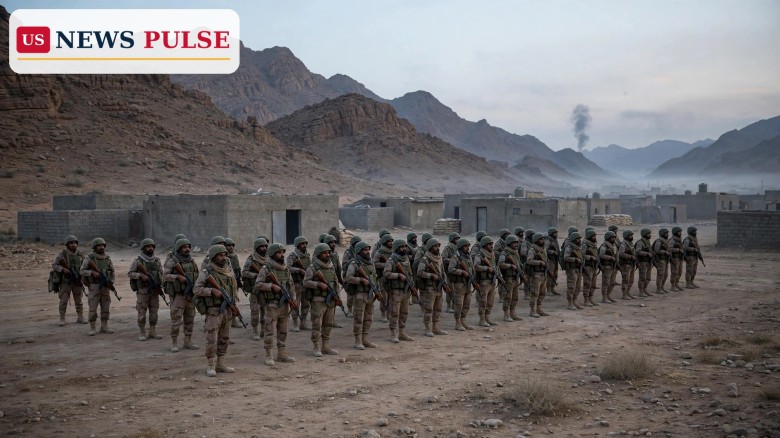
A Houthi ballistic missile struck a Yemeni army training camp in northern al-Dhalea province on Wednesday, November 4, 2026, killing at least eight recruits and wounding more than 15, according to a military source who spoke to Al Jazeera. The strike hit a gathering of recruits at the al-Jumaima camp in Qa'atabah district.
Key Points
- A Houthi ballistic missile hit the al-Jumaima training camp in Qa'atabah district, northern al-Dhalea, on Wednesday, November 4, 2026.
- At least eight recruits were killed and more than 15 wounded, a military source told Al Jazeera; other reports put the toll higher.
- No official casualty toll has been released, and the Houthis have not confirmed the strike, though their spokesman said the group carried out several operations on Wednesday.
- A second Houthi missile attack the same day hit sites in Lahj governorate, bringing the combined initial toll to nine dead and 50 wounded, according to South24.
- Separately, government forces said they advanced in the al-Dahida mountains of eastern al-Jawf as part of Operation Dawn of Yemen, now in its second month.
What Happened
The missile struck the al-Jumaima camp while recruits were gathered at the training site in Qa'atabah district, a frontline area of northern al-Dhalea where government forces and Houthi fighters have clashed repeatedly. A military source told Al Jazeera that eight people were killed and more than 15 wounded. Medical sources cited by Al Bawaba put the toll at 11 killed and around 60 wounded, while South24 reported seven killed and 50 wounded. With no official toll released, the exact number of dead and wounded remains unclear.
The Houthis have not confirmed that they fired the missile. Houthi military spokesman Yahya Saree claimed responsibility for several operations on Wednesday, without naming the al-Dhalea strike specifically. A second Houthi missile attack the same day hit sites in Lahj governorate, south-west Yemen, according to South24, which put the combined initial toll from the two attacks at nine dead and 50 wounded. The pairing of the two strikes suggests a coordinated effort.
Background and Context
Yemen has been at war since 2014, when Houthi fighters seized the capital, Sanaa, and the internationally recognised government was forced into exile. A Saudi-led coalition intervened in 2015, and the conflict has since killed tens of thousands of people and created one of the world's worst humanitarian crises. Fighting has flared repeatedly along front lines in Marib, Taiz, al-Dhalea and al-Jawf.
Al-Dhalea sits on a strategic fault line between Houthi-held highlands and government-held southern territory, and its districts have changed hands more than once. Qa'atabah, where the al-Jumaima camp is located, lies close to the front, making its training facilities a target of obvious military value. The government offensive in al-Jawf adds a second front: Operation Dawn of Yemen, now in its second month, aims to push Houthi forces back from strategic high ground east of al-Hazm, the provincial capital.
Houthi Missile Attack in Yemen: The al-Dhalea Strike in Context
The al-Dhalea strike fits a wider pattern of Houthi missile use that has intensified this year. The group has fired ballistic missiles and drones at Saudi targets, at shipping in the Red Sea and the Gulf of Aden, and at government forces inside Yemen itself. Saudi air defences intercepted a Houthi ballistic missile aimed at the kingdom's southern region earlier this week
What makes the strike notable is its target. Training camps are where armies are built, and recruits are the least experienced soldiers on any battlefield. Hitting them in formation, far from combat, is a blow to morale as well as to manpower. It also raises questions about air defences around government military sites: Yemen's government forces have limited protection against ballistic missiles, and camps in frontline provinces are exposed in ways that fixed bases in Aden or Marib are not.
Reactions and Quotes
The Houthis have not confirmed the al-Dhalea strike. Houthi military spokesman Yahya Saree said the group had carried out several operations on Wednesday, but did not identify the camp attack among them.
Yemeni government forces focused their public messaging on the al-Jawf advance, announcing that they had pushed further into the al-Dahida mountain range and taken strategic heights east of al-Hazm. The government has not yet issued a detailed statement on the al-Dhalea casualties. For the families of the recruits, the conflicting reports are the cruellest part of the day: until an official list is published, relatives will be left waiting for news from hospitals and from the camp itself.
Why It Matters
The strike shows that Yemen's war, often treated as frozen, is still killing people in large numbers and still capable of sudden escalation. The Houthis retain the ability to fire ballistic missiles deep into government territory, and the government retains the ability to launch ground offensives like Operation Dawn of Yemen.
It also matters beyond Yemen. Houthi missiles have already disrupted Red Sea shipping, drawn in Saudi and American air defences, and become part of a wider regional confrontation that includes the war between the United States and Iran. Airstrikes on Hodeidah have already hit civilian infrastructure in Yemen this year. Every escalation on the ground in Yemen risks spilling into the sea lanes and the airspace around it, where the stakes are global.
What Happens Next
The immediate question is the casualty toll. An official figure should emerge in the coming days as the wounded are counted and the dead identified, and it will settle the wide gap between the reports so far. The government is also likely to respond militarily, either with strikes on Houthi positions in al-Dhalea or with a renewed push in al-Jawf, where its forces say they are already advancing.
The wider question is whether Operation Dawn of Yemen can hold its gains. The offensive is in its second month, and the government claims strategic heights east of al-Hazm. If the advance stalls, the al-Dhalea strike will stand as a reminder that the Houthis can still impose a heavy price on the government's forces.
Frequently Asked Questions
What happened in al-Dhalea, Yemen?
A Houthi ballistic missile struck the al-Jumaima military training camp in Qa'atabah district, northern al-Dhalea province, on Wednesday, November 4, 2026, hitting a gathering of recruits.
How many people were killed?
At least eight killed and more than 15 wounded, per a military source cited by Al Jazeera; other reports put the toll higher. No official toll has been released.
Did the Houthis confirm the strike?
No. The Houthis have not confirmed the al-Dhalea strike, though their military spokesman, Yahya Saree, claimed responsibility for several operations on Wednesday.
What is Operation Dawn of Yemen?
It is a Yemeni government offensive, now in its second month, aimed at pushing Houthi forces back in eastern al-Jawf province. Government forces said on Wednesday they had taken strategic heights east of al-Hazm.
Why does the strike matter beyond Yemen?
Houthi missiles have disrupted Red Sea shipping, so escalation in Yemen risks spilling into sea lanes that matter to the whole world.
© 2026 US News Pulse. All rights reserved.
 Print
 Save