
Houthi Missile Riyadh Airport Claim: Group Says It Struck Airport, Warns Airlines
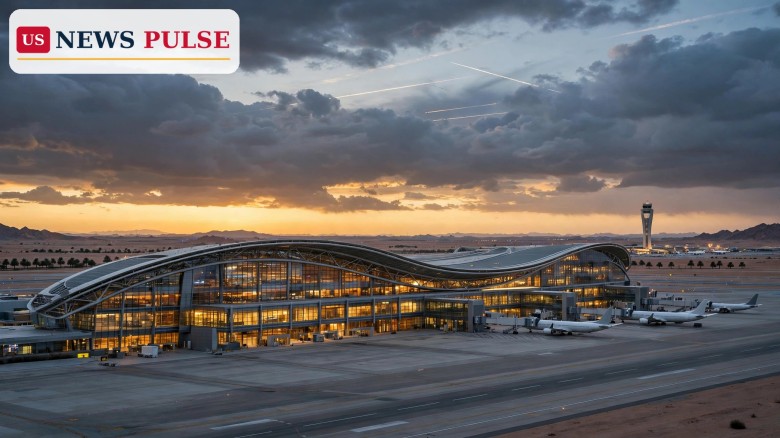
Yemen's Houthi movement said on Wednesday, November 4, 2026, that it fired a ballistic missile at King Khalid International Airport in Riyadh and claimed a direct hit that caused "significant damage". The claim has not been confirmed by Saudi authorities, and independent reporting indicated that flights continued to operate at the airport.
Key Points
- Houthi military spokesman Yahya Saree said on X on Wednesday, November 4, 2026, that a ballistic missile directly hit King Khalid International Airport in Riyadh and caused "significant damage".
- Saree warned international airlines, airport staff and travellers to avoid Saudi airspace, calling it unsafe, except over the holy cities of Mecca and Medina.
- Saudi authorities have not confirmed the strike or any damage, and independent reporting said flights continued to operate at the partly reopened airport.
- The claim follows a deadly Houthi attack on the same airport on October 10, 2026; a man died on Tuesday, November 3, from injuries sustained in that attack.
- Saree also announced three other operations in Jizan and Najran and said six ballistic missiles were fired at troop concentrations in eastern al-Jawf.
What Happened
The claim came in a post on X by Yahya Saree, the Houthi movement's military spokesman, on Wednesday, November 4, 2026. Saree said the group had fired a ballistic missile at King Khalid International Airport, the main international gateway to the Saudi capital, and that the missile had directly hit the airport and caused "significant damage". He gave no evidence of the damage, and no independent source has verified that a missile struck the airport.
In the same post, Saree warned international airlines, airport employees and travellers against using Saudi airspace, describing it as unsafe, with an exception for the airspace over Mecca and Medina. Saudi authorities have not confirmed the strike or any damage, and independent reporting on Wednesday said flights continued to operate at the airport, which had only partly reopened on October 25 after being closed for about two weeks.
Background and Context
Houthi attacks on Saudi airports, oil infrastructure and military sites have escalated since July 2026 and intensified sharply in October. The group, which controls much of northern Yemen including the capital Sanaa, has repeatedly fired ballistic missiles and drones across the border into Saudi Arabia during a war that has now run for more than a decade.
The airport at the centre of Wednesday's claim was already a target. On October 10, 2026, a Houthi attack struck King Khalid International Airport, and a man injured in that attack died on Tuesday, November 3, from his wounds. The airport was closed for about two weeks after the attack and only partly reopened on October 25. An advisory from the European Union Aviation Safety Agency on Saudi airspace remains in effect, citing repeated missile and drone attacks in the Riyadh area.
Houthi Missile Riyadh Airport Claim: What Is Verified and What Is Not
What is verified is narrow but solid. Saree did post the claim on X on Wednesday, and he did warn airlines, airport staff and travellers to avoid Saudi airspace. The October 10 attack is a matter of record, as is the November 3 death of a man injured in it, and the airport's two-week closure and partial reopening on October 25.
What is not verified is the central claim itself: that a ballistic missile hit the airport on Wednesday and caused "significant damage". Saudi authorities have said nothing, no damage has been independently documented, and flights continued to operate. The Houthis have a record of claiming hits that Saudi air defences say were intercepted, and that history is why the claim alone cannot be treated as fact. On the same day, a Houthi missile killed at least eight recruits at a Yemeni army camp in al-Dhalea, showing the group's missile arm is active on several fronts at once.
Reactions and Quotes
The most important words so far are Saree's own. In his post on X, he said the missile "directly hit the airport" and caused "significant damage", and he warned airlines, airport employees and travellers against using Saudi airspace, "as it is not secure", except over Mecca and Medina. The language is aimed at passengers as well as governments: a warning to the travelling public, not just a military claim.
Saudi Arabia has not responded publicly, as with earlier claims, when Riyadh has often said little and pointed instead to interceptions by its air defences. No airline had publicly announced a change to its Riyadh schedules by Wednesday evening. Saudi Arabia reportedly offered the Houthis $1 billion for a ceasefire and a halt to attacks on Saudi airports and oil facilities, a sign of how seriously Riyadh takes the threat.
Why It Matters
King Khalid International Airport is one of the busiest airports in the Middle East and the main gateway to the Saudi capital. A credible threat to it affects the airlines that fly there, the passengers who transit through Riyadh, and the businesses and events that depend on the city being reachable and safe. If the warning leads carriers to reroute or suspend flights, it would hit the kingdom's aviation and tourism ambitions directly.
It also matters because of the pattern. The Houthis have escalated attacks on Saudi targets since July, and Wednesday's claim came with three other operations and six missiles fired in al-Jawf, pointing to a campaign that is widening rather than winding down.
What Happens Next
The first thing to watch is whether Saudi Arabia confirms or denies the strike, and whether any damage is documented. Flight-tracking data and airline schedules will tell their own story: if carriers keep flying to Riyadh as normal, the claim will look like rhetoric; if any airline suspends or reroutes flights, or the European aviation safety advisory is tightened, the warning will have had a real effect. The second question is whether the Houthis strike again.
Frequently Asked Questions
What did the Houthis claim?
Yemen's Houthis said on Wednesday, November 4, 2026, that they fired a ballistic missile at King Khalid International Airport in Riyadh, that it directly hit the airport and caused "significant damage", and warned airlines, airport staff and travellers to avoid Saudi airspace.
Has Saudi Arabia confirmed the strike?
No. Saudi authorities have not confirmed the strike or any damage, and independent reporting said flights continued to operate at the airport, which had only partly reopened on October 25 after a two-week closure.
Are flights still operating at Riyadh airport?
Yes, according to independent reporting on Wednesday. An EU Aviation Safety Agency advisory on Saudi airspace remains in effect, citing repeated missile and drone attacks in the Riyadh area.
What happened in the October 10 attack?
A Houthi attack struck the same airport on October 10, 2026. A man injured in that attack died on Tuesday, November 3, from his wounds, and the airport was closed for about two weeks before partly reopening on October 25.
Why are the Houthis attacking Saudi airports?
Houthi attacks on Saudi airports, oil infrastructure and military sites have escalated since July 2026 and intensified in October, as part of the group's wider campaign against Saudi Arabia in Yemen's long-running war.
© 2026 US News Pulse. All rights reserved.
 Print
 Save