
Missing Kentucky Boy Roman Heilman Found Safe After 44 Hours in Woods With Dog
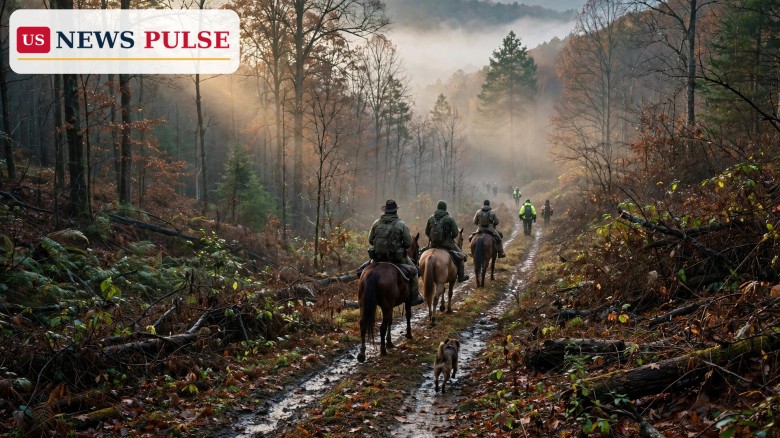
Six-year-old Roman Heilman is safe tonight after nearly 44 hours lost in the rugged, heavily wooded hills of eastern Kentucky — and the small dog that never left his side may have helped save his life. The nonverbal boy with autism was found on Tuesday morning about a mile and a half from his home near Louisa, in Lawrence County, when he stepped out of the undergrowth behind his dog and into the path of searchers on horseback. He was naked, covered in briar scratches and dehydrated, but alive — and by Wednesday he was recovering in hospital in what rescuers called a miracle.
Roman vanished on Sunday afternoon, November 1, at around 4 p.m., from the Tadpole Road area. Kentucky State Police issued an Endangered Child Alert, and the search grew into one of the largest rescue efforts the county has seen in years, with more than 300 volunteers on foot and horseback, alongside state troopers, the Kentucky National Guard and search-and-rescue teams from West Virginia and Ohio.
Key Points
- Roman Heilman, 6, nonverbal and autistic, vanished on Sunday afternoon, November 1, from Tadpole Road near Louisa in Lawrence County, eastern Kentucky.
- He was found safe on Tuesday morning, November 3, about a mile and a half from home after nearly 44 hours in rugged, wooded hills.
- More than 300 volunteers searched on foot and horseback, with Kentucky State Police, the National Guard and teams from West Virginia and Ohio.
- Riders found him at about 11:30 a.m. Tuesday when he stepped out of the undergrowth behind his small dog, which rescuers believe stayed with him throughout.
- He was naked and covered in briar scratches and was treated for dehydration, recovering in hospital by Wednesday, November 4.
What Happened
Roman was last seen at home on Tadpole Road on Sunday afternoon. When his family realised he was gone, the alarm went up quickly: Kentucky State Police issued an Endangered Child Alert, and the search began that evening. The terrain around Louisa is unforgiving — steep ridges, dense forest, briar thickets and creek valleys that swallow sound. A small child can vanish into it in minutes, and a child who cannot call for help is harder still to find.
Volunteers poured in from across Lawrence County, many on horseback, because horses can push through brush that stops trucks. The weather raised the stakes: Roman spent two nights exposed to cold and rain, with no shelter and no food. Then, at about 11:30 a.m. on Tuesday, riders on a wooded slope saw movement. Roman stepped out behind his dog, pointed at the horses and said, "E-I-E-I-O" — the refrain from "Old MacDonald Had a Farm." The boy missing for nearly two days was suddenly, safely, in caring hands.
Background: Two Nights in the Kentucky Hills
Louisa sits in Lawrence County in the far east of Kentucky, a rural county of Appalachian hills where homes scatter along creek valleys and wooded ridges rise steeply behind them. For a nonverbal child with autism, the risks of wandering are well known: children on the spectrum are more likely to wander, often drawn to woods or water, and a child who cannot speak cannot answer a searcher's call. That is why the alert went out so fast. Roman was found a mile and a half from home.
Roman Heilman and the Dog That Stayed With Him
The detail that has captured the most attention is the dog. Roman's small dog was with him when the riders found him, and rescuers believe it stayed with him throughout the nearly 44 hours he was lost. A familiar animal can keep a frightened child calm, give warmth on a cold night and give searchers something to spot in the brush.
Roman's first words to his rescuers — "E-I-E-I-O," aimed at the horses — have become the detail people repeat most. For a nonverbal child, those few syllables carried enormous meaning: he recognised the horses, connected them to a song he knew, and reached out to the people who had come to find him.
Reactions: "A Miracle" in Lawrence County
The word rescuers kept coming back to was "miracle." After two nights in cold and rain, in steep and tangled country, with a six-year-old who could not call for help, the people who searched those hills expected the worst. Finding Roman alive — alert enough to point at the horses and sing a fragment of a farm song — felt like an outcome they had hoped for but hardly dared to expect.
Why It Matters
Roman's rescue is a reminder of how quickly a child can disappear in rural America, and how much depends on the speed and scale of the response. An alert issued within hours, a volunteer turnout in the hundreds and professional teams from three states turned a disappearance that could have ended in tragedy into a happy ending. And it matters because the dog stayed — the image of a small dog refusing to leave a six-year-old's side is the detail that has travelled furthest.
What Happens Next
Roman was recovering in hospital by Wednesday, November 4, and the focus now is his health and his return home. Doctors will want to be sure two nights in the cold left no lasting effects before he is discharged. There is no suggestion of any criminal element: Roman wandered from home, as children do, and the search was a rescue operation, not an investigation.
Frequently Asked Questions
Who is Roman Heilman?
Roman Heilman is a six-year-old boy from near Louisa in Lawrence County, eastern Kentucky. He is nonverbal, has autism, and went missing from Tadpole Road on Sunday afternoon, November 1, 2026.
How long was Roman Heilman missing?
Nearly 44 hours. He vanished at around 4 p.m. on Sunday, November 1, and was found at about 11:30 a.m. on Tuesday, November 3, roughly a mile and a half from home.
How was Roman Heilman found?
Horseback riders found him when he stepped out of the undergrowth behind his small dog. He pointed at the horses and said, "E-I-E-I-O."
Was Roman Heilman hurt?
He was naked and covered in briar scratches and was treated for dehydration. By Wednesday, November 4, he was recovering in hospital.
Did Roman Heilman's dog stay with him?
Yes. His small dog was with him when he was found, and rescuers believe it stayed by his side throughout the nearly 44 hours he was lost.
Read more on US News Pulse: Missing Utah Teen Kylie Arellano Found Safe in Oregon After More Than 500 Days | Kentucky Measles Outbreak Reaches 204 Cases in Largest Surge Since 1991 | Two Dead as 1,000-Year Flooding Swamps Palm Bay, Florida; Hundreds Rescued
© 2026 US News Pulse. All rights reserved.
 Print
 Save