
FinCEN Flags $8 Billion in Suspicious Wire Payments Through US Money Firms
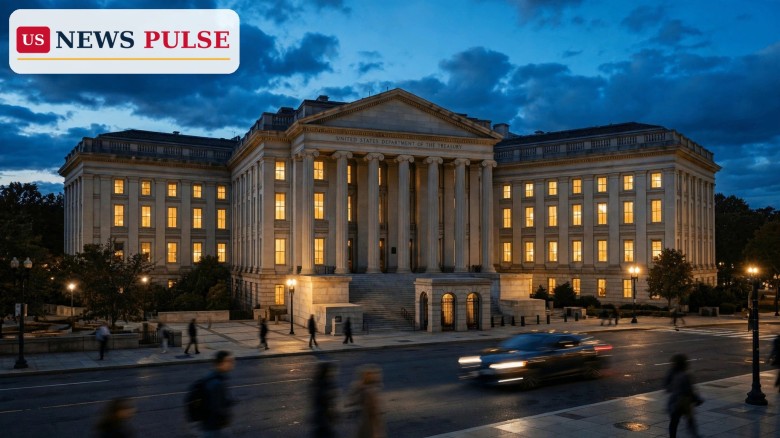
The United States Treasury Department's Financial Crimes Enforcement Network has flagged more than $8 billion in potentially suspicious cross-border wire payments directed by foreign agents through American money services businesses, in one of the largest totals the agency has ever publicised.
FinCEN issued the alert on Friday, October 30, 2026, covering 2021-2025 payments. The figure comes from Bank Secrecy Act reporting, and the agency asks banks and money transmitters to watch for the same patterns and report them with a new keyword: FIN2026FOREIGNAGENT.
Key Points
- FinCEN found over $8 billion in suspicious foreign-directed wire payments via US money firms in 2021-2025.
- Banks must detect and report such activity, tagging reports with the keyword FIN2026FOREIGNAGENT.
- Patterns pointed to UAE exchange houses, Chinese banks and trading firms, and East African recipients.
- Treasury Secretary Scott Bessent announced the figure in St. Cloud, Minnesota, as part of a wider fraud crackdown.
- The $8 billion reflects suspicious-activity reports, which are leads, not proof of crime or confirmed losses.
What Happened
FinCEN's alert describes a simple but hard-to-trace arrangement: a foreign agent directs a US-based money services business, known as an MSB, to send funds to an overseas third party, such as a purported supplier or business partner. The agent giving the instruction and the person ultimately receiving the money may be different, which makes it harder for banks to identify who really benefits and what the payment is for.
Money services businesses use agent networks to provide international transfers, including for communities underserved by traditional banks. FinCEN said criminals can exploit those arrangements to move funds while concealing the ultimate beneficiaries, potentially facilitating terrorist financing, fraud and embezzlement. The alert names no business and gives no payment count. It cautions banks against treating money services businesses as uniformly high risk, to avoid cutting off legitimate remittances. FinCEN also issued notice FIN-2026-NTC2 on the abuse of charities for terrorist financing, fraud and embezzlement.
Background: FinCEN and the Bank Secrecy Act
FinCEN is the Treasury Department's financial intelligence unit. Under the Bank Secrecy Act, banks, money transmitters and other financial institutions must file suspicious activity reports when they spot transactions that may involve money laundering, terrorist financing or other crimes. Those reports are investigative leads: they alert law enforcement, but they are not proof that a crime occurred.
That distinction matters here. The $8 billion total may include attempted and completed transfers, payments moving in or out of the country, and lawful as well as illicit activity. Records can overlap, so the total may be overinclusive, and FinCEN does not present it as a count of unique payments or a confirmed measure of losses. The agency has used geographic targeting orders to trace money overseas, including in Minnesota, as reported in our report on the $41 million Minnesota healthcare fraud charges.
FinCEN's $8 Billion Wire Payment Alert: The Patterns Banks Must Watch
The alert sets out the recurring routes FinCEN wants institutions to watch. Payments repeatedly flowed to foreign exchange houses in the United Arab Emirates, to Chinese commercial banks and trading companies, and to recipients across East Africa, with Egypt, Kenya, Uganda and Djibouti named.
Those corridors are not suspicious in themselves. The UAE is a major financial hub, Chinese trading firms handle vast legitimate trade, and East African communities in the US send large lawful remittances home. FinCEN's point is that the same corridors can disguise a payment's origin, destination or purpose, so banks should look at the whole picture: who directed the transfer, who received it, and whether the stated purpose fits. On reports about this pattern, banks should put FIN2026FOREIGNAGENT in field 2 and in the narrative, so FinCEN and law enforcement can group the filings and see the network behind them.
Reactions and Quotes
Treasury Secretary Scott Bessent announced the figure at an administration event in St. Cloud, Minnesota, as part of a wider fraud crackdown under the White House Task Force to Eliminate Fraud. "FinCEN identified over $8 billion in potentially suspicious foreign agent-directed payments between 2021 and 2025 alone," he said.
Bessent said the department had stopped nearly $190 million tied to overseas fraud and returned over $100 million to American victims. FinCEN framed the alert as a call for vigilance, not an accusation against any business, asking institutions to report suspicious cross-border payments without treating money services businesses as high risk by default. The alert also lands amid a legal fight over corporate ownership reporting, after 21 states sued the Trump administration over a rule exempting US companies from beneficial ownership disclosure, as reported in our coverage of the 21-state lawsuit against the FinCEN reporting rollback.
Why It Matters
The alert matters for three reasons. First, the scale: $8 billion in flagged payments over five years shows how much money can move through the US financial system at the direction of people outside it, with true beneficiaries hidden behind intermediaries. Second, it shows where risks concentrate: the UAE, China and East Africa recur in financial-crime reporting and overlap with routes used in the Minnesota fraud cases behind much of the administration's crackdown.
Third, the alert is a test of whether the reporting system works as intended. Suspicious activity reports only help if banks file them with enough detail, and if FinCEN can connect them into cases. The new keyword is a small administrative change, but it is the mechanism that turns thousands of separate filings into a single picture of a network.
What Happens Next
The immediate next step falls to banks and money transmitters. They are expected to review their cross-border payment activity against the patterns in the alert, file reports where warranted, and use the FIN2026FOREIGNAGENT keyword so the filings can be tracked. FinCEN will then be able to see whether the reports confirm the patterns, reveal new routes, or point to specific networks for investigation.
Law enforcement may follow with cases of its own, as it did in Minnesota, where suspicious-activity reporting preceded charges. But any case will take time, and FinCEN's caution, that these are leads rather than proof, means the $8 billion should not be read as $8 billion in confirmed crime. The wider fraud crackdown will continue, and Bessent's St. Cloud announcement suggests more figures and actions will follow.
Frequently Asked Questions
What did FinCEN flag?
Over $8 billion in potentially suspicious cross-border wire payments directed by foreign agents through US money firms in 2021-2025.
Does the $8 billion mean $8 billion was stolen?
No. The figure is a sum of suspicious-activity reports, which are investigative leads. It may include lawful activity, attempted transfers and overlapping records, and is not confirmed losses.
What is the FIN2026FOREIGNAGENT keyword for?
Banks should include it in field 2 and in the narrative of suspicious activity reports on this pattern, so FinCEN and law enforcement can group the reports and trace the networks behind them.
Which countries and routes were named?
Payments to UAE exchange houses, Chinese banks and trading companies, and East African recipients, with Egypt, Kenya, Uganda and Djibouti named.
Are money transfer businesses now considered high risk?
No. FinCEN cautioned against treating money services businesses as uniformly high risk, and it did not name any specific business in the alert.
© 2026 US News Pulse. All rights reserved.
 Print
 Save