
CENTCOM Launches Task Force Iron Gate to Choke Iran's Land Weapons Trade
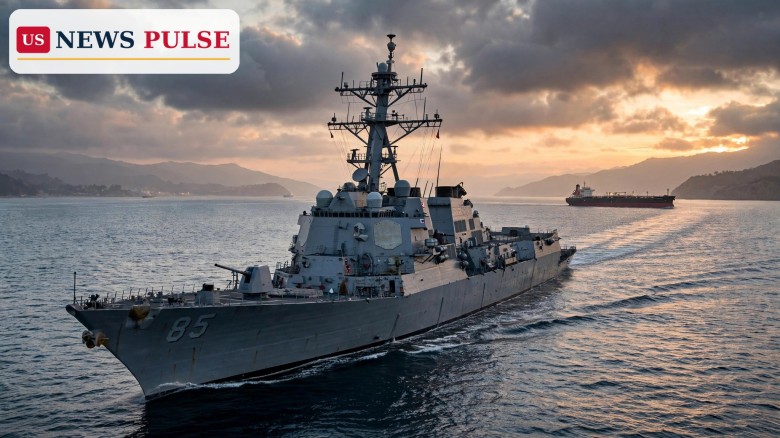
US Central Command has launched a new unit, Task Force Iron Gate, to choke off Iran's overland trade in weapons, sanctioned goods and illicit revenue, extending a naval blockade that Washington says has already blocked more than $25 billion in Iranian oil exports. CENTCOM announced the task force on Saturday, November 7, 2026, saying it will target the movement of advanced weapons systems, dual-use technologies and sanctioned materials across Iran's land borders and the Caspian Sea. The move comes as the US-Iran war enters its ninth month.
Key Points
- CENTCOM announced Task Force Iron Gate on Saturday, November 7, 2026, to stop Iran moving weapons, dual-use technology, sanctioned materials and illegal revenue over land and across the Caspian Sea.
- Based in Tampa, Florida, it will have about 20 civilian and military staff and coordinate with other US government agencies.
- It extends the naval blockade imposed on April 13, 2026, briefly lifted after the June ceasefire and reimposed on July 15.
- CENTCOM estimated the blockade has blocked more than $25 billion in Iranian crude oil exports in recent months.
- The announcement came the same day Iran lifted its 2,000km missile-range limit and claimed to have shot down a US MQ-9 drone over Qeshm Island.
What Happened
US Central Command said on Saturday it will establish Task Force Iron Gate to stop Iran moving advanced weapons, dual-use technology, sanctioned materials and illegal revenue across its land borders and the Caspian Sea. The announcement adds a land-based enforcement arm to a campaign fought mainly at sea, where US warships have enforced a blockade of Iranian oil exports for most of the year.
It will be based in Tampa, Florida, with about 20 civilian and military staff. Its job is to coordinate with other US agencies to track and disrupt the routes Iran uses to move weapons and money when it cannot use the sea. The timing is significant: the announcement came the same day Tehran lifted its self-imposed 2,000-kilometre limit on ballistic missile range, a move the Islamic Revolutionary Guard Corps said would be demonstrated "in practice". Iran also claimed its air defence shot down a US MQ-9 drone over Qeshm Island, in the Strait of Hormuz. The United States has not confirmed the drone claim. Qatar's prime minister said mediation continues with "significant progress" made.
Background: The Blockade and Nine Months of War
The naval blockade it extends was first imposed on April 13, 2026, briefly lifted after a June ceasefire, then reimposed on July 15. CENTCOM now estimates the blockade has prevented Iran from exporting more than $25 billion in crude oil in recent months, a figure that underlines how central oil revenue is to Tehran's war effort.
The US-Iran war began on February 28, 2026, and is now in its ninth month. On Friday, November 6, President Donald Trump confirmed fresh limited US strikes on an Iranian air defence system, calling the action "minor" and saying the target was knocked out in about 15 minutes. At the same time, Vice President JD Vance has led a backchannel effort to broker a new ceasefire and revive stalled nuclear talks, holding near-daily discussions with Qatar's prime minister and other mediators.
Task Force Iron Gate: How the New Unit Will Work
Task Force Iron Gate is a coordination body, not a large new deployment. Its roughly 20 civilian and military staff will be based in Tampa, working with other US agencies to combine intelligence, sanctions enforcement, military planning and diplomacy.
The focus is Iran's land borders and the Caspian Sea, the routes through which Tehran can move goods when its ports are under blockade. Iran borders Iraq, Turkey, Afghanistan, Pakistan, Turkmenistan, Azerbaijan and Armenia, and its northern shore sits on the Caspian Sea, shared with Russia, Kazakhstan, Turkmenistan and Azerbaijan. CENTCOM commander Adm. Brad Cooper said the unit would deepen that cooperation: "Strengthening CENTCOM's collaboration with US interagency partners will further constrain Iran's ability to finance terrorism, rebuild weapons factories, and replenish their military."
Reactions
Adm. Cooper framed the task force as an extension of the existing blockade rather than a new escalation. From Tehran, the response was defiance. The Revolutionary Guard ended the 2,000-kilometre missile-range limit in place since 2017, with spokesman Brig. Gen. Hossein Mohebbi saying Iran would "demonstrate these capabilities in practice". Iran also claimed its air defence had shot down an American MQ-9 drone over Qeshm Island, a claim Washington has not confirmed.
Qatar, which has been mediating between the two sides, struck a different note. Its prime minister said mediation continues and that "significant progress" has been made, adding that Washington remains willing to seek a deal.
Why It Matters
Task Force Iron Gate matters because it targets the part of Iran's war economy that a naval blockade cannot reach. Oil is the most visible source of Iranian revenue, and the $25 billion figure shows what the blockade has cost Tehran. But weapons, components and money also move by truck, rail and ship across the Caspian, keeping Iran's military supplied when its ports are closed.
The move also matters for the negotiations. Lifting the blockade is one of Iran's conditions for ending the war, and Washington is raising the cost of the status quo before any deal is struck. Its success will depend on the cooperation of Iran's neighbours, whose territory and waters it will be watching.
What Happens Next
Task Force Iron Gate will now stand up in Tampa, its small staff coordinating with other US agencies. The first test will be whether it can disrupt Iran's land and Caspian smuggling networks. Diplomacy will continue alongside it: Vice President Vance's backchannel talks, mediated by Qatar, aim at a working-level meeting between US and Iranian delegates in the coming days.
Watch also for Iran's response: the Revolutionary Guard said it would demonstrate longer-range capabilities "in practice", and any test or launch would be a new escalation. For now, the pattern of the war holds: pressure and talks advancing side by side, with each side trying to strengthen its hand before any deal is struck.
Frequently Asked Questions
What is Task Force Iron Gate?
It is a new US Central Command unit, announced on November 7, 2026, to stop Iran moving weapons, dual-use technology, sanctioned materials and illegal revenue over land and the Caspian Sea.
How big is the task force?
About 20 civilian and military staff, based in Tampa, Florida, coordinating with other US agencies rather than deploying a large new force.
How much oil has the naval blockade stopped?
CENTCOM estimated the blockade has blocked more than $25 billion in Iranian crude oil exports in recent months.
When was the naval blockade imposed?
It was first imposed on April 13, 2026, briefly lifted after the June ceasefire, and reimposed on July 15, 2026.
Is the US still talking to Iran?
Yes. Vice President JD Vance leads backchannel talks through mediators including Qatar, whose prime minister reported "significant progress".
Read more on US News Pulse: Iran lifts its self-imposed 2,000km limit on ballistic missile range, Vance leads secret Iran backchannel talks as Qatar says a deal is still possible, and Trump confirms 'minor' US strikes on Iran air defence as State Dept warns Americans.
© 2026 US News Pulse. All rights reserved.
 Print
 Save