
Gaza Flooding: First Winter Storm Floods 70,000 Tents of Displaced Palestinians
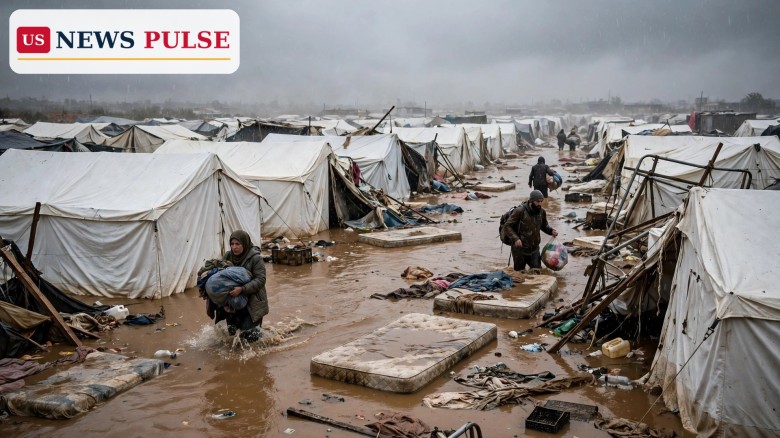
Heavy rain from the first winter storm flooded at least 70,000 tents sheltering displaced Palestinians across the Gaza Strip within 12 hours, the Hamas-run Gaza Government Media Office said on Saturday, November 7, 2026. The Gaza flooding washed away shelters, soaked mattresses and blankets, leaving tens of thousands exposed to cold and rain as the territory's battered emergency services struggled to cope.
Gaza's civil defence said it received about 1,500 distress calls in 10 hours, with water rising 30 to 40 centimetres at several sites. No fatalities had been reported by Saturday, though people were injured, dozens of walls collapsed, and initial losses were put at about $3 million.
Key Points
- At least 70,000 tents sheltering displaced Palestinians flooded within 12 hours of the first winter storm, the Gaza Government Media Office said on Saturday, November 7, 2026.
- Gaza's civil defence received about 1,500 distress calls in 10 hours, with water rising 30 to 40 centimetres at several sites.
- No fatalities were reported, but people were injured, dozens of walls collapsed, and three abandoned houses fell without causing injuries.
- Officials said they could not cope, citing fuel shortages and damaged equipment, including hundreds of vehicles destroyed in the war.
- More than one million displaced people face a harsh winter; Gaza urgently needs about 200,000 tents and heating supplies, while the UN says only about 2,800 tents are available inside the territory.
What Happened
Rain began on Friday night in al-Mawasi, where more than 900,000 displaced people are sheltering, and continued from 10 p.m. By Saturday morning, floodwater had swamped tent camps across the Gaza Strip, turning sandy ground into mud and leaving bedding and belongings floating in the water.
Civil defence teams worked through the night as about 1,500 distress calls reached them in 10 hours. At several sites the water rose 30 to 40 centimetres, high enough to soak mattresses and wash away the few possessions families had kept. In al-Mawasi, where hundreds of thousands are concentrated, families spent the night lifting children and blankets above the rising water.
Three abandoned houses collapsed without causing injuries, and dozens of walls came down across the territory. The storm also flooded streets in coastal Israel, causing blackouts and closures.
Background and Context
More than one million displaced people in Gaza face a harsh winter, Gaza's emergency committee said, and the territory urgently needs about 200,000 tents and heating supplies. The United Nations put the need at about 121,000 tents, 561,000 tarpaulins and 1.7 million mattresses, with only about 2,800 tents available inside the territory.
The shortfall follows more than a year of war that destroyed homes, warehouses and infrastructure. A United States-brokered ceasefire in 2025 called for eventual reconstruction, but little progress has been made, leaving most displaced families in tents and makeshift shelters never built to withstand winter weather.
Gaza Flooding Exposes the Scale of the Shelter Shortage
The scale of the flooding measures how little stands between displaced families and the weather. Municipal and civil defence officials said they could not cope with the storm, citing fuel shortages and damaged equipment, including hundreds of vehicles destroyed in the war.
With only about 2,800 tents available inside Gaza against a UN-estimated need of 121,000, most families had no replacement shelter when theirs flooded. The 70,000 tents that went under water are a large share of all the tents in the territory, and each one held a family that now has nowhere dry to sleep.
The shortages extend beyond tents: the UN says Gaza needs 561,000 tarpaulins to waterproof shelters and 1.7 million mattresses to replace those ruined by water. Heating supplies are scarce too, and with temperatures falling, families face a winter in wet tents with no way to keep warm or dry.
Reactions
Gaza's civil defence described a night of constant calls, about 1,500 distress appeals in 10 hours as water rose through the camps. Municipal and civil defence officials said plainly they could not cope, pointing to fuel shortages and equipment destroyed in the war, including hundreds of vehicles.
Gaza's emergency committee warned that more than one million displaced people face a harsh winter and said the territory urgently needs about 200,000 tents and heating supplies. The United Nations, which put the need at about 121,000 tents, 561,000 tarpaulins and 1.7 million mattresses, says the gap between need and supply inside Gaza is the central obstacle to getting families through the winter.
Why It Matters
The flooding matters because it shows the humanitarian crisis in Gaza is not over, even with a ceasefire in place. The war destroyed homes; the ceasefire has not yet rebuilt them, and the first storm of winter has now destroyed many of the tents meant to bridge the gap.
It matters, too, because of what comes next. Winter in Gaza brings cold rain and wind, and the displaced population outnumbers the shelter system. If 70,000 tents can flood in one November night, the months ahead test every remaining shelter, and the health risks of cold, damp and overcrowding will grow with each storm.
For the aid effort, the flooding starkly measures the gap between need and supply: about 200,000 tents needed, about 2,800 available. Closing it will decide whether winter becomes a second disaster for families who have already lost their homes.
What Happens Next
Emergency teams will keep pumping water from the camps, but the priority is dry shelter and heating for the families whose tents flooded. Aid agencies are pressing for tents, tarpaulins and mattresses to reach Gaza in far greater numbers, along with fuel for civil defence vehicles and pumps.
The longer question is reconstruction. The United States-brokered ceasefire of 2025 promised eventual rebuilding, but little progress has been made, and the flooding made the cost of delay visible in one night. Until homes are rebuilt or proper winter shelter arrives, displaced families face each new storm with the same thin canvas between them and the rain.
Frequently Asked Questions
How many tents were flooded in Gaza?
At least 70,000 tents sheltering displaced Palestinians flooded within 12 hours of the first winter storm, the Hamas-run Gaza Government Media Office said, affecting tens of thousands of people.
Was anyone killed in the flooding?
No fatalities had been reported by Saturday, November 7, 2026, though people were injured, dozens of walls collapsed and three abandoned houses fell without causing injuries.
What do displaced people in Gaza need most?
Gaza's emergency committee says the territory urgently needs about 200,000 tents and heating supplies. The UN puts the need at about 121,000 tents, 561,000 tarpaulins and 1.7 million mattresses; only about 2,800 tents are available inside Gaza.
Why can't Gaza's emergency services cope?
Municipal and civil defence officials said they could not cope, citing fuel shortages and damaged equipment, including hundreds of vehicles destroyed in the war.
What about the ceasefire and reconstruction?
A US-brokered ceasefire in 2025 called for eventual reconstruction, but little progress has been made, leaving most displaced families in tents and makeshift shelters that cannot withstand winter.
Read more on US News Pulse: IDF kills Hamas intelligence chief Jamal Abu Saeed in Gaza City airstrike and Qatar says US and Iran are reviewing mediator proposals for an interim deal.
© 2026 US News Pulse. All rights reserved.
 Print
 Save