
UN Report: UAE Firm Hired Colombian 'Desert Wolves' to Fight for Sudan's RSF
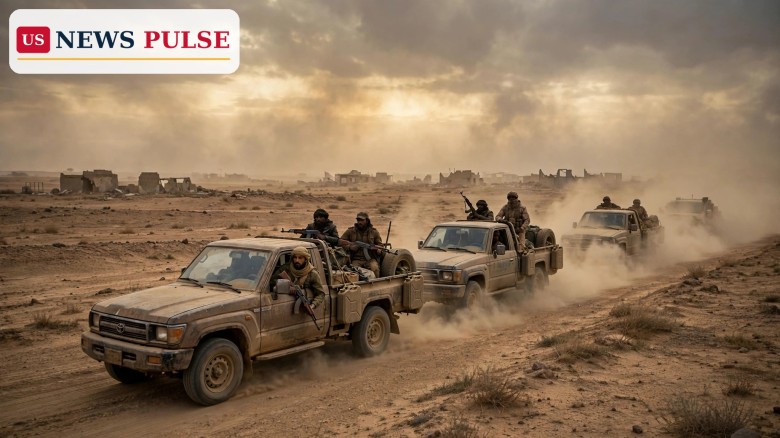
A confidential United Nations report accuses an Abu Dhabi-based security company of recruiting hundreds of former Colombian soldiers as Desert Wolves mercenaries to fight alongside Sudan's Rapid Support Forces (RSF), the paramilitary group accused of atrocities with the hallmarks of genocide. The findings, first disclosed by The New York Times on November 5, put fresh scrutiny on the Emirates' role in Sudan's civil war — and on its bid to put a senior Emirati diplomat at the head of the United Nations.
Key Points
- A confidential UN report to the Security Council says Abu Dhabi-based Global Security Services Group (GSSG) recruited hundreds of former Colombian military personnel to fight for Sudan's RSF.
- The contractors formed a battalion called the "Desert Wolves" — Lobos del Desierto — serving as infantry and artillery, flying drones and training RSF fighters.
- The UN Panel of Experts put the force at 1,500–2,000 contractors, moved through UAE military facilities and based in Nyala from March 2025.
- The unit joined the siege of El Fasher, which fell in October 2025 after 500 days.
- The UAE denies aiding either side militarily and says it investigated GSSG and found no mercenary activity.
What Happened
Submitted to the UN Security Council in early November, its contents were disclosed by The New York Times on November 5. It says GSSG, a private Abu Dhabi security company, recruited the Colombians and organised them into a single operational battalion. The men, mostly former soldiers, were flown through UAE military facilities including Ghiyathi and Al Wathba, then moved onward through Libya and Somalia territory held by factions aligned with the Emirates.
They set up a base in Nyala, capital of South Darfur, in March 2025, and took part in the long siege of El Fasher, the last major Darfur city still held by the army. El Fasher fell in October 2025 after more than 500 days under siege. The contractors fought as infantry and artillery, operated drones and trained RSF fighters — far more than guarding installations or advising.
Background: Sudan's War and the RSF
Sudan's war began in April 2023, when a power struggle between the army and the RSF, once allies in government, erupted into open fighting. More than 14 million people have been displaced — the world's largest displacement crisis — and large parts of the country face famine. Millions of displaced Sudanese risk losing aid as UN shelter stocks run dry.
The RSF, led by General Mohamed Hamdan Dagalo — known as Hemedti — stands accused of mass killings, sexual violence and ethnic targeting, particularly in Darfur. The UN has embargoed arms to Darfur since 2004 and called repeatedly on outside powers to stop fuelling the conflict. A Human Rights Watch report of May 25, 2026, documented Colombian fighters hired from 2024 through Colombia-based agency A4SI and channelled to the RSF. The new UN report goes further, tying the pipeline to an Abu Dhabi company and describing a structured, battalion-sized deployment, not scattered hires.
Desert Wolves Mercenaries: What the UN Report Found
The name — the Desert Wolves, or Lobos del Desierto — was apparently chosen by the recruiters. The UN Panel of Experts says 1,500–2,000 Colombian contractors were deployed, enough to operate as a self-contained battalion with its own infantry, artillery and drone units. The route ran through the Emirates' own military infrastructure, via the Ghiyathi and Al Wathba facilities, then through parts of Libya and Somalia controlled by UAE-aligned factions.
Their Nyala base, set up in March 2025, put them at the heart of the RSF's Darfur campaign. From there they joined the siege of El Fasher, whose fall in October 2025 after 500 days marked one of the war's darkest chapters. The report does not say the Colombians took part in the killings reported after the fall, but their presence beside the RSF during the siege is now on the Council's record.
Reactions
The UAE has firmly denied the allegations. Abu Dhabi says it gives no military assistance to either side in Sudan's war and that it investigated GSSG and found no mercenary activity. But GSSG is described as having close political, business and familial links to senior Emirati leadership, which makes the denial harder for sceptics to accept.
Human Rights Watch, which documented the pipeline in May, wants the findings pursued through the Security Council. Sudan's army-led government, long accusing the Emirates of arming the RSF, is expected to seize on the report. The RSF has not publicly responded, and the panel's full text is unpublished, so the public account rests on the Times' disclosure and the reporting that followed.
Why It Matters
The timing gives the report unusual weight. On October 21, the UAE nominated senior diplomat Lana Nusseibeh to succeed António Guterres as UN Secretary-General when his term ends on December 31. A UN report accusing an Emirati-linked company of running a mercenary pipeline into a war the UN calls one of the world's worst humanitarian crises is an awkward backdrop for that candidacy, diplomats say. It also recalls the UN's struggle to keep its own missions alive: the Western Sahara peacekeeping mission was wound up after 35 years.
The report also tests the Council's willingness to enforce its Darfur arms embargo: if a battalion-sized foreign force could move through a member state's facilities into an embargoed war zone, the embargo's credibility is at stake — and so is the Council's ability to police private armies.
What Happens Next
The Security Council is expected to discuss the findings in the coming weeks, and whether the report is published in full will be an early test of how seriously members take it. The panel may also recommend targeted sanctions against those named. For the Emirates, the task is containing the diplomatic damage while its UN leadership candidate is under consideration. For Sudan, little changes: the war grinds on, El Fasher's survivors still count their dead, and more than 14 million displaced people wait for a peace out of reach. But the Desert Wolves are now on the record — and the question of who sent them is no longer one the world can ignore. Elsewhere, the US vice president is leading secret backchannel talks to end another war.
Frequently Asked Questions
Who are the Desert Wolves?
The "Desert Wolves" — Lobos del Desierto — is a battalion of former Colombian soldiers recruited to fight for Sudan's RSF, according to a confidential UN report. The panel put it at 1,500–2,000.
What is Global Security Services Group?
GSSG is an Abu Dhabi security firm that the UN report says recruited the Colombians and formed the battalion. It is described as having close links to senior UAE leadership.
What does the UAE say?
The UAE denies giving military help to either side in Sudan's war and says it investigated GSSG and found no mercenary activity.
How long has Sudan's war lasted?
The war between the Sudanese army and the RSF began in April 2023 and has displaced more than 14 million people.
Why does this matter for the UN?
The UAE nominated diplomat Lana Nusseibeh on October 21 to be the next UN Secretary-General when António Guterres's term ends on December 31.
© 2026 US News Pulse. All rights reserved.
 Print
 Save