
Amtrak to Allow Guns in Lockboxes on Acela Trains Starting January 2027
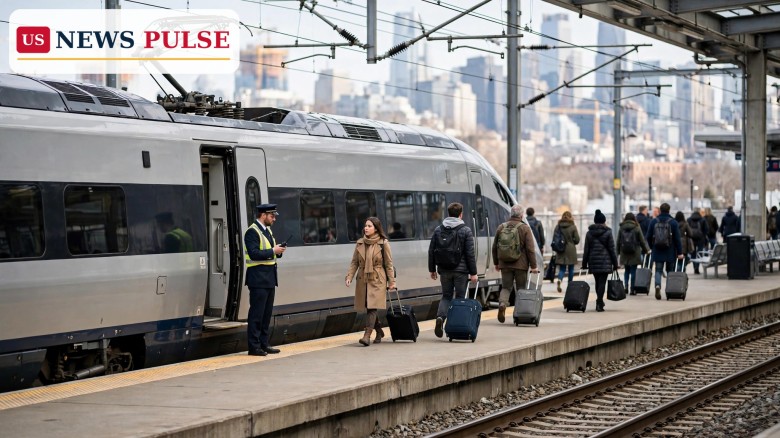
From January 2027, passengers on Amtrak's Acela and Northeast Regional trains will be allowed to carry unloaded firearms in their carry-on bags, under a major change to the railroad's gun rules. The policy covers the trains linking Boston, New York, Philadelphia and Washington along the Northeast Corridor, the busiest passenger rail route in the United States.
Travellers aged 18 and older will be able to bring declared, unloaded firearms and ammunition on trains without checked baggage. Each gun must travel in a double-locked, TSA-compliant hard-sided case, with advance notice required and travel only between staffed stations. The Transport Workers Union, representing 360 Amtrak onboard workers, calls the plan "sheer lunacy".
Key Points
- From January 2027, passengers aged 18 and over may carry declared, unloaded firearms in carry-on bags on Amtrak trains without checked baggage, including Acela and Northeast Regional services.
- Each firearm must travel in a double-locked, TSA-compliant hard-sided case, inaccessible during the trip, with advance notice required and travel only between staffed stations.
- A station agent adds an Amtrak lock before boarding and removes it on arrival, keeping the weapon sealed for the whole journey.
- The Transport Workers Union, representing 360 Amtrak onboard workers, calls the plan "sheer lunacy" and says it would put guns on about 1,500 more trains a day.
- Amtrak ties the change to Executive Order 14206, signed by President Donald Trump on February 7, 2025, ordering a review of federal actions for possible Second Amendment infringements.
What Happened
Amtrak is rolling out the policy in stages. It began on September 1, 2026, on the Auto Train, the overnight service between Lorton, Virginia, and Sanford, Florida. The wider rollout follows in 2027, extending the rules to the Northeast Regional and Acela.
The Northeast Regional runs between Boston and Washington, stopping in Providence, New York, Philadelphia and Baltimore, while Acela is the flagship high-speed service on the same corridor, used by about 750,000 people a day, according to the union.
Travelling with a firearm will be tightly controlled. The gun must be unloaded, inside a hard-sided case meeting Transportation Security Administration standards, secured with two locks. Amtrak adds its own lock at departure, and only a station agent can remove it at the destination.
Background and Context
For years, Amtrak's firearms rules have been narrow. Under a 2010 law, the railroad allows firearms only as checked baggage, and only on a limited number of long-distance trains with secure baggage cars. On the Northeast Corridor, where no checked baggage is offered, guns were effectively barred altogether.
Amtrak has linked the change to Executive Order 14206, signed by President Donald Trump on February 7, 2025, directing the attorney general to review federal rules for possible Second Amendment infringements. The revised policy is presented as part of that wider review.
Amtrak Guns on Trains: How the New Rules Will Work
The policy is built around one idea: the firearm must be sealed away from the moment the passenger arrives at the station until they leave the destination station. The double-locked, TSA-compliant hard-sided case is designed to resist being forced open. The passenger supplies the case and its locks, while Amtrak supplies an additional lock, fitted by an agent at departure and removed by an agent at arrival.
Advance notice is a central requirement. A passenger cannot simply turn up at the platform with a gun in a bag and expect to board. Amtrak must be told in advance, and the journey must begin and end at a staffed station, since only an agent can fit and remove the Amtrak lock.
Reactions and Quotes
The strongest reaction has come from the Transport Workers Union, which represents 360 Amtrak onboard service workers. The union calls the plan "sheer lunacy" and is urging the federal government to reverse it. Its argument is one of scale: extending gun transport to the corridor would bring firearms onto about 1,500 more trains a day, on a route used by about 750,000 people daily.
Amtrak calls the change a measured response to the administration's Second Amendment review, stressing the controls: declared weapons only, unloaded, double-locked, sealed by an agent, and inaccessible for the whole journey. The debate is likely to sharpen as January 2027 approaches.
Why It Matters
The decision matters because of where it applies. The Northeast Corridor is the spine of passenger rail in the United States, linking Washington with New York, Boston and Philadelphia. The trains carry commuters, business travellers, students and families, often in crowded carriages, so a change to what can be carried on board touches a large number of people every day.
It also tests how far the administration's Second Amendment review will reach. Amtrak's response shows the review is producing concrete changes in unexpected places. If the policy stands, it may encourage similar changes elsewhere and prompt legal challenges from those who argue the new rules go too far, or not far enough.
What Happens Next
The Auto Train phase is already under way, having begun on September 1, 2026. The experience on that single route is likely to shape the argument over the wider rollout: smooth procedures would let Amtrak point to a working system, while problems would give the union fresh evidence for reversal.
The full rollout to the Northeast Regional and Acela is scheduled for January 2027. By then, staff at corridor stations must be trained, locking procedures must be in place, and passengers must know the rules. Legal and political challenges are also possible, and the railroad must decide how to handle the union's objections.
Frequently Asked Questions
When will Amtrak allow guns in carry-on bags on Acela and Northeast Regional trains?
From January 2027. The rollout began on the Auto Train on September 1, 2026, and reaches the Northeast Regional and Acela, which offer no checked baggage, in 2027.
What are the rules for carrying a firearm on Amtrak under the new policy?
Passengers aged 18 and over must declare the firearm in advance. It must be unloaded, in a double-locked, TSA-compliant hard-sided case, inaccessible during the trip. Travel is only allowed between staffed stations, where an agent adds an Amtrak lock before boarding and removes it on arrival.
Why is the Transport Workers Union opposed to the change?
The union, representing 360 Amtrak onboard workers, calls the plan "sheer lunacy" and says it would extend gun transport to about 1,500 more trains a day on a corridor used by about 750,000 people daily. It wants the policy reversed.
How could passengers travel with guns on Amtrak before this change?
Under a 2010 law, firearms were allowed only as checked baggage on a limited number of long-distance trains. Because Acela and Northeast Regional trains do not offer checked baggage, passengers on those services had no lawful way to travel with a firearm.
Why is Amtrak changing its firearms policy now?
Amtrak ties the change to Executive Order 14206, signed by President Donald Trump on February 7, 2025, which directed the attorney general to review federal actions for possible infringements of the Second Amendment.
Related: Democrats hire fired Justice Department prosecutors to staff Trump investigations and Trump set to host Qatar's prime minister at the White House on Iran.
© 2026 US News Pulse. All rights reserved.
 Print
 Save