
US Strikes Damage 23 Iran Pharmaceutical Companies as 37 Medicines Run Short
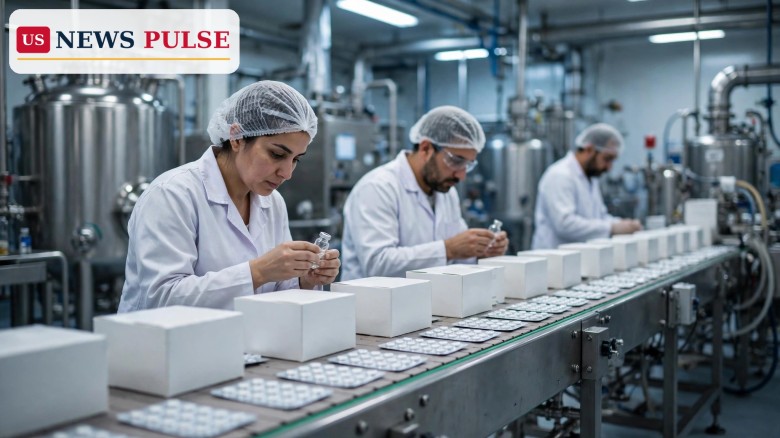
US strikes have damaged 23 pharmaceutical companies in Iran and left 37 essential medicines hard to supply, Tehran said on Monday, in a new sign that the eight-month war is now hitting the country's health system. Iran's Food and Drug Administration said 15 drug manufacturers and eight distribution firms were hit, warning that production and raw-material supplies were disrupted. The World Health Organization, which has verified more than 20 attacks on health care in Iran since March, has called for health sites to be protected under international law.
Key Points
- Iran's Food and Drug Administration says US strikes damaged 23 pharmaceutical companies — 15 manufacturers and eight distributors.
- Iran is struggling to supply 37 of about 700 types of essential medicine.
- The WHO has verified more than 20 attacks on health care in Iran since March 1, 2026, killing at least nine people.
- Tehran's Pasteur Institute, founded in 1920, was badly damaged on March 23, wrecking 23,000 square metres of laboratories.
- The Tofigh Daru factory was hit on March 31, destroying lines that made anaesthetics and cancer drugs.
What Happened
Iran's Food and Drug Administration announced on Monday, November 9, 2026, that recent US strikes had damaged 23 pharmaceutical companies across the country. A spokesperson told the Tasnim news agency that 15 of the firms were drug manufacturers and eight were distribution companies. The agency said Iran was now facing difficulty supplying 37 of the roughly 700 types of essential medicine used in the country.
Iran produces most of its own medicines, so the loss of 23 companies at once threatens shortages that patients cannot easily replace.
The figures come from Iranian authorities and could not be independently verified. They were reported by Tasnim, a news agency close to Iran's Revolutionary Guards. The US military has not publicly commented on strikes against pharmaceutical facilities.
Background and Context
The war between the United States and Iran began on February 28, 2026, and is now in its ninth month. The conflict has disrupted shipping through the Strait of Hormuz and repeatedly pushed oil prices higher. Talks between Washington and Tehran have continued through Qatari mediators, but no settlement has been reached.
Health infrastructure has been caught in the fighting from the early weeks. The WHO said it has verified more than 20 attacks on health care in Iran since March 1, 2026, killing at least nine people, including an infectious-diseases health worker and a Red Crescent member.
Two of the most serious incidents came in March. Tehran's Pasteur Institute, Iran's premier biomedical hub, was badly damaged on March 23, when explosions wrecked 23,000 square metres of laboratories focused on HIV, malaria, hepatitis and flu research. The institute was founded in 1920 and is one of the oldest medical research centres in the Middle East. A week later, on March 31, the Tofigh Daru pharmaceutical factory was hit, destroying production lines for anaesthetics and cancer drugs. Israel confirmed that attack, saying the firm supplied chemicals to the regime.
US Strikes and Iran's Pharmaceutical Industry
Iran's pharmaceutical industry is unusually important to its health system. Under years of sanctions, Iran built up domestic drug manufacturing so that it now produces most of the medicines its hospitals and pharmacies need, importing mainly raw materials and specialist drugs. That self-reliance means damage to factories cannot quickly be made up from abroad, while sanctions and a US naval blockade restrict what can be shipped in.
The 37 medicines now reported to be in short supply represent about 5 percent of the roughly 700 essential types Iran tracks. The Food and Drug Administration did not list which drugs were affected, but the earlier strikes give a sense of the stakes: anaesthetics and cancer drugs were among the production lines destroyed at Tofigh Daru, and the Pasteur Institute's damaged laboratories worked on vaccines and treatments for HIV, malaria, hepatitis and flu.
Reactions and Quotes
The WHO has been the clearest international voice on the damage. Director-General Tedros Adhanom Ghebreyesus has called for health sites to be protected under international law, and the agency's verification of more than 20 attacks on health care in Iran since March gives the Iranian figures an independent anchor, even though the WHO has not confirmed the pharmaceutical tally itself.
"We can negotiate with dignity and resolve the issue with dignity. We favour dialogue and negotiations," Iranian President Masoud Pezeshkian said on Monday. He added that Iran would "not surrender to force and bullying" and that disputes should be settled through diplomacy. Pezeshkian said Supreme Leader Mojtaba Khamenei had instructed officials to bring the state of "neither war nor peace" with the United States to an end.
Qatar, the key mediator, has presented a two-day "bridge deal" under which the US would lift its naval blockade and release some frozen Iranian funds while Iran invites nuclear inspectors back and the Strait of Hormuz reopens. Secretary of State Marco Rubio said on Sunday that he did not believe a breakthrough was imminent.
Why It Matters
The damage to Iran's drug industry matters because it turns a military campaign into a public health crisis. Medicines are not easily replaced in wartime: factories take months to rebuild, raw materials must be imported through a blockade, and patients with cancer, chronic illness or infectious disease cannot wait. If the shortages spread beyond the 37 medicines already affected, hospitals across Iran could face rationing within weeks.
What Happens Next
The immediate question is whether the shortages worsen. Iran's Food and Drug Administration will be watched for updates on which medicines are affected and whether alternative supplies can be found.
The wider war also hangs over the medicine crisis. The Iran talks continue through Qatari mediators, and Trump is meeting Qatar's prime minister at the White House on Monday. If the bridge deal advances, the blockade could be lifted and drug supplies could resume; if talks stall, the damage reported on Monday may only be the start.
Frequently Asked Questions
How many pharmaceutical companies in Iran were damaged?
Iran's Food and Drug Administration says 23 companies were damaged — 15 drug manufacturers and eight distribution firms.
How many essential medicines are affected?
Iran is facing difficulty supplying 37 of about 700 types of essential medicine.
What is the Pasteur Institute?
Tehran's Pasteur Institute, founded in 1920, is Iran's premier biomedical research hub. It was badly damaged on March 23, with explosions wrecking 23,000 square metres of laboratories.
What did the WHO say about attacks on health care in Iran?
The WHO has verified more than 20 attacks on health care in Iran since March 1, 2026, killing at least nine people, and its director-general has called for health sites to be protected under international law.
Can the figures be independently verified?
Not yet. The figures come from Iranian authorities via the Tasnim news agency, and the US has not publicly commented on strikes against pharmaceutical facilities.
Read more: Iran says US fired projectiles at Qeshm Island in new Sunday night attack | Gargash warns of long uncertainty as US-Iran settlement looks difficult | Brent crude drops below $98 as Gulf producers slash prices after Iran talks
© 2026 US News Pulse. All rights reserved.
 Print
 Save