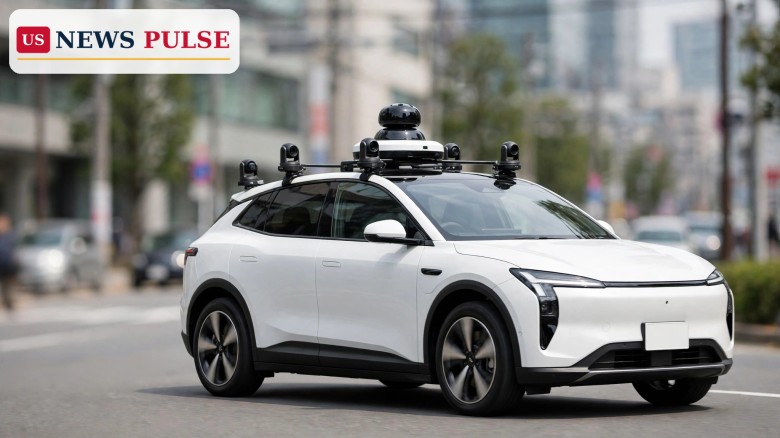
Toyota will build Waymo's next robotaxi. The Waymo Toyota robotaxi deal, announced on Friday, October 30, 2026, puts Toyota's 2027 bZ4X electric SUV at the centre of Waymo's first big push into right-hand-drive markets, with testing due to start in Japan in 2027 and the United Kingdom to follow. It is the first concrete vehicle to come out of a partnership the two companies struck 18 months ago, and it gives Waymo a factory-built, Japan-made car for the countries where its current fleet does not fit.
Waymo will begin testing autonomous Toyota bZ4X vehicles in Japan next year as part of a broader partnership with the automaker to provide electric vehicles for robotaxi operations in international markets, including the UK, TechCrunch reported on October 30, 2026. Under the partnership announced on Friday, Toyota will manufacture the 2027 bZ4X vehicles and integrate Waymo's self-driving system at its Takaoka factory in Japan. The electric vehicle is now known as the bZ in the North American market.
The autonomous bZ4X vehicles will initially be tested in Japan, where Waymo intends to eventually operate a robotaxi service. But the intent is to deploy these vehicles in other right-hand driving countries such as the UK. Waymo has been testing its autonomous Jaguar I-Pace vehicles in London for months and plans to launch a robotaxi service there once it receives the necessary permits.
The announcement comes 18 months after Toyota and Waymo signed a preliminary agreement to explore the development and deployment of an autonomous vehicle platform. At the time, TechCrunch noted, the agreement fell into the "let's see what happens" category, with language vague enough to leave plenty of room for interpretation. Friday's announcement changes that: it names the vehicle, the factory, the first market and the year testing starts.
Toyota executive vice president Hiroki Nakajima said the first operations would involve a small number of vehicles, according to Reuters reporting of the announcement. Neither company would say how many cars will be used at first, or where in Japan they will run. Waymo co-chief executive Dmitri Dolgov told Reuters there were no other countries or timelines to share beyond the starting markets.
Waymo, the autonomous driving business owned by Google parent Alphabet, has spent years building its robotaxi service around a small number of vehicle platforms, most visibly the Jaguar I-Pace. That car is a left-hand-drive vehicle built for the United States, and adapting a robotaxi business to Japan and the UK means solving a basic physical problem first: both countries drive on the left, and their cars put the steering wheel on the right. A purpose-built, factory-integrated right-hand-drive vehicle removes that obstacle at the source, rather than retrofitting cars one by one.
Japan has been on Waymo's map for some time. Waymo began testing Jaguar I-Pace vehicles in Japan in 2025, and in September 2026 it said it was targeting fully driverless paid rides in Tokyo in 2027 with taxi operator Nihon Kotsu and the GO ride-hailing app, at a scale of about 100 vehicles, subject to approval. The Toyota bZ4X programme sits alongside that plan: the companies describe it as a step toward Japan's first fully autonomous ride-hailing service using high-volume, domestically made vehicles. These are Level 4 cars, which means they can drive themselves without a human driver in certain areas and conditions.
In Britain, the path is longer and more bureaucratic. Waymo has been testing Jaguar I-Pace vehicles in London for months in preparation for a robotaxi service, but a commercial service still requires the necessary permits. In Great Britain, the Department for Transport opened applications in May 2026 for operators seeking to run pilots involving self-driving vehicles in taxi, bus and private-hire-style services. The Toyota and Waymo announcement did not identify a UK operating area or link the proposed future deployment to a particular British pilot, and no UK automated passenger service approval was announced.
The scale of Waymo's ambition is visible in a separate strand of reporting. Waymo plans to deploy 5 billion dollars in newly borrowed debt to quintuple its commercial autonomous fleet to 20,000 vehicles by the end of next year, expanding from 4,000 cars, according to Silicon Report. A factory deal with the world's largest carmaker is, in that light, less a single product announcement than a supply line for a much larger fleet.
For now, the partnership looks more like a conventional vehicle supplier deal that helps Waymo fill specific regional needs while adding a new model to its robotaxi portfolio, TechCrunch observed. Toyota builds the car and fits the hardware on the factory line at Takaoka; Waymo supplies the Driver, the self-driving system that perceives the road, plans the route and controls the vehicle. Testing and validation in Japan in 2027 comes first, and commercial service follows later. Deployment to the UK and other markets served by Waymo is planned for subsequent years, but the announcement does not set a date for UK deployment, name a British city, or confirm the launch of a UK passenger service.
But the partnership could go beyond robotaxis. The companies said they will continue to look at bringing Waymo's autonomous technology to personally owned Toyota vehicles. That is a much larger market than ride-hailing, and it is the part of the announcement that legacy carmakers will read most carefully: a supplier relationship today could become a technology licensing relationship tomorrow, putting Waymo's driver inside cars that ordinary buyers own and drive themselves, with the system acting as an advanced driver-assistance feature rather than a full chauffeur.
Toyota and Waymo also announced plans to look at other future "initiatives" that would use "insights from Waymo's real-world operations" to improve safety for other road users. What that might mean is unclear, although Hiroki Nakajima, executive vice president of Toyota and a board member, provided some clues in his statement.
"This collaboration will help scale that technology and bring it to customers in Japan and beyond through Waymo's ride-hailing service, and in parallel, Toyota will continue to explore how integrating vehicles with traffic infrastructure can make those roads safer still," Nakajima said in a statement.
Dolgov framed the geography plainly, telling Reuters: "We'll start with the right-hand drive markets in Japan and the UK." The bluntness matters, because it draws a line around what is actually promised. Japan first, the UK second, and nothing else announced. For a company that has often been accused of overpromising on self-driving timelines, the restraint is itself part of the message.
TechCrunch's read was measured. The announcement, it wrote, moves a partnership that had been only an agreement to "explore" working together into something physical: a named vehicle, a manufacturing location and a year for initial operations. The same coverage cautioned, however, that the deal as announced is closer to a vehicle supply arrangement than a sweeping joint venture, and that the more ambitious possibilities, including Waymo technology in privately owned Toyotas, remain things the companies will "continue to look at" rather than products with dates attached.
The deal matters for three reasons. First, it is the clearest sign yet that the robotaxi race is becoming a manufacturing race. Software alone does not put cars on roads in new countries; factories, vehicle platforms and local supply chains do, and Toyota gives Waymo all three in Japan. Second, it changes the competitive picture in the UK. Waymo's London testing has so far used Jaguars; a Toyota-built, right-hand-drive fleet designed for the job would give it a vehicle it can scale in Britain without depending on a single European supplier. Third, it shows how the world's biggest carmaker sees autonomy: not as a threat to be kept at arm's length, but as a technology to be built into its own vehicles, first in a ride-hailing fleet it does not own, and perhaps later in cars it sells to the public.
For American readers, the story also has a domestic echo. Waymo's fleet expansion, its debt-funded plan to reach 20,000 vehicles, and its push into Tokyo and London all point the same way: the self-driving business is no longer a science project confined to a few US cities. It is becoming a global transport business, with Japanese factories, British regulators and American software all in the same supply chain. The car on a Tokyo street in 2027 may be the clearest preview yet of what a driverless street looks like everywhere else a few years later.
Three things are worth watching. The first is the size and location of the Japanese test fleet in 2027, and whether the Nihon Kotsu and GO plan for paid driverless rides in Tokyo proceeds on schedule and at the reported scale of about 100 vehicles. The second is the UK permit process: Waymo needs regulatory approval before any passenger service can launch in London, and the timing of that approval will decide whether the bZ4X arrives in Britain as a test vehicle or as a working taxi. The third is whether the "personally owned Toyota vehicles" strand produces anything concrete. A Waymo system inside a car a customer buys would be a bigger shift than any robotaxi fleet, and both companies have now put it on the record as something they are exploring.
Until the first bZ4X robotaxis roll out in Japan, the announcement remains a plan with a factory and a date rather than a service passengers can hail. But plans with factories behind them are harder to dismiss than press releases, and this one has Toyota's largest home plant behind it.
On October 30, 2026, they announced that Toyota will manufacture 2027 bZ4X electric vehicles with Waymo's self-driving system integrated at its Takaoka factory in Japan, with testing in Japan starting in 2027 and deployment in the UK and other right-hand-drive markets to follow.
Testing and validation begin in Japan in 2027 with a small fleet. Commercial service is planned to follow, and UK deployment comes in later years. No exact UK date or city has been announced.
It is Toyota's bZ4X electric SUV, known as the bZ in North America. The Waymo version is a custom variant fitted with the Waymo Driver self-driving system on the factory line at Takaoka.
No. Waymo has been testing Jaguar I-Pace vehicles in London for months, but a commercial robotaxi service there still requires the necessary permits.
Possibly. The companies said they will continue to look at bringing Waymo's autonomous technology to personally owned Toyota vehicles, but no product or date has been announced.
Related coverage on US News Pulse: AI scraping opt-out: Google, OpenAI, Microsoft and Anthropic back one no-scrape signal and Apple Maps blurs US military bases and space sites in quiet security change.
Leave a Comment



 | Today's Date: