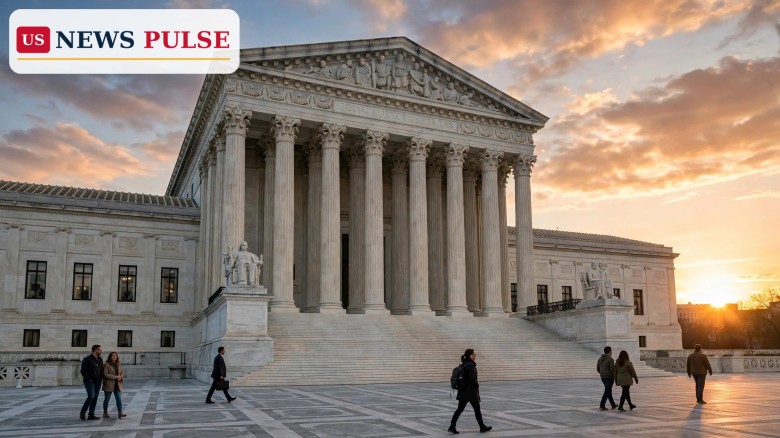
The Supreme Court Colorado preschool case arrives at the nation's highest court on Tuesday, November 3, 2026, carrying a question that reaches far beyond one state's classrooms: when taxpayer money funds preschool places, can a religious school take part while turning away children whose families do not share its beliefs? The justices will hear arguments from the Archdiocese of Denver and other Catholic groups seeking an exemption from Colorado's equal-access rule, in a case that tests the reach of religious freedom, the limits of anti-discrimination law, and the conditions states may attach to public money.
Under Colorado law, children became eligible in 2023 for 15 hours a week of state-funded preschool before entering kindergarten. Participating preschools may be public or private, secular or religious. But the law requires them to give all children an equal opportunity to enrol, regardless of the sexual orientation or gender identity of the students or their parents.
The Archdiocese of Denver, along with other Catholic entities and a Colorado family, sued as the state's universal preschool initiative expanded. According to court papers, the archdiocese admits students only from families who support Catholic beliefs, including on same-sex relationships and gender identity. The Catholic Church recognises marriage only as a union between a man and a woman, and opposes transgender self-identification. Its catechism states that homosexual acts are intrinsically disordered and that under no circumstances can they be approved.
A Colorado-based federal judge upheld the programme's LGBT protections in 2024. The Denver-based 10th US Circuit Court of Appeals affirmed that ruling last year, prompting the current appeal to the Supreme Court. The court, with its 6-3 conservative majority, has in recent years taken a broad view of religious liberty, and conservative religious interests have prevailed in a series of clashes with LGBT protections.
The challengers are represented by the Becket Fund for Religious Liberty, a conservative legal group which says it has an undefeated record in 13 cases before the Supreme Court, six of them unanimous. Citing the court's 2015 ruling that legalised same-sex marriage nationwide, lawyers for the Catholic preschools told the justices that the decision promised religious groups would be protected when they dissent from secular orthodoxies about marriage and sexuality.
“The Free Exercise Clause simply cannot do that important work — which this court has described as 'at the heart of our pluralistic society' — if it can be so easily evaded,” they wrote.
Colorado's universal preschool programme was designed to widen early education, not to fund one kind of school. A family can use its funded hours at a public school, a private secular preschool, or a religious preschool, so long as the school joins the programme and follows its rules. The equal-opportunity requirement sits at the centre of that bargain: a participating school may not shut its doors to a four-year-old because the child's parents are gay, or because a child is transgender.
Colorado officials have accused the Catholic preschools of seeking legal permission to discriminate against four-year-olds and their families while receiving taxpayer dollars. The state argues that its requirements do not intrude on the Free Exercise Clause — the First Amendment provision protecting the right to practise religion without government interference — because they are neutral and apply generally to participating groups.
That argument rests on a 1990 Supreme Court precedent, Employment Division v. Smith, which upheld generally applicable laws even when they curb religious freedom. The ruling was written by the late Justice Antonin Scalia, a staunch conservative, yet it has long been in the crosshairs of conservative litigants. By agreeing to hear the Colorado case, the Supreme Court formally declined to consider overruling Smith. But a group of constitutional scholars backing Colorado cautioned the justices that embracing the broadest argument presented by the Catholic groups would gut the precedent.
Doing so, they argued, would usher in a “most-favoured nation” rule for religion, meaning that exceptions granted for secular activities would make it difficult for states to deny comparable exceptions for religious activities. “The original public meaning of the (Free Exercise) Clause is that it forbids laws targeting religion as such, not that it affirmatively requires religious exemptions from laws that the state permissibly enacts,” the scholars wrote.
A core disagreement is whether Colorado discriminated against the Catholic preschools by refusing to exempt them from the equal-opportunity requirement while allowing preschools to prioritise the enrolment of low-income and disabled students. The Catholic groups point to that difference as evidence they were singled out. Colorado points to the programme's purpose: reaching children who face the steepest barriers to early education, without regard to who their parents are.
The Supreme Court Colorado preschool case turns on two competing readings of the First Amendment. The religion provisions include both the Free Exercise Clause, which protects religious practice, and the Establishment Clause, which restricts the government from establishing or endorsing a particular religion, or promoting religion over nonreligion. That second provision underpins the concept of separation of church and state.
The justices' recent decisions have expanded access by religious schools to public money where, in the court's view, policies had unlawfully excluded religious institutions. In 2022, the court ruled for two Christian families challenging a Maine programme that provided state-funded tuition assistance but excluded private religious schools. In 2020, it endorsed Montana tax credits that helped pay for students to attend private religious schools, ruling for three mothers of Christian school students. Those decisions followed a 2017 ruling for Trinity Lutheran Church of Columbia, Missouri, declaring that churches and other religious entities cannot be flatly denied public money based on their religious status, even in states whose constitutions explicitly ban such funding.
The Colorado case asks whether that line of reasoning extends further: from barring the exclusion of religious schools to requiring an exemption from an anti-discrimination condition that applies to everyone in the programme. Advocacy groups backing Colorado, including the ACLU and Americans United for Separation of Church and State, told the justices the state's preschool funding programme is neutral toward religion. Siding with the Catholic groups, they argued, would force the government “to provide taxpayer dollars – and the state's imprimatur – to beneficiaries whose conduct undercuts state policy goals, including equality goals.”
The liberal justices have raised the alarm in recent cases, arguing that the conservative majority is undermining church-state separation as envisioned in the Establishment Clause. Dissenting in the 2022 Maine case, Justice Sonia Sotomayor wrote: “Today, the court leads us to a place where separation of church and state becomes a constitutional violation.”
“These cases reflect a very conservative court, following the conservative agenda on the religion clauses and LGBT issues,” Erwin Chemerinsky, dean of the University of California, Berkeley Law School, said of the recent rulings.
The recent pattern he described is striking. In March, the court rejected a Colorado law that barred psychotherapists from using “conversion” talk therapy intended to change an LGBT minor's sexual orientation or gender identity, siding with a Christian licensed counsellor who cast the ban as an intrusion on First Amendment free speech rights. Last year, the court sided with Christian and Muslim parents in Maryland who sued to keep their elementary school children out of certain classes when storybooks with LGBT characters are read.
In 2023, the court ruled that the First Amendment right to free speech allows certain businesses to refuse to provide services for same-sex weddings. And in 2018, it sided with a Colorado baker who refused, based on his Christian beliefs, to have his shop make a wedding cake for a gay couple, based on the Free Exercise Clause.
Supporters of the Catholic schools frame the Colorado dispute as a matter of conscience: a religious preschool, they argue, should not have to choose between its faith and a state programme open to every other school. Supporters of Colorado frame it as a matter of equal access: a programme paid for by all taxpayers, they argue, should not fund a school that turns a child away because of who that child's parents are. Both sides agree the ruling will be read far beyond Colorado's borders.
Preschool is where the abstract debate over religious freedom meets the daily life of families. Four-year-olds do not choose their parents, their school, or the beliefs of either. A ruling for the Catholic groups would give religious providers a powerful argument for exemptions from equal-access conditions in other state-funded programmes, from childcare subsidies to after-school services. A ruling for Colorado would confirm that states may set a single, neutral price of admission for public money: serve every eligible child, or do not take the funds.
The stakes are also financial and practical. States across the country are expanding funded preschool, and many rely on private and religious providers to supply enough places. If religious schools can participate on their own admissions terms, states gain capacity but lose uniformity. If they cannot, states may lose places in communities where a Catholic preschool is the nearest, or only, option — unless those schools change their admissions policies.
The case also arrives as the court faces a wave of religion-and-schools appeals. The justices are expected to consider whether a Texas law requiring public schools to post the Ten Commandments violates the court's 1980 ruling striking down a similar requirement in Kentucky. An appeals court that upheld the Texas law in April said the Supreme Court has since jettisoned the reasoning behind the 1980 decision, pointing to its 2022 opinion backing a high school football coach who offered prayers at the 50-yard line after games.
Other pending appeals ask the court to revisit a 2004 decision allowing states to exclude students studying to become ministers from public scholarship programmes; to consider whether Amish schools in New York deserve a religious exemption from state vaccination rules after measles outbreaks ended religious exemptions; to decide whether a Maryland substitute teacher's religious and free speech rights were violated by rules on pronouns and parental notification; and to weigh public funds for religious homeschool curricula and for special education services delivered at Jewish schools. The Colorado argument will therefore be read as a signal for how far the court's religious-liberty majority is willing to go this term.
Arguments on Tuesday will be followed by the justices' private conference, where they will take a preliminary vote and assign the majority opinion. A decision is expected later in the term, and the reasoning — not just the winner — will matter most. A narrow ruling, tied closely to Colorado's preschool rules, would leave other programmes to fight their own cases. A broad ruling, embracing a general right to religious exemptions from neutral funding conditions, would invite challenges across the country.
Whatever the outcome, Colorado's programme will continue in the meantime, and families will keep enrolling under the current rules until the court speaks. Lawmakers in other states will be watching too: a win for the Catholic groups would encourage religious providers to seek exemptions elsewhere, while a win for Colorado would encourage states to write equal-access conditions into new programmes with greater confidence.
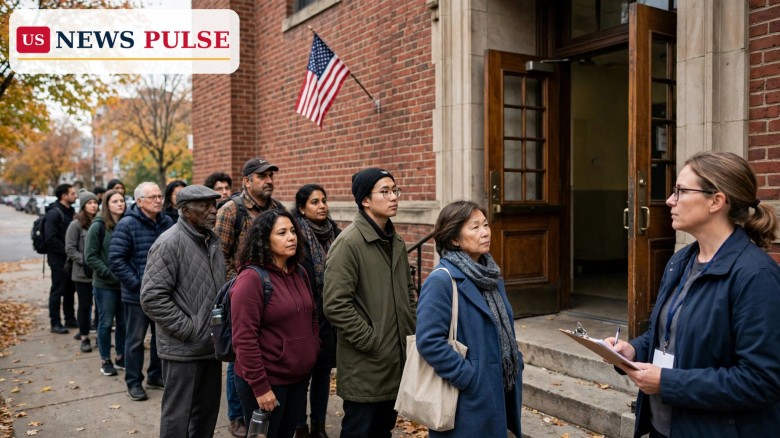
For the families at the heart of the case, the wait is personal. A preschool place is not an abstract benefit. It is a classroom, a teacher, and a start to school — and the court must now decide who gets to walk through that door, and on what terms.
What is the Supreme Court Colorado preschool case about? It is a challenge by the Archdiocese of Denver and other Catholic groups to Colorado's rule that state-funded preschools give every child an equal opportunity to enrol, regardless of the sexual orientation or gender identity of the child or parents. The groups want a religious exemption.
When will the Supreme Court hear the case? Arguments are scheduled for Tuesday, November 3, 2026. A decision is expected later in the court's term.
How many Catholic preschools are involved? The Archdiocese of Denver oversees 34 Catholic preschools, according to court papers.
What does Colorado's programme provide? Since 2023, Colorado children have been eligible for 15 hours a week of state-funded preschool before kindergarten, at public, private, secular or religious schools that join the programme.
Why is the Trump administration involved? The administration is backing the Catholic groups, arguing in support of their religious-freedom claim. Colorado is defended by the state, with support from groups including the ACLU and Americans United for Separation of Church and State.
Related coverage on US News Pulse: Supreme Court SNAP payments block extended as shutdown deal heads to House vote; Federal judge blocks DOJ election pressure campaign days before midterms; Chief Justice Roberts defends judicial independence as courts face attacks.
Sources: Reuters via The Jerusalem Post, October 31, 2026; USA TODAY, October 31, 2026.
Leave a Comment



 | Today's Date: