The Moscow terror threat warning issued by the United States Embassy in Moscow on Saturday, October 31, 2026, told Americans to stay away from the Tsaritsyno Museum Reserve in the Russian capital on that day, after the embassy said it was aware of a credible threat of a mass casualty event at the site. The alert, published by the US Mission in Russia, named the museum-reserve at Dolskaya Ulitsa 1, Moscow, and said the US government was coordinating with appropriate Russian authorities on a response. It did not say who was behind the threat, how the information was obtained, or what form an attack might take, and by Saturday evening in Moscow there was no confirmed report that an attack had taken place at Tsaritsyno.
The embassy's security alert, titled "Threat to Tsaritysyno Museum Reserve in Moscow (October 31, 2026)", was posted on the US Embassy and Consulates in Russia website on Saturday. In full, its central warning read: "The U.S. Embassy in Moscow is aware of a credible threat of a mass casualty event TODAY October 31, at the Tsaritsyno Museum Reserve in Moscow at Dolskaya Ulitsa 1, Moscow, Russia 11569. The U.S. government is coordinating with appropriate Russian authorities on a response."
Under "Actions to take", the embassy listed: avoid the Tsaritsyno Museum Reserve location on October 31, 2026; avoid the area, stay alert, and avoid crowds; be aware of surroundings; review a personal security plan; keep a cellphone charged in case of emergency; carry proper identification; and monitor local media for further information. It also urged Americans to enrol in the State Department's Smart Traveler Enrollment Program (STEP) to receive health and security updates, and gave embassy assistance contacts, including +7 495 728-5577 and MoscowACS@state.gov, and State Department Consular Affairs numbers 1-888-407-4747 and 1-202-501-4444.
The warning was also shared by the embassy's social-media account, TravelGov, on October 31, 2026, repeating the same address and the instruction to avoid the area and crowds. News outlets picked up the alert during Saturday, and by the afternoon in Moscow, Russian media and independent outlets were reporting the FSB's response and unconfirmed developments at the site itself.
One report, citing the Russian outlet Fontanka, said an organ concert had been scheduled at the complex on Saturday and that the museum's website was not available at the time of reporting. Another report, citing the publication Vazhniye istorii, said concerts had been planned that day at 17:00 in the Khlebny Dom and at 18:00 in the Bazhenov Hall. A report citing an Ostorozhno Media journalist said the museum-reserve was later closed for technical reasons, that police officers arrived, and that the entrance was blocked. Those accounts of a closure and a police presence were not, in the reporting seen for this article, confirmed by an official statement from the museum or from Russian authorities, and they should be treated as unconfirmed. What is confirmed is the embassy alert itself and the FSB's acknowledgement that it had received US information.
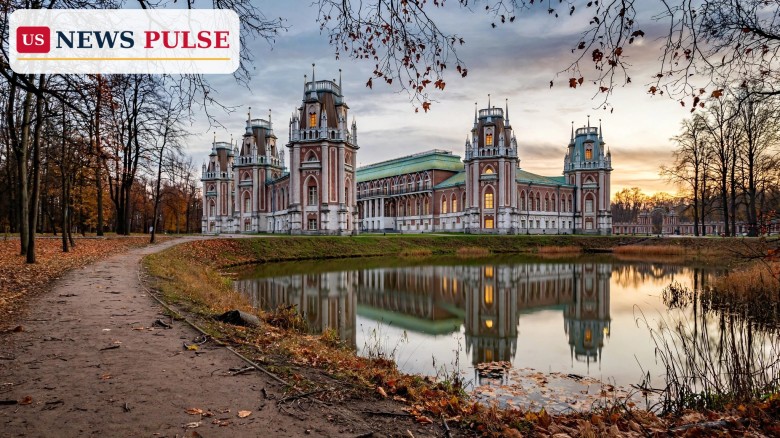
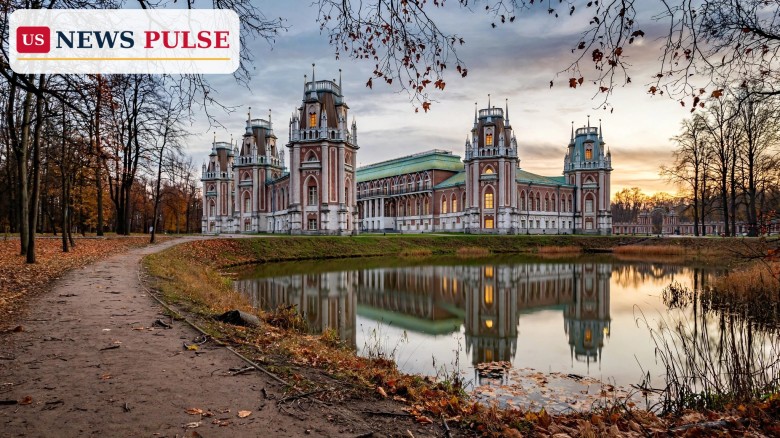
Tsaritsyno is a large museum-reserve and park in southern Moscow, founded in 1775 as Empress Catherine II's summer home, and it remains a popular destination for walking, concerts and cultural events. Its palace complex, with red-brick Gothic-style buildings, ponds and parkland, draws visitors throughout the year, which is part of why a warning naming a single, specific, busy public site on a Saturday carried immediate weight. The embassy did not describe Tsaritsyno as a target in any wider sense, and it did not warn about other Moscow sites by name in this alert.
The alert also sits against a much longer US travel-warning history for Russia. The State Department already lists Russia at Level 4, "Do Not Travel", its highest level, citing risks including terrorism, the fallout from the war in Ukraine, and the possibility of arbitrary detention of American citizens. That standing warning is separate from Saturday's specific, dated alert, but it explains why the embassy's advice is framed not only as "avoid this place today" but as part of a broader instruction to stay alert, avoid crowds and keep a personal security plan under review.
The most pointed precedent cited in Saturday's coverage is March 2024. Before the terrorist attack at the Crocus City Hall complex near Moscow, in which more than 140 people were killed, the US Embassy had also warned about a possible attack on mass events in Moscow, including concerts. The comparison does not prove that Saturday's threat will lead to an attack, and no official has said so. It does explain why a short embassy alert, even without details about the source or the plot, was treated by newsrooms and by Russian authorities as a serious signal rather than a routine notice.
It is worth being precise about what the Moscow terror threat alert does and does not say, because the gap between the two has already produced speculation online. The alert says the threat is "credible" and that it concerns a "mass casualty event" on October 31 at one named location, the Tsaritsyno Museum Reserve. It does not name a group, an individual, a weapon, a method or a time of day. It does not say an attack is under way, and it does not say that Russian authorities have made arrests. The only action it asks of Americans is avoidance and vigilance on that day, plus the standing steps of staying aware, keeping a phone charged, carrying identification and following local media.
The same restraint applies to the Russian side. The FSB, through statements reported by RIA Novosti and TASS, said: "We have received information from U.S. partners regarding plans for a terrorist attack in Moscow. We are taking appropriate action." A later statement, reported by the Times of India and others, said "Relevant work is being carried out", without disclosing further details about the intelligence or the nature of the alleged plot. The FSB did not identify the museum as the intended target, specify when or where an attack was expected, or disclose whether any suspects had been detained. FSB chief Alexander Bortnikov later described the American information as being "of a general nature", according to Interfax, a characterisation that sits in tension with the embassy's decision to name a specific place and date.
That tension is not unusual in security warnings. An embassy can act on intelligence it judges credible enough to warn its citizens, while a host country's security service can confirm receipt of information without confirming the same level of detail in public. Readers should therefore treat the embassy's location and date as the warning, and the FSB's statements as confirmation that information was shared, not as confirmation of a plot at Tsaritsyno specifically.
The embassy's own words are the core of the story. "The U.S. Embassy in Moscow is aware of a credible threat of a mass casualty event TODAY October 31, at the Tsaritsyno Museum Reserve in Moscow at Dolskaya Ulitsa 1, Moscow, Russia 11569," the alert said. "The U.S. government is coordinating with appropriate Russian authorities on a response."
Russia's Federal Security Service stated, according to The Moscow Times: "We have received information from U.S. partners regarding plans for a terrorist attack in Moscow. We are taking appropriate action." The FSB later added, in the formulation reported by several outlets, that "Relevant work is being carried out", without further detail.
FSB chief Alexander Bortnikov later described the American information as being "of a general nature", according to Interfax, as reported by the Times of India. No US official quoted in the reporting seen for this article gave a competing public characterisation of the intelligence, and no Russian official quoted in that reporting confirmed a target, a time or an arrest.
Coverage also noted the embassy's standing advice for Americans in Russia, which the alert repeated in shortened form: avoid the location, avoid crowds, stay alert, review a personal security plan, keep a phone charged, carry identification and monitor local media. The embassy's assistance page lists MoscowACS@state.gov and +7 495 728-5577 for the Moscow embassy, and State Department Consular Affairs at 1-888-407-4747 or 1-202-501-4444.
A specific, dated warning about a named public place matters for three reasons. First, it is practical: anyone in Moscow on October 31, American or not, who had planned to visit Tsaritsyno could change plans on the basis of a short, clear instruction. Second, it is diplomatic: the alert shows that, even at a time of deep US-Russia tension over Ukraine and wider security disputes, information about a possible terrorist attack was still passed from the United States to Russian authorities, and Russian authorities publicly acknowledged receiving it. Third, it is a reminder of how security warnings work in public: they are deliberately vague about sources and methods, which protects intelligence but leaves the public with a warning and very little to verify for itself.
That vagueness is also why restraint in reporting matters. A warning is not an attack, and a confirmation that information was received is not a confirmation that a plot existed at the named site. Treating unconfirmed reports of a closure or a police cordon as proof of a foiled attack would overstate what is known. Equally, dismissing the alert because no attack had been confirmed by Saturday evening would understate why embassies issue such warnings at all: they are meant to change behaviour before an event, not to describe one after it.
For Americans in Russia, the practical consequence is unchanged by the debate over wording. The State Department's Level 4 "Do Not Travel" advice already applied before Saturday, and Saturday's alert added a single, time-limited instruction on top of it: do not go to Tsaritsyno on October 31, stay away from crowds, and stay alert.
The immediate question is whether Russian authorities or the US Embassy issue a further statement after October 31, either confirming that the threat has passed, describing any action taken, or extending the warning. No such follow-up had been confirmed in the reporting seen for this article by Saturday evening Moscow time. If the museum-reserve was closed for technical reasons on Saturday, as unconfirmed reports suggested, the next step will be to see whether it reopens normally and whether the museum or Moscow authorities explain the closure.
Longer term, the episode will be read alongside the March 2024 Crocus City Hall precedent, in which a US warning preceded a devastating attack, and alongside the current pattern of US security alerts for Russia. Analysts will ask whether the sharing of threat information continues even as political relations remain hostile, and whether the FSB's "general nature" description reflects a genuine difference in assessment or a public-relations choice. Those questions cannot be answered from the alert and the FSB statements alone, and this article does not speculate beyond them.
For now, the verified position is narrow and clear: the US Embassy warned of a credible mass casualty threat at Tsaritsyno on October 31, 2026; Russia's FSB confirmed receiving US information about a planned terrorist attack in Moscow and said relevant work was being carried out; and no attack at Tsaritsyno had been confirmed by Saturday evening.
It warned of a credible threat of a mass casualty event on that day at the Tsaritsyno Museum Reserve in Moscow, at Dolskaya Ulitsa 1, and told Americans to avoid the location, avoid the area and crowds, and stay alert.
No attack at Tsaritsyno had been confirmed in the reporting seen for this article by Saturday evening Moscow time. Unconfirmed reports of a closure and police at the site were not confirmed by an official museum or authorities' statement.
The FSB confirmed it had received information from US partners about plans for a terrorist attack in Moscow and said relevant work was being carried out. It did not name Tsaritsyno, give a time or place, or say anyone had been detained, and its chief later described the US information as being of a general nature.
According to the embassy alert: avoid the Tsaritsyno location on October 31, avoid crowds, stay alert, review a personal security plan, keep a phone charged, carry identification, monitor local media, and enrol in the STEP programme. The State Department already advises against all travel to Russia at Level 4.
Because the US Embassy had also warned before that attack about possible attacks on mass events in Moscow, including concerts, and more than 140 people were killed at Crocus City Hall. The precedent explains why Saturday's alert was taken seriously, but it does not prove an attack was planned for Tsaritsyno.
Related coverage on US News Pulse: Iran strikes on US bases: AP finds methodical campaign, 115 attacks, billions lost; Iran-US talks update; Oleshky evacuees return home after 1,711 days in emotional Ukraine reunion.
Leave a Comment



 | Today's Date: