President Donald Trump said on Saturday that defeated Brazilian presidential candidate Flavio Bolsonaro can stay in the United States for as long as he wants, even as Secretary of State Marco Rubio insisted that Washington played no part in organising the senator's secret departure from Brazil. The Bolsonaro Miami stay has become a fresh diplomatic flashpoint just days before the November 3 midterm elections, with the White House defending the decision to admit him while Brazil's courts pursue investigations that were supposed to keep him at home.
Speaking to reporters at his Mar-a-Lago club in Palm Beach, Florida, Trump said he had no plans to meet Bolsonaro, but voiced sympathy for the Brazilian senator. "I think he got treated very shabbily. Very shabbily, so he can stay here as long as he wants," Trump said, adding that the Brazilian election that Bolsonaro lost was "a disgrace". Rubio, speaking separately in Atlanta where the Group of 20 foreign ministers met, was blunt about the American role in the journey itself: "We didn't facilitate anything."
The new statements came on Saturday, October 31, 2026, as the Bolsonaro story moved from the fact of his arrival into a dispute about how he got here and what happens next. Rubio addressed reporters on the sidelines of the G20 foreign ministers' meeting in Atlanta, Georgia. He said US officials learned that Bolsonaro had arrived in the country, that the Brazilian politician already held a valid visa, and that Trump subsequently decided to allow him to enter. Rubio said he had met Brazilian Foreign Minister Mauro Vieira in Atlanta on Friday and Saturday and expected to meet Brazilian officials again in France in November, at a Group of Seven foreign ministers' meeting where Brazil will take part as an observer, and again ahead of the G20 leaders' summit in Miami in December.
Trump, speaking at Mar-a-Lago the same day, went further than Rubio on the question of Bolsonaro's future. He ruled out a meeting, but offered an open-ended welcome. The remarks matter because they remove, for now, any suggestion that Bolsonaro's stay is short or conditional. Reports from US media have described his entry as humanitarian parole lasting one year, a status that would still require a further decision when it expires. Trump's language — "as long as he wants" — points in a different direction, and it was that language that travelled fastest in Saturday's coverage.
At the same time, a second thread of the story sharpened. CNN Brazil, cited by the Jerusalem Post on November 1, reported that a former Mossad agent who became a naturalised US citizen helped Bolsonaro escape Brazil in defiance of the judicial order barring him from leaving. According to that investigation, the former Israeli intelligence officer arrived in Brazil on October 19, six days before the second round of the presidential election, and travelled with Bolsonaro in one vehicle while his wife and two daughters travelled in a second. One driver was identified as a former municipal council member from Foz do Iguacu, and the second driver was his son. The report also said a top adviser to Argentine President Javier Milei arrived in the border area to oversee the operation and prevent documentation of it. US News Pulse has not independently verified the Mossad-agent claim, and the White House has not publicly addressed it in detail.
Bolsonaro, 45, is a Brazilian senator and the son of former president Jair Bolsonaro, who is serving a 27-year sentence under house arrest after being convicted of plotting a coup following his defeat in the 2022 presidential election. The younger Bolsonaro lost the presidential runoff on October 25, 2026, to incumbent Luiz Inacio Lula da Silva. Days later, Brazil's Supreme Court ordered him to surrender his passports within 24 hours as part of a money-laundering investigation and barred him from leaving the country. Bolsonaro has denied wrongdoing, and he faces investigations in Brazil over alleged corruption, money laundering and tax evasion.
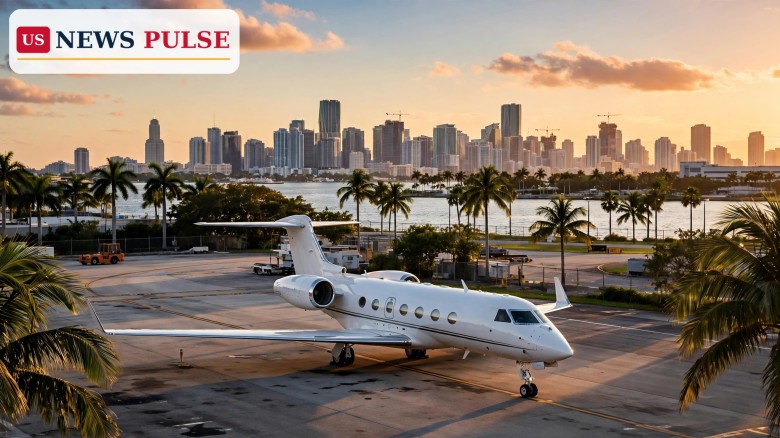
Instead of surrendering his travel documents, Bolsonaro left Brazil in a carefully planned route that US News Pulse covered in its earlier report on his arrival. He crossed into Argentina, boarded a Gulfstream G400 executive jet operated by the Argentine airline Baires Fly, stopped to refuel in Guayaquil, Ecuador, and landed on Wednesday morning at Opa-locka Executive Airport near Miami, accompanied by his family. The New York Times and the Wall Street Journal reported that the aircraft was chartered by Jason Miller, an adviser to Trump, and the Wall Street Journal reported that Trump personally approved the family's entry on Tuesday, after which Rubio moved to issue visas. The head of the airline told AFP that the plane was paid for by an intermediary from a US bank account. Brazil's federal police have said they have no official record of his exit, and Brazil summoned Argentina's charge d'affaires for information.
That background is why Rubio's denial on Saturday drew so much attention. The distinction Rubio drew — between facilitating a departure and authorising an entry — is a narrow one, and it is the distinction the administration is now relying on. Under Rubio's account, the United States did not organise the crossing or the flight; it learned of the arrival, confirmed a valid visa, and Trump decided to admit him. Critics, including 25 Democratic lawmakers in the United States who have demanded that the administration explain whether US diplomatic resources were used to assist the escape, argue that the distinction collapses once the entry itself is approved at the presidential level. From Miami, Bolsonaro has publicly denounced what he called judicial persecution and vowed to direct opposition efforts from abroad, while promoting a Senate leadership bid — even as much of his own Liberal Party has shown limited public support for his claims.
Read together, the Trump and Rubio statements do two different jobs. Rubio's statement is aimed at Brazil and at the diplomatic record: it denies American involvement in the escape and frames the US role as a routine visa and entry decision, softened by the promise of further talks with Foreign Minister Vieira. Trump's statement is aimed at a domestic audience and at Bolsonaro himself: it offers sympathy, attacks the legitimacy of the Brazilian election, and promises an indefinite welcome. The tension between the two is obvious. A government that insists it merely processed an arrival is also, through its president, publicly embracing the man who arrived.
There is also a practical question that neither statement fully answers. If Bolsonaro's entry rests on humanitarian parole for one year, as reports have described it, then his long-term status is not settled by a presidential remark to reporters. Parole is a temporary permission, not a visa or a grant of asylum, and it can be revisited. If, on the other hand, the administration intends to extend or convert that status, Saturday's remarks may be the first public signal of that intention. Reuters, citing a US official and another person familiar with the matter, reported that Trump currently had no plans to back Bolsonaro's political ambitions, despite allowing him to enter the country — a detail that suggests the White House wants the welcome to be personal rather than political, at least for now.
"We didn't facilitate anything," Rubio told reporters in Atlanta, in the clearest denial yet from the administration about its role in Bolsonaro's departure. He added that US officials learned Bolsonaro had arrived and that the senator already held a valid visa, and that Trump subsequently decided to allow him to enter.
"I think he got treated very shabbily. Very shabbily, so he can stay here as long as he wants," Trump said at Mar-a-Lago. "The election was a disgrace," he added, repeating his criticism of the Brazilian vote. Trump also said he had no plans to meet Bolsonaro, a point that both the Times of India and Moneycontrol reported from his Saturday remarks.
In Brazil, the reaction has been framed by the courts rather than by politicians alone. The Supreme Court's passport order, the money-laundering investigation behind it, and the absence of any official exit record in Brazil's federal police files are the facts that make the escape legally significant rather than merely dramatic. The summoning of Argentina's charge d'affaires shows that Brasilia is treating the route through Argentina as a diplomatic matter, not just a travel story. Rubio's promise of further meetings with Vieira — in France next month and ahead of the December Miami summit — suggests both sides want a channel open even while they disagree about what happened.
The Bolsonaro Miami stay matters for three reasons, and they pull in different directions. First, it tests how the United States handles a foreign politician who arrives after defying his own country's courts. Every administration faces versions of this choice, but this one is unusually public: the traveller is the son of a former president convicted of plotting a coup, the election he lost was only days old, and the president himself has now commented twice — first by approving entry, then by offering an open-ended stay.
Second, it matters for the US-Brazil relationship at a moment when both countries are trying to keep other business moving. Rubio hosted the G20 foreign ministers in Atlanta and will meet Vieira again in France and before the December leaders' summit in Miami. A dispute about a single arrival could complicate those talks, or it could be contained by them. The fact that Rubio and Vieira met twice in Atlanta, on Friday and Saturday, suggests containment is at least being attempted.
Third, it matters for the midterm campaign at home, where Trump has made his handling of foreign leaders and borders a central theme. Two days before voters decide control of Congress, a story in which the president welcomes a defeated right-wing candidate, calls his election a disgrace, and is simultaneously accused by Democrats of using diplomatic resources to help him, fits neatly into the campaign's final weekend. It also gives Democrats a concrete case to point to when they argue that the administration's foreign policy is personal rather than institutional.
The next steps are diplomatic, legal and political, and they will not all move at the same speed. Diplomatically, watch the Rubio-Vieira channel: a meeting in France in November and another before the December Miami summit will show whether Brazil accepts Rubio's account or keeps pressing for an explanation of the flight. Legally, watch Brazil's investigations and any request for Bolsonaro's return or for information about the aircraft, its payment and its passengers. The reports about a former Mossad agent and about a Milei adviser at the border, if confirmed by further reporting, would add new legal and diplomatic layers. Politically, watch whether Trump repeats the "as long as he wants" promise at a rally or lets it stand as a single remark, and whether the administration clarifies the humanitarian parole timeline.
For Bolsonaro himself, the immediate future is in Miami, where he arrived with his family and where he has begun to speak as an opposition figure abroad. Whether that role grows or fades will depend less on Saturday's remarks than on his party's willingness to follow him, on Brazil's legal moves, and on whether Washington treats his stay as a humanitarian pause or a political home. For now, the only certainty is the one Trump stated plainly: he is welcome to stay, and the president has no plans to meet him.
Flavio Bolsonaro is a Brazilian senator, the son of former president Jair Bolsonaro, who lost the October 25, 2026, presidential runoff to Luiz Inacio Lula da Silva and then travelled to Miami after a Brazilian court ordered him to surrender his passports.
Trump said Bolsonaro "can stay here as long as he wants", that he had been treated "very shabbily", and that the Brazilian election was "a disgrace" — while also saying he had no plans to meet him.
Rubio denied that the United States facilitated Bolsonaro's departure from Brazil, saying US officials learned of his arrival, that he already held a valid visa, and that Trump decided to allow him to enter.
Reports say he crossed into Argentina, boarded a Baires Fly Gulfstream G400, refuelled in Guayaquil, Ecuador, and landed at Opa-locka Executive Airport near Miami on Wednesday, October 28, after Brazil's Supreme Court barred him from leaving.
Humanitarian parole is a temporary US permission to enter and stay for a limited period, reported in Bolsonaro's case as one year. It is not a visa or asylum, and it does not by itself settle long-term status.
Related coverage: Flavio Bolsonaro arrives in Miami after fleeing Brazil election defeat and Wembanyama drops 43 as Spurs beat Timberwolves 121-111. More US and world news is available on the US News Pulse homepage.
Leave a Comment



 | Today's Date: