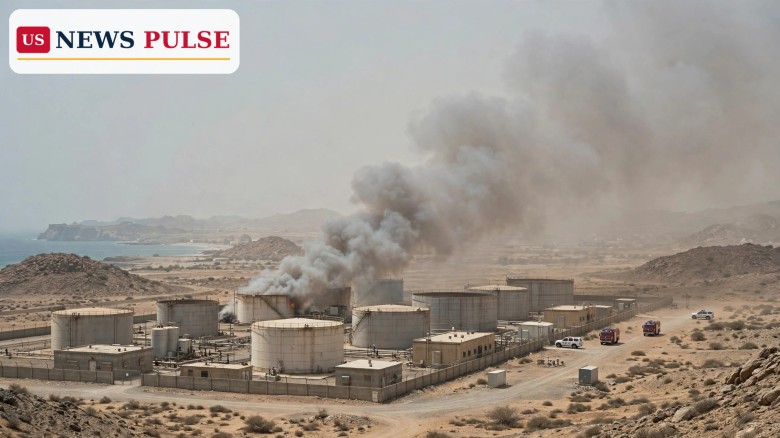
Two airstrikes hit an oil facility in Yemen's western Hodeidah governorate on November 1, 2026, wounding at least three civilians, according to Houthi-affiliated Al Masirah television, as reported by Al Jazeera. The strikes hit the facility in Bajil district, on Yemen's Red Sea coast, and there was no immediate comment from the Saudi-led coalition that Al Masirah blamed for the raids.
The attack came as Yemen's foreign minister used a major regional security conference in Bahrain to argue that there can be no lasting security in the region without a stable Yemen, and to call for international action to lift the siege of Taiz, a city he described as the victim of a war crime. It also came against a wider backdrop of escalation across the region: Iran and the United States are negotiating through Qatari mediators over reopening the Strait of Hormuz, while Iran's military leadership warns it is ready for any attack and has ordered commanders to prepare to respond without geographical limits.
Al Jazeera's live coverage on November 1 reported the Hodeidah strikes in a short item sourced to Al Masirah, the Houthi-affiliated broadcaster. According to that report, the Saudi-led coalition fighting the Houthi rebel group conducted two raids on an oil facility in Bajil district, in the western Hodeidah governorate. Al Masirah said at least three civilians were wounded. The report did not name the facility, describe the extent of the damage, or say whether the wounded civilians were workers at the site or nearby residents, and Al Jazeera said it would bring more detail when it had it. That thinness is important to state plainly: the strike and the casualty figure come from a single, partisan source, and neither the coalition nor an independent monitor had confirmed them in the reporting reviewed for this article.
Hodeidah is one of the most strategically sensitive places in Yemen. Its port on the Red Sea is the main entry point for food, fuel and humanitarian aid for millions of Yemenis, and the governorate has been a front line for much of the war. Bajil district lies inland from the port city, in an area where oil infrastructure, roads and agricultural land sit close together, which is why a strike on an oil facility there carries both a humanitarian risk — fuel is essential for hospitals, water pumps and transport — and a military one. An oil facility is also a target whose destruction can be claimed as an economic blow by either side, which makes independent verification of damage especially important, and especially difficult, in the first hours.
The absence of an immediate coalition comment is also part of the story. The Saudi-led coalition, which backs Yemen's internationally recognised government, does not always comment promptly on individual strikes, and its silence leaves the Al Masirah account as the only public version in the first hours. Readers should therefore treat the attribution — that the coalition carried out the raids — as Al Masirah's claim, not as a confirmed fact, until the coalition responds or independent evidence emerges. The same caution applies to the casualty figure: "at least three civilians wounded" is what Al Masirah reported, and it may be revised as hospitals or aid agencies report.
Yemen's war has lasted more than a decade, and its latest intensification began in September 2026, when the Iran-backed Houthis took over strategic territory along the Red Sea coast, prompting a counteroffensive by forces aligned with the internationally recognised government, according to Al Jazeera's reporting. Saudi Arabia has backed the government campaign, while the Houthis have retaliated with attacks on airports and oil facilities in the kingdom. That cycle — Houthi advances on the coast, government counteroffensives, and retaliatory strikes on economic infrastructure on both sides — is the context in which the Bajil strikes should be read. Oil facilities have become targets precisely because they are both economically valuable and symbolically potent: hitting one hurts the other side's revenues and signals reach.
The wider regional war adds a second layer. The United States and Israel began a war against Iran at the end of February 2026, a peace memorandum was signed on June 18 under Pakistani mediation, and talks on a final agreement have since faced repeated difficulties, with mutual accusations of non-compliance. Yemen's Houthis are aligned with Iran, and the Red Sea has become a secondary theatre of that conflict: Houthi attacks on shipping and on Saudi infrastructure, and coalition strikes on Houthi-held areas, are watched in Washington, Riyadh and Tehran as signals of how the wider confrontation is moving. A strike in Hodeidah on November 1 therefore lands in a week when the United States is weighing whether to resume strikes on Iran after the November 3 midterm elections, and when Iran's supreme leader has ordered his commanders to prepare to defend the country and to update target lists that include American and Israeli assets.
The humanitarian stakes in Hodeidah are high regardless of who carried out the strikes. The United Nations has repeatedly warned that Yemen remains one of the world's worst humanitarian crises, with millions of people dependent on aid that arrives through Hodeidah's port. Damage to fuel infrastructure in the governorate can ripple quickly into food prices, hospital operations and water supplies, even when the strike itself is limited. That is why aid agencies track strikes on oil and fuel facilities in Hodeidah with particular care, and why the "at least three civilians wounded" figure, if confirmed, would be only the most immediate measure of harm.
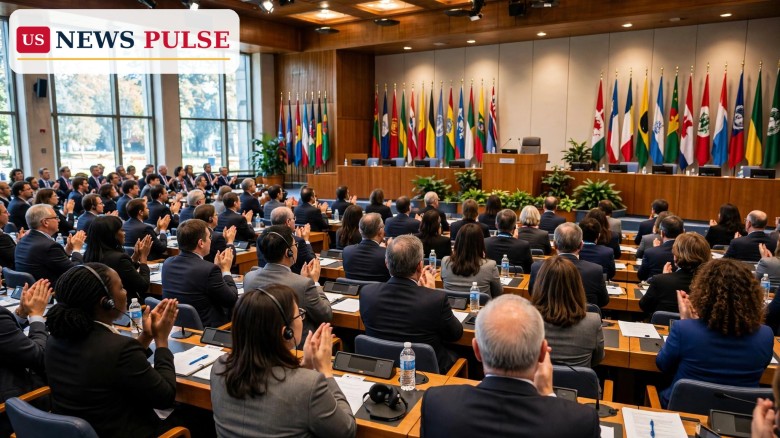
On the same day as the reported strikes, Yemen's Foreign Minister Afrah Al-Zouba addressed the Manama Dialogue in Bahrain, the region's leading security conference, in a session on the foundations of regional security. She said regional stability depends on restoring state authority across Yemen, and that supporting that restoration is a shared responsibility. "There is no sustainable regional security without a stable Yemen, and no stable Yemen without state authority over all its territory, with arms and the decisions of war and peace held solely by its legitimate institutions," she said, according to a post from her account and reporting of her remarks.
Al-Zouba also called for international action to lift the siege of Taiz, a city in south-west Yemen that has been besieged by Houthi forces for years, and described the siege as a war crime in the headline of the Tribune India report of her remarks. Taiz has become a symbol of Yemen's war for many Yemenis: a city of hundreds of thousands of people cut off from easy road access, dependent on difficult mountain routes for supplies, and repeatedly the subject of international appeals that have not ended the siege. By raising Taiz at Manama, Al-Zouba was linking the day's strike in Hodeidah to a broader argument: that Yemen's fragmentation — different armed groups controlling different territory, with different foreign backers — is itself a regional security threat, because it leaves the Red Sea coast, the Bab el-Mandeb strait and the approaches to the Strait of Hormuz exposed to escalation.
Her remarks also touched on maritime navigation, a theme that connects Yemen directly to the Iran negotiations. Houthi threats to shipping in the Red Sea and, according to recent reporting, to undersea cables in the Strait of Hormuz, have made Yemen's coast a concern far beyond Yemen itself. Al-Zouba's argument was that only a Yemeni state with authority over its whole territory can secure those waters, and that the international community therefore has an interest in ending the war rather than managing it. That is a diplomatic argument, not a military one, and it sits in tension with the day's violence in Hodeidah: while ministers talk about state authority in Manama, airstrikes are still hitting infrastructure on the ground.
Yemen's Foreign Minister Afrah Al-Zouba said at the Manama Dialogue: "There is no sustainable regional security without a stable Yemen, and no stable Yemen without state authority over all its territory, with arms and the decisions of war and peace held solely by its legitimate institutions." She added that supporting the restoration of Yemeni state institutions is a shared responsibility. Those quotations come from her own account of the session and from reporting of her remarks, and this article does not add further quotations from her speech that were not in the reporting reviewed.
No immediate comment from the Saudi-led coalition was reported in the Al Jazeera item on the Hodeidah strikes, and no statement from the Houthi authorities beyond the Al Masirah report was included in that coverage. In the wider regional picture, Iran's Foreign Minister Abbas Araghchi told Al Jazeera that Tehran had reached a plan with Qatari mediators to reopen the Strait of Hormuz within two days if the United States meets its conditions, and United States President Donald Trump said negotiations with Iran were "going fine" but that he was "not in that much of a hurry" to make a deal. Iran's Revolutionary Guard commander Brigadier-General Yadollah Javani told the semi-official Fars news agency that Iranian forces are "fully prepared for any scenario the enemy may devise" and warned of devastating strikes on United States warships. Those statements are reported here as context for the regional escalation, not as direct reactions to the Hodeidah strikes, and this article does not present them as such.
The Hodeidah strikes matter even though the immediate casualty figure is small, because of where they happened and what they signal. Hodeidah is Yemen's humanitarian lifeline and a Red Sea flashpoint at the same time, and any strike on its oil infrastructure raises the risk of fuel shortages, price rises and further retaliation. The strikes also show that Yemen's war is intensifying again, not winding down, even as diplomats gather in Bahrain to talk about regional security and in Doha to talk about Hormuz. When airstrikes and security conferences happen on the same day, the gap between diplomacy and the battlefield is the story.
For the United States, the strikes are a reminder that the Iran confrontation is not confined to Iran itself. Houthi-held Yemen, Saudi-backed government forces, and the Red Sea shipping lanes are all part of the same regional system, and escalation in one place can spill into another. That is why Washington watches Hodeidah closely, and why a small strike report on November 1 will be read in the context of the larger question facing the administration after the midterms: whether to resume strikes on Iran, and what that would mean for its allies and adversaries across the region.
The next steps are verification and response. Aid agencies and hospital sources in Hodeidah may confirm or revise the casualty figure and describe the damage to the Bajil facility, and the Saudi-led coalition may issue a statement confirming or denying the strikes. If the coalition confirms them, expect it to frame the facility as a military or economic target linked to the Houthis; if it denies them, expect competing claims about what caused the damage. Either way, the Houthis may retaliate, as they have after previous coalition strikes, with attacks on Saudi airports or oil facilities, which would extend the cycle.
Diplomatically, the Manama Dialogue continues, and the Doha talks on Hormuz remain the more consequential negotiation: Araghchi's two-day reopening plan, if it holds, could lower regional tensions, while a failure could raise them sharply after the United States midterms. Yemen's fate is tied to that outcome, but it is not determined by it. Even a Hormuz deal would leave Yemen's war, the Taiz siege and the Hodeidah front lines unresolved, and Al-Zouba's warning — that there is no regional security without a stable Yemen — will remain the test against which any wider settlement is judged.
Two air raids struck an oil facility in Bajil district, in Yemen's western Hodeidah governorate, according to Houthi-affiliated Al Masirah TV as reported by Al Jazeera. At least three civilians were wounded, Al Masirah said.
Al Masirah blamed the Saudi-led coalition fighting the Houthis. The coalition had not commented in the reporting reviewed for this article, so the attribution remains Al Masirah's claim, not a confirmed fact.
Hodeidah's Red Sea port is the main entry point for food, fuel and aid for millions of Yemenis, and the governorate is a front line in Yemen's war. Strikes on fuel infrastructure there can affect hospitals, water supplies and food prices.
Foreign Minister Afrah Al-Zouba said there is no sustainable regional security without a stable Yemen, called for state authority over all Yemeni territory, and urged international action to lift the siege of Taiz.
Yemen's Houthis are aligned with Iran, and the Red Sea is a secondary theatre of the wider United States-Israel-Iran confrontation. The strikes came as Iran and the United States negotiate through Qatari mediators over reopening the Strait of Hormuz.
Related coverage: Oleshky evacuees return home after 1,711 days in emotional Ukraine reunion; Bolsonaro Miami stay: Trump says Flavio can remain as Rubio denies US role; World news.
Sources: Al Jazeera live coverage, November 1, 2026, citing Al Masirah TV; Tribune India (ANI) reporting on Foreign Minister Afrah Al-Zouba at the Manama Dialogue, November 1, 2026; Al Jazeera reporting on the September 2026 intensification of Yemen's war.
Leave a Comment



 | Today's Date: