FBI agents have begun visiting donors to Alaska Senate candidate Dan J. Sullivan, asking whether they were misled into supporting the wrong Sullivan, as the federal investigation into the namesake candidacy widened just two days before the November 3 midterm elections. The donor visits, reported by The Associated Press on November 1, 2026, came after federal prosecutors confirmed a criminal probe and asked a judge to isolate ballots ranking the challenger, and after President Donald Trump used a Halloween party at Mar-a-Lago on Saturday night to call the case, in his words, “voter fraud at the highest level.”
The visits mark the most visible street-level step yet in a case that has moved from court filings and subpoenas to doorstep interviews in Alaska fishing towns and a Massachusetts suburb. Every donor identified so far told the AP they were not deceived, and the challenger, the Democratic nominee and her party have all denied any scheme to confuse voters. No charges have been announced, and federal officials have declined to say what crimes, if any, are being examined or who the targets are.
According to the AP, an Anchorage-based FBI agent visited a boat dealership in Petersburg, the small fishing community accessible only by air or water where Dan J. Sullivan lives, and left a business card for Charles Flint. Flint, who has known the candidate for years as a respected teacher and musician, contributed $500 over the summer to what he considered a long-shot campaign, saying he knew Sullivan would have expenses and respected him for, in his words, “throwing his hat in the ring.”
Flint told the AP the agent asked his son, who works at the dealership, whether Flint felt he had been “misled” about which candidate he was supporting. “I don’t feel like I’ve been misled at all,” Flint said in a telephone interview, adding that he had no intention of calling the agent back but would “let him waste his time trying to track me down.” Flint said he intends to rank Democrat Mary Peltola first on his ballot, followed by Dan Sullivan, and added: “I don’t think there’s any confusion.”
Two different FBI agents were dispatched to Sitka, where they conducted a brief interview at the doorstep of another donor. That donor, who asked not to be named because of the ongoing investigation, said the agents asked whether the contribution had been made to the Sullivan the donor intended. The conversation lasted about five minutes, the donor told the AP, describing the agents as “scrupulously polite” and emphasising that the conversation was entirely voluntary.
Yet another donor, Pat Campbell of Groton, Massachusetts, said a couple of FBI agents came to her door on Friday and spoke with her husband. “They said they were from the FBI and investigating fraud in election contributions,” Campbell wrote in a text message to the AP. “No, we had not been defrauded. We knew to whom we had contributed.”
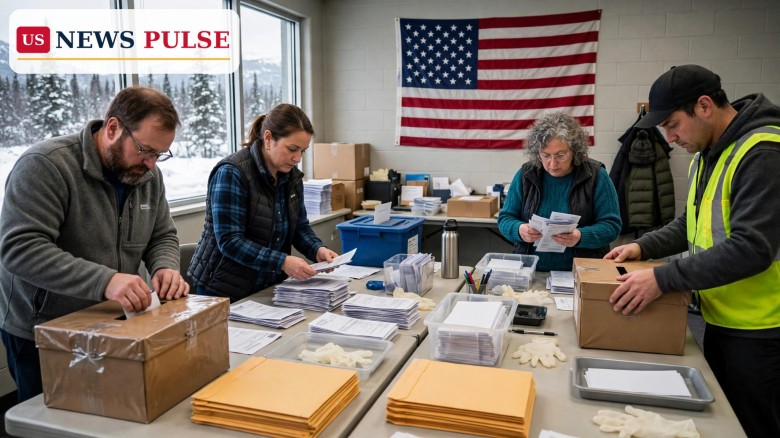
The donor visits followed the Justice Department’s Friday push, in a lawsuit it filed last week, for a court order directing Alaska election officials to preserve and segregate all ballots ranking Daniel J. Sullivan. Alaska Assistant U.S. Attorney E. Bryan Wilson wrote in the filing that the government “seeks to preserve and segregate all ballots ranking Daniel J. Sullivan for the purposes of investigating whether such ranking was the product of voter confusion, should such an investigation become necessary.” The filing requested a decision by Monday.
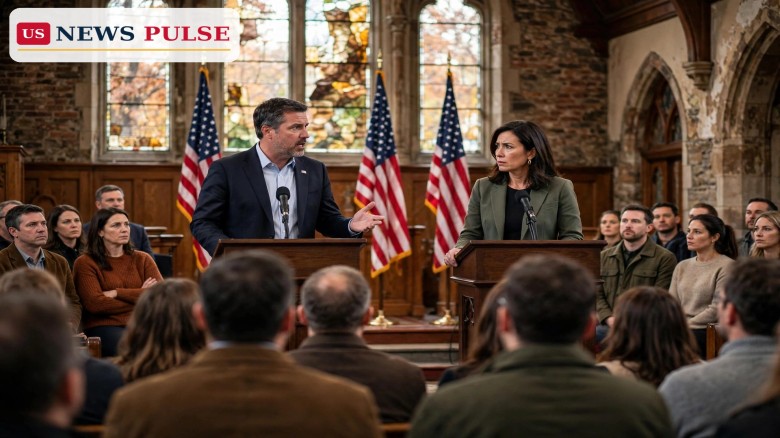
The dispute centres on two men with near-identical names on Alaska’s ranked-choice ballot. The incumbent is two-term Republican Senator Dan S. Sullivan, listed on the ballot as a Republican and the incumbent. The challenger is Daniel J. Sullivan Jr., a retired teacher with no party affiliation, who won a place on the ballot after the Alaska Supreme Court upheld his candidacy on June 29, 2026, and then appeared on the August open primary ballot in the same form.
The race is one of a handful nationwide expected to determine control of the Senate, where Republicans currently hold a 53-47 majority, and all 435 House seats plus 35 Senate seats are on the ballot on November 3. Peltola, a former U.S. representative, is challenging the incumbent senator in a ranked-choice general election in which voters may rank both Sullivans.
The case escalated after a New York Times report on October 28, 2026, alleged that Peltola’s campaign appeared to be involved in recruiting the retired teacher. The report was based partly on interviews with a former campaign manager, Elisa Rios, who was fired before the August primary. Federal prosecutors have since issued dozens of grand jury subpoenas and document-preservation requests, including to the campaign offices of Peltola and Daniel Sullivan, and Republican Governor Mike Dunleavy ordered a state investigation after the Times reporting.
Alaska’s government, in a filing on Saturday, October 31, urged U.S. District Judge Sharon L. Gleason to dismiss the Justice Department’s lawsuit immediately and with prejudice, calling the demand to preserve and segregate ballots ranking Daniel J. Sullivan “both disturbing and impossible.” State attorneys argued that voters’ ballots are commingled in the ballot box on Election Day, that election workers could not segregate ballots ranking one candidate without violating ballot-secrecy protections, and that segregated ballots would not reveal any voter’s reason for ranking Daniel J. Sullivan. They also noted that state officials already took steps to distinguish the two men on the ballot and that the ranked-voting system further addresses confusion by allowing voters to rank both Sullivans.
The Alaska ballot request followed a separate defeat for the department in California, where the 9th U.S. Circuit Court of Appeals rejected a request to set aside disputed ballots received in the midterm election and sent to more than 20,000 people the administration contends may not be U.S. citizens. California officials argued that list is highly unreliable and most likely includes many people who are U.S. citizens.
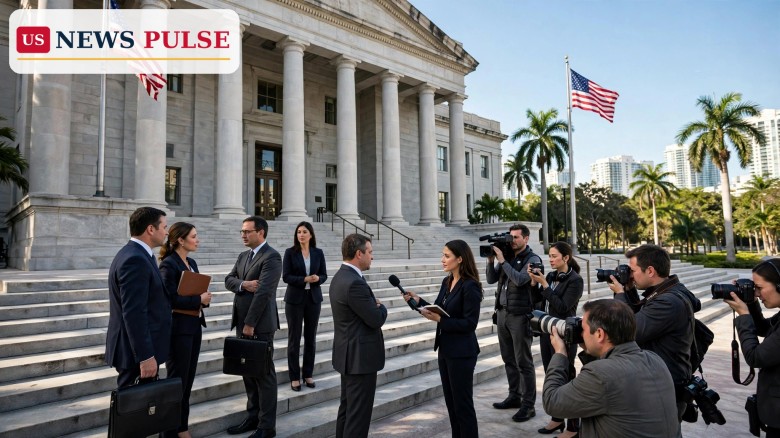
The donor interviews are the clearest sign yet that the criminal side of the matter is active on the ground, not only in court papers. U.S. Attorney Michael Heyman told reporters in Anchorage on Friday that the investigation has been ongoing for several months, but that recent revelations from the Times report had resulted in a “significant surge of law enforcement assets to Alaska.” Heyman would not say what potential crimes authorities are looking into or who the targets are, and he asked members of the public to come forward with tips that could help investigators.
It is highly unusual for Justice Department officials to publicly discuss a criminal investigation or even confirm its existence, and the timing of the Anchorage news conference was particularly notable given the department’s longstanding practice of avoiding public steps in the weeks before an election that could be perceived as attempting to influence a political outcome. Critics of the federal intervention have warned that the ballot-segregation request and the criminal probe risk federal overreach in a tight contest, while supporters of the investigation argue that a namesake candidacy designed to siphon votes must be examined before certification.
The department also filed with the court a list of proposed questions it seeks to compel the Peltola campaign and the Democratic Senatorial Campaign Committee to answer as part of the civil case seeking to block certification of the Senate race if the incumbent loses. President Trump has said he told the department to file the case.
Trump was asked about the case on Saturday night during a Halloween party at his Mar-a-Lago estate and called it “voter fraud at the highest level.” He also suggested that Dan Sullivan had gone into hiding, saying: “Nobody can find him now, so he knows he’s guilty.” The president further suggested, without providing details, that top Democratic leaders outside the state could have been involved and that they should be prosecuted.
A day earlier, at a rally late Friday in Florida, Trump said Peltola and Dan J. Sullivan should be prosecuted. He noted that U.S. Attorney General Todd Blanche was in attendance and said: “He’s going to make his own decision.” Trump then addressed Blanche directly, saying of decisions regarding the case: “Todd, please make your own,” and watched Blanche’s response. Trump added: “OK, he said ‘yes.’”
Peltola denied on Thursday that she knew anything about the effort to put Dan J. Sullivan on the ballot, saying: “I am not interested in tricking voters.” At a campaign rally in Anchorage late Friday, she said she is “so deeply offended by these accusations about having any involvement with anyone else’s candidacy,” calling the allegations “garbage” and part of a “smear campaign” to suppress turnout on the eve of the election. “I know I can beat Dan Sullivan. I do not need any help winning this race,” she told volunteers at an Anchorage aviation museum. Asked before the rally whether someone on her campaign could have been involved in recruiting Dan J. Sullivan, she told KTUU: “I have no idea. I honestly have no idea.”
Democrats, including the Democratic Senatorial Campaign Committee, have repeatedly denied involvement in any campaign trick, and Dan J. Sullivan has long denied he was running at Democrats’ behest. Asked about Rios, the former campaign manager at the centre of the Times reporting, Peltola said certain people are “gone for a good reason,” adding: “If I could fire them again, I’d be happy to fire them again.”
The Alaska race matters nationally because it could help decide which party controls the Senate for the final two years of Trump’s second term, and because the legal fight tests how far federal authorities can go, days before an election, to challenge how a state counts and certifies its votes. If Judge Gleason grants segregation, Alaska would have to find a way to set aside one candidate’s ranked ballots without, in the state’s argument, breaking the secrecy that ranked-choice voting depends on. If she dismisses the case, the Justice Department’s leverage to challenge certification would narrow sharply, even as the criminal probe continued separately.
The donor visits add a second, more personal dimension. Donors are being asked, in their homes and workplaces, to characterise their own intent, and their answers so far cut against the confusion theory: each donor who spoke to the AP said they knew exactly which Sullivan they supported. That does not settle the investigation, which may turn on documents, communications and campaign records rather than donor intent, but it shows why the case is so contested: the same facts are read by one side as evidence of a scheme and by the other as ordinary politics in a state where a retired teacher can put his name on the ballot.
The timing also matters. With voting already under way and Election Day on Tuesday, any court order, subpoena or public statement lands in a live election. The department’s own practice has been to avoid steps that could be seen as influencing an outcome, which is why Heyman’s public confirmation of a criminal probe, and Trump’s weekend comments, have drawn as much attention as the filings themselves.
The immediate milestone is Monday, November 2, the date by which the Justice Department asked for a decision on preserving and segregating ballots ranking Daniel J. Sullivan. Judge Gleason could grant the request, deny it, or adopt the state’s position and dismiss the underlying lawsuit. The state has asked for dismissal immediately and with prejudice, which would bar the department from bringing the same certification challenge again.
Separately, the criminal investigation continues without a public timetable. Heyman declined to name crimes or targets, and no charges have been announced. Further subpoenas, document-preservation requests and witness interviews remain possible, and the AP reporting suggests agents are already working beyond Alaska, as the Groton, Massachusetts, visit shows.
On Tuesday, November 3, Alaskans vote in the ranked-choice general election. Certification, and any challenge to it, would follow the count, and the department’s civil case was framed precisely around that later stage: it seeks to block certification if the incumbent loses. Whatever Gleason decides on Monday, the underlying political contest, and the argument over whether voters were confused, will be tested first at the ballot box.
Who are the two Dan Sullivans? The incumbent is Republican Senator Dan S. Sullivan, listed as the incumbent. The challenger is Daniel J. Sullivan Jr., a retired teacher with no party affiliation, whose place on the ballot was upheld by the Alaska Supreme Court.
What did the FBI ask donors? Agents asked whether donors felt misled about which Sullivan they supported and whether their contribution went to the Sullivan they intended. The donors who spoke to the AP said they were not misled.
Has anyone been charged? No. Federal officials have confirmed a criminal investigation but have declined to name crimes or targets, and no charges have been announced.
What happens on Monday, November 2? That is the date by which the Justice Department sought a ruling on its request to preserve and segregate ballots ranking Daniel J. Sullivan. Alaska’s government has instead urged dismissal of the case.
Does the case affect the election result directly? Not yet. The civil case seeks to block certification if the incumbent loses, and the criminal probe is separate. The election itself takes place on Tuesday, November 3.
Related coverage: Justice Department seeks Alaska ballot segregation in Dan Sullivan Senate race, Alaska calls Trump ballot demand impossible in Saturday court filing, and Peltola denies knowing about second Dan Sullivan as Alaska Senate row deepens.
Leave a Comment



 | Today's Date: