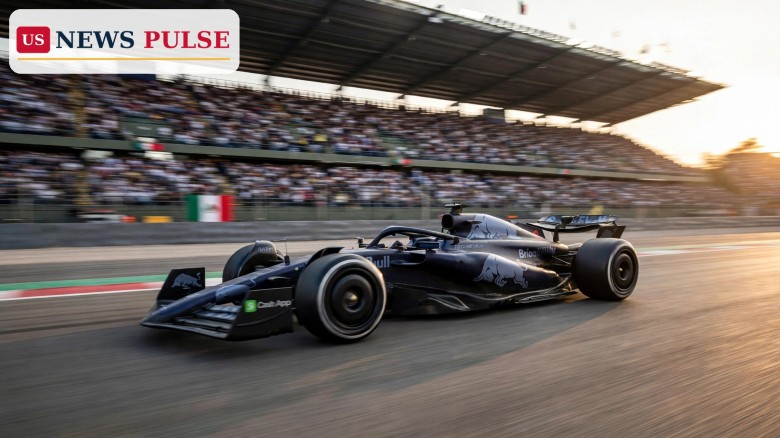
Liam Lawson has been disqualified from qualifying for the Mexico City Grand Prix after Formula 1's stewards ruled that his Racing Bulls car breached the sport's technical regulations on its MGU-K hybrid system, wiping out what had been one of the New Zealander's strongest Saturday performances of the season and sending him to the back of the grid for Sunday's race. The Liam Lawson disqualified Mexico City GP ruling, announced after the qualifying hour at the Autodromo Hermanos Rodriguez, turns a weekend that had already produced penalties, a driver change at a rival team and a landmark pole position into an even more unpredictable 71-lap contest.
Lawson had qualified an impressive eighth in the closely fought session, ahead of his Racing Bulls team-mate Arvid Lindblad, and had already been due to drop one place to ninth because of a one-place grid penalty imposed for his clash with Red Bull's Max Verstappen in second practice on Friday. Instead, the disqualification removes him from the qualifying classification altogether. He is now due to start Sunday's race from the back of the field, in 22nd place, although the stewards separately granted him permission to take part in the race.
The sequence began in the second part of qualifying. Lawson's fastest Q2 lap, timed at 1 minute 17.207 seconds, was quick enough to take him into Q3, the final shootout for pole position, and to help Racing Bulls place both of its cars in the top ten shootout. After qualifying, however, the FIA's technical delegate referred the car to the stewards, noting that Lawson was in breach of the minimum MGU-K power requirement just after crossing the line on that fastest Q2 lap.
The technical delegate's report put the point in formal terms: the driver maximum power demand and the electrical DC power of the ERS-K were reduced at greater rates than permitted by the regulations. In plainer language, the MGU-K — the motor-generator unit that recovers kinetic energy under braking and can return electrical energy to drive the car — did not power down in the gradual, controlled way the rules require. Reports of the stewards' decision said Lawson had run out of battery energy at the end of his flying lap, causing MGU-K deployment to stop abruptly and its output to fall from 350 kilowatts to zero instantly.
The stewards heard evidence from Racing Bulls' representatives, from Lawson himself, from the Single Seater Sporting Director and from members of the FIA technical team, including the FIA technical delegate. The evidence, the stewards said, was accepted by all parties present. It showed that after the control line at the end of his fastest lap in Q2, the driver did not lift off the power immediately. As a result, the rate of reduction of MGU-K deployment required to achieve the regulated step-down was not achieved.
The formal breach was recorded against Articles C5.12.6 and C5.12.7 of the Formula 1 technical regulations. Those articles control how quickly the electrical power must be reduced, at a maximum rate of either 50 kilowatts per second or 100 kilowatts per second depending on the event, so that a car cannot shed its hybrid power in a sudden step. Lawson's car, the stewards found, reduced its power far more steeply than either limit allows.
The disqualification is the second major blow of the weekend for Lawson, and it arrives in a season in which his future has been under constant scrutiny. On Friday, the stewards had already handed both Lawson and Verstappen one-place grid penalties for their collision in second practice at Turns 12 to 14, in the Foro Sol stadium section of the Mexico City circuit. The stewards described the moves as unacceptable, said both drivers were equally to blame, and recorded that both had admitted their moves were unnecessary and clumsy. Each driver also received one penalty point on his super licence.
That Friday incident had already shaped Saturday's starting order before the disqualification was announced. Verstappen qualified fourth but drops to fifth on the grid because of his penalty, promoting championship leader Kimi Antonelli to fourth. Lawson qualified eighth but was due to start ninth because of his own penalty, with Lindblad moving up to eighth. The disqualification goes much further: it erases Lawson's qualifying result entirely and promotes every driver behind him by one place in the final classification.
Saturday's session itself was one of the closest of the year. Lewis Hamilton took his first pole position for Ferrari with a final Q3 lap of 1 minute 16.514 seconds, beating his former Mercedes team-mate George Russell by just nine thousandths of a second. Charles Leclerc was third in the second Ferrari, and the top five drivers were separated by less than two tenths of a second. Hamilton's pole was his 105th in Formula 1, his first for Ferrari and his first at a Grand Prix since the 2023 Hungarian Grand Prix. It was also a landmark for the sport's oldest pole-sitter in more than four decades.
The weekend has been unusually turbulent even before Lawson's exclusion. Haas dropped Esteban Ocon in the middle of the weekend and handed reserve driver Ryo Hirakawa a shock Formula 1 race debut, while Oscar Piastri suffered a surprise elimination in Q2. Against that background, a disqualification decided on a hybrid-system technicality may look like a footnote, but in a championship fight as tight as this one, a car starting at the back rather than in the points has real consequences for teams as well as drivers.
The most important passage in the stewards' decision is the one that explains why Racing Bulls' two strongest arguments could not save the result. The team told the stewards that the breach had produced no performance advantage, and the stewards expressly noted that the team had self-disclosed the problem. Neither point, they ruled, could prevent disqualification.
"The team argued that this did not provide any performance advantage however it is clear that non-compliance with the Technical Regulations is not excused if no performance advantage is gained," the stewards said. "Further, these regulations require that a car must comply with them at all times during an event." They added: "The stewards note in particular that the team self-disclosed the breach however there are a multitude of precedents that require us, despite all mitigating circumstances, to impose a penalty of disqualification where a car does not comply with the Technical Regulations."
That reasoning matters beyond this one race. Formula 1's technical rules are deliberately strict: a car must comply at all times during an event, and the standard penalty for a technical infringement is disqualification, even when the team itself reports the problem and even when no advantage is shown. The rule exists precisely so that teams cannot trade a small breach for a sporting benefit and then argue afterwards that it did not matter. It also explains why the stewards treated the MGU-K ramp-down rate as a matter of compliance rather than of intent: the regulation prescribes a maximum rate of reduction, and Lawson's car exceeded it.
The decision also underlines how fine the margins have become in modern qualifying. The breach did not happen on a slow lap or in the pit lane. It happened in the fraction of a second after Lawson crossed the line at the end of his quickest Q2 lap, when his battery was spent and he did not lift off the power immediately. A driver fighting for a place in Q3 is, by definition, extracting everything from the car at that moment. The rules, however, draw no distinction between a deliberate shortcut and a car that simply runs out of energy at the wrong instant.
Formula 1's own report of the decision was concise, recording that Lawson had been disqualified for a technical breach and would start from the back of the grid. The stewards' words, quoted above, are the fullest official explanation available: the evidence was accepted by all parties, the regulated step-down was not achieved, and precedent required disqualification despite the mitigating circumstances.
Racing Bulls has not been reported as contesting the facts. Its position, as recorded by the stewards, was that the breach gave no performance advantage — a sporting argument, not a denial that the power reduction happened too quickly. The team's self-disclosure, noted with emphasis by the stewards, is consistent with a team that found a problem in its own data and reported it rather than waiting to be caught. That honesty did not change the penalty, but it does frame the incident as a procedural failure rather than a deliberate attempt to cheat.
The wider reaction in the paddock is likely to focus on two questions. The first is whether the MGU-K ramp-down rules, which have already drawn FIA scrutiny after concerns about qualifying techniques used by other teams, are being applied consistently. The second is what the disqualification does to the constructors' championship fight for fifth place, where Racing Bulls and Alpine are close rivals. Reports of the decision noted that Lawson's exclusion hands a potential advantage to Alpine, one of Racing Bulls' rivals for fifth, because Lawson can no longer score from a top-ten starting position while Alpine's Pierre Gasly and Franco Colapinto start ninth and eleventh respectively.
For Lawson, the disqualification is a severe sporting setback. Starting from the back at the Autodromo Hermanos Rodriguez is not a hopeless task — the long run to the first corner and the stadium section offer overtaking chances — but it turns a race in which he could have fought for points from the start into a recovery drive through traffic, with all the risk of first-lap incidents that brings. For a driver whose seat has been the subject of speculation all season, a weekend that began with a practice collision and ends with a disqualification is a difficult one to explain, even when the second penalty involves no suggestion of deliberate wrongdoing.
For Racing Bulls, the cost is doubled. The team had both cars in Q3, a genuine achievement at a circuit where the thin air at altitude punishes power units and brakes. Lawson's exclusion leaves Lindblad, promoted to eighth, as the team's only car starting in the top ten. In a constructors' fight where every point can decide millions of dollars in prize money and prestige, losing a top-ten starter to a technicality is a material blow, and it is one the team cannot appeal away on the ground that it gained nothing.
For the championship, the effect is indirect but real. Hamilton starts from pole with Russell alongside him and Leclerc third, while Antonelli, the championship leader, starts fourth and Verstappen fifth. Reports of the revised grid set out Antonelli's title permutations for Sunday: he will become world champion if he finishes in the top nine should Russell win, and in the top ten should Hamilton win. Lawson's absence from the top ten does not change those permutations, but it does remove one car from the group that could have influenced the race at the front, and it promotes Gasly and Nico Hulkenberg into the points-paying top ten.
Sunday's 71-lap Mexico City Grand Prix starts at 8 p.m. GMT. Lawson will line up at the back of the grid, with the stewards' permission to race already granted, and will need to pick his way through the field if he is to salvage points. Racing Bulls could instead be forced into a pit-lane start if it makes changes to his car that breach parc ferme regulations, so the team faces a careful choice between a back-of-the-grid start with a legal car and a pit-lane start with a changed one.
At the front, Hamilton will try to convert his first Ferrari pole into a first Ferrari victory, with Russell, Leclerc, Antonelli and Verstappen all within two tenths of his qualifying pace. Antonelli's championship arithmetic gives him a clear target: finish in the top ten, and higher if Hamilton or Russell wins, and the title is his. For the rest of the field, the revised grid means new opportunities: Lindblad starts eighth in only his latest chance to impress, Gasly ninth and Hulkenberg tenth, while Piastri, eliminated in Q2, starts further back and must also fight forward.
The disqualification itself is unlikely to be revisited before the race. Technical disqualifications in Formula 1 are rarely overturned, and the stewards' reliance on precedent, on the all-times compliance rule and on evidence accepted by all parties leaves little room for a successful challenge. The longer question — whether the MGU-K ramp-down regulations need clearer guidance for drivers who run out of battery at the end of a flying lap — is one for the FIA and the teams to settle after the race, not during it.
Why was Liam Lawson disqualified from Mexico City GP qualifying? Because his Racing Bulls car breached the technical regulations on the MGU-K system. Just after he crossed the line at the end of his fastest Q2 lap, the MGU-K power fell from 350 kilowatts to zero instantly, instead of reducing gradually at the maximum rate the rules allow.
Did Lawson gain an advantage from the breach? Racing Bulls argued that he did not, and the stewards noted the team had self-disclosed the problem. The stewards ruled, however, that non-compliance is not excused even if no performance advantage is gained, and that a car must comply with the technical regulations at all times during an event.
Where will Lawson start Sunday's race? From the back of the grid, in 22nd place. He had qualified eighth and was already due to drop to ninth because of a one-place penalty for his Friday practice clash with Max Verstappen, but the disqualification removes him from the classification altogether.
Who benefits from the disqualification? Every driver behind Lawson moves up one place. Arvid Lindblad moves to eighth, Pierre Gasly to ninth and Nico Hulkenberg to tenth, while Lewis Hamilton, George Russell and Charles Leclerc keep the top three places on the grid.
Can Kimi Antonelli win the championship in Mexico? According to reports of the revised grid, Antonelli will become world champion if he finishes in the top nine when George Russell wins, and in the top ten when Lewis Hamilton wins. He starts the race fourth, behind Hamilton, Russell and Leclerc.
Related coverage: Lewis Hamilton takes pole for the Mexico City Grand Prix and Verstappen and Lawson handed one-place grid penalties for their practice clash.
Sources: Formula 1, Autosport, Grand Prix, F1i, Speedcafe and RacingNews365, November 1, 2026.
Leave a Comment



 | Today's Date: