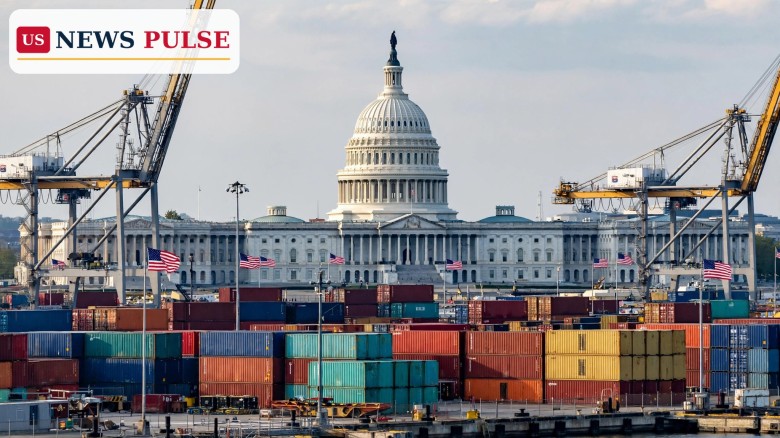
A Democratic victory in the 2026 midterm elections would change the argument over President Donald Trump's tariffs in Congress, but it would not, on its own, remove them. That is the central finding of a Reuters report published on November 1, 2026, two days before voters decide control of the House and Senate. If Democrats win at least one chamber, they could force votes to repeal tariffs and launch a wave of oversight hearings, yet the president's veto power would still stand in the way of any rollback.
The report, by David Lawder, draws on trade experts and congressional aides who expect friction, symbolism and scrutiny rather than repeal. Democrats would gain the committee gavels and the floor time to challenge the tariff programme, but they would remain far short of the two-thirds majorities needed to override a presidential veto. The result, the experts say, is a trade debate that shifts in tone and in politics, even as the tariffs themselves stay in place.
Washington, Nov 1 (Reuters) — the trade agenda that has defined much of President Trump's second term will face a new source of friction if Democrats win control of Congress on Tuesday, November 3, 2026. A cascade of oversight hearings and symbolic tariff rollback votes is likely next year, trade experts and congressional aides told Reuters, but Mr Trump will remain undeterred in his zeal for more tariff actions.
Democrats are eager to pass legislation to negate many of the president's tariffs and the more archaic statutes backing them. Any gains by the party, however, will run into the reality of the president's veto power. Even a clean sweep of both chambers would not give Democrats the two-thirds majorities required to override him.
"One of the most obvious priorities would be repealing Trump's tariffs on Canada, which are raising prices and harming communities on both sides of the border," said Senator Ron Wyden, the top Democrat on the tax- and trade-focused Senate Finance Committee. Mr Wyden's comment captures the political logic of the Democratic position: Canada is the closest trading partner, the tariffs there are easy to explain to voters, and the economic pain is felt in border communities in both countries.
Meanwhile, the Trump administration is developing plans to rely more heavily on executive actions, including on trade, without the need for congressional approval. That parallel track matters because it means Congress's leverage is limited even if its composition changes. The White House can keep setting tariff policy through statutes and executive authority that Congress would struggle to revoke over a veto.
The tariff programme has been built over two years on a set of old trade statutes, some dating back nearly a century. The administration has used them to impose punitive duties on Canada, a temporary 10 percent global tariff, and a series of country- and sector-specific measures, arguing that past trade deals have left American workers, farmers and businesses "ripped off". Supporters point to almost 20 trade deals the White House says it has secured, and to trillions of dollars in manufacturing investment pledges.
Congress, by contrast, has largely watched from the sidelines. Republicans, who hold both chambers, have taken a largely hands-off approach to the tariffs, even as some struggling incumbents — including Senator Susan Collins of Maine — have pushed back in recent months. The Senate did vote 51-47 on October 29, 2026 to terminate the national emergency behind the president's global tariffs, with four Republicans joining Democrats, but that vote did not by itself dismantle the tariff edifice.
The midterms therefore arrive as a test of whether voters want a Congress that confronts the tariff programme or one that continues to defer to the president. Democrats have framed tariffs as a tax on American consumers, pointing to higher prices for imported goods. Republicans have framed them as leverage that has forced trading partners to the table and brought investment home. Tuesday's results will settle which argument carried more weight, even if they do not settle the policy itself.
If Democrats win at least one chamber, the most immediate change would be on the floor and in committee rooms. They could stage symbolic votes on long-sidelined trade bills, including Senator Chuck Schumer's "End Trump's Tariff Tax Act". That bill, which has 28 co-sponsors including Mr Wyden, would scrap the statute backing the punitive tariffs on Canadian goods, Section 338 of the Tariff Act of 1930, along with the statute used for the temporary 10 percent global tariffs, Section 122 of the Trade Act of 1974. It also calls for refunding all duties collected under the archaic trade laws.
Such a bill would almost certainly be vetoed, and Democrats know it. "Democrats are going to try a lot of things. I just don't think anything's going to get across the finish line because neither party will have a veto-proof majority in any scenario," said William Reinsch, a non-resident adviser to the Center for Strategic and International Studies in Washington.
The second, and potentially more consequential, change would be oversight. Gaining control of the trade committee gavels would give Democrats a platform to launch a steady stream of hearings and investigations into the tariff programme. Key targets, according to Mr Reinsch and other trade experts, would include the opaque process for determining tariff exemptions that benefit specific companies, how tariffs are affecting small businesses, and how the administration is doling out hundreds of billions of dollars in investment funds pledged by Japan, South Korea and other trading partners in recent trade deals.
A confrontational oversight agenda would mark a sharp shift from the Republican approach of the past two years. Hearings can compel testimony, surface documents and create a public record that shapes the next election cycle even when they do not change the law. Greta Peisch, a former general counsel at the US Trade Representative's office and a former trade counsel to Senate Finance Committee Democrats, said the effort could "form the basis of a proposal for the presidential elections" in 2028.
"I think it's really the beginning of how Democrats, and Congress as a whole, think about whether and how to enact trade legislation and reforms in the next two to four years, really," Ms Peisch, now a trade partner at Wiley Rein in Washington, told Reuters.
The White House response was uncompromising. "President Trump will never waver from putting America First, whether in trade negotiations or through an economic agenda of tax cuts and deregulation," spokesman Matthew Middleton said in an emailed statement. "That agenda has already secured almost 20 fair trade deals and trillions in manufacturing investments, with even more progress, jobs, and opportunities ahead for everyday Americans."
Trading partners, meanwhile, understand that Congress will not be in a position to remove the tariffs, said Milos Ivkovic, an international arbitration law expert and adjunct professor at Washington University in St. Louis. A wait-and-see approach to the vote will not benefit trade deal holdouts such as India, Vietnam or Canada, he said.
"For all of those countries who think that midterms will have such an effect that the United States government and President Trump will change foreign policy, they're mistaken," Mr Ivkovic said. Countries holding off on trade discussions with the Trump administration "are actually jeopardizing their negotiations," he added.
Democrats, for their part, have not hidden their ambitions. Beyond the Canada tariffs, they want to use oversight to test the administration's claims about the benefits of the programme, and to build a record for a future reform bill that could pass under a different president or with a larger majority. The symbolic votes, in that strategy, are not wasted effort: they force every member to take a public position that can be used in the 2028 campaign.
The Reuters analysis matters because it punctures a common assumption about Tuesday's vote: that a Democratic Congress would automatically mean the end of the Trump tariffs. It would not. The veto, the old statutes and the administration's willingness to act by executive order all point in the same direction — continuity in policy, change in politics.
That distinction has real consequences for businesses and consumers. Companies deciding where to invest, and households deciding what to buy, cannot count on a midterm result to lower import costs next year. The tariffs, and the uncertainty around them, are likely to persist through the president's final two years in office, whatever happens on Tuesday.
At the same time, the political shift is not trivial. A Democratic House or Senate would give tariff critics a megaphone they have lacked for two years, and a paper trail of hearings and votes that could shape the 2028 presidential race. Trade policy, which has often been a bipartisan consensus in Washington, is becoming a partisan dividing line, and the midterms are the moment that line hardens.
The analysis also matters for America's trading partners. Governments in Ottawa, New Delhi, Hanoi and elsewhere have been weighing whether to wait out the current administration or to strike deals now. The message from experts quoted by Reuters is blunt: waiting for Congress to rescue them is a mistake.
On Tuesday, November 3, 2026, voters will decide the House and Senate majorities. The first calls will come soon after polls close, starting with Indiana and Kentucky at 6 p.m. Eastern Time. If Democrats win one or both chambers, the new Congress will be seated in January 2027, and the oversight and symbolic-vote strategy described by Reuters would begin to take shape in the first months of the year.
The administration, meanwhile, is not standing still. Reuters reports that Mr Trump is preparing more tariffs over his final two years, including from a forthcoming investigation into excess industrial capacity in 16 major trading partners, even as he grants exemptions or delays some duties. The trade debate, in other words, is about to get louder, not quieter.
For readers, the practical watchpoints are simple: who wins the House and Senate on Tuesday, which committees Democrats control if they win, what the first oversight hearings target, and whether any tariff bill reaches the president's desk — and is vetoed. Each of those steps will tell us more about the next two years of American trade policy than any single campaign promise.
Would a Democratic Congress repeal Trump's tariffs? Not on its own. Democrats would need a two-thirds majority in both chambers to override a presidential veto, and no scenario in Tuesday's election gives them that. They could pass repeal bills, but the president could veto them.
What could Democrats do instead? They could hold oversight hearings into tariff exemptions, small-business impacts and the investment funds pledged by trading partners, and stage symbolic votes on bills such as the "End Trump's Tariff Tax Act" to build a record for 2028.
Which tariffs would Democrats target first? Senator Ron Wyden named the tariffs on Canada as an obvious priority, arguing they raise prices and harm communities on both sides of the border.
Would Trump stop imposing tariffs if Democrats win? According to the White House and trade experts quoted by Reuters, no. The administration plans to rely more on executive action and is preparing further tariff investigations, including into excess industrial capacity in 16 trading partners.
What should trading partners do? Experts quoted by Reuters advise against waiting for the midterms to change US policy. Countries holding off on negotiations, they say, are jeopardising their own talks.
Related coverage: Canada-US trade stalemate to outlast midterms, Trump tariffs fail to cut US trade deficit, report shows, Trump-Xi trade deal cuts China tariffs to 47 percent.
Leave a Comment



 | Today's Date: